


What if the most important part of a bunionectomy consultation isn’t choosing a procedure, but understanding why it’s being recommended for you? It’s reasonable to ask whether surgery is necessary, what alternatives remain, and how pain, complications, recurrence, and recovery could affect your daily life. The questions to ask your foot surgeon before bunionectomy can turn those concerns into a clear, personalized conversation.
This checklist can help you understand your diagnosis, the goals and limitations of the proposed surgery, and what recovery may involve in your circumstances. It covers nonsurgical options, the surgical plan, potential risks, pain management, and practical steps to prepare and recover. Bring your questions and any concerns about work, footwear, or daily activities so you can discuss a plan that reflects your needs.
Key Takeaways
- Ask how your examination and imaging relate to your symptoms and daily function, and why surgery is being considered for you.
- Use the questions to ask your foot surgeon before bunionectomy to clarify the proposed procedure, its expected benefits, and its limitations.
- Discuss possible complications and the chance that pain or other symptoms may continue after surgery.
- Plan ahead by asking what support, mobility arrangements, work adjustments, medication guidance, and follow-up your recovery may involve.
Questions to Ask About Your Bunion Diagnosis and Whether Surgery Fits
A recommendation for bunion surgery deserves a clear, individualized explanation. Ask what the examination and any imaging show, how those findings relate to your pain or difficulty with daily activities, and what the proposed treatment is intended to improve. A bunionectomy decision should reflect your clinical findings, symptoms, and personal goals, not the appearance of the foot alone.
Use the questions to ask your foot surgeon before bunionectomy to connect the diagnosis with your day-to-day experience. For example:
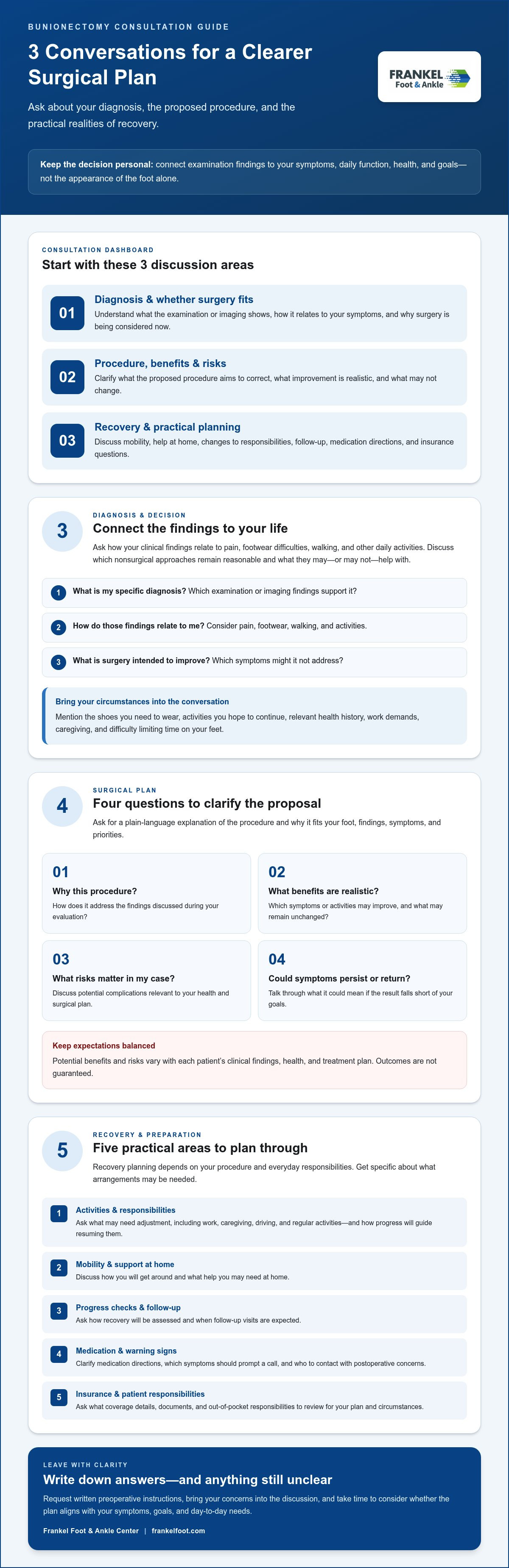
- What is my specific diagnosis, and which examination or imaging findings support it?
- How do those findings relate to my pain, footwear difficulties, or limits on walking and other activities?
- What is surgery intended to improve, and which symptoms might it not address?
If you’d like background before your appointment, What is a Bunion? provides an overview of bunions and treatment approaches. Use it as general context, then ask how your own findings shape the recommendation.
How do I know why bunion surgery is being recommended?
Ask why surgery is being considered now and which nonsurgical approaches remain reasonable for you. Discuss what those options may help with and where their limits lie in your situation. A useful explanation connects the recommendation to your symptoms and priorities, rather than leaving you to guess why one approach is preferred.
Share details that may affect the decision and planning, such as the shoes you need to wear, activities you hope to continue, relevant health history, and daily responsibilities. Work demands, caregiving, or difficulty limiting time on your feet can also shape what feels manageable. These details make the conversation more specific to your life and help you consider the next step.
Questions About the Proposed Bunionectomy, Benefits, and Risks
Once you understand why surgery is being considered, ask for a plain-language explanation of the specific plan. The questions to ask your foot surgeon before bunionectomy should clarify what will happen and why that approach fits your foot, symptoms, and priorities.
What should I understand about my specific surgical plan?
Ask what the procedure involves, which part of the bunion deformity it is intended to correct, and how the plan relates to your individual findings. You can also ask what alternatives are appropriate in your case and how their possible benefits and limitations compare. For additional context, explore this bunion surgery overview alongside your surgeon’s explanation.
- Why do you recommend this procedure for my case? Ask how it addresses the findings discussed during your evaluation.
- What benefits are realistic for me? Clarify which symptoms or activities may improve, and what the procedure may not change.
- What are the potential risks or complications? Ask which concerns are most relevant to your health and surgical plan.
- Could pain or other symptoms persist or return? Discuss what may happen if the result falls short of your goals.
Expected benefits and risks vary with each patient’s clinical findings, health, and treatment plan. A useful conversation makes room for both the hoped-for improvements and the uncertainties, without treating any outcome as guaranteed.
Frankel Foot & Ankle Center provides bunion surgery tailored to each patient’s needs. Learn more about the bunion surgery approach as you prepare to discuss your diagnosis, options, and goals.
Questions About Bunionectomy Recovery, Follow-Up, and Your Next Step
Recovery planning should account for your procedure and everyday responsibilities. Before making a decision, ask what help you may need at home, how you’ll manage getting around, and whether work, caregiving, driving, or regular activities may need to change. Ask which activities may need adjustment and how your progress will guide a return to them. Clear answers help you arrange practical support instead of relying on assumptions about recovery.
How can I prepare for recovery and make an informed decision?
Ask how your progress will be reviewed and what follow-up appointments are planned. Clarify medication instructions, which symptoms should prompt a call, and who to contact with postoperative concerns. Request written preoperative instructions so you can review them at home and share relevant details with anyone helping you.
- Which activities may I need to adjust, and how will I know when to resume them?
- What mobility arrangements or help at home should I plan for?
- How will recovery progress be assessed, and when are follow-up visits expected?
- What medication directions and warning signs should I understand?
- What insurance coverage questions and patient responsibilities should I review before scheduling?
Insurance details and out-of-pocket responsibilities depend on your plan and circumstances, so ask which information or documents you should review. These practical questions to ask your foot surgeon before bunionectomy can help you leave with a clearer picture of the medical plan and the arrangements it may require.
Write down the answers, note anything that remains unclear, and take time to consider your options without pressure. To prepare for your discussion, review the Frankel Foot & Ankle Center bunion care information.
Move Forward With Clear Answers and a Personal Plan
A thoughtful bunionectomy decision starts with understanding why surgery is being recommended, what the proposed procedure aims to address, and how its potential benefits and risks relate to your circumstances. The questions to ask your foot surgeon before bunionectomy can also help you plan for support, mobility, work, and follow-up during recovery.
Take your notes and any remaining concerns into the conversation. Clear answers can help you decide whether the plan aligns with your symptoms, health, and goals, without feeling rushed to make a choice.
Frankel Foot & Ankle Center specializes in bunion surgery and foot and ankle care for patients in Middletown and Katonah, New York, and Milford, Pennsylvania. Explore bunion care at Frankel Foot & Ankle Center to learn more about its approach and prepare for a personalized discussion.
Frequently Asked Questions
What questions should I ask before bunion surgery?
Before surgery, make sure you understand the diagnosis and purpose of the proposed plan. Ask which examination or imaging findings support it, how they relate to your pain or activity limits, what the procedure is meant to improve, and what risks or limitations apply. The questions to ask your foot surgeon before bunionectomy should also cover recovery expectations and follow-up.
Can I ask my foot surgeon about alternatives to bunionectomy?
Yes. Asking about alternatives is a useful part of making an informed decision. Ask which nonsurgical approaches remain reasonable for your situation, what each may help with, and where its limitations may be. You can also ask how the potential benefits and tradeoffs of surgery compare with continuing conservative care, based on your symptoms, examination, and personal priorities.
How do I know whether a bunionectomy is right for me?
A bunionectomy may be worth discussing if your symptoms and foot function are affecting your daily life, but the decision depends on your individual clinical findings and goals. Ask how your examination and imaging relate to your concerns, what surgery could realistically improve, and what may remain unchanged. Frankel Foot & Ankle Center provides bunion and foot and ankle care in Middletown and Katonah, New York, and Milford, Pennsylvania.
What should I ask my surgeon about recovery after bunion surgery?
Ask what your recovery plan may involve, including mobility support, activity adjustments, work planning, and follow-up visits. Clarify medication instructions, which symptoms should prompt a call, and who to contact with postoperative concerns. Also ask how your progress will be assessed and what written instructions you’ll receive. Planning around your responsibilities can help you arrange practical support before surgery.


