


Could a painful bump near your little toe be different from the bunion you’ve heard about? A bunionette forms at the base of the fifth toe, on the outer side of the foot, while a bunion affects the joint at the base of the big toe. If shoes press against the bump or make the outer forefoot tender, noticing where the discomfort occurs and what triggers it can help you decide what to do next.
This guide explains what a bunionette is, which symptoms to watch for, and practical ways to reduce pressure. You’ll also learn about possible contributing factors and when a clinical assessment can help distinguish a bunionette from other causes of a foot bump. Frankel Foot & Ankle Center provides foot and ankle consultations for patients in Middletown and Katonah, New York, and Milford, Pennsylvania.
Key Takeaways
- A bunionette forms near the little-toe joint, while a bunion affects the big-toe joint.
- Tenderness, redness, swelling, or shoe pressure may occur, but symptoms alone can’t confirm the cause of a bump.
- Notice what aggravates the discomfort and reduce pressure with shoes that leave room around the toes.
- If discomfort persists or affects walking, a foot evaluation can help clarify the cause and discuss appropriate care options.
What Is a Bunionette? Understand the Bump Near the Little Toe
A bunionette is a bony prominence near the joint at the base of the fifth toe, the little toe, along the outer edge of the foot. It’s also called a tailor’s bunion. The bump may become more noticeable or uncomfortable when footwear presses against it, but appearance alone can’t confirm the cause.
The prominence is associated with the fifth metatarsal, the long bone leading to the little toe. If the area is tender or looks swollen, note exactly where the bump sits and whether pressure from a shoe makes it more uncomfortable. That information can help describe the problem during an assessment. Read more about the condition in this Tailor's bunion reference.
How Is a Bunionette Different from a Bunion?
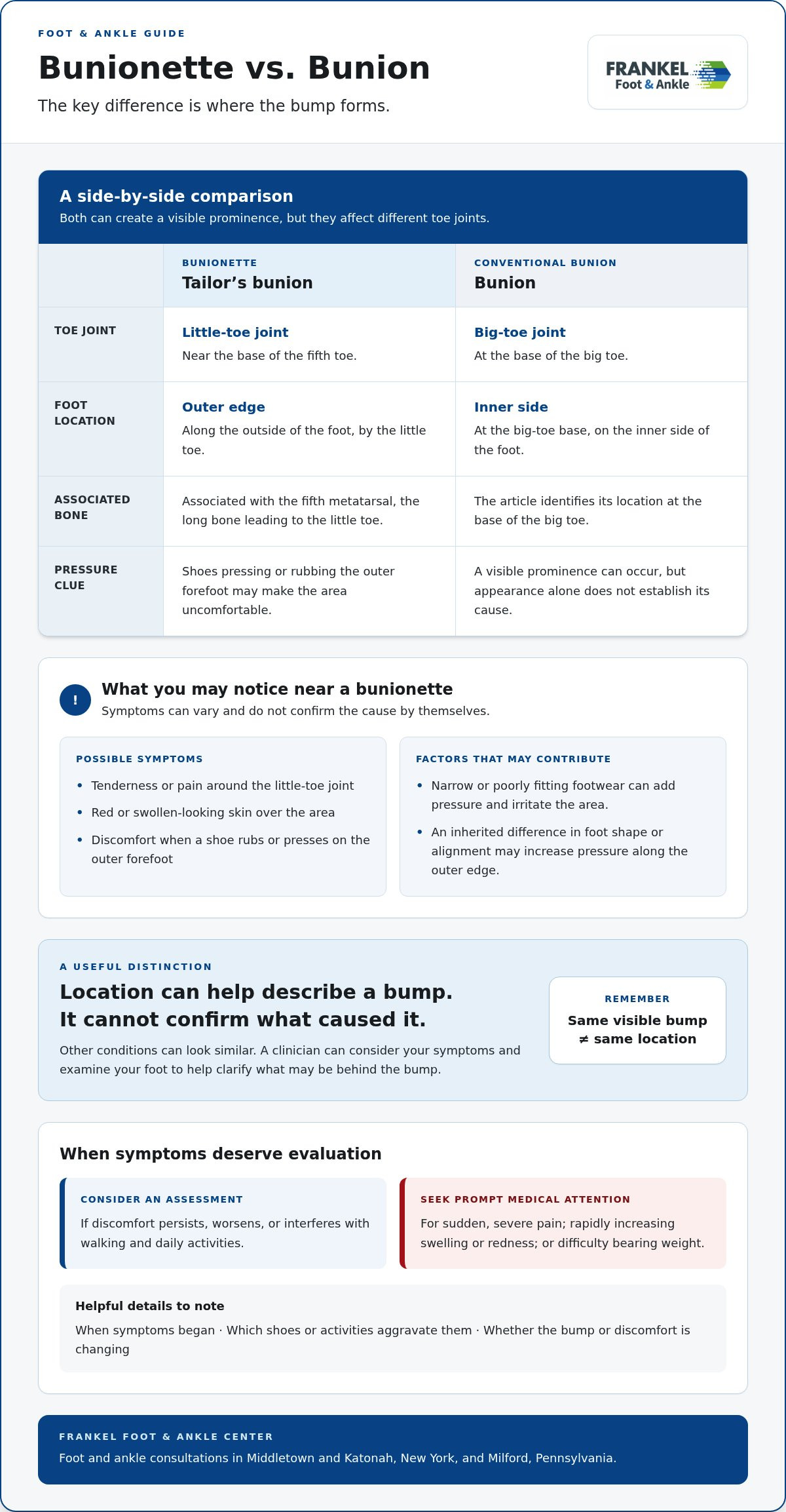
The main difference is which toe joint is affected. A bunionette appears on the outside of the foot near the little-toe joint. A conventional bunion forms at the base of the big toe, on the inner side of the foot. Both can create a visible prominence, but they involve different parts of the foot. Learn more about the big-toe condition in our scarless bunion surgery information.
Not every bump near a toe is a bunion or bunionette. Other conditions can look similar, so the location and appearance aren’t enough to establish the cause. A clinician can consider your symptoms and examine your foot to help clarify what may be behind the bump and discuss next steps.
Bunionette Symptoms and Contributing Factors: What to Notice
A bunionette may cause tenderness or pain around the little-toe joint, especially when a shoe rubs or presses on the outer forefoot. The skin over the area can also appear red or swollen. Symptoms vary, and none of these signs alone confirms the cause of a bump or discomfort.
Narrow or poorly fitting footwear may irritate the area by adding pressure. Foot structure can also contribute: an inherited difference in the shape or alignment of the foot may increase pressure along its outer edge. The American College of Foot and Ankle Surgeons describes these factors in its Tailor's bunion overview. Pay attention to whether symptoms increase in shoes that squeeze your toes. Footwear pressure can aggravate discomfort, but it isn’t the only possible explanation for pain.
When Should a Bump or Little-Toe Pain Be Evaluated?
Consider a clinical assessment if discomfort persists, worsens, or interferes with walking and daily activities. Seek prompt medical attention for sudden, severe pain, rapidly increasing swelling or redness, or difficulty bearing weight, since these symptoms may need timely evaluation.
When describing the problem, note when symptoms began, which shoes or activities aggravate them, and whether the bump or discomfort is changing. A clinician can use that history and an examination to help determine appropriate next steps. For more information about evaluating and managing foot discomfort, see our comprehensive foot pain relief guidance. Frankel Foot & Ankle Center provides foot and ankle consultations and pain-relief care in Middletown and Katonah, New York, and Milford, Pennsylvania. Explore foot and ankle care.
Bunionette Care: Practical Steps and What a Foot Evaluation Can Clarify
Use these simple steps to identify what aggravates the area and reduce avoidable pressure:
- Note the pattern. Record when discomfort began, which shoes or activities make it worse, and whether symptoms are changing. This gives you clear details to share at an appointment.
- Ease shoe pressure. Choose footwear with room around the toes and avoid shoes that rub or squeeze the outer forefoot. A protective pad may cushion the area, but remove it if it makes the shoe feel tighter.
- Arrange an evaluation if discomfort persists. Ongoing pain or symptoms that limit your usual activities are good reasons to have your foot assessed.
These steps may reduce irritation, but they don’t establish the cause of a bump. If pain continues, a clinician can ask about your symptoms and examine the affected area to better understand what may be contributing to the discomfort. Recommendations depend on the individual findings.
What Can a Foot and Ankle Consultation Help Determine?
An evaluation can help clarify whether the pain is related to a bunionette or another issue and give you an opportunity to discuss suitable next steps. Care may include approaches to reduce pressure and address symptoms. Surgery isn’t automatic; whether it’s appropriate depends on the assessment and your situation. Understanding the options can help you make an informed decision without feeling rushed.
Frankel Foot & Ankle Center offers foot and ankle consultations and pain-relief care in Middletown and Katonah, New York, and Milford, Pennsylvania. Learn more about foot and ankle care.
Take the Next Step Toward Foot Comfort
A bump near the little toe can make everyday footwear uncomfortable, but its appearance alone doesn’t confirm the cause. If you’re dealing with a bunionette or ongoing outer-foot pain, note what triggers your symptoms and whether they’re changing. Reducing shoe pressure may help, while persistent discomfort is a reason to seek an individual assessment.
A foot and ankle consultation can help clarify what may be contributing to your symptoms and discuss appropriate options without assuming surgery is necessary. Frankel Foot & Ankle Center provides consultations and pain-relief care for patients in Middletown and Katonah, New York, and Milford, Pennsylvania.
For help understanding persistent foot symptoms, schedule a foot and ankle consultation with Frankel Foot & Ankle Center.
Frequently Asked Questions
What is a bunionette?
A bunionette is a bony prominence near the joint at the base of the fifth toe, along the outer edge of the foot. It’s also called a tailor’s bunion. Footwear pressure may make the area uncomfortable, but a bump’s appearance alone can’t confirm its cause. A foot assessment can help clarify what’s going on.
Is a bunionette the same as a bunion?
No. A bunionette affects the joint at the base of the little toe on the outer side of the foot. A traditional bunion affects the joint at the base of the big toe on the inner side. Although both can create a visible bump, they involve different areas, and similar-looking bumps may have other causes.
Can shoes make a bunionette hurt?
Yes. Shoes that squeeze the toes or rub against the outer forefoot can increase pressure and irritate a bunionette. A wider toe box may reduce rubbing, while a cushion over the tender spot may help if it doesn’t make the shoe feel tighter. If pain continues despite reducing pressure, consider having the area assessed.
When should I see a podiatrist for a bunionette?
Consider an assessment if little-toe pain persists, worsens, or interferes with walking or daily activities. Seek prompt medical attention for sudden, severe pain or rapidly increasing redness or swelling. Frankel Foot & Ankle Center provides foot and ankle consultations and pain-relief care in Middletown and Katonah, New York, and Milford, Pennsylvania.


