


The safest way to speed up ankle surgery recovery is to follow a gradual plan, not to rush back onto your feet. Patients are usually told to avoid putting weight on the ankle for the first 3 to 4 weeks, although timing varies by procedure. Physical therapy often starts two to four weeks after surgery, while full recovery can take up to a year.
It’s understandable to want a clear timeline and practical steps that support healing. This guide explains how physical therapy and weight-bearing precautions fit into recovery, and what to expect as you return to daily activities. You’ll also learn why milestones differ and how steady, safe progress can help restore movement.
Key Takeaways
- Begin range-of-motion and strengthening exercises only when your care team clears them, then progress gradually through rehabilitation.
- Protect the healing ankle by following your prescribed weight-bearing limits and using a walking aid when needed.
- Use recovery milestones as a guide, not a deadline; the procedure and healing progress shape when you return to everyday activities.
- Plan for follow-up care and physical therapy to support movement, strength, and balance as recovery advances.
1. Physical therapy and gradual return to movement
Knowing how to speed up ankle surgery recovery starts with matching movement to healing, not forcing progress. Physical therapy may begin two to four weeks after surgery, depending on the procedure and your doctor’s instructions. A cast or weight-bearing restriction affects which movements are appropriate, so follow your prescribed plan before starting exercises.
For early movement, your doctor may approve toe wiggles, ankle circles, or tracing the alphabet with your foot. These gentle exercises let you practice controlled motion before taking on more demanding activity. If your movement is restricted, wait for clearance instead of testing the ankle. When considering how to speed up ankle surgery recovery, choose your next exercise only when your care plan allows it.
Physical therapy may continue for six to eight weeks, with sessions commonly scheduled two to three times per week. As rehabilitation progresses, towel scrunches, toe extensions, and heel raises can help rebuild foot and ankle muscle function after the initial healing phase. A therapist can adapt exercises to address stiffness, strength, and range of motion.
Progress should be gradual and purposeful. For example, after approval, you might move from seated ankle circles to supported balance work. Calf and Achilles stretches may also be added when your surgeon clears them. Report concerning pain and don’t increase exercise intensity on your own: healing tissues need time to adapt to each new demand.
Therapy can support recovery beyond movement practice. It may help prevent blood clots, reduce scar tissue, swelling, and inflammation, build ankle strength, and restore range of motion. Your therapist can guide stretching and strengthening as rehabilitation progresses.
After the cast is removed, patients spend several more weeks in physical therapy to rehabilitate the ankle. Post-operative physical therapy sessions typically last between 6 and 12 weeks. Range-of-motion exercises should begin only after the doctor gives the go-ahead.
2. Avoiding weight-bearing during early recovery
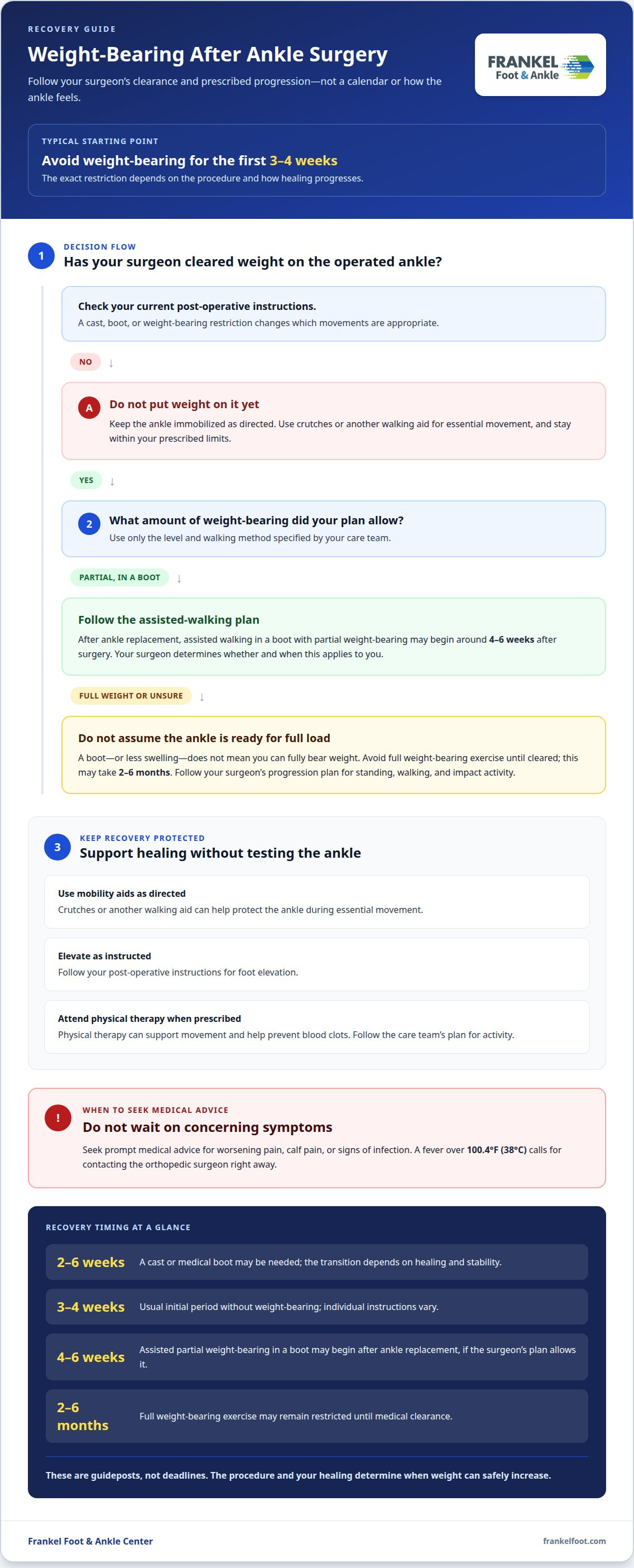
After ankle surgery, patients are usually instructed to avoid weight-bearing for the first 3 to 4 weeks. The exact period depends on the procedure and healing, including whether the operation involved ankle replacement or ankle fusion. Keep the ankle immobilized as directed; crutches or another walking aid can help protect it during essential movement.
How can you prevent blood clots and other complications during recovery? Follow the prescribed movement plan and attend physical therapy, which can help prevent blood clots. Elevate the foot as instructed, and contact a healthcare provider about calf pain or signs of infection, including a fever over 100.4°F (38°C).
A cast or medical boot may be needed for about two to six weeks, but the transition depends on surgical healing and stability. After ankle replacement, assisted walking in a boot with partial weight-bearing may begin around 4-6 weeks after surgery. Your surgeon’s progression plan determines when to increase load; a boot alone doesn’t mean the ankle is ready for full weight.
What activities should you avoid after ankle surgery, and for how long? Avoid putting weight on the operated ankle during the initial restriction period, and avoid full weight-bearing exercise until cleared; this may take 2 to 6 months. Follow the limits for standing, walking, and impact activity rather than testing mobility because swelling has eased. Gradual progression supports function while reducing unnecessary stress on the repair.
For ankle discomfort beyond the immediate surgical restrictions, explore ankle pain relief.
3. Typical recovery timeline after ankle surgery
Recovery milestones depend on the operation, bone healing, and how strength and walking progress. Ankle fractures often heal within 4 to 8 weeks, while full recovery from ankle surgery can take up to a year. These timelines describe different stages: bone healing doesn’t necessarily mean the foot and ankle are ready for unrestricted activity.
Recovery also differs by procedure. After ankle replacement, patients may walk independently with a brace by about 3 months; unrestricted walking may take 6-12 months. Fusion and other surgical repairs have their own healing demands, so treatment milestones depend on the procedure and weight-bearing plan.
To ease pain and swelling, ice the affected area for 15-20 minutes every few hours during the first couple of days. Keep the foot elevated almost all the time for the first two weeks, following the post-operative instructions. Swelling can take up to six months to settle.
No single food or supplement plan applies to everyone. Choose nourishing meals and discuss supplements and smoking with your care team, especially before ankle replacement. Smoking and diabetes are associated with a higher risk of complications after ankle replacement, while age alone does not determine recovery time.
Seek prompt medical advice for worsening pain, calf pain, or signs of infection. At three weeks after surgery, these symptoms warrant contacting a healthcare provider; a fever over 100.4°F (38°C) calls for contacting the orthopedic surgeon right away.
For ankle discomfort, explore ankle pain relief.
Discomfort is typically highest in the first few days after ankle surgery. Bone realignment usually heals within six to eight weeks, but may take longer; a bone generally takes three months to heal. Most patients have substantial improvement within six months, nearing 75 percent recovery. Guide: feeling better at three months, feeling good by six months, back to normal by a year.
Frankel Foot & Ankle Center: Bunion surgery scarless painless
The Frankel Foot & Ankle Center provides ankle pain relief for people experiencing ankle discomfort. If pain persists after surgery or makes walking difficult, the center’s ankle pain relief care may be a relevant next step. Recovery timelines and movement restrictions depend on the operation and your healing, so this care does not replace your post-surgical instructions.
The center also offers bunion surgery scarless painless, foot pain relief, and laser for fungal toenails. These offerings address different foot and ankle concerns; the right fit depends on the problem you want addressed. For ongoing ankle discomfort, contact Frankel Foot & Ankle Center to discuss ankle pain relief.
Make your next recovery step a thoughtful one
Learning how to speed up ankle surgery recovery is less about pushing harder and more about protecting your progress. Keep your care plan central as you move into the next stage. Use follow-up visits to discuss changes in pain, mobility, or confidence, and make sure each new activity goal fits your current healing. Small, well-timed adjustments can make daily movement feel less like guesswork.
If you’re dealing with persistent foot or ankle concerns and want to discuss possible next steps, contact Frankel Foot & Ankle Center. A thoughtful conversation can help you move forward with a plan suited to your needs. Keep taking recovery one step at a time.
Frequently Asked Questions
What is the typical recovery timeline after ankle surgery?
Recovery often takes several months, with milestones shaped by the operation and your healing. An incision typically takes two to three weeks to heal, while strength and balance may continue to improve during months three to four. Light recreational activity may be possible during months four to six. These milestones distinguish wound healing from rebuilding function.
When can you start walking and bearing weight after ankle surgery?
Walking and weight-bearing resume according to your surgeon’s progression plan, which accounts for the procedure and your healing. Some patients begin walking with a boot and crutches, then transition to regular footwear during weeks six to eight if cleared. Comfortable walking does not mean the ankle is ready for impact exercise. Increase activity only within your care plan’s limits.
What foods, supplements, or habits support healing after ankle surgery?
Choose nourishing meals and discuss supplements and smoking with your care team, especially before ankle replacement. Follow your prescribed movement plan and keep your foot elevated as instructed.


