


A prescription lacquer can fail even when you’ve used it as directed. If at-home treatment for toenail fungus has failed, limited penetration through the nail may be part of the problem, but the discoloration or thickening may also have another cause. Toenails grow slowly, so visible recovery can take time even when treatment is working.
It’s understandable to feel discouraged when a stubborn nail hasn’t changed. The next step is to confirm what’s causing the change and consider whether a different treatment is appropriate, rather than simply repeating the same approach. This article explains why lacquer may not clear an infection, how a specialist can distinguish fungus from other nail conditions, and when oral medication or laser treatment may be considered.
Key Takeaways
- Prescription lacquer can struggle to reach fungus beneath the nail, and slow nail growth can delay visible improvement.
- Discoloration or thickening doesn’t always mean fungus; PCR testing or a fungal culture can help clarify the diagnosis.
- Oral antifungal medication may be considered, with treatment choice shaped by health history, other medications, and possible monitoring needs.
- Severe symptoms, pain, a dark nail, diabetes, or poor circulation are reasons to seek professional foot care; laser treatment may also be discussed after assessment.
Oral antifungal medication
Onychomycosis, or fungal nail infection, can persist when topical medication cannot reach fungus beneath the nail. When at-home treatment for toenail fungus has failed, limited penetration may be one reason, though an incorrect diagnosis can also explain the result. In the United States, prescription costs vary by medication and insurance coverage; a pharmacy can provide your out-of-pocket amount.
When Topical Treatments Fail
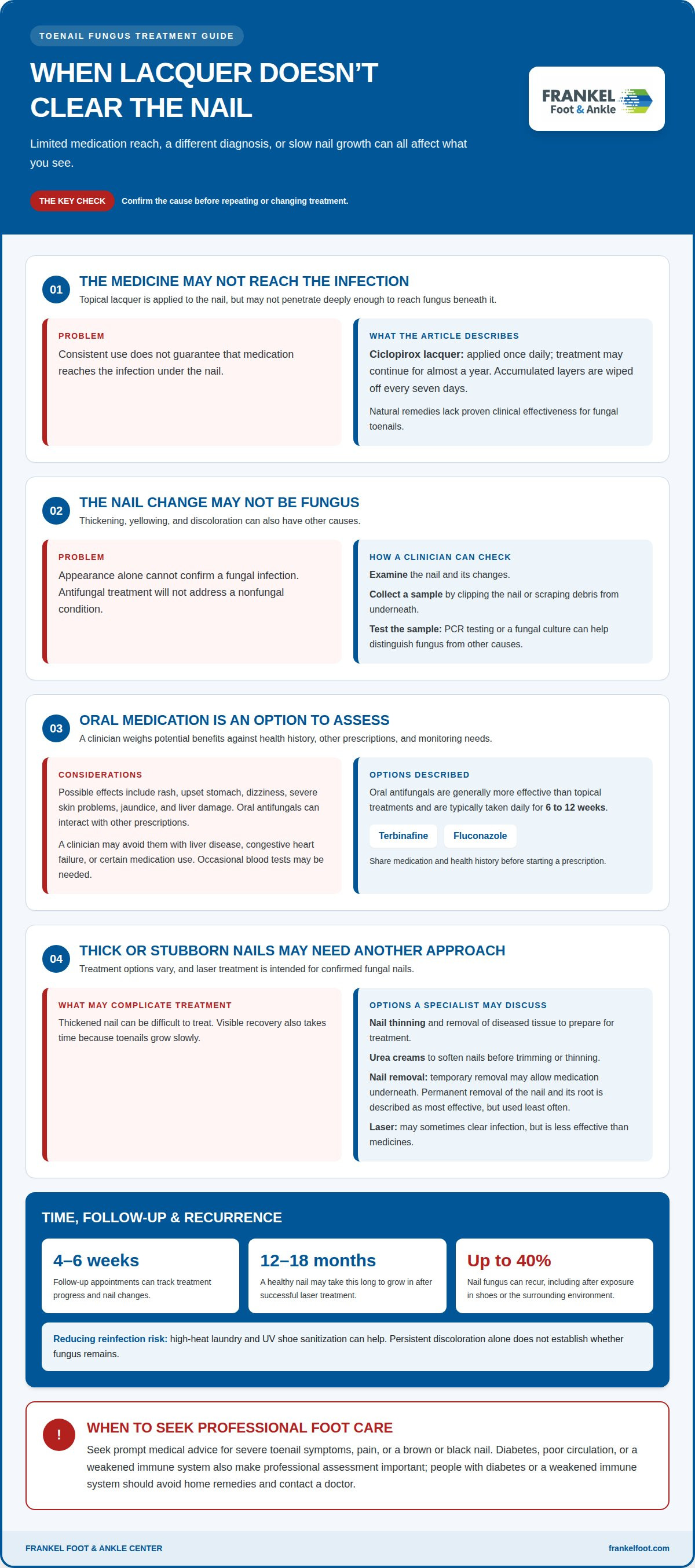
Topical antifungals are applied to the nail, but may not penetrate deeply enough to reach the infection. That limited access can help explain why lacquer doesn’t clear a fungal nail, even with consistent use. Prescription ciclopirox is applied once daily and may continue for almost a year; accumulated layers are wiped off every seven days. Natural remedies also lack proven clinical effectiveness for fungal toenails.
Prescription Antifungal Options
Prescription options include topical lacquer and oral antifungal medication, which works through the body as a new nail grows. Oral medicines are generally more effective than topical treatments and are typically taken daily for 6 to 12 weeks. Terbinafine and fluconazole are examples of oral prescriptions. Ciclopirox lacquer requires regular application, while oral treatment gradually replaces infected nail with new growth. If at-home treatment for toenail fungus hasn’t cleared the nail, a clinician can assess whether prescription medication is appropriate. Visible changes may take months as toenails grow slowly.
Oral Medication Limitations and Safety
Oral antifungals can treat infection within the nail, but potential side effects and health conditions matter. Possible effects include rash, upset stomach, dizziness, severe skin problems, jaundice, and liver damage. These medications can also interact with other prescriptions. A clinician may avoid oral treatment for people with liver disease, congestive heart failure, or certain medication use. Occasional blood tests may be needed during treatment to monitor safety. Share your medication list and relevant health history before starting a prescription.
Distinguishing fungal infection from other nail conditions
Thick, yellow, or discolored nails don’t prove a fungal infection; other nail conditions can look similar. A health care provider may examine the nail, clip it, or scrape debris from underneath for laboratory testing. PCR testing or a fungal culture can help distinguish fungus from other causes before treatment, including terbinafine, is considered. Confirmation matters because antifungal treatment won’t address a nonfungal condition.
For thickened nails, professional thinning and removal of diseased tissue can prepare the nail for advanced treatment. Urea creams may soften nails before trimming or thinning. A stubborn fungal nail may sometimes be removed, including permanently removing the nail and its root. Permanent removal is described as the most effective option, but it’s used least often. Laser treatment may sometimes clear infection, though the U.S. National Library of Medicine notes it’s less effective than medicines. After successful laser treatment, a healthy nail may take 12 to 18 months to grow in.
Recurrence is possible even after symptoms improve with over-the-counter antifungal products. Nail fungus can recur at a rate as high as 40%, including after exposure to fungal organisms in shoes or the surrounding environment. High-heat laundry and UV shoe sanitization can help reduce reinfection risk. Tea tree oil and other home remedies may appeal, but they don’t replace a confirmed diagnosis. People with diabetes should be especially proactive about foot concerns. If laser treatment is being considered, an assessment can help clarify the next step and whether laser treatment for fungal toenails fits the situation.
Consulting a foot and ankle specialist
A foot and ankle specialist can evaluate a nail that remains thickened or discolored after prescription treatment. A clinical assessment considers symptoms, pain, nail changes, circulation, health history, and current medications. Patients with diabetes or a weakened immune system should avoid home remedies and contact a doctor. Poor blood flow also makes professional foot care important.
Seek prompt medical advice for severe toenail symptoms, pain, or a brown or black nail. These changes warrant an appointment with a primary care doctor or podiatrist rather than continued self-treatment. Mention remedies already tried, including vinegar soaks, tea tree oil, or an over-the-counter ointment. That information helps the clinician evaluate what was applied and whether irritation or persistent infection needs attention.
For confirmed fungal disease, nail thinning and removal of diseased tissue may help prepare the nail for treatment. Prescription antifungal creams may work better after thinning, and a clinician may temporarily remove the nail to apply medication underneath. Oral medications are another option, but health history and other prescriptions affect whether they’re appropriate. A specialist can recommend a plan based on the nail and the patient’s overall health, rather than assuming every discoloration is fungal.
Follow-up appointments every 4 to 6 weeks can track treatment progress and changes in the nail. Complete clearing takes time because a healthy nail must grow in; persistent discoloration alone doesn’t establish whether fungus remains. For a professional foot assessment, request a foot and ankle evaluation.
Frankel Foot & Ankle Center: Laser for fungal toenails
Frankel Foot & Ankle Center offers laser treatment for fungal toenails as an option to discuss after home or prescription treatments haven’t resolved the concern. A confirmed diagnosis matters because nail discoloration can have causes other than fungus, and laser treatment is intended for fungal nails. A foot and ankle specialist can help determine whether this approach fits your diagnosis and health history, or whether another treatment path is more appropriate. Nail changes may take time to grow out, so discuss what progress to expect and how it will be assessed. For guidance on laser treatment for fungal toenails, contact Frankel Foot & Ankle Center.
Choose a Clear Next Step
If at-home treatment for toenail fungus has failed, let the next step bring clarity rather than another round of guesswork. A focused conversation about the nail’s changes, treatments already tried, and relevant health history can help guide what to consider next. You deserve an approach based on your specific concern, not simply another product applied without knowing the cause.
The Frankel Foot & Ankle Center offers fungal nail laser treatment for patients considering care beyond home treatment. Discuss whether this option may fit your situation and what questions you want answered before deciding how to proceed. The center serves patients at its Milford, Pennsylvania, Middletown, New York, and Katonah, New York offices.
Contact Frankel Foot & Ankle Center to discuss your next step. You can move forward thoughtfully, one decision at a time.
Frequently Asked Questions
Why did my prescription nail lacquer fail to clear the fungus?
It may not have cleared the nail because the diagnosis was incorrect or the application routine wasn’t followed consistently. Bring the product name and details about how you used it to your next appointment. Mention when treatment began and what changed during use. Those specifics can help distinguish an incomplete course from a nail condition that needs a different approach.
How long does it take to see clear nail growth after switching to laser?
After successful laser treatment, a completely healthy toenail can take 12 to 18 months to grow in. The treated nail won’t become clear all at once; healthy growth gradually advances from the base. To notice changes, compare the new growth near the cuticle over time, rather than judging progress by the older discolored portion alone.
How many laser sessions will I need if my previous treatment failed?
The session plan depends on the nail findings and treatment approach; previous lacquer use alone doesn’t determine a session count. Ask how progress will be assessed and what changes would prompt a reassessment. Follow-up appointments let the clinician observe nail growth and discuss whether the current plan remains appropriate.
Is the fungus contagious to my family members while I am being treated?
Fungal exposure can occur in shared environments, including shoes, but a household member isn’t automatically infected. Avoid sharing footwear or nail tools, keep feet clean and dry, and treat athlete’s foot rather than leaving it unaddressed. These practical steps can reduce shared exposure and help limit opportunities for reinfection during treatment.
Misdiagnosis: Is It Actually Fungus?
It may not be; nail appearance alone can’t confirm onychomycosis. A clinician can collect a nail clipping or scrape debris from beneath the nail for laboratory testing, including PCR or fungal culture. Testing can help determine whether antifungal treatment fits the cause of the nail change, rather than extending treatment based only on appearance.


