


A bunion can affect more than the shape of your big toe. What happens if you leave a bunion untreated varies, but it may grow more prominent, become painful, and crowd nearby toes. Over time, changes in how your foot bears weight can also make walking and staying active more difficult.
It’s understandable to hope a bump or occasional soreness will settle on its own. This article explains how bunions may progress and what complications can develop, including hammertoes, calluses, and pain in the ball of the foot. You’ll also learn when symptoms warrant professional attention and how an early assessment can clarify your options.
Key Takeaways
- Comfort measures may ease bunion pain, but they don’t correct the underlying toe misalignment.
- Bunions can progress at different rates, gradually crowding nearby toes and making shoes less comfortable.
- Changes in foot alignment may contribute to problems such as hammertoes, pain beneath the forefoot, and altered walking.
- Persistent pain, difficulty finding comfortable shoes, or limits on daily activities are reasons to seek a professional assessment.
What Happens If A Bunion Is Left Untreated?
Understanding what happens if you leave a bunion untreated starts with recognizing that symptoms can affect more than appearance. Pain, swelling, reduced toe movement, and difficulty finding comfortable shoes may increase. The effects also depend on how alignment changes and whether nearby toes become crowded.
Pain and Swelling Symptoms
A bunion is a deformity at the base of the big toe that can cause joint pain, redness, and swelling. Shoe pressure may irritate the area, while reduced toe motion can make walking uncomfortable. Persistent symptoms can interfere with daily activities, and an enlarging bump may leave less room for neighboring toes.
Changes in Walking and Joint Pain
When the big toe hurts, you may shift your weight or change your stride. This altered gait can make balance and walking more difficult. Uneven weight distribution may contribute to pain in the ball of the foot, knee, hip, or lower back, extending the impact beyond the bunion.
For comfort, choose wider shoes with a roomy toe box and avoid tight, pointed footwear. Bunion pads, toe spacers, or orthotics may ease pressure. Ice wrapped in a cloth can soothe soreness, but these measures don’t straighten the toe or eliminate the deformity.
See a doctor if pain or swelling persists, the toe shifts further, comfortable shoes become difficult to find, or the bunion limits your usual activities. A worsening or severe bunion warrants assessment rather than waiting for symptoms to resolve.
A clinician can assess toe alignment, movement, and tenderness. An X-ray may help evaluate bone alignment and the extent of the deformity, particularly when considering treatment options.
Surgery may be recommended when pain continues despite conservative care or limits daily activities. Recovery from traditional bunion surgery can take 6 weeks to 6 months. Possible outcomes include persistent pain, stiffness, weakness, or recurrence.
Stages and progression of untreated bunions
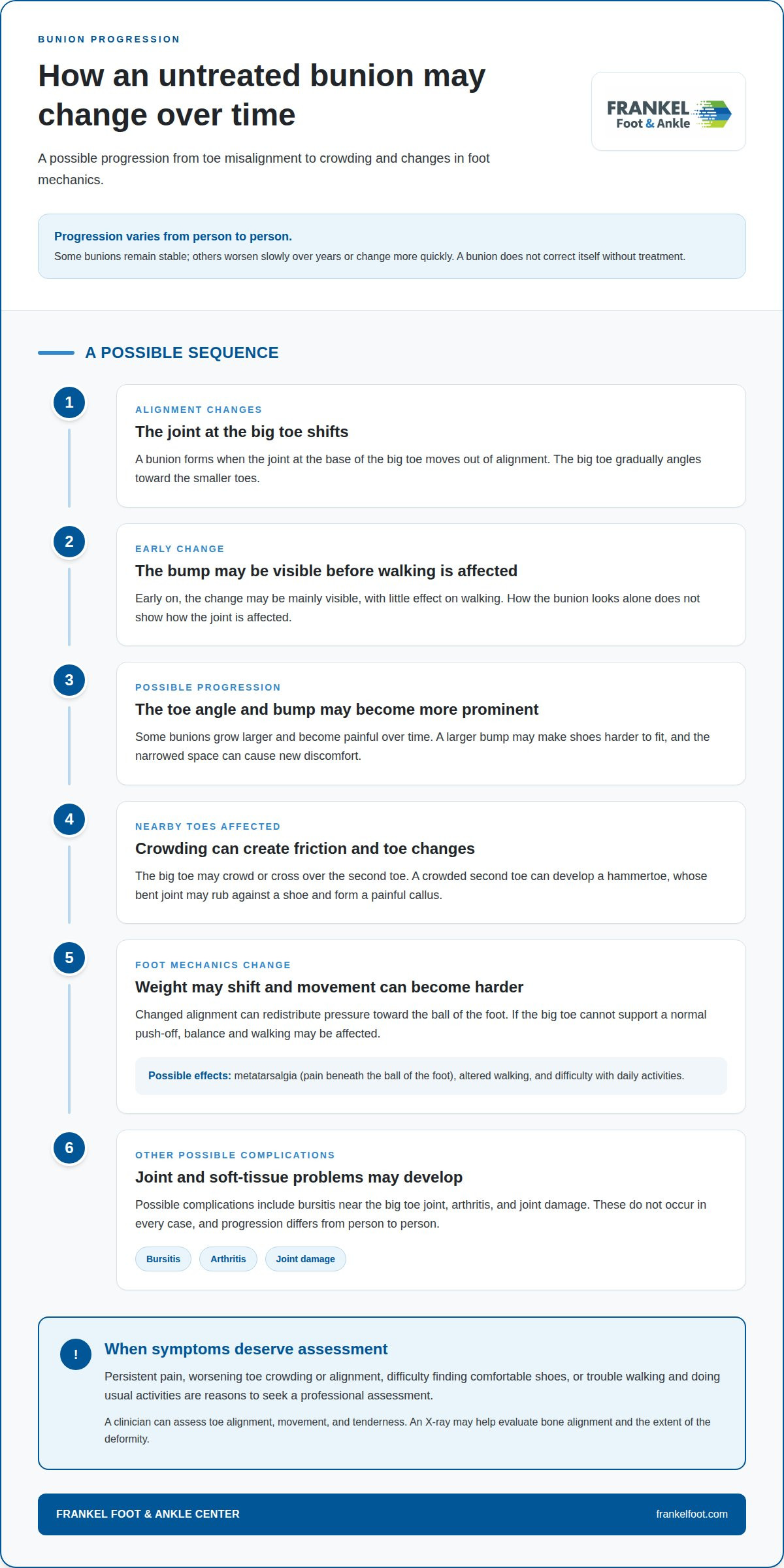
A bunion forms when the joint at the base of the big toe shifts out of alignment. The toe gradually angles toward the smaller toes, creating a deformity that can range from mild to severe. It doesn’t correct itself without treatment.
Early on, the change may be mainly visible, with little effect on walking. Some bunions remain stable, while others grow larger and become painful over time. Progression varies: a bunion may worsen slowly over years or change more quickly, so appearance alone doesn’t show how the joint is affected.
As the big toe moves toward neighboring toes, the space between them narrows. Crowding can put pressure on the second toe and change how the foot bears weight. A larger bump can also make shoes harder to fit. These changes may cause new discomfort even if the bunion began as a mild deformity.
Without treatment, the altered joint position can affect foot mechanics. Pressure may shift toward the ball of the foot, and neighboring toes can develop alignment problems. Arthritis and joint damage are possible consequences of progression, but they don’t occur in every case.
Wide, comfortable footwear and orthotics can help manage symptoms, but they don’t correct the underlying alignment. An assessment considers pain, toe position, joint movement, and effects on daily activities. Severe deformity or persistent pain may prompt a discussion of surgical options and whether a corrective procedure fits your needs.
If the toe’s alignment or comfort is changing, an evaluation can clarify the progression and bunion treatment options.
Complications of untreated bunions
As a bunion progresses, pressure can spread beyond the prominent joint. The big toe may crowd or cross over the second toe, creating friction inside footwear and affecting the neighboring toe’s position.
A crowded second toe can develop a hammertoe, with a bent joint that rubs against the top of a shoe. Repeated rubbing may cause a painful callus. Other possible complications include bursitis near the big toe joint, arthritis, and metatarsalgia, or pain beneath the ball of the foot. These problems can occur together, making comfortable shoes and walking harder.
Changed alignment can also redistribute pressure across the foot. If the big toe cannot support normal push-off, balance and walking may be affected, and daily activities can become more difficult. Secondary complications may develop over time, although progression differs from person to person.
Long-standing joint changes matter because arthritis-related damage may be irreversible. Added toe deformities or forefoot pain can also make treatment more complex. Delaying care may increase the complexity of bunion surgery and lengthen recovery, particularly when additional problems need attention.
Seek an assessment if toe crowding, persistent pain, or difficulty walking is worsening. Evaluation can identify alignment changes and help determine whether to discuss symptom management or surgery. Bunion surgery is generally considered when significant pain continues despite conservative care or interferes with daily activities, not on the basis of appearance alone.
If bunion symptoms are limiting walking or daily activities, explore bunion surgery options.
Frankel Foot & Ankle Center: Bunion surgery scarless painless
Frankel Foot & Ankle Center offers minimally invasive bunion surgery, also described as no-pain bunion correction, for people considering treatment for a painful bunion. If discomfort continues to limit walking, shoe choices, or daily activities, discussing the procedure with the center may be a next step. Surgery isn’t necessary for every bunion; the decision depends on symptoms and their effect on function.
Understanding how bunions can progress and what complications may develop can help you recognize when ongoing symptoms deserve attention. An evaluation can clarify whether bunion surgery is relevant to your concerns and what options may suit your needs.
For help with bunion concerns, contact Frankel Foot & Ankle Center.
Choose a Next Step That Supports Your Mobility
Knowing what happens if you leave a bunion untreated can help you make an informed choice. Your next step can be guided by what matters most to you: comfort, movement, and confidence in daily routines. A bunion alone doesn’t mean you need surgery. Consider whether your symptoms are changing what you can do and what support would help you move forward.
Frankel Foot & Ankle Center provides care for bunion concerns, as well as foot and ankle pain relief, at its Milford, Pennsylvania, Middletown, New York, and Katonah, New York, offices. Your goals and concerns should shape the discussion. An evaluation can help you explore options suited to your situation and decide on a next step.
When you’re ready, reach out to Frankel Foot & Ankle Center. Taking a thoughtful next step is a positive way to support your mobility and well-being.
Frequently Asked Questions
Are bunions only a cosmetic issue?
No. A bunion involves a change in the big toe joint’s alignment, not just a visible bump. For example, the joint may become sore or stiff, and the toe may press against its neighbor. If the change affects shoe comfort or walking, it has a functional impact as well as an effect on appearance.
Bunion Treatment: Can a Bunion Be Fixed Without Surgery?
Non-surgical care can ease symptoms, but it doesn’t remove the bunion or permanently realign the toe. Wider shoes, padding, toe spacers, and orthotics may reduce pressure during daily activities. These approaches may help with comfort, especially when symptoms are mild, but they don’t reverse an established structural deformity.
Can Untreated Bunions Lead to Permanent Damage?
Bunions can contribute to lasting changes, although complications don’t develop in everyone. Ongoing misalignment may damage the big toe joint, and bunion-related osteoarthritis isn’t reversible. Persistent nerve irritation or numbness and changes in nearby toes are also possible. Increasing pain, reduced toe movement, or worsening alignment are reasons to seek an assessment.
Can bunions affect balance and stability?
Yes. The big toe helps the foot push off and maintain balance, so pain or restricted movement can change how you stand or walk. You might shift weight away from the sore joint or feel less steady during a turn. These changes can make routine movement more difficult, particularly when the toe is crowded.
Can bunions cause joint problems later?
Bunions can affect the big toe joint and may contribute to arthritis or degeneration over time. A changed walking pattern can also place extra strain on other areas, including the knees, hips, or lower back. Joint symptoms can have several causes, so persistent pain beyond the foot should be assessed in context.


