


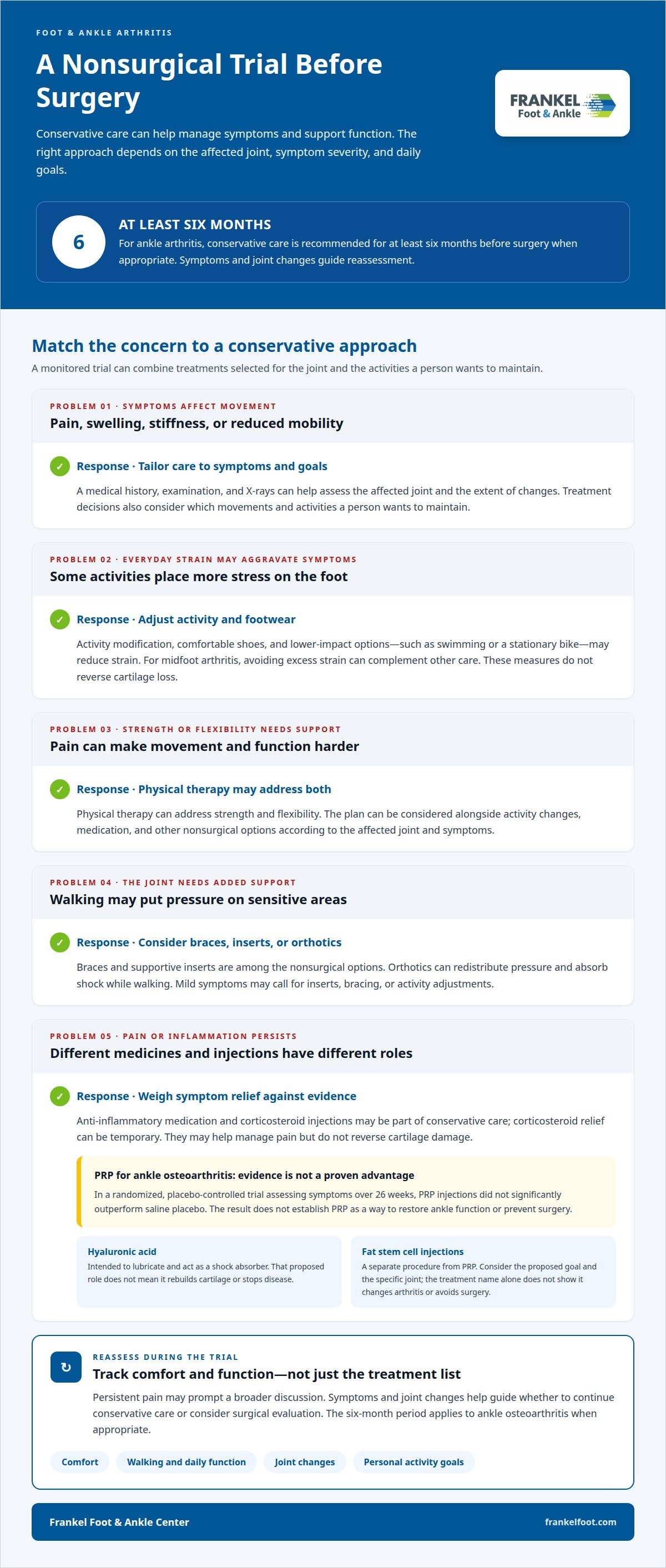
Foot arthritis doesn’t automatically mean surgery. Conservative care, including activity changes, medication, physical therapy, braces, and orthotics, is often considered first. When appropriate, a treatment framework recommends trying conservative management for at least six months before ankle arthritis surgery.
Joint pain, swelling, stiffness, and reduced mobility can all be signs of foot arthritis. Wanting relief without an operation is understandable, but the right approach depends on which joints are affected and how much symptoms interfere with daily activities.
This guide to alternatives to foot surgery for arthritis in Middletown, NY, explains what conservative treatment can involve and when surgery may enter the discussion. It also covers PRP, hyaluronic acid, and fat stem cell injections, including how these options compare with established nonsurgical care.
Key Takeaways
- Learn which clinical findings and imaging help distinguish arthritis in the foot or ankle from other causes of pain.
- Understand how the severity and location of joint changes shape the decision to continue conservative care or consider surgery.
- See what evidence suggests about PRP for ankle arthritis and why injection options should be weighed carefully.
- Compare the roles of hyaluronic acid, PRP, and fat stem cell injections before discussing treatment choices with a foot and ankle professional.
How long should conservative treatment be tried before surgery?
Conservative care can include several treatments selected for the affected joint and symptoms. For ankle arthritis, a treatment framework recommends trying conservative care for at least six months before surgery when appropriate. During this period, people considering alternatives to foot surgery for arthritis in Middletown, NY, can track changes in comfort and function.
Non-Surgical Treatment Options
Nonsurgical treatments can manage pain and support function without an operation. For foot and ankle arthritis, options include activity modification, anti-inflammatory medication, physical therapy, braces, supportive inserts, custom orthotics, and corticosteroid injections. Comfortable shoes and lower-impact activities, such as swimming or using a stationary bike, may also reduce strain. Orthotics can redistribute pressure and absorb shock while walking, while physical therapy can address strength and flexibility.
Matching Treatment to Severity and Goals
Choosing treatment involves considering arthritis severity alongside the movements and activities a person wants to maintain. An evaluation may use medical history, an examination, and X-rays to assess the affected joint. Mild symptoms may call for inserts, bracing, or activity adjustments, while persistent pain may prompt a broader treatment discussion. These factors help tailor alternatives to foot surgery for arthritis in Middletown, NY, to goals such as walking more comfortably or maintaining joint motion.
Conservative Care and Surgical Evaluation
Conservative care is a monitored trial of nonsurgical treatments before deciding whether surgery merits consideration. For ankle osteoarthritis, the six-month period applies when appropriate; symptoms and joint changes guide reassessment. How much do nonsurgical foot arthritis treatments cost in Middletown, NY? Costs depend on the treatment, visits, and other care involved. Does insurance cover orthotics, physical therapy, medications, or injections in New York? Coverage varies by plan and treatment, so review the benefits for each service.
Lifestyle Changes and Weight Management
Lifestyle changes aim to reduce avoidable strain while keeping the foot moving safely. Weight management is one conservative option, though its benefit depends on the person’s circumstances and how much joint stress contributes to symptoms. For midfoot arthritis, options include choosing comfortable shoes, avoiding excess strain, and trying lower-impact activities such as swimming or a stationary bike. These measures may complement orthotics or physical therapy, but they don’t reverse cartilage loss.
Does PRP work for ankle arthritis?
PRP is an injection proposed as a nonsurgical option for ankle osteoarthritis, but trial findings matter. A randomized, placebo-controlled trial assessed PRP symptoms over 26 weeks, according to Frankel Foot & Ankle Center. PRP injections did not significantly outperform saline placebo for ankle osteoarthritis symptoms. This result means PRP shouldn’t be presented as a proven way to restore ankle function or prevent surgery. A treatment discussion should distinguish possible symptom relief from evidence of benefit.
Arthritis-related deformity and symptoms depend partly on which joints are affected. Common sites include the ankle, three foot joints, and the joint at the base of the great toe. Osteoarthritis, inflammation, or trauma can contribute to joint damage and limited motion. Diagnosis and imaging help show the location and extent of changes, which can inform whether preserving movement or stabilizing a painful joint is a priority.
For advanced ankle arthritis, surgical options may include fusion or replacement. Fusion joins the ankle joint, while replacement uses an implant. Big toe fusion may be considered for advanced arthritis to relieve pain and create a stable toe for push-off. Risks and recovery vary by procedure. Midfoot fusion complications can include nonunion, delayed healing, infection, blood clots, and nerve damage; afterward, a cast is used for about 6 to 10 weeks, with foot-stressing activities avoided for about 2 to 3 weeks.
These tradeoffs make an individualized assessment important, especially when symptoms affect walking or daily function. For persistent ankle symptoms, ankle pain relief can be part of the conversation about available care and next steps.
Hyaluronic acid, PRP, and fat stem cell injections
Injection options have different intended roles and evidence to consider. Comparing them with medication and corticosteroid injections can clarify what each approach may address.
Hyaluronic Acid Injections
Hyaluronic acid injections are intended to act as a lubricant and shock absorber within a joint. For people with cartilage damage, stiffness, or swelling, that proposed role may sound like a way to support movement. Lubrication is not the same as cartilage repair: this intended function doesn’t mean an injection rebuilds damaged cartilage, stops the disease, or restores range of motion. The affected joint and treatment goal matter.
PRP and Fat Stem Cell Injections
PRP and fat stem cell injections are separate procedures, not interchangeable names for the same treatment. PRP has been studied for ankle osteoarthritis, but the trial discussed earlier found no significant advantage over saline for symptoms. For fat stem cell injections, consider the proposed goal, such as symptom relief or cartilage repair, and how it relates to the specific joint. An injection’s name alone doesn’t show that it changes arthritis or avoids surgery.
Anti-inflammatory medications and injections address symptoms in different ways. Oral or topical anti-inflammatory drugs may be part of conservative care, while corticosteroid injections can reduce inflammation and pain in arthritic joints. Cortisone is commonly injected for arthritis, and relief can be temporary. These options may help manage pain, but they don’t reverse cartilage damage. A clinician considers the affected joint, symptoms, and treatment goals when discussing medication or an injection.
For persistent foot or ankle symptoms, discuss foot pain relief as part of the next treatment conversation.
Frankel Foot & Ankle Center: Bunion surgery scarless painless
Frankel Foot & Ankle Center provides foot and ankle pain relief for people seeking care for persistent symptoms in Middletown, NY, Katonah, NY, and Milford, PA. If arthritis affects walking or daily activities, an evaluation can help clarify the source of pain and appropriate care options. For bunion concerns, the center also offers minimally invasive bunion surgery, described as no-pain bunion correction.
The injection approaches discussed above aren’t interchangeable, and PRP trial findings don’t establish it as a reliable alternative to surgery for ankle arthritis. A focused discussion of your symptoms and treatment priorities can help clarify the next step. Turn to Frankel Foot & Ankle Center when ongoing foot or ankle pain needs professional attention in Middletown, NY, Katonah, NY, or Milford, PA.
Contact Frankel Foot & Ankle Center to discuss your foot or ankle concerns.
Choose a Next Step That Fits Your Goals
Choosing among alternatives to foot surgery for arthritis in Middletown, NY, is easier when the decision reflects what you want your foot or ankle to do in daily life. Relief matters, but so do the activities, comfort, and movement you hope to retain.
A clinical discussion can define what progress would look like, whether that means walking through errands with less discomfort or returning to a valued routine. Clear goals keep treatment focused on the changes that matter most to you. Your needs and priorities deserve attention as you consider the path ahead.
To explore your next step, connect with Frankel Foot & Ankle Center. You can move forward with a clearer sense of care options and the goals you want them to support.
Frequently Asked Questions
What are the signs of foot arthritis?
Foot arthritis commonly causes joint pain, swelling, stiffness, and reduced mobility. The location and pattern can offer useful clues: rheumatoid arthritis can affect corresponding joints in both feet with similar symptoms, while post-traumatic arthritis can develop after an injury such as a fracture or severe sprain. Persistent pain that limits walking or daily activities deserves assessment.
How is arthritis treated?
Arthritis treatment aims to manage pain and improve function because foot and ankle arthritis is chronic. Assessment can include medical history, a physical examination, and X-rays of the affected joint. These findings help identify the joint involved and how symptoms affect movement. Treatment can then focus on practical goals, such as making walking or standing more comfortable.
What non-surgical treatments are available for foot arthritis?
Nonsurgical care can combine measures that ease joint strain with treatments that address pain and function. For example, a clinician may consider medication or an injection alongside supportive footwear or physical therapy. The mix depends on the affected joint, symptoms, and daily demands. These approaches manage arthritis rather than remove the underlying disease, so progress is measured by comfort and function.
Can orthotics, supportive shoes, or braces relieve foot arthritis pain?
Yes, orthotics, supportive inserts, comfortable shoes, and braces can help reduce strain and redistribute pressure. Orthotics can absorb shock during walking, while bracing can shift weight away from damaged ankle cartilage. For example, someone with painful ankle arthritis may benefit from support that reduces loading on the affected joint. The right option depends on the joint and the person’s walking needs.
Do physical therapy and exercises help foot arthritis, and which are recommended?
Physical therapy can help restore strength and flexibility affected by foot or ankle arthritis. Therapy for ankle arthritis commonly targets supporting muscles, flexibility, and gait mechanics. For midfoot arthritis, lower-impact activities such as swimming or using a stationary bike, along with strengthening exercises, can reduce excess strain. The focus is on maintaining useful movement and function without aggravating symptoms.


