


A second opinion for ankle surgery in Katonah, NY, isn’t usually required before surgery, except when emergency surgery is needed to save a life. Still, another medical perspective can help you better understand the diagnosis and recommended plan before deciding.
If you’re weighing surgery, it’s reasonable to want a clear explanation of why it’s recommended and what alternatives may be appropriate. This article explains when a second opinion may help, how to compare different diagnoses or treatment recommendations, and what records and questions can support a productive appointment. You’ll also learn how a foot and ankle specialist can assess your symptoms and discuss possible next steps.
Key Takeaways
- A second opinion isn’t generally required before surgery, but it may help when you’re unsure about the diagnosis or proposed plan.
- Compare recommendations by looking at the diagnosis, treatment alternatives, and expected outcomes, not just the procedures suggested.
- Bring relevant medical records and imaging so the specialist can assess your history and current ankle concerns.
- Insurance coverage and record-request timelines can vary, so learn what your plan requires and allow time for records to arrive.
Should You Always Get a Second Opinion Before Surgery?
No. A second opinion isn’t required before surgery, except when life-saving emergency surgery is needed. When seeking a second opinion for ankle surgery in Katonah, NY at Frankel Foot & Ankle Center, another evaluation can help clarify the diagnosis and the reasons for the proposed procedure.
Reasons to Seek a Second Opinion
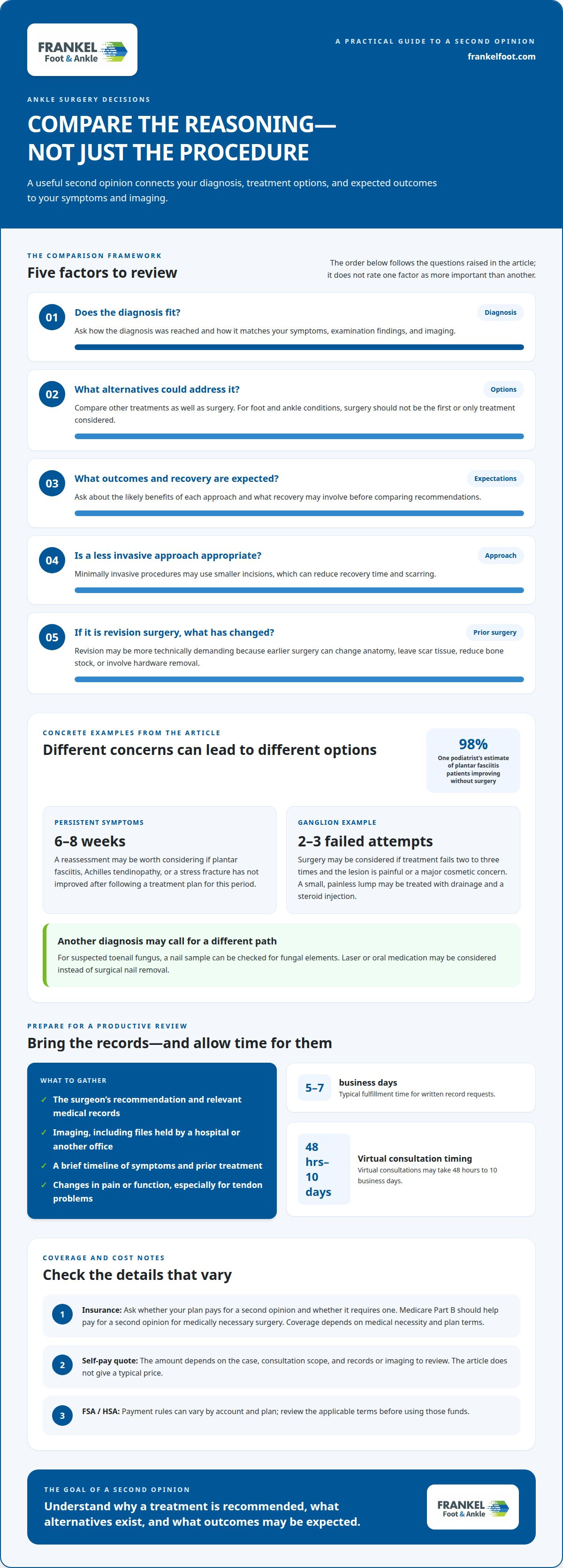
Consider another opinion if you’re uncertain about an ankle diagnosis, the proposed operation, or whether the underlying cause of pain has been identified. A reassessment can also help when plantar fasciitis, Achilles tendinopathy, or a stress fracture hasn’t improved after 6-8 weeks of following a treatment plan. You aren’t obligated to tell your first surgeon that you’re seeking another perspective.
For foot and ankle conditions, surgery should not be the first or only treatment considered. Revision surgery may be discussed when symptoms persist or return after an operation, or when a previous procedure needs correction. Revision can be more technically demanding because surgery may change anatomy, leave scar tissue, reduce bone stock, or involve hardware removal.
Preparing for an Ankle Surgery Opinion
To provide a second opinion for ankle surgery in Katonah, NY, a specialist at Frankel Foot & Ankle Center reviews your records, imaging, symptoms, and proposed procedure, then evaluates how the findings relate to your diagnosis. A virtual appointment can allow you to discuss those materials and clarify next steps; virtual consultations may take 48 hours to 10 business days.
Ask how the diagnosis was reached, what other treatments might address the problem, and what outcomes and recovery to expect. You can also ask whether a less invasive approach is appropriate. Minimally invasive procedures may use smaller incisions, which can reduce recovery time and scarring. These questions help you compare recommendations and make a more informed decision.
How can a specialist help you understand two different diagnoses or treatment plans?
A foot and ankle specialist compares each diagnosis with your symptoms, examination findings, and imaging. This review can clarify why doctors recommend different approaches and what might change the treatment decision.
Resolving Conflicting Treatment Plans
Ask the physician to explain the reasoning behind each diagnosis and how the findings support it. If two doctors disagree, a third opinion may help clarify the diagnosis, alternatives, and expected outcomes. A specialist can also help distinguish differing interpretations from a genuine disagreement about treatment.
For plantar fasciitis, conservative care is often considered before foot surgery. One podiatrist estimates that 98% of patients improve without surgery and describes regularly performing at least 10 treatments before recommending an operation.
Choosing Treatment After Another Opinion
Treatment decisions should reflect the diagnosis, symptoms, and likely benefits of each approach. For a ganglion, a small, painless lump may be treated by draining its fluid and injecting a steroid. Surgery may be considered if treatment fails two to three times and the lesion is painful or a major cosmetic concern.
For suspected toenail fungus, a nail sample can be examined by a pathologist for fungal elements. Laser or oral medication may be considered instead of surgical nail removal. Learn about laser treatment for fungal toenails as one treatment option.
Insurance, records, and appointment logistics
Before scheduling a consultation, ask your insurer whether its policy pays for a second opinion and whether it requires one. Medicare Part B should help pay for a second opinion for medically necessary surgery. Coverage can depend on medical necessity and plan terms, so distinguish consultation benefits from coverage for a later procedure.
For a self-pay second opinion on ankle surgery near Katonah, the amount depends on the case and is provided after a quote request. The consultation’s scope and the records or imaging to review can affect the quote. Avoid assuming a typical cost based on another patient’s experience.
Gather the surgeon’s recommendation, relevant medical records, imaging, and a brief timeline of symptoms before the appointment. Written record requests are typically fulfilled within 5-7 business days. If imaging is held by a hospital or another office, arrange for those files to reach the consulting podiatrist too.
For revision surgery, insurance almost always covers the procedure when it’s medically necessary because symptoms persist or recur. A second opinion can clarify why revision is being considered, what outcomes may be expected, and whether continued therapy or another approach is an option. For tendon problems, bring details of prior treatment and changes in pain or function.
FSA and HSA payment rules can vary by account and plan; review the applicable terms before using those funds. The office can help explain the consultation process, while your insurer determines your benefits. To discuss ankle pain relief, take the next step with the records and questions relevant to your appointment.
Frankel Foot & Ankle Center: Bunion surgery scarless painless
The Frankel Foot & Ankle Center may be a helpful next step if ankle or foot pain is part of your decision about surgery. The practice offers ankle and foot pain relief for concerns that can affect movement and daily activities. For bunions, it provides minimally invasive bunion surgery, also described as “no-pain bunion correction.” These services may be relevant when seeking care for pain or considering bunion treatment, but they don’t replace a careful review of your diagnosis and surgical options.
If you’re ready to discuss your foot or ankle concerns, contact Frankel Foot & Ankle Center.
Move Forward With a Clearer Surgical Decision
A second opinion for ankle surgery in Katonah, NY, can help you connect the proposed procedure to what matters in your daily life. Consider what you want to understand before deciding, such as how treatment aligns with your mobility goals, work, or preferred activities. A useful discussion should help you explain the options in your own words and identify any concerns that still need attention.
You don’t need to rush a decision simply because surgery has been discussed. Take the next step when you’re ready to talk through your foot or ankle concerns with a professional. Contact Frankel Foot & Ankle Center to begin that conversation. A thoughtful, informed decision can help you move forward with greater confidence.
Frequently Asked Questions
Does Insurance Pay for a Second Opinion?
Many insurance policies pay for a second opinion, and some require one before surgery. Medicare Part B should help pay when the surgery is medically necessary. Coverage for a consultation may differ from coverage for the surgery itself, so review your plan’s terms and ask your insurer how referrals, in-network clinicians, and authorization affect your benefits.
What will my current doctor think of me if I get a second opinion?
Seeking another medical perspective is a reasonable way to make an informed decision about your care. You’re not obligated to tell your original surgeon that you’re getting another opinion. If you choose to discuss it, you can explain that you want to understand the diagnosis and options more clearly, not criticize the care you’ve received.
Does my original surgeon need to be involved?
No, you can seek another opinion or transfer care without involving your original surgeon. A new specialist may still need relevant records or imaging to understand your case. You can decide whether to share the second opinion’s findings with your original surgeon, particularly if you want the clinicians to coordinate your ongoing care.
How does a specialist assess whether they’re the right provider for a second opinion?
Look for a clinician whose training and practice focus on foot and ankle conditions, including surgical and nonsurgical care. Ask whether they can explain the reasoning behind the diagnosis, discuss alternatives, and address your specific ankle concern. A clear explanation of what the available findings support can help you judge whether the consultation meets your needs.
How long does it take to schedule an ankle surgery second opinion near Katonah
In-person second-opinion consultations typically occur on the same day. Virtual consultations may take 48 hours to 10 business days.


