


A smoother recovery starts before you leave for surgery. To prepare for foot surgery in Middletown, NY, bring your identification, insurance information, medication list, and relevant medical records; wear loose clothing and arrange a ride home. After day surgery, you shouldn’t drive for at least 24 hours, and it’s helpful to have someone available to assist you for the first 48 hours.
It’s understandable to focus on what to pack while also wondering how you’ll manage at home. Preparing ahead can make the first days less stressful and help you follow your recovery instructions comfortably.
This guide explains what to bring, how to plan transportation and caregiving, and how to set up for recovery with food, ice, elevation, and prescribed pain medicine. It also covers what to bring to a podiatrist consultation, so you can discuss your concerns and understand the treatment plan before surgery.
Key Takeaways
- Plan work leave and household help around your procedure and the activities you may need to manage during recovery.
- Bring relevant medical records, imaging, a medication list, and written questions to your podiatrist consultation.
- Prepare the mobility aids your care team recommends and a supportive, non-slip shoe for your unoperated foot.
- Set up a recovery area where you can elevate your foot, use ice, and take pain medicine as prescribed.
Arranging caregiving, transportation, and work leave
Arrange a ride, home support, and time away from work before the procedure. Planning these practical details can help you focus on following your doctor’s recovery instructions.
-
Planning Transportation and Family Waiting
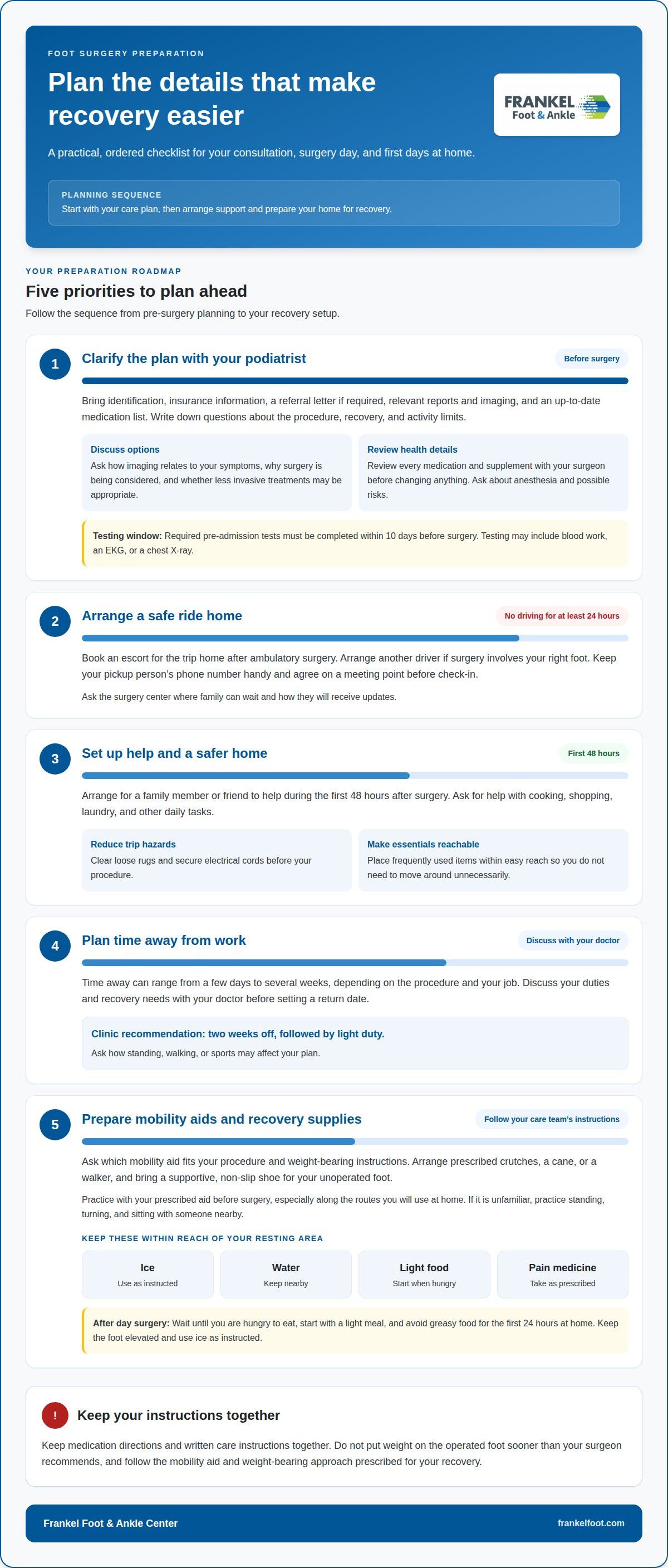
Book an escort to take you home after ambulatory surgery, and arrange another driver if surgery involves your right foot. Patients having day surgery shouldn’t drive for at least 24 hours afterward. Ask the surgery center where family can wait and how they’ll receive updates. Keep your pickup person’s phone number handy, and agree on a meeting point before check-in.
-
Preparing the Home and Arranging Help
Arrange for a family member or friend to help during the first 48 hours after surgery. Ask them to assist with cooking, shopping, laundry, and other daily tasks. Before your procedure, clear loose rugs and secure electrical cords to reduce tripping hazards. Set up essentials within easy reach, so you don’t need to move around unnecessarily while recovering.
-
Organizing Work Leave and Recovery Supplies
Discuss your job duties and recovery needs with your doctor before setting a return date. Time away can range from a few days to several weeks, depending on the procedure and your job. The clinic recommends two weeks off, followed by light duty. Ask how standing, walking, or sports may affect your plan. Arrange any prescribed mobility aids, such as crutches, a cane, or a walker, and bring a supportive, non-slip shoe for your unoperated foot. Your specialist can tailor the discussion to your procedure and conditions such as arthritis.
Consulting a podiatrist before surgery
When learning how to prepare for foot surgery in Middletown, NY, start by using your initial podiatry visit to clarify the diagnosis, treatment options, and preparation plan.
- Bring identification, insurance information, a referral letter if required, relevant reports and imaging, and an up-to-date medication list. Write down questions about the procedure, recovery, and activity limits. This information helps the physician understand your health history and address your concerns during the appointment.
- Ask how imaging relates to your symptoms and whether surgery is appropriate. For foot or ankle conditions that are not emergencies or severe, podiatrists usually consider less invasive treatments first. Depending on the condition, options may include rest, medication, injections, or physical or occupational therapy. Ask why surgery is being considered and what it involves, including for ankle surgery.
- Review every medication and supplement with your surgeon before changing anything. Some may need temporary adjustments. Required pre-admission tests must be completed within 10 days before surgery. Testing may include blood work, an EKG, or a chest X-ray, particularly for older patients or those with existing conditions. Discuss anesthesia and risks such as bleeding, infection, stiffness, or nerve damage.
- Ask the podiatrist to explain the recommended plan, alternatives, and preoperative instructions in clear terms. If an orthopedic physician is also involved, clarify who will coordinate your care. As you consider how to prepare for foot surgery in Middletown, NY, bring questions about persistent ankle symptoms and ankle pain relief to the discussion.
What mobility aids and supplies are needed after foot surgery?
- Ask your surgeon which mobility aid fits your procedure and weight-bearing instructions. MedlinePlus advises bringing crutches, a cane, or a walker to surgery. The right choice depends on how you can move safely while protecting the operated foot. Don’t put weight on it sooner than your surgeon recommends.
- Practice with your prescribed aid before surgery, especially along the routes you’ll use at home. Clear walkways and move frequently used items within easy reach. If crutches or a walker are unfamiliar, practice standing up, turning, and sitting with someone nearby.
- Set recovery supplies within reach of your resting area: ice, water, light food, and prescribed pain medicine. After day surgery, wait until you’re hungry to eat, start with a light meal, and avoid greasy food for the first 24 hours at home. Keep the foot elevated and use ice as instructed to help manage swelling and discomfort.
- Keep medication directions and your care team’s written instructions together, so you can follow them without searching while resting. Take pain medicine as prescribed rather than waiting for discomfort to worsen. Use only the mobility aid and weight-bearing approach recommended for your recovery; restrictions depend on the procedure.
For questions about preparing for bunion surgery, get guidance on bunion surgery preparation.
Frankel Foot & Ankle Center: Bunion surgery scarless painless
Frankel Foot & Ankle Center offers minimally invasive bunion surgery, also described as “no-pain bunion correction.” A consultation can help you discuss your symptoms and whether bunion surgery suits your needs. Prepare questions about the procedure, recovery, and home support to make the conversation more focused.
If foot or ankle pain is your main concern, the practice offers foot and ankle pain care. For fungal toenails, it offers laser treatment. These services address different concerns, so the right next step depends on what you want treated.
If you’d like to discuss your foot concerns, contact Frankel Foot & Ankle Center.
Take the Next Step With Confidence
Preparing for a consultation can help you take an active role in decisions about your foot health. Explain what matters most to you, whether that’s returning to daily routines, staying active, or addressing discomfort that affects your mobility. A clear discussion can help you understand your options and decide what suits your needs.
If you’re considering how to prepare for foot surgery in Middletown, NY, bring your questions to a focused conversation with a foot and ankle specialist. Frankel Foot & Ankle Center provides care for bunions and foot or ankle pain, helping patients explore options suited to their concerns.
Reach out to Frankel Foot & Ankle Center to discuss your next step. Thoughtful preparation can help you move forward with greater clarity and confidence.
Frequently Asked Questions
What should you bring with you?
Bring identification, insurance details, and any referral or medical records needed for check-in. Keep reports and imaging from outside facilities together, and include a written list of medications and supplements. A folder makes information easier to find if staff ask about a particular test or medicine. Bring your questions, too, so you can discuss any remaining concerns before the procedure.
How long before I can resume driving?
Plan to wait at least one week before driving, as the clinic advises, and follow your surgeon’s specific instructions. Day-surgery patients shouldn’t drive for at least 24 hours. Restrictions may last from two weeks to three months, depending on the patient and procedure. The operated foot, your recovery, and the demands of driving all affect when you can safely return behind the wheel.
How long do I need time off work after the surgery?
The clinic recommends taking two weeks off, then returning on light duty. Recovery may take a few days to several weeks, depending on the procedure and your job. Work involving prolonged standing, walking, or physical effort may require different planning from a role with lighter duties. Discuss your job demands before setting a return date.
How long will you have to stay in the hospital after surgery?
Many foot surgeries are outpatient procedures, so patients can usually go home the same day if complications don’t occur. If an overnight hospital stay is needed, patients may remain for one or more nights. The procedure, recovery, and any complications affect the length of stay. Ask whether your planned surgery is outpatient and what might change that plan.
What are the risks associated with surgery?
Risks include reactions to anesthesia, bleeding, infection, stiffness, and nerve damage. Potential concerns depend on the procedure and your health history. Before surgery, discuss your medications, existing conditions, and anesthesia plan with your surgeon. Ask which risks are most relevant to your operation and what symptoms after surgery should prompt you to seek medical attention.


