


What if the corrective procedure you've been avoiding out of fear could be performed through an incision no larger than a grain of rice? Approximately 23% of adults in the U.S. live with the daily discomfort of hallux valgus, yet many suffer in silence to avoid the traditional "horror stories" of invasive operations. You've likely spent years managing chronic pain while walking or feeling embarrassed by the appearance of your feet, perhaps believing that bunion surgery would inevitably lead to months of immobility and significant scarring.
We understand that your goal is a return to a vibrant, active lifestyle without being sidelined by a long recovery. You deserve a solution that bridges the gap from debilitating pain to effortless movement. In this guide, you'll discover how advanced, scarless surgical techniques in Middletown allow for a more comfortable experience and a faster return to your daily life. We'll examine the precision of modern hardware and the shift toward outpatient care that helps you get back into normal shoes sooner than you ever thought possible.
Key Takeaways
- Identify the specific clinical indicators that signal when a bunion has progressed from a minor nuisance to a condition requiring surgical intervention.
- Explore the evolution of bunion surgery from traditional 5cm incisions to modern 3mm micro-incisions that prioritize both functional correction and aesthetic results.
- Compare the recovery benefits of local anesthetic blocks and specialized instrumentation against the more intensive requirements of conventional procedures.
- Follow a step-by-step recovery roadmap from the day of your procedure in Middletown to your first weeks of restored mobility.
- Evaluate the importance of seeking a dedicated specialist who combines advanced surgical techniques with a patient-centered, compassionate philosophy.
Understanding Bunion Surgery: When Conservative Care Isn't Enough
Hallux valgus, commonly known as a bunion, is far more than a cosmetic protrusion on the side of the foot. It's a complex structural deformity where the first metatarsal bone rotates outward while the big toe leans inward. This misalignment is progressive. Over time, the joint capsule stretches and the tendons pull unevenly, causing the "bump" to become more pronounced and painful. For many patients, Understanding Bunions begins with recognizing that the condition won't resolve on its own. It's a mechanical issue that requires a mechanical solution.
Patients often spend years cycling through conservative treatments. You might've tried custom orthotics, silicone toe spacers, or transitioned exclusively to wide-toe-box shoes. While these methods provide temporary relief by reducing pressure, they don't address the underlying bony malalignment. When pain persists despite these efforts, it's a clear indication that bunion surgery has moved from an option to a necessity. Delaying intervention can lead to several secondary complications, such as:
- The development of painful hammer toes as the second toe is forced upward.
- The onset of localized arthritis within the joint due to improper wear.
- Chronic bursitis or inflammation of the fluid-filled sac near the joint.
- A permanent change in your walking mechanics that affects other joints.
The Physical and Emotional Impact of Bunions
The toll of a bunion extends beyond the foot itself. Chronic pain often forces a shift in your gait, which can create a chain reaction of discomfort in the knees, hips, and lower back. Beyond the physical, there's a significant emotional weight. Many individuals feel a sense of embarrassment regarding the appearance of their feet, leading them to avoid sandals or social situations where footwear is removed. The "tipping point" for Middletown residents often occurs when the psychological burden of restricted footwear and the physical reality of constant pain converge, making professional intervention the only logical path forward.
Evaluating Your Candidacy for Surgery
Determining if you're ready for bunion surgery involves a comprehensive diagnostic approach. At the Frankel Foot & Ankle Center, we utilize weight-bearing X-rays to measure the hallux valgus angle and perform a detailed gait analysis to see how the deformity affects your movement. It's a common misconception that age is the primary barrier to correction. In reality, we prioritize overall bone health and your personal activity goals. A specialized consultation allows us to map out a precise surgical plan tailored to your unique anatomy, ensuring the best possible functional and aesthetic outcome.
The Evolution of Scarless and Minimally Invasive Bunion Removal
Surgical methodology has undergone a paradigm shift. While traditional open procedures were once the only standard for Bunion Surgery Options, modern advancements now prioritize minimal disruption to the foot’s delicate anatomy. The term "scarless" doesn't imply that the procedure is magic; rather, it refers to a sophisticated technique that utilizes micro-incisions to access the underlying bone. By moving away from the extensive, multi-inch cuts of the past, we can achieve comprehensive correction with significantly less trauma to the surrounding skin and muscle.
This evolution is driven by specialized technology. Instead of large surgical saws, we utilize high-torque, low-speed burrs designed to reshape and realign the bone through tiny "portals." Throughout the procedure, real-time imaging guidance allows for extreme precision without the need to "open" the foot for visibility. This level of accuracy ensures that the structural realignment is permanent and stable. To enhance the patient experience, we often utilize long-acting local anesthetic blocks. This creates a virtually painless environment during and immediately after the procedure, reducing the reliance on heavy narcotic medications during the early stages of healing.
The Science of Micro-Incision Surgery
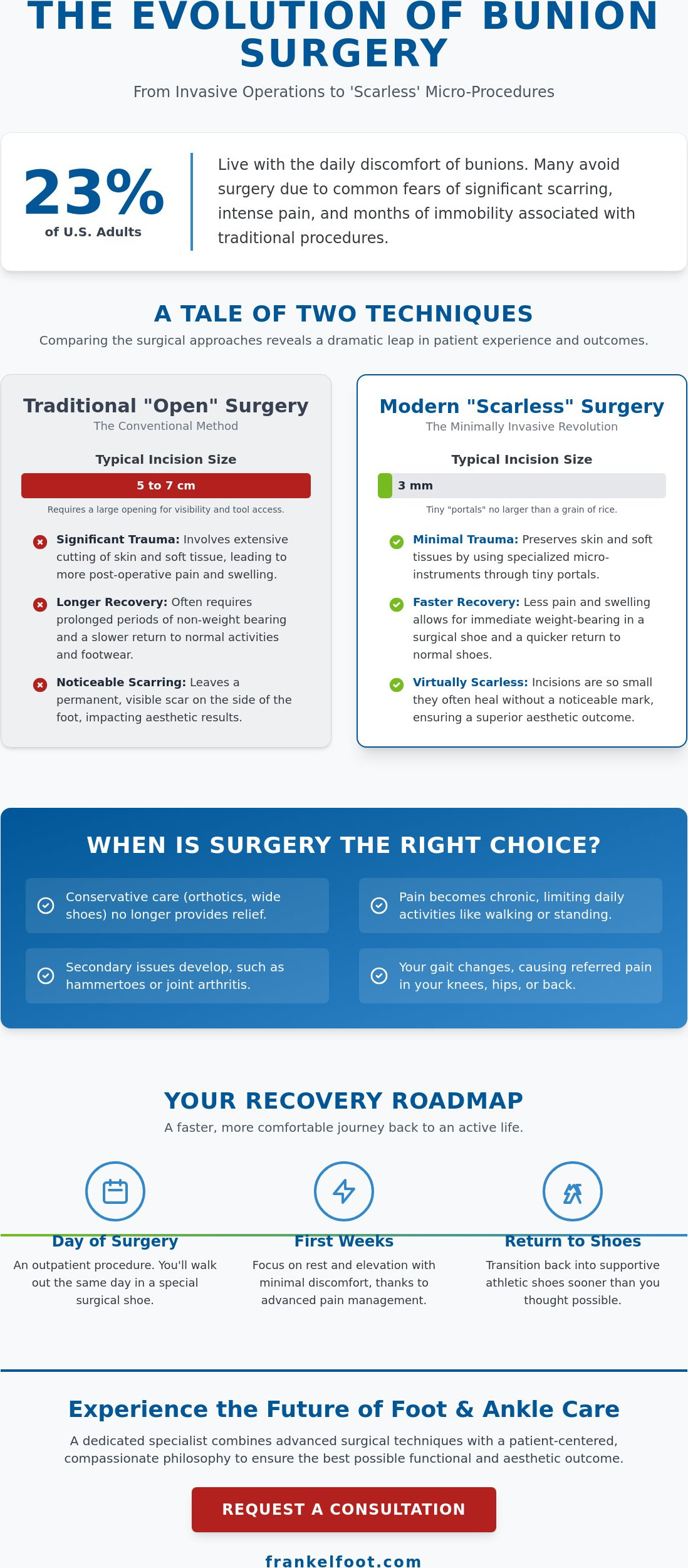
The core difference between traditional and modern methods lies in the size of the entry point. Traditional bunion surgery typically requires an incision of 5 to 7 centimeters; however, modern scarless techniques utilize a portal as small as 3 millimeters. These tiny openings are just large enough for specialized instruments to pass through the skin. By working through these micro-incisions, we preserve the vital soft tissue structures and the local blood supply. Maintaining this biological integrity is essential because it facilitates a faster cellular response and accelerates the overall healing timeline. If you are curious about how these techniques might apply to your specific case, consulting with a specialist can provide the clarity you need.
Why 'Scarless' Is More Than Just Aesthetic
While the absence of a large, visible scar is a significant benefit for many patients, the advantages of this approach are primarily clinical. Smaller entry points naturally carry a reduced risk of post-operative infection compared to large, open wounds. Additionally, because the surgical instruments bypass the joint capsule rather than cutting through it, patients experience far less post-operative stiffness and a more natural range of motion. Scarless surgery is a technique that prioritizes internal structural integrity and external skin preservation. This methodology ensures that the foot not only looks better but also functions with the strength and flexibility required for an active life.
Just as a plastic surgeon Scottsdale AZ utilizes advanced techniques to minimize scarring and maximize aesthetic appeal in cosmetic surgery, modern podiatric methods apply these same principles to foot reconstruction, ensuring that functional health and visual results go hand-in-hand.
Traditional vs. Modern Bunion Procedures: A Comparative Analysis
Traditional bunion surgery often conjures images of significant trauma and prolonged recovery. For decades, the standard approach required an incision of 5 to 7 centimeters, which typically necessitated general anesthesia and a heavy reliance on narcotics for post-operative pain management. In contrast, modern scarless techniques utilize a 3-millimeter micro-portal. This shift isn't just about the size of the mark left behind; it's about a fundamental change in how we manage stability and discomfort. While older methods frequently relied on external pins that were prone to infection, modern procedures utilize advanced internal fixation. These beveled screws or titanium plates lie flush with the bone, providing immediate structural integrity that allows for a "walk-away" experience.
The differences in surgical philosophy are stark:
- Incision Size: 5-7cm (Traditional) vs. 3mm (Modern).
- Anesthesia: General anesthesia (Traditional) vs. Local blocks with NSAIDs (Modern).
- Hardware: Protruding pins (Traditional) vs. Flush internal fixation (Modern).
- Mobility: Weeks on crutches (Traditional) vs. Immediate weight-bearing (Modern).
Comparing Downtime and Lifestyle Disruption
Traditional recovery often involves a 6-week non-weight-bearing hurdle, leaving patients dependent on crutches or knee scooters. This is a significant disruption for an active Middletown resident managing a career or family responsibilities. Modern Bunion Surgery Recovery focuses on immediate mobility. Most patients begin walking in a specialized post-operative shoe on the same day as their procedure. This early weight-bearing prevents muscle atrophy and maintains circulation, allowing you to return to your routine with minimal interference. It's a supportive approach that respects your time and your need for independence.
Long-Term Outcomes and Recurrence Rates
A common myth suggests that minimally invasive methods are less permanent than "open" surgery. This misconception stems from older techniques that simply "shaved the bump" without correcting the underlying bone angle. Dr. Frankel’s approach prioritizes a complete structural realignment. By rotating the metatarsal back into its proper biological position, we address the root cause of the deformity. This ensures lasting results and drastically reduces recurrence rates. Because we avoid the extensive soft tissue trauma of traditional bunion surgery, patients don't have to contend with the thick scar tissue that often causes post-operative stiffness and long-term discomfort.
Your Recovery Timeline: From Surgery to Walking in Middletown
The journey toward pain-free movement begins the moment your procedure concludes. At our Middletown facility, the experience is streamlined to prioritize your comfort and independence. Most patients are pleasantly surprised to find they can bear weight immediately after bunion surgery, provided they use the specialized post-operative shoe. This immediate mobility is a hallmark of modern care, contrasting sharply with the weeks of total immobilization required by older surgical methods. You'll leave our center with a clear, step-by-step plan for the days ahead, moving from the initial healing phase to a full return to activity.
Immediate Post-Op: The First 48 Hours
The initial two days are focused on controlling the body’s natural inflammatory response. We emphasize a protocol of elevation and intermittent icing to minimize swelling around the micro-incisions. Because we utilize advanced local anesthetic blocks during the procedure, the intense pain often associated with traditional operations is significantly mitigated. Most individuals report that their discomfort is manageable with basic over-the-counter anti-inflammatories. You'll be encouraged to take short, purposeful walks in your surgical shoe to maintain circulation and promote the early stages of bone healing.
Milestones in Your Healing Journey
As you progress into the second and third weeks, your focus shifts from protection to restoration. The 2026 recovery standard for minimally invasive correction is one where patients return to sneakers within 4 weeks. This accelerated timeline is possible because the internal fixation we use provides immediate stability to the realigned bone. During this phase, we may introduce gentle physical therapy exercises to ensure your big toe joint retains its full range of motion. This prevents the scar-tissue stiffness that often plagues traditional "open" surgical outcomes.
Returning to daily activities happens in stages. If your procedure was on the left foot and you drive an automatic vehicle, you might return to the driver's seat within a week or two. For the right foot, we typically wait until you have the strength and reaction time to move between pedals safely. By the second month, most patients are ready to re-engage with high-impact activities like jogging or return to wearing fashion footwear for social events. If you're ready to start your journey toward a faster recovery, schedule your consultation to discuss a personalized treatment plan.
Choosing the Right Surgeon: The Frankel Foot & Ankle Center Advantage
Dr. Marc Frankel’s philosophy is rooted in the belief that high-level surgical precision should never exist in a vacuum, separate from compassionate, patient-centered care. While a general orthopedist manages a wide range of musculoskeletal issues, a dedicated foot and ankle specialist focuses exclusively on the complex biomechanics of the lower extremity. This specialization is critical when performing modern bunion surgery, as the technique requires a refined mastery of micro-instrumentation and real-time imaging. We take great pride in our commitment to the Middletown community, focusing on outcomes that allow our neighbors to return to their lives without the physical or emotional burden of foot deformities. Your initial consultation at the Frankel Foot & Ankle Center is designed to be a thorough, step-by-step evaluation where we prioritize your long-term mobility and comfort.
Similarly, for those in the Brooklyn or Queens area, patients can explore Bunion Surgery and specialized foot care at Local Foot Doc, a practice that also emphasizes advanced, minimally invasive solutions for various foot deformities.
Expertise in Minimally Invasive Techniques
The transition from traditional "open" methods to scarless correction involves a significant technical learning curve. It isn't simply about making a smaller cut; it's about the ability to realign bone and stabilize joints through a tiny portal with absolute accuracy. Our facility utilizes patient-centered technology, ranging from high-resolution digital diagnostics to advanced lasers, to ensure every step of your care is precise. You can Learn more about our Foot and Ankle Pain Relief services to see how our progressive methodology extends beyond surgical intervention to provide comprehensive relief for various conditions.
A Supportive Path to Recovery
Your journey with us is designed to be steady and informative, moving logically from your first call to your final follow-up. We understand that navigating insurance and scheduling can feel overwhelming, so our team works diligently to manage these details for our Middletown residents. We acknowledge that your desire for an aesthetically pleasing, scar-free result is just as valid as your need for functional relief. This balanced approach ensures that your foot not only feels stronger but also looks the way you want it to. If you're ready to move past the pain and reclaim your active lifestyle, Schedule your consultation with Dr. Frankel today to begin your path toward lasting health improvements.
Step Into a Future of Comfort and Mobility
Living with a foot deformity shouldn't be a life sentence of discomfort or embarrassment. We've explored how modern advancements have fundamentally transformed the experience of bunion surgery, moving away from traumatic open procedures toward the precision of scarless correction. By prioritizing internal stability and external skin preservation, you're choosing a path that respects both your time and your desire for a natural appearance. You can look forward to a transition that moves you from daily pain back to the activities you love most with confidence.
At the Frankel Foot & Ankle Center, Dr. Marc Frankel provides the specialized expertise necessary to achieve these lasting results for the Middletown, NY community. Our approach bridges the gap between clinical excellence and the personal, supportive care you deserve. Whether your goal is returning to a running routine or simply walking through the day without a limp, we're here to facilitate that journey. Take the first step toward a more active, pain-free future by connecting with our team. Schedule Your Scarless Bunion Consultation in Middletown today. We're ready to help you rediscover the joy of effortless movement.
Frequently Asked Questions
How painful is bunion surgery really with the modern approach?
Modern techniques are designed to be minimally invasive, which drastically reduces the trauma to your foot. By utilizing long-acting local anesthetic blocks and micro-incisions, most patients report that the discomfort is manageable with basic over-the-counter anti-inflammatories. This approach eliminates the intense post-operative pain often associated with traditional bone-breaking procedures. You'll find the experience is focused on your comfort from the moment you enter our Middletown facility.
Will I have a visible scar after my bunion removal in Middletown?
You shouldn't expect a large, unsightly scar after your procedure. Because our scarless method uses micro-portals only 3 millimeters in length, the skin heals with minimal trace. These tiny entry points are strategically placed to be as inconspicuous as possible. Over time, most patients find that these marks fade entirely. This leaves the foot looking aesthetically pleasing while ensuring the internal structure is fully corrected.
How long will I be off work following scarless bunion surgery?
Your return to work depends largely on your daily responsibilities and the physical demands of your role. Patients with sedentary or office-based positions often return within 3 to 7 days. If your job requires standing or heavy lifting, you might need two to three weeks to ensure proper healing. Because you can walk in a specialized shoe immediately, your independence is preserved throughout the initial recovery phase.
Can both feet be operated on at the same time?
It's possible to perform bunion surgery on both feet during the same session. Many patients choose this option to consolidate their recovery time into a single window. However, we often discuss the benefits of staggering the procedures to ensure you have one "stable" foot for balance and ease of movement. We'll help you decide which path aligns best with your home environment and personal support system.
Does insurance typically cover minimally invasive bunion surgery?
Most insurance providers consider this procedure a medical necessity when chronic pain or walking difficulties are documented. While every plan varies, many cover minimally invasive techniques because they often lead to lower complication rates. We recommend checking with your specific provider regarding their criteria, such as hallux valgus angle measurements. Our team is experienced in helping patients navigate these requirements to ensure they receive the care they need.
What happens if I leave my bunion untreated until 2026?
Leaving a bunion untreated until 2026 or beyond often leads to progressive joint deterioration. As the misalignment worsens, it can cause secondary issues like hammer toes, localized arthritis, and chronic bursitis. These complications can make future surgical correction more complex. Addressing the issue now prevents the permanent structural changes that eventually impact your gait and the health of your knees and hips.
When can I wear high heels or running shoes again after the procedure?
You can typically transition back into supportive sneakers within 4 to 6 weeks. For high-impact activities like running or wearing fashion footwear like high heels, we generally recommend waiting until the two to three month mark. This timeline ensures the bone has achieved full structural stability. We'll monitor your progress during follow-up appointments to give you a specific "all-clear" based on your unique healing rate.
How is Dr. Frankel's 'scarless' method different from what other surgeons offer?
Dr. Frankel’s approach differs through the use of specialized micro-instrumentation and real-time imaging that avoids "opening" the foot. While some surgeons still use traditional saws and large incisions, our method prioritizes soft tissue preservation. This precision results in less swelling and a faster return to daily life. We combine this technical skill with a compassionate, patient-centered philosophy that focuses on your long-term comfort and functional success.


