


Swelling after a workday often reflects fluid pooling after long periods of sitting or standing. Gentle movement, breaks to change position, and raising your feet can help ease mild ankle edema. If swelling follows an injury, elevate the foot and move it gently. Pain, bruising, or difficulty walking calls for medical evaluation. Sudden swelling with chest pain or trouble breathing needs emergency care.
Swelling can be concerning when it changes how your shoes fit or makes each step uncomfortable. This guide explains why feet and ankles may swell after work, what practical measures may help at home, and which symptoms call for prompt or emergency medical attention. It also covers injury-related swelling and common foot and ankle problems, so you can recognize when a professional assessment may be appropriate.
Key Takeaways
- Learn how medication effects, vein problems, and other health conditions can contribute to swelling, not just a long day on your feet.
- Recognize symptoms such as one-sided swelling, warmth, redness, or worsening pain that may need prompt medical attention.
- Understand how injuries and foot or ankle conditions can cause swelling, and which changes make an assessment especially important.
- Explore how Frankel Foot & Ankle Center’s ankle pain relief may help when discomfort or swelling is affecting your daily activities.
Why do I have swollen feet and ankles after a day of work?
After work, fluid can collect in your feet and ankles. Common causes include prolonged standing or sitting, salty meals, vein problems, medicines, and illness.
Common Causes of Ankle Edema
Ankle edema is fluid buildup in the tissues around the ankles and feet. Standing or sitting for long periods can slow blood flow and make swelling more noticeable later in the day. Varicose veins may also contribute when blood pools in the legs. Sprains, fractures, tendon injuries, arthritis, or inflammation can cause swelling in one foot or ankle. The NHS also lists insect bites, blood clots, infection, and heart, liver, or kidney problems as possible causes. Redness or warmth can accompany an injury or infection.
Risk Factors for Swelling
Risk factors are personal circumstances or health conditions that make fluid buildup more likely. Pregnancy, certain medicines, long-lasting heart, liver, or kidney illness, and lymph-node surgery can raise risk. Adults over 65 are also more often affected. Some blood-pressure medicines, anti-inflammatory medicines, steroids, estrogens, diabetes medicines, and medicines for nerve pain may cause swelling. Long trips, hormone changes, and a high-salt diet can contribute. These factors matter because recurring swelling may have more than one cause, making routine wellness evaluations from services like Bewell a practical way to monitor overall health markers.
Diagnosis and Testing
Diagnosis identifies the likely cause by considering symptoms, health history, and examination findings. A clinician may check whether swelling affects one or both legs, whether it pits after pressure, and whether pain, redness, or warmth is present. Testing can help assess possible underlying illness. Evaluation may include urine tests, blood tests, a chest X-ray, or an electrocardiogram. The choice depends on symptoms and suspected causes, such as heart failure or liver or kidney problems. Identifying the cause guides treatment, since swelling can signal a serious condition.
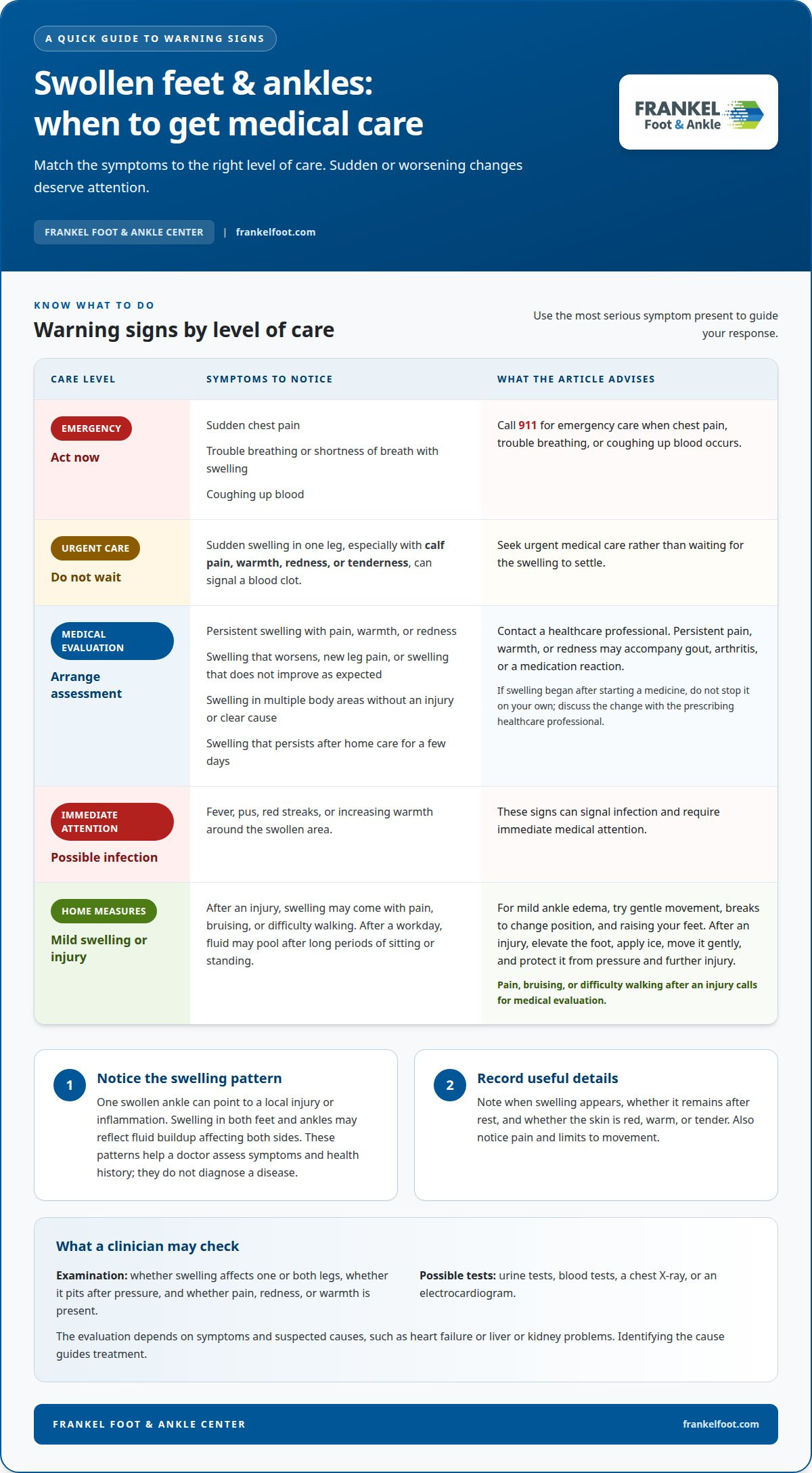
When to seek medical care
Some symptoms need urgent attention, especially when swelling appears suddenly or affects one leg. Match warning signs to the right response rather than relying on home care.
Symptoms Requiring Immediate Care
Emergency symptoms include sudden chest pain, trouble breathing, or coughing up blood. According to Frankel Foot & Ankle Center, people experiencing these symptoms should call 911 for emergency care. A sudden swollen leg with calf pain, warmth, redness, or tenderness can signal a blood clot. Seek urgent medical care rather than waiting for the swelling to settle. Shortness of breath with swollen feet and ankles also needs prompt attention.
Gout, Arthritis, and Medication Reactions
Persistent swelling with pain, warmth, or redness needs medical evaluation. These symptoms may accompany gout, arthritis, or a reaction to medication. A swollen foot that remains painful can have several causes, so a clinician can assess your symptoms and relevant health history. If swelling began after starting a medicine, don’t stop taking it on your own. Contact the prescribing healthcare professional to discuss the change and appropriate next steps.
Warning Signs for Medical Evaluation
Arrange medical evaluation when swelling affects multiple body areas without an injury or clear cause. Contact a healthcare professional if swelling worsens, new leg pain develops, or symptoms fail to improve as expected. Swelling that persists after home care for a few days also warrants discussion with a doctor. Fever, pus, red streaks, or increasing warmth can signal infection and require immediate medical attention. Ongoing ankle discomfort can also be assessed through ankle pain relief.
Injuries and foot or ankle conditions
Swelling in one ankle can point to a local problem, such as an injury or inflammation. Swelling in both ankles and feet may reflect fluid buildup affecting both sides. This difference helps a doctor assess the pattern alongside your symptoms and health history.
After a sprain, fracture, or tendon injury, the swollen area may hurt, bruise, or make walking difficult. Arthritis can also inflame a joint and cause swelling. After an injury, elevate the foot, apply ice, and move it gently. Seek medical evaluation if swelling comes with pain, bruising, or difficulty walking. Protect the area from pressure and further injury while it heals.
Swelling on both sides can have a different explanation. Venous insufficiency may reduce blood flow back toward the heart, while pregnancy or kidney disease can contribute to fluid buildup. Liver or heart conditions may also cause swelling. These patterns don’t diagnose a disease, but they give a doctor useful context, especially if swelling persists or affects other areas of the body.
Notice when the swelling appears and what changes it. Repeated periods of swelling after activity, swelling that remains after rest, or a sudden change in one ankle each offer different clues. Record whether the skin looks red, feels warm, or becomes tender, and whether movement is limited. Those details can help distinguish a foot or ankle condition from broader fluid retention. For ongoing ankle discomfort after an injury or recurring swelling, explore ankle pain relief.
Frankel Foot & Ankle Center: Ankle pain relief
Frankel Foot & Ankle Center offers ankle pain relief for people whose swelling comes with persistent discomfort or affects walking and daily activities. Ankle swelling can have several causes, so this service is most relevant when pain or ongoing foot and ankle symptoms are part of the concern. Sudden swelling with chest pain or difficulty breathing calls for emergency care, not a routine appointment.
For ongoing ankle discomfort, Frankel Foot & Ankle Center can help address pain that affects your mobility and comfort. An assessment can help guide care toward the foot or ankle problem behind your symptoms. If ankle pain is affecting your daily activities, contact Frankel Foot & Ankle Center to discuss ankle pain relief.
Take the Next Step Toward Comfortable Movement
Use what you’ve noticed about your swelling to make your next conversation more useful. Note whether it changes with activity, footwear, or rest, and describe how it affects walking or daily tasks. You can also record which movements feel difficult and what you’d like to do comfortably again. These details help focus attention on changes that matter to your routine. Persistent ankle edema deserves attention when it interferes with comfort or movement, even if you’re unsure what triggered it.
Frankel Foot & Ankle Center can be a next step when ankle or foot discomfort continues to affect your routine. If you’re ready to discuss your concerns, contact Frankel Foot & Ankle Center. Taking action can help you move forward with a clearer plan and renewed confidence in caring for your feet.
Frequently Asked Questions
How can you care for yourself at home?
For mild swelling, raise your feet above heart level for 15 to 30 minutes and take movement breaks during the day. Choose comfortable shoes with a soft sole, avoid tight socks, and gently flex your ankles after sitting. Keep swollen skin clean and moisturized. Ask a healthcare provider before trying compression socks, especially if you have diabetes or circulation problems.
What Is Edema?
Edema is the medical term for swelling caused by fluid collecting in body tissues. Around an ankle, it may look like puffiness or stretched, shiny skin. Pressing gently on the area may leave a temporary indentation, called pitting. Swelling can affect one or both sides, and may come with a feeling of heaviness.
When should you call for help?
Call 911 for sudden chest pain, trouble breathing, or coughing up blood, as advised by Frankel Foot & Ankle Center. Seek urgent care for sudden swelling in one leg with calf pain, warmth, or tenderness, which may signal a blood clot. Contact a healthcare provider if swelling worsens, spreads without an obvious cause, or comes with fever or a wound.
Can swollen feet be related to diabetes?
Yes. Persistent foot swelling in someone with diabetes deserves medical evaluation because diabetes can affect circulation, nerves, kidneys, and foot health. Reduced sensation may make a blister or small wound harder to notice, while slower healing can increase concern about skin damage. Pay attention to new changes in shoe fit, skin condition, or walking comfort, and share them with a healthcare professional.
How is this symptom treated?
Treatment depends on what is causing the swelling. A healthcare professional may address an underlying condition, review medicines that could contribute, or recommend a diuretic to help the body remove fluid. Don’t stop a prescribed medicine on your own. For ongoing foot or ankle discomfort, Frankel Foot & Ankle Center provides care in Middletown and Katonah, New York, and Milford, Pennsylvania.


