

A laser visit can be brief, but toenail clearing takes time. Most laser therapy sessions take 10-15 minutes, and most conditions may require 5 to 10 treatments. If you’re looking for laser toenail fungus treatment near me, understanding the session length and treatment schedule can help you plan with confidence.
It’s natural to want a clear idea of what treatment involves before committing to a series of appointments. This article explains how laser and cold laser treatment for toenail fungus work, how the approaches differ, how long sessions take, and why visible clearing happens gradually as the nail grows. You’ll also learn what to expect from the treatment schedule and which other options may be considered.
Key Takeaways
- Plan for brief appointments, but understand that treatment may involve multiple sessions and a longer schedule.
- Visible clearing takes patience because the damaged nail needs to grow out and be replaced by clearer nail.
- Learn how laser and cold laser approaches are described, and what questions can help you understand the treatment process.
- Frankel Foot & Ankle Center offers laser treatment for fungal toenails as a care option to discuss when nail changes concern you.
Treatment schedule and session duration
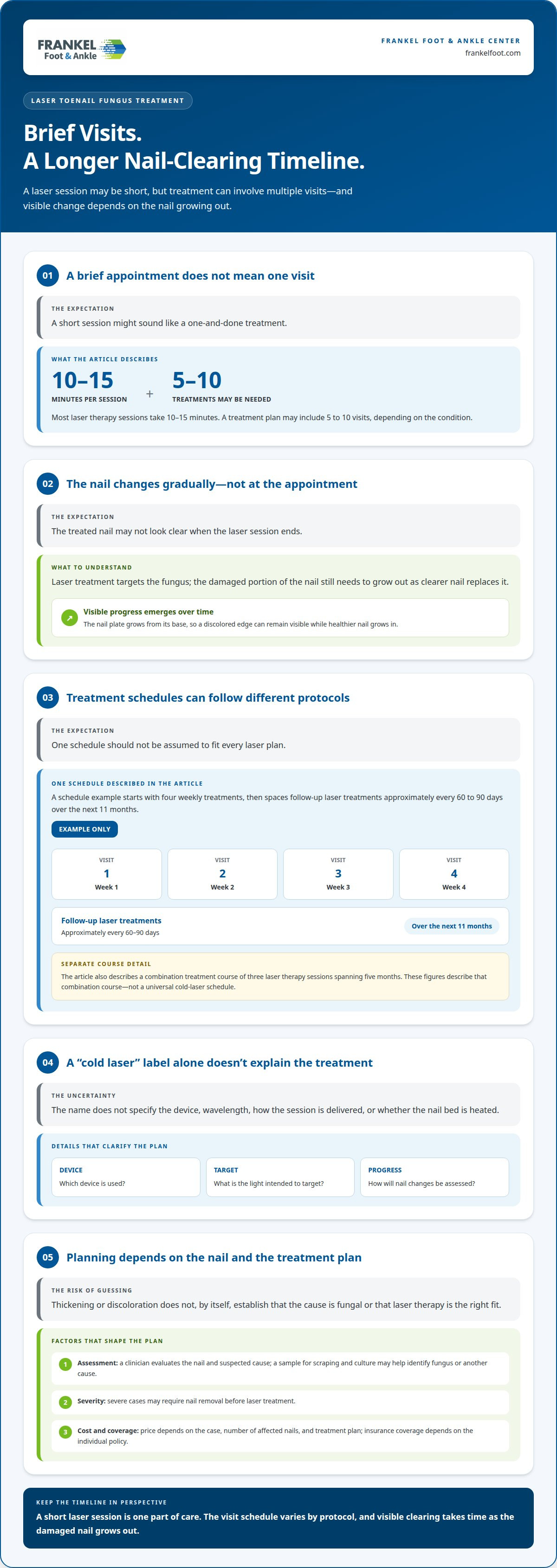
Most laser therapy sessions take 10-15 minutes, so the appointment itself is brief. A treatment plan may include 5 to 10 visits, depending on the condition being treated. A short session doesn’t mean the nail will look clear immediately: damaged nail must grow out as healthier nail replaces it. The nail plate grows from its base, so visible change appears gradually rather than at the appointment’s end.
Schedules vary by protocol. One schedule starts with four weekly treatments, then spaces follow-up laser treatments approximately every 60 to 90 days over the next 11 months. Another way to understand the timeline is to separate the laser visits from nail regrowth: treatment addresses the fungus, while the nail needs time to grow out. Ask during the consultation how the planned visits fit together and when progress will be assessed.
Laser treatment is generally described as well tolerated and not painful, with a brief session focused on the affected nail and nail bed. The experience and schedule depend on the treatment plan. Oral medications work differently and are taken over time; they aren’t the same as a laser session. Don’t assume that a “cold laser” label means the treatment schedule or result will be identical.
To compare local prices, credentials, and guarantees, compare the written treatment plan, included visits, clinician qualifications, and the exact terms and limits of any guarantee. Price depends on the case and is given after a quote request; the number of affected nails and the treatment plan are relevant factors.
A good candidate is someone whose nail changes are assessed as fungal and whose treatment plan fits laser therapy. A consultation considers the nail’s condition and the suspected cause. Severe cases may require nail removal before laser treatment. There’s no universal avoid list established here, so suitability rests on those clinical factors, not on the treatment name alone.
Laser treatment for toenail fungus
At a laser appointment, focused light is directed at the affected nail and nail bed. The treatment aims to heat these areas and target the fungus beneath the nail plate. The visit is brief, but the nail’s appearance changes gradually as damaged nail grows out. Laser therapy is one approach to a fungal infection; topical treatments and oral medications are other options with different methods of use.
Toenail changes can have causes other than fungus, so the first step is an assessment of the affected nail. A clinician may take a nail sample for scraping and culture to identify the fungus or another cause. This helps guide treatment rather than assuming every thick or discolored nail needs the same therapy. Fungus can also spread between athlete’s foot and toenails through socks and shoes, so attention to both areas may be relevant.
Insurance coverage depends on the terms of your individual plan and how it handles laser treatment. Review your policy’s podiatry and treatment benefits before scheduling an appointment.
For laser toenail fungus treatment near you, look for a local podiatry clinic that provides laser therapy and explains its treatment process. A nearby clinic can assess the nail and discuss whether laser treatment fits the suspected infection.
When evaluating a clinic, look for clear explanations of who provides the treatment, what the process involves, and how nail changes will be assessed. A useful consultation distinguishes laser therapy from topical or oral medications and explains what progress may look like.
For information about laser treatment for fungal toenails, review the treatment details before deciding whether to schedule a consultation.
Cold laser treatment for toenail fungus
“Cold laser” is a treatment label, but the name alone doesn’t explain the device or its protocol. It doesn’t specify the wavelength, how a session is delivered, or whether the laser heats the nail bed. Those details matter because laser approaches aren’t interchangeable simply because they target fungal nail changes. A useful consultation explains the method in plain language and how it relates to the affected nail.
Separate what the label says from what the treatment plan includes. Ask which device is used, what the light is intended to target, and how progress will be assessed. Laser therapy is generally described as well tolerated and not painful, but that description doesn’t identify a particular cold-laser device or promise the same experience for everyone.
A combination treatment course usually includes three laser therapy sessions and spans five months. These figures describe a combination course, not a universal cold-laser schedule. The plan’s purpose and the other treatments included help explain why visit timing can differ.
Assess nail growth over time. The damaged portion must grow out as clearer nail replaces it, so a discolored edge can remain visible while healthy growth emerges from the base. Fungal infection can return after treatment; keeping athlete’s foot and other fungal skin rashes under control may help prevent recurrence.
For a treatment plan suited to fungal nail changes, review the treatment information and note which questions you want addressed during a consultation.
Frankel Foot & Ankle Center: Bunion surgery scarless painless
Frankel Foot & Ankle Center offers laser treatment for fungal toenails for people seeking professional care for nail changes. If discoloration, thickening, or crumbling is affecting a toenail, this service offers a next step after learning how laser approaches and treatment schedules differ.
A consultation can help connect your concerns with the right type of foot care. Frankel Foot & Ankle Center also offers foot pain relief and ankle pain relief, alongside its laser treatment for fungal toenails. Its bunion surgery offering is scarless and painless. These services address different concerns, so focus your discussion on the symptoms that brought you in, such as a changing nail or persistent foot discomfort.
For care focused on fungal toenails, visit frankelfoot.com to learn more or contact Frankel Foot & Ankle Center.
Take the next step with a clear plan
Choosing laser treatment is only one part of addressing a changing toenail. A useful next step is to bring your questions about the nail, treatment approach, and expected follow-up to a foot care appointment. If you’re looking for laser toenail fungus treatment near you, focus on understanding the proposed care and how progress will be assessed, rather than expecting the nail to change overnight.
Frankel Foot & Ankle Center offers laser treatment for fungal toenails, along with foot pain relief, ankle pain relief, and scarless, painless bunion surgery. These services address different concerns, so your next conversation can stay focused on the care relevant to you.
Contact Frankel Foot & Ankle Center to discuss your foot care needs. Taking that first step can help you move forward with greater clarity and confidence.
Frequently Asked Questions
Are There Other Treatment Options?
Yes. Options include topical medication, oral antifungal medication, laser therapy, or a combination plan. The appropriate approach depends on the suspected infection, nail involvement, and health factors that affect medication choices. For local foot and ankle care, the Frankel Foot & Ankle Center serves Middletown, New York; Katonah, New York; and Milford, Pennsylvania. A clinical assessment can help distinguish among treatment approaches.
How Long Until I See Results?
Some improvement may appear within 2 to 4 months, but a toenail’s appearance changes as it grows. Compare the new nail emerging at its base with the older affected portion, rather than expecting the whole nail to look clear at once. Changes in color, thickness, and texture can help show whether healthier-looking nail is growing in.
How Does the Laser Work?
Laser treatment directs light toward the affected nail and nail bed, where the energy is intended to target fungus. Some laser approaches heat these areas. Device type and treatment method matter, so the word “laser” alone doesn’t describe every procedure. Ask for a plain-language explanation of how the specific method addresses fungal growth beneath the nail.
How Effective Is the Laser Procedure?
Current studies show laser treatment benefits 89% of nails. That figure refers to nails benefiting, not to the percentage of patients who achieve complete clearance. Treatment response and visible nail appearance are different measures: even after fungus is addressed, the affected portion must grow out. Follow changes in the nail itself over time, not just immediate post-treatment appearance.
What Are Fungal Toenails?
Fungal toenails, also called onychomycosis, are nails infected by fungi. They may appear yellow or discolored, thicken, or develop a white or yellow patch beneath the edge. In some cases, the nail edge crumbles and becomes painful. Similar changes can have other causes, so a clinician’s assessment helps identify whether fungus is responsible.


