


A stiff, aching big toe can make walking uncomfortable, and the location of the pain matters. Hallux rigidus is degenerative arthritis in the metatarsophalangeal joint at the base of the big toe, where cartilage breaks down over time. Pain often develops gradually, worsens with activity, and improves with rest. Stiffness or a bump on top of the joint may also appear.
It’s understandable to seek relief at home while trying to identify the cause of the discomfort. This article explains how hallux rigidus differs from a sudden gout flare and how simple measures, such as comfortable shoes and ice, may ease mild pain. You’ll also learn when persistent or unexplained symptoms warrant a medical assessment, helping you make informed decisions about next steps.
Key Takeaways
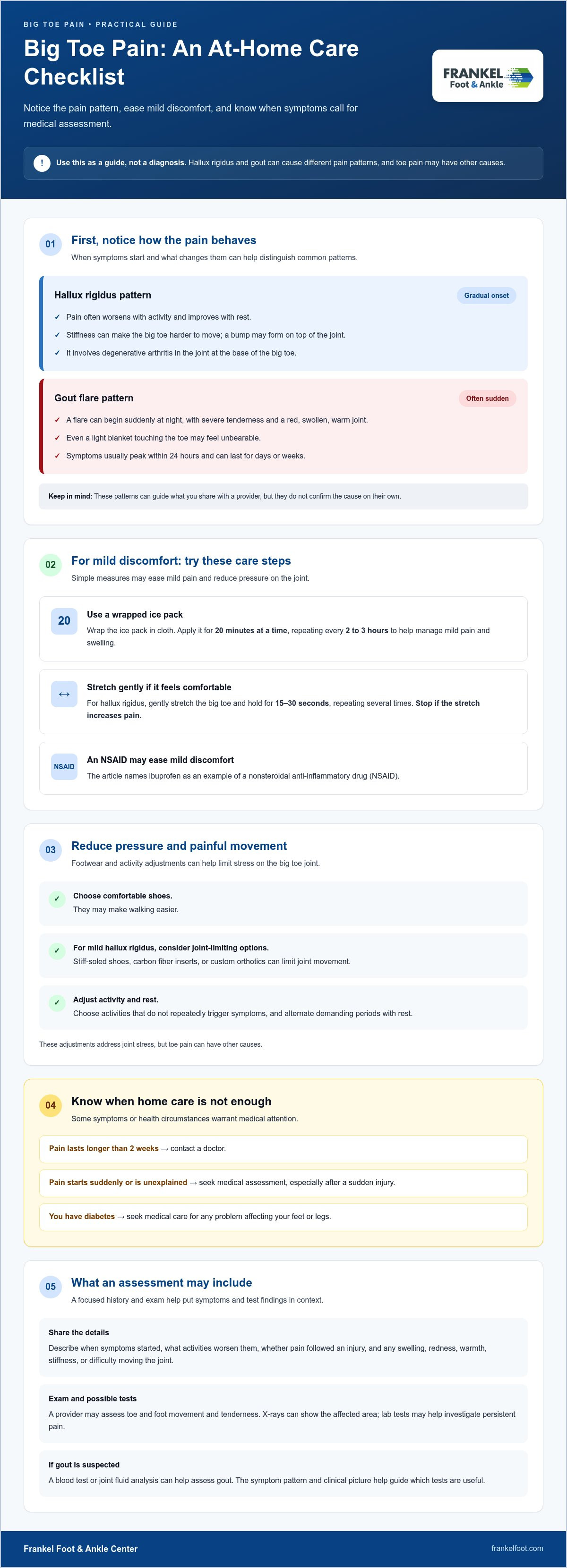
- Hallux rigidus affects the joint at the base of the big toe. Gradual, activity-related stiffness differs from the sudden, intense pain that can occur with gout.
- For mild discomfort, try an ice pack for 20 minutes at a time, repeat every 2 to 3 hours, and choose comfortable shoes.
- A physical exam, X-rays, or lab tests can help identify the cause of ongoing toe pain; gout may also be assessed with a blood test or joint fluid analysis.
- Persistent, sudden, or unexplained pain deserves medical attention. People with diabetes should seek care for problems affecting their feet or legs.
What Is Hallux Rigidus?
Hallux rigidus is degenerative arthritis in the metatarsophalangeal joint at the base of the big toe. As cartilage breaks down, the joint can become stiff and painful. The condition commonly develops between ages 30 and 60, and it is common in adults over 30. Hallux rigidus affects 1 in 40 people over age 50. Its early stages are stages 1 and 2. Symptoms often begin gradually, rather than during one sudden episode.
With hallux rigidus, discomfort often worsens during activity and improves with rest. Walking, for example, may bring on pain that settles when you sit down. Stiffness can make the toe harder to move, and a bump may form on top of the joint. These symptoms can point to a degenerative joint condition, but they don’t establish a diagnosis on their own. Noting when pain occurs and what triggers it can help distinguish this pattern from other causes of an aching big toe.
Gout often has a very different onset. A flare can begin suddenly at night, with the joint becoming red, swollen, warm, and severely tender. Even a light blanket touching the toe may feel unbearable. Gout symptoms usually peak within 24 hours, then can last for days or weeks. Pain often improves after a few days, although untreated attacks may become more frequent and last longer. This sudden pattern contrasts with the gradual symptoms of hallux rigidus. Recognizing the difference can prevent mistaking a flare for ongoing stiffness and help guide the next steps toward diagnosis.
At-home pain relief and care
For mild toe pain, home care may ease discomfort and reduce pressure on the joint. Ice, footwear choices, and activity adjustments are practical starting points.
Managing Big Toe Pain at Home
Wrap an ice pack in cloth and apply it for 20 minutes at a time. Repeat every 2 to 3 hours to help manage mild pain and swelling. An NSAID such as ibuprofen may ease mild discomfort. For hallux rigidus, gently stretch the big toe and hold for 15-30 seconds, repeating several times. Stop the stretch if it increases pain.
Prevention Through Footwear and Activity Changes
Footwear and activity changes can reduce pressure and limit painful movement at the big toe joint. Comfortable shoes may make walking easier. For mild hallux rigidus, stiff-soled shoes, carbon fiber inserts, or custom orthotics can limit joint movement. Choose activities that don’t repeatedly trigger symptoms, and alternate demanding periods with rest. These adjustments address joint stress, although toe pain can have other causes.
Home care doesn’t replace diagnosis after a sudden injury or unexplained pain. Contact a doctor if pain lasts longer than 2 weeks. People living with diabetes should seek medical care for any problem affecting their feet or legs, and community providers like Quality Comprehensive Health Center emphasize accessible care for managing broader health needs. These situations need attention because the cause may require care beyond home measures.
If persistent discomfort affects walking, Frankel Foot & Ankle Center offers foot pain relief for ongoing symptoms.
How is the cause of big toe pain diagnosed, including tests and imaging?
Diagnosis begins with a focused history and physical exam. Describe when symptoms started, which activities worsen them, and whether the pain followed an injury. Mention changes such as swelling, redness, warmth, stiffness, or difficulty moving the joint. These details help distinguish gradual joint problems from sudden inflammatory episodes.
During the exam, a provider assesses the toe and foot, including movement and areas of tenderness. Restricted motion at the joint base, for example, can help explain pain while walking. A provider may use X-rays, lab tests, or both to investigate persistent pain. Imaging shows the affected area, while lab testing helps assess possible causes that an exam alone cannot establish.
When gout is suspected, a blood test or joint fluid analysis can help assess the condition. The speed at which symptoms developed, along with warmth, redness, swelling, and tenderness, also informs the evaluation. Blood tests and joint fluid analysis assess different evidence, so the clinical picture guides which tests are useful. Share whether symptoms arrived abruptly or built gradually, as that distinction helps direct the diagnostic process.
Bring a clear account of symptom changes and any recent injury to your appointment. If pain persists beyond two weeks or starts suddenly without an obvious cause, seek medical assessment. People living with diabetes should get medical attention for foot or leg problems. These details help connect test findings with symptoms that affect daily movement.
For ongoing foot discomfort, explore foot pain care as a next step.
Frankel Foot & Ankle Center: Bunion surgery scarless painless
Frankel Foot & Ankle Center provides foot pain relief for people whose toe discomfort persists or interferes with walking. Because different conditions can cause similar symptoms, a focused assessment can help identify what may be contributing to pain and guide appropriate care. Ongoing big toe pain warrants professional attention, especially when it limits daily activities.
The center also offers minimally invasive bunion surgery, described as “no-pain bunion correction.” Bunions and hallux rigidus are distinct issues, so this service is relevant when a bunion is part of the problem, not as a substitute for evaluating joint stiffness or another cause of pain.
For support with foot pain, contact Frankel Foot & Ankle Center or visit the website.
Keep your next step focused on comfortable movement
An aching big toe can affect more than a single walk. It may gradually change how you approach errands, work, or time on your feet. Treat changes in daily function as a reason to seek a clearer understanding rather than continually working around discomfort. Consider what you want to return to, such as a regular walk or standing through routine tasks, and share that priority when discussing care.
Frankel Foot & Ankle Center offers foot pain relief, ankle pain relief, and minimally invasive bunion surgery, also described as “no-pain bunion correction.” The practice can help connect your concerns with an appropriate care option, while recognizing that not every painful toe has the same cause.
Contact Frankel Foot & Ankle Center to take a considered next step. With appropriate attention, you can move forward with greater clarity and confidence.
Frequently Asked Questions
What is gout?
Gout is an inflammatory arthritis that develops when uric acid builds up in the blood and forms sharp crystals in a joint, often at the base of the big toe. A flare may be treated with NSAIDs, corticosteroids, or colchicine. For chronic gout, medication can lower uric acid and help prevent future attacks. Treatment depends on the person’s condition.
How do I stop my big toe from hurting?
For mild discomfort, reduce activities that reliably trigger pain and choose soft, comfortable shoes for necessary walking. Apply a wrapped ice pack for 20 minutes, repeating every 2 to 3 hours. An NSAID such as ibuprofen may help relieve pain. If discomfort escalates or follows an injury, home measures aren’t a substitute for medical evaluation.
What causes big toe pain?
Big toe pain can result from hallux rigidus, gout, or an injury. The pattern offers clues: stiffness that develops over time differs from a sudden inflammatory flare. Pain may also make normal toe movement or putting pressure on the foot difficult. Note what happened before symptoms began and which activities worsen them, as these details help guide an assessment.
What does pain in the big toe indicate?
Pain may indicate wear-related arthritis at the base joint, uric-acid crystal inflammation, or an injury, but the sensation alone can’t identify its cause. A bump over the joint with restricted motion may fit hallux rigidus; a hot, red, swollen toe can occur with gout. A physical exam and targeted tests help distinguish possible causes.
What to do if your big toe really hurts?
Stop activities that put pressure on the toe and seek medical assessment for sudden pain or discomfort without a clear cause. People living with diabetes should get medical care for any foot or leg problem, and pain lasting longer than 2 weeks also warrants attention. If you’re in Middletown, Katonah, or Milford, arrange local assessment rather than waiting.


