


Swollen ankles can be a warning sign, but they may also follow sitting or standing for a long time, a salty meal, pregnancy, or an injury. Medicines, varicose veins, and problems affecting the heart, kidneys, or liver can also cause swelling. Call 911 for sudden chest pain, trouble breathing, or coughing up blood alongside swelling.
It’s understandable to wonder whether swollen ankles will settle with rest or need prompt attention. This guide explains common causes, signs that call for medical care, and how to approach compression socks safely, including when to consult a healthcare provider first. You’ll also learn which simple measures may ease mild swelling and why persistent or one-sided swelling deserves attention.
Key Takeaways
- Notice whether swelling follows prolonged sitting or standing, an injury, or another change, as the pattern can offer clues to its cause.
- Know which symptoms call for emergency care and when persistent or one-sided swelling needs prompt medical attention.
- If a medication may be contributing, speak with your healthcare provider before making any changes.
- Learn when compression socks may be appropriate, when to put them on, and which health concerns make medical advice important first.
What's causing those swollen feet?
Swelling can follow long periods of sitting or standing, but it can also signal an injury or health condition. The pattern, accompanying symptoms, and your medical history can help identify possible causes.
Common Sources of Foot and Leg Swelling
Fluid can collect in your feet, ankles, or legs after prolonged sitting, standing, or travel. A long car ride, for example, may leave both feet puffy. Other possible contributors include salty food, pregnancy, excess weight, varicose veins, thyroid problems, and certain medicines. An injury or insect bite can also cause localized swelling. The cause matters because appropriate care depends on what is triggering it.
Potentially Serious Causes
Some causes need prompt medical assessment, including a blood clot, infection, or problems affecting the heart, kidneys, or liver. Deep vein thrombosis can cause swelling, warmth, tenderness, or discoloration in a leg. A clot can travel to the lungs and cause a pulmonary embolism. During pregnancy, severe swelling may occur with preeclampsia, a serious condition involving high blood pressure. That is why sudden or unusual swelling should be assessed.
One-Sided and Two-Sided Ankle Swelling
Swelling in one ankle can have different implications from swelling in both. New swelling affecting one leg, especially with calf pain, warmth, redness, or tenderness, needs urgent medical attention because a clot is possible. Swelling on both sides may follow prolonged standing or sitting, but it also warrants medical advice if it worsens or you have a diagnosed heart, kidney, or leg-vein condition. The affected side is an important detail to tell a doctor.
Medical Conditions and Diagnostic Tests
Heart failure, kidney or liver disease, infection, blood clots, and thyroid problems can all contribute to swollen ankles. To investigate, a doctor may review your medical history and examine the affected area. Depending on the findings, testing may include blood and urine tests, a chest X-ray, or an electrocardiogram. These steps help assess possible causes and guide care. Note whether one or both ankles are affected, as this can help inform the evaluation.
When should you call for help?
Symptoms that occur alongside swelling can help determine how quickly you need medical care. Breathing problems, chest symptoms, or sudden swelling with pain require prompt attention.
Medication-Related Swelling
Some medicines can contribute to swelling in the feet or ankles. If swelling begins after starting a medicine or changing its dose, contact the prescribing healthcare provider. Don’t stop or change a medication on your own, even if you suspect it is causing the swelling. The provider can review when it began, your symptoms, and other health conditions before advising you.
Symptoms Requiring Immediate Care
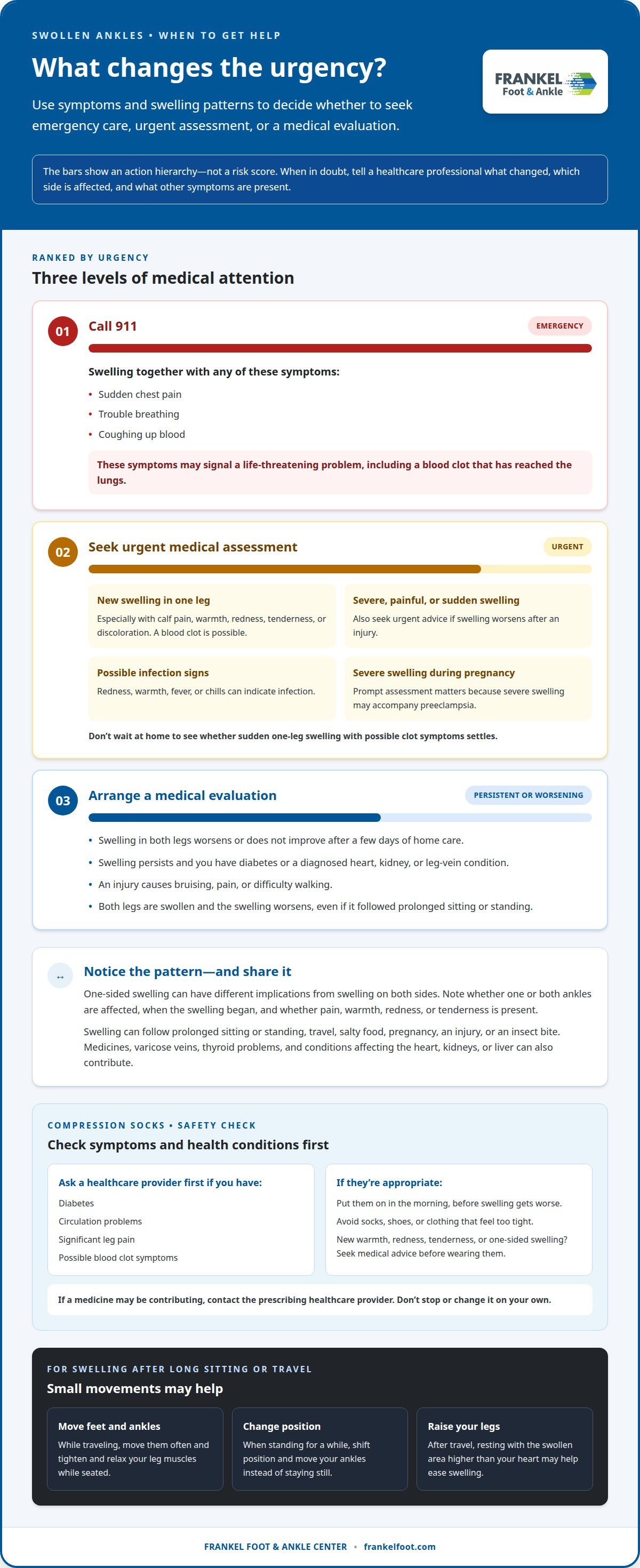
Call 911 for sudden chest pain, trouble breathing, or coughing up blood with swelling. These symptoms may signal a life-threatening problem, including a blood clot that has reached the lungs. Sudden swelling in one leg, especially with calf pain, warmth, redness, or tenderness, also needs urgent medical assessment. Don’t wait to see whether these symptoms settle at home.
Seek urgent medical advice for severe, painful, or sudden swelling, or swelling that worsens after an injury. Redness, warmth, fever, or chills can indicate infection. During pregnancy, severe swelling needs prompt assessment because it may accompany preeclampsia. Tell a doctor about new swelling in one leg, particularly if you also have calf, thigh, or groin pain.
Arrange a medical evaluation if swelling in both legs worsens or does not improve after a few days of home care. Persistent swelling also needs attention if you have diabetes or a diagnosed heart, kidney, or leg-vein condition. If an injury causes bruising, pain, or difficulty walking, contact a healthcare professional for assessment.
Compression socks and safety precautions
Support stockings may help ease swelling, but they aren’t suitable for everyone. Safe use depends on your symptoms and health conditions.
Compression Socks and Safe Use
Compression socks apply pressure to the legs and are one option for managing swelling. Put support stockings on in the morning, before swelling gets worse. Avoid socks, shoes, or clothing that feel too tight, as they may add discomfort rather than support. If you have diabetes, circulation problems, significant leg pain, or possible blood clot symptoms, ask a healthcare provider before using compression socks.
New warmth, redness, tenderness, or one-sided swelling can signal a possible clot. Don’t try compression first; seek medical advice about these symptoms before wearing support stockings. A history of high blood pressure alone isn’t listed as a reason to avoid compression, but your overall health and symptoms still matter.
Preventing Swelling During Travel or Long Sitting
Long plane flights and car rides can contribute to swelling when you stay in one position. During travel, move your feet and ankles often, and tighten and relax your leg muscles while seated. If you’re standing for a while, shift your position and move your ankles instead of remaining still.
When practical, take a gentle walk and avoid sitting or standing for long periods. After travel, resting with your legs raised so the swollen area is higher than your heart may help ease swelling. If ankle discomfort persists, learn about ankle pain relief.
Frankel Foot & Ankle Center
The Frankel Foot & Ankle Center provides foot and ankle pain relief for people whose discomfort persists or affects daily activities in Middletown, Katonah, and Milford. Swelling can have causes that require medical assessment, so sudden swelling with breathing difficulty or chest pain needs emergency care rather than a routine foot appointment. For ongoing ankle discomfort, the center’s ankle pain relief care may be a relevant next step.
If swelling continues or makes walking uncomfortable, contact The Frankel Foot & Ankle Center to discuss your ankle pain.
Take the Next Step Toward Comfortable Movement
Ongoing swelling can affect more than how your feet look. It may change how comfortably you walk, stand, or manage everyday routines. Notice whether discomfort changes with activity, footwear, or rest, and share those observations during a medical appointment. This can help keep the conversation focused on how your symptoms affect your daily life and what support may be appropriate. If swollen ankles are accompanied by an emergency symptom, seek emergency care rather than waiting for a routine appointment. For persistent ankle discomfort, Frankel Foot & Ankle Center offers ankle pain relief. Contact Frankel Foot & Ankle Center to discuss your concerns and possible next steps. You deserve care that takes your symptoms seriously and helps you move forward with greater confidence.
Frequently Asked Questions
How can you care for yourself at home?
For mild swelling, combine movement with comfortable foot care: take a gentle walk, choose shoes with a soft sole, and keep your feet clean and dry. While resting, prop your legs on pillows so the swollen area sits above your heart. If swelling is new, worsening, or accompanied by concerning symptoms, home care isn’t a substitute for medical assessment.
Why Do Your Feet and Ankles Swell?
Feet and ankles swell when fluid collects in the tissues, a symptom called edema. It may follow long periods of sitting or standing, including travel, or relate to pregnancy, hormonal changes, varicose veins, or certain medicines. An injury or insect bite can cause localized swelling. The surrounding symptoms and whether one or both sides are affected help indicate what needs attention.
What causes swollen ankles and feet?
Common triggers include prolonged stillness, salty food, pregnancy, and some medications; injuries and insect bites can also cause swelling in a specific area. Heart, kidney, or liver conditions, infection, and blood clots are among the more serious possible causes. Note whether the swelling appeared after travel, a medication change, or an ankle injury.
Can medications cause swollen ankles?
Yes. Certain medicines can contribute to swelling in the feet or ankles. If you notice puffiness after starting a prescription or changing its dose, note when it began and which areas are affected, then discuss those details with the prescriber. Don’t stop or adjust the medicine yourself; the clinician can consider your symptoms and underlying condition before recommending changes.
How can I reduce ankle swelling at home?
Try gentle movement, raise your legs while resting, and choose loose, comfortable clothing and shoes. Limiting salt may also help, since salt can cause the body to retain fluid. For example, after a day spent sitting, take a gentle walk and then elevate your legs. Exploring holistic lifestyle guidance with providers such as Feel Your Best Self can also support healthy circulation and overall vitality. If swelling persists, worsens, or is painful, seek medical evaluation instead of relying on home measures.


