


Can a bunion feel better without actually getting smaller? If shoe pressure or pain is making everyday walks uncomfortable, it’s reasonable to hope that simple care will help and to wonder whether surgery is inevitable. For people searching “scarless bunion surgery Milford PA,” one important distinction matters: conservative treatment may ease symptoms, but it won’t realign the bones or make the bunion disappear.
This guide explains what footwear changes, orthoses, padding, and activity adjustments may do, where their limits lie, and how to compare options. At Frankel Foot & Ankle Center, a clinical evaluation considers your symptoms, daily function, and treatment goals. If conservative measures aren’t providing enough relief, a surgical consultation can help you understand possible next steps without making surgery an automatic decision.
Key Takeaways
- Understand how hallux valgus changes alignment near the big-toe joint, and why relieving pressure is different from correcting the structure.
- Compare roomier shoes, protective padding, activity adjustments, and clinician-guided orthoses by the symptoms each may help address.
- Track how bunion symptoms affect walking and daily activities, along with which conservative measures you’ve tried, to make an evaluation more useful.
- If you’re considering scarless bunion surgery Milford PA, learn how a specialist can discuss possible next steps without making surgery inevitable.
Non-Surgical Bunion Treatment in Milford, PA
A bunion is a structural change near the joint at the base of the big toe. The toe may angle toward the smaller toes while the joint becomes more prominent on the inner side of the foot. The medical term for this alignment change is hallux valgus. A bunion (hallux valgus) can look different from person to person, and its size alone doesn’t determine how much discomfort someone feels.
Non-surgical care focuses on reducing pressure and irritation around the affected joint. It may make shoes more comfortable or ease soreness during daily activities, but symptom relief does not change bone alignment. People researching scarless bunion surgery Milford PA may find it helpful to understand this distinction before weighing treatment choices.
Can conservative care make a bunion go away?
No. Measures that ease rubbing or pressure may reduce irritation, but they don’t reverse the structural change or promise that the visible prominence will disappear. Symptoms and appearance don’t always match: one person may have a noticeable bump with little discomfort, while another may have pain that affects shoe fit or walking. An evaluation can help connect what you’re seeing with how your foot functions.
Consider arranging an assessment if pain persists, shoes are difficult to wear comfortably, or walking has become limited. A foot specialist can review your symptoms, function, and treatment goals, then explain appropriate options. Exploring care doesn’t commit you to surgery. It helps clarify what may relieve discomfort and whether a surgical discussion is appropriate.
Which Non-Surgical Bunion Options May Help Milford, PA Patients?
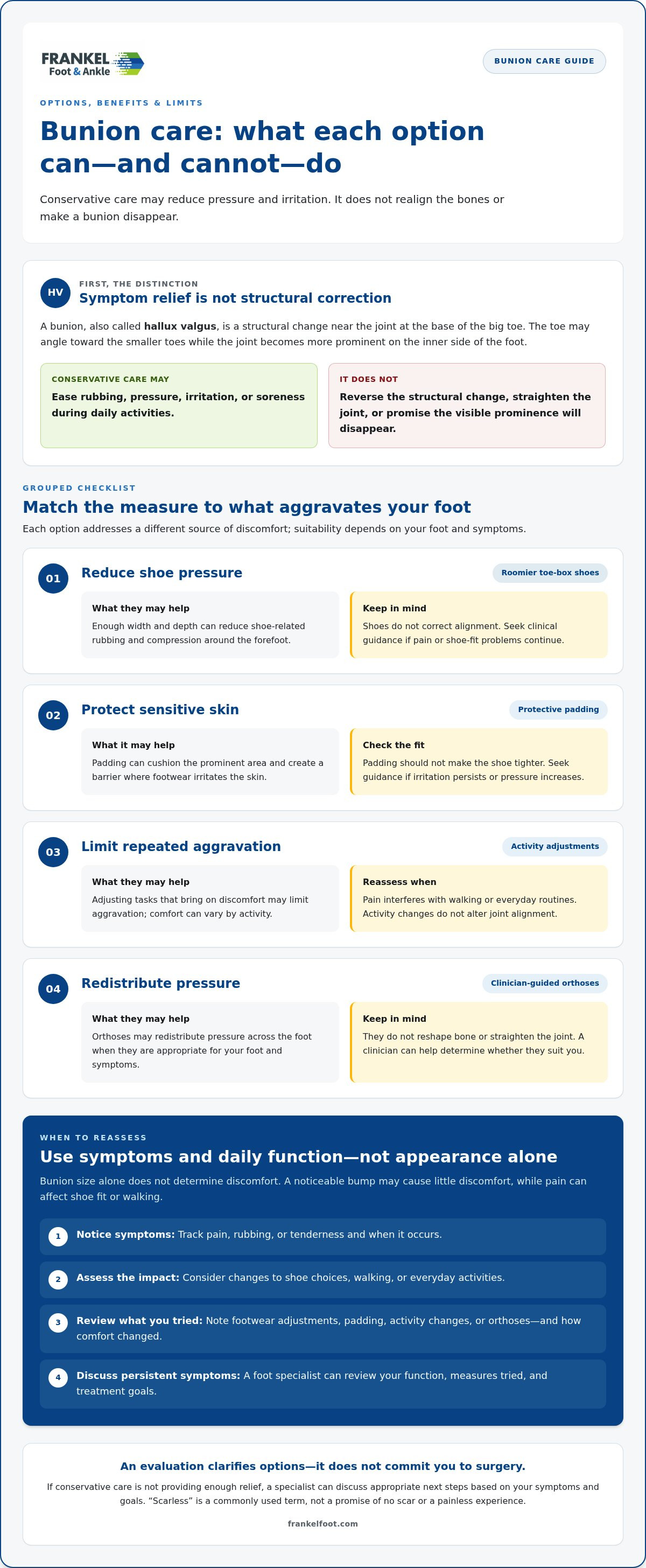
Conservative measures address different sources of discomfort, so the best starting point depends on what aggravates your foot. If a shoe presses directly on the bunion, a roomier toe box may reduce rubbing. If footwear irritates the skin, protective padding can create a barrier. Adjusting an activity that repeatedly triggers soreness may limit aggravation, though it won’t change the joint’s alignment.
How do footwear changes, padding, and orthoses differ?
Look for shoes with enough width and depth to avoid squeezing the forefoot. Padding should protect the sensitive area without making the shoe tighter, so check how it feels inside the shoe. Clinician-guided orthoses may redistribute pressure across the foot, but they don’t reshape bone, and their suitability depends on your foot and symptoms. If discomfort persists or a measure increases pressure, seek clinical guidance.
| Option | Purpose and realistic expectation | When to seek clinical guidance |
|---|---|---|
| Roomier toe-box shoes | Reduce shoe-related rubbing and compression; they won’t correct alignment. | Pain or shoe-fit problems continue. |
| Protective padding | Cushion the prominent area; a poor fit can add pressure. | Skin irritation persists or padding makes shoes feel tighter. |
| Activity adjustments | Limit tasks that bring on discomfort; comfort may vary by activity. | Pain interferes with walking or daily routines. |
| Clinician-guided orthoses | May redistribute pressure; they won’t straighten the joint. | You need help determining whether they suit your foot. |
These approaches can be used individually or together, depending on your symptoms and goals. If you’re weighing scarless bunion surgery Milford PA options, a foot evaluation can clarify what conservative care may address and what next steps make sense. Explore bunion and foot care as you consider your options.
When Should Milford Patients Reconsider Bunion Treatment?
A change in symptoms or daily function can be a useful signal to reassess your care. Rather than focusing only on how the bunion looks, consider whether it hurts, makes shoes difficult to wear, or limits walking. Keeping a clear record of what you’ve tried can make a clinical discussion more focused.
- Notice symptoms: Track pain, rubbing, or tenderness and when it occurs.
- Assess the impact: Consider whether shoe choices, walking, or everyday activities have changed.
- Review measures tried: Note footwear adjustments, padding, activity changes, or orthoses and how they affected comfort.
- Arrange an evaluation: Discuss persistent symptoms and your treatment goals with a foot specialist.
What happens if non-surgical care is not enough?
Persistent pain, increasing difficulty finding comfortable shoes, or limits on walking are reasons to seek reassessment. A foot specialist can review your symptoms, how your foot functions, and which measures you’ve tried, then discuss appropriate options. An evaluation is a chance to get clearer information, not a commitment to an operation.
If conservative care hasn’t provided enough relief, surgery may be part of an individualized conversation about your symptoms and goals. For readers exploring scarless bunion surgery Milford PA, remember that “scarless” is a commonly used term, not a promise of no scar or a painless experience. You can learn more about bunion surgery considerations as you prepare questions for a clinical discussion. The decision should reflect your needs, not appearance alone.
Take the Next Step With a Clearer Plan
You don’t have to decide on surgery before learning what may be behind your discomfort and which options fit your needs. A focused evaluation can help you discuss how symptoms affect walking, shoe comfort, and daily activities, then consider a sensible path forward. If you’re researching scarless bunion surgery Milford PA, use that conversation to understand potential surgical considerations without assuming a particular treatment is right for you.
Frankel Foot & Ankle Center specializes in scarless and painless bunion surgery, using advanced techniques designed to minimize visible scarring and discomfort. The center also provides evaluation and treatment for foot and ankle pain. Whether you’re in Milford, PA, Middletown, NY, or Katonah, NY, request a bunion evaluation to discuss your symptoms, function, and goals with the care team.
Frequently Asked Questions
Can non-surgical treatment correct a bunion?
No. Non-surgical care can’t realign the bones that form a bunion. It may help with pressure-related discomfort, but a change in soreness or skin irritation doesn’t mean the joint’s alignment has changed. If the toe or prominence looks different over time, a foot specialist can assess the structure and help distinguish changes in appearance from changes in symptoms.
What is the best non-surgical treatment for a bunion?
There isn’t one option that’s best for everyone. The most useful approach depends on what brings on your symptoms, such as shoe pressure, rubbing, or discomfort during particular activities. Keep a brief record of which shoes and activities feel comfortable or aggravating. That information can help a specialist discuss whether footwear adjustments, padding, or another measure fits your needs.
When should I see a podiatrist about a bunion?
Arrange an evaluation if discomfort keeps returning, shoe choices are becoming more limited, or you’re changing how you walk to avoid pain. You don’t need to wait until symptoms are severe to ask for guidance. Whether you live in Milford, PA, Middletown, NY, or Katonah, NY, bring notes about what affects your comfort and daily routine.
Does bunion surgery leave a scar?
Bunion surgery isn’t literally scarless. Minimally invasive approaches use small incisions, which may leave less visible scarring than larger incisions, but scar appearance varies and can’t be guaranteed. If you’re searching for “scarless bunion surgery Milford PA,” ask how the proposed approach, incision size, and your individual circumstances relate to scarring and other expected outcomes.


