


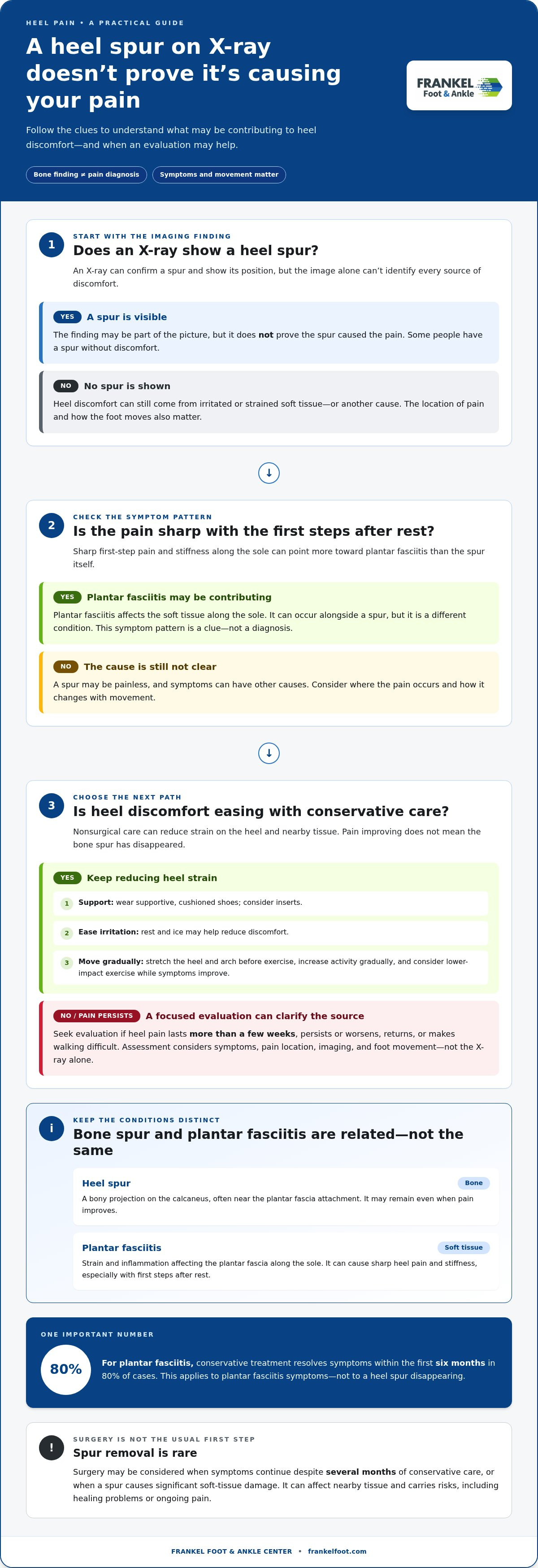
A heel spur can remain even after heel pain improves. A bone spur in the calcaneus is a bony growth on the heel bone, often near where the plantar fascia attaches, while plantar fasciitis is irritation or strain of that connective tissue. The two conditions are related, but they aren’t the same, and heel discomfort often improves without removing the spur.
If your first steps after resting bring sharp heel pain, it’s understandable to wonder what’s causing it. This article explains where a bone spur in the calcaneus forms, how its symptoms compare with plantar fasciitis, and why pain can ease even while the bone growth remains. You’ll also learn what nonsurgical care may help and when persistent heel pain needs evaluation.
Key Takeaways
- A heel spur may remain even when the discomfort around it improves with nonsurgical care.
- Heel spurs and plantar fasciitis are related but distinct, so identifying the source of pain matters.
- The spur forms on the heel bone, and its position helps explain how nearby tissues may be affected.
- Persistent heel pain can benefit from a focused evaluation and care aimed at relieving foot pain.
Do heel spurs go away without surgery?
A heel spur is a bony growth on the calcaneus, or heel bone, often beneath the heel near the plantar fascia attachment. It can remain after pain settles because surrounding tissue, rather than the spur itself, often causes symptoms.
Symptoms can include tenderness when bearing weight, swelling, warmth, or a small heel bump. Calluses or corns may develop where pressure and repeated walking irritate the skin. Nearby tissue can also become sensitive when everyday movement puts strain on it.
Spur Disappearance Without Surgery
A formed heel spur is permanent and won’t disappear with nonsurgical treatment. Rest, ice, supportive footwear, inserts, and stretching may ease discomfort by reducing strain on the heel and surrounding tissue. Less pain doesn’t mean the bony growth has vanished. Spurs develop through calcium deposits and may project from the heel toward the arch.
Surgical Removal and Its Risks
Surgery is generally considered when symptoms continue despite several months of conservative care, but spur removal is rare. It may be considered if a spur causes significant soft-tissue damage. Surgery can affect nearby tissue and carries risks, including healing problems or ongoing pain, so potential benefits must be weighed against those concerns. Recovery focuses on wound healing and a gradual return to weight-bearing and walking; the course depends on the procedure and tissue recovery.
To reduce recurring discomfort, wear supportive, cushioned shoes, stretch your heel and arch before exercise, and increase activity gradually. Lower-impact exercise can reduce repeated heel stress while symptoms improve. Arrange a medical evaluation if heel pain lasts more than a few weeks. An assessment can help determine whether the spur or another cause contributes to the pain.
Are heel spurs the same thing as plantar fasciitis?
No. A heel spur is a bony growth, while plantar fasciitis affects the plantar fascia, the tissue along the sole. The conditions can occur together, but they are distinct.
The Relationship Between the Conditions
Heel spurs and plantar fasciitis are linked because a spur forms near the plantar fascia’s attachment to the heel bone. Repeated strain in this area can contribute to both a bony growth and irritation in nearby tissue. An X-ray showing a spur doesn’t prove it caused the pain. Discomfort may instead come from strained or inflamed fascia, so treatment should address the source of symptoms.
Distinguishing Heel Spurs From Plantar Fasciitis
A heel spur is a structural change in bone; plantar fasciitis is a soft-tissue condition involving strain and inflammation. Spurs may cause no pain. Plantar fasciitis, by contrast, can cause sharp heel pain and stiffness along the sole, especially with the first steps after rest. Sharp, intense pain is more likely to come from plantar fasciitis than from the spur itself. That’s why removing a visible spur isn’t automatically the answer to heel pain.
Treatment for heel discomfort often focuses on easing pressure and strain. Supportive shoes, cushioned inserts, activity adjustments, rest, ice, and stretching can help reduce stress on the heel. For plantar fasciitis, conservative treatment resolves symptoms within the first six months in 80% of cases. That figure applies to plantar fasciitis, not disappearance of the bony growth. Persistent or worsening pain deserves evaluation to identify which condition is driving it.
Calcaneal spur definition and location
The calcaneus is the heel bone, and a spur is a bony projection on it. Its location can indicate which nearby tissues may experience pressure or discomfort.
Meaning of a Calcaneal Spur
A bone spur in the calcaneus is a bony growth associated with calcium deposits. It can develop where repeated strain affects the heel. Its significance depends on symptoms and nearby tissue, not simply on its presence. Some people have a spur without discomfort, so finding one doesn’t establish the cause of heel pain or mean treatment is needed.
Where Calcaneal Spurs Develop
A spur can form on the underside of the heel, near the plantar fascia’s connection to the calcaneus. It can also form at the back of the heel and project toward the arch. These locations matter because nearby tissue may experience pressure during walking or other weight-bearing activity. The spur’s position offers useful context, but doesn’t explain every symptom on its own.
Healthcare providers commonly use an X-ray to confirm a heel spur and assess its size. An X-ray shows the bone spur in relation to the heel bone, but the image alone can’t identify every source of discomfort. Evaluation also considers where the pain occurs and how the foot functions during movement. Together, those findings help distinguish an imaging result from the tissue or movement issue contributing to symptoms.
If heel discomfort is affecting walking, seek help for persistent foot pain and learn about appropriate care.
Frankel Foot & Ankle Center: Bunion surgery scarless painless
Frankel Foot & Ankle Center provides foot pain relief for people whose heel discomfort affects daily movement. Bunion surgery treats bunions, a separate condition, rather than removing a calcaneal spur. Heel pain may come from irritated soft tissue, a spur, or another cause, so care should address the source of the symptoms.
Consider seeking care if heel discomfort persists, returns, or makes walking difficult. A focused assessment can help clarify the cause of your foot pain and guide appropriate care. For heel pain, the relevant service is foot pain relief, not bunion surgery.
To learn more, visit Frankel Foot & Ankle Center.
Take the Next Step Toward Comfortable Movement
Persistent heel discomfort can make ordinary movement feel uncertain. Rather than focusing only on an X-ray finding, consider your symptoms and how they affect daily activities. A bone spur in the calcaneus may be part of the picture, but understanding your foot pain can help you consider appropriate care.
Frankel Foot & Ankle Center offers foot and ankle pain relief, as well as scarless, painless bunion surgery. These services address different concerns, so the right path depends on what is affecting your movement. If foot pain is limiting your routine, contact Frankel Foot & Ankle Center to discuss care. Taking that step can help you move forward with greater clarity and confidence.
Frequently Asked Questions
What is a heel spur?
A heel spur is a bony projection on the calcaneus, or heel bone. It may appear on an X-ray without causing symptoms, so the image alone can’t show whether it explains your discomfort. When assessing heel pain, a clinician considers where it occurs and how it affects movement alongside imaging findings.
How do I take care of myself if I have heel spurs?
Reduce activities that aggravate your heel, and choose supportive, cushioned shoes for daily walking. Ice the painful area for 20 minutes several times a day. Keep a simple record of when discomfort occurs, such as after sitting, during exercise, or with particular footwear. That pattern can help identify which activities place more strain on your heel.
How do healthcare providers diagnose heel spurs?
Healthcare providers commonly use an X-ray to identify a heel spur. They also assess where you feel pain and how your foot functions during movement. Before an evaluation, note whether discomfort starts after rest, worsens with activity, or changes how you walk. These details put an imaging finding in context instead of assuming it causes every symptom.
How does PRP infiltration treatment for heel spurs work?
PRP infiltration refers to injecting platelet-rich plasma into tissue. It’s an injection-based approach, not a way to physically remove a bony spur. The information here doesn’t establish how PRP is prepared, its effectiveness for heel-spur pain, or its risks. Ask what problem the proposed treatment is meant to address and how it relates to your diagnosis.
How to remove a spur without surgery?
An established heel spur can’t be made to disappear without surgery. Nonsurgical care instead aims to ease associated discomfort by reducing heel strain, wearing supportive footwear, adjusting activity, stretching, and applying ice. Consider whether your goal is removing the bone growth or making movement less painful. These are different outcomes, and symptom relief doesn’t mean the spur is gone.


