


Achilles tendon pain is a sign to take the strain seriously, not simply push through it. Achilles tendinitis is an injury involving the tendon at the back of the ankle, often linked to overuse or damage; achilles tendonitis treatment may include modifying activities, easing pain, and gradually strengthening the calf. The right approach depends on the symptoms and how the tendon responds.
If walking, running, or climbing stairs has become uncomfortable, it’s understandable to want relief without making the problem worse. Exercises may support recovery, but the right activity level matters.
This guide explains Achilles tendinitis, who may be at risk, how strengthening exercises and pain-relief options fit into care, and when persistent or sudden symptoms call for medical attention.
Key Takeaways
- Achilles tendon problems are often linked to repetitive stress, but risk isn’t limited to athletes; age, activity level, and some medications can also matter.
- Recovery can take time: MedlinePlus says Achilles tendinitis pain may take at least 2 to 3 months to go away.
- Strengthening exercises and physical therapy can help build calf strength and manage tendon loading; progress should be gradual and guided by symptoms.
- Seek immediate medical attention after a pop followed by sudden pain in the back of the leg or heel, as this may signal a tendon rupture.
Who is at risk for Achilles tendon injuries?
Repeated stress can overload the Achilles tendon, especially when sports activity increases sharply. About 24% of athletes develop an Achilles tendon injury during their lifetimes. Noninsertional tendinitis usually affects active, younger adults, while insertional tendinitis can occur at any age, including in people who aren’t active. Fluoroquinolone treatment is also listed as a risk factor.
Symptoms may include pain, tenderness, or swelling near the heel. The location of pain helps distinguish insertional from noninsertional tendinitis, while activity patterns and medication history can inform diagnosis. MedlinePlus says Achilles tendinitis pain may take at least 2 to 3 months to go away.
Supportive shoes and heel lifts can reduce strain while walking. A shoe insert or wedge slightly raises the heel, changing the load on the tendon. Custom orthotics may help control foot motion and reduce abnormal pressure or strain, potentially lowering the chance of recurring symptoms. Choose support based on where the pain occurs and how your foot moves.
A walking boot may be needed for severe tendinitis, while crutches can help limit painful weight-bearing. Immobilization may continue for a couple of weeks to allow healing. Night splints offer support during sleep, whereas a boot limits ankle motion while walking. These devices serve different purposes, so their use depends on your symptoms and diagnosis.
To reduce the risk of future injury, increase sports activity gradually and wear shoes suited to the activity. A sudden increase in running, for example, can add repetitive stress to the tendon. Repetitive strain can also accumulate in active industrial workplaces, where ergonomic facility design and efficient warehouse storage from providers like colbydandenong.com.au help streamline heavy manual operations.
Surgery may be considered if the tendon has torn or several months of more-conservative treatment haven’t worked. Achilles tendon surgery can involve pain and infection risks, so the extent of tendon damage and response to nonsurgical care matter.
Physical therapy and strengthening exercises
Physical therapy may combine activity modification, guided exercises, and rehabilitation. It can structure Achilles tendonitis treatment around movement, strength, and tendon loading.
Physical Therapy for Achilles Tendinosis
Achilles tendinosis therapy addresses tendon loading, stiffness, and the calf muscles’ role in foot and ankle movement. During an intermediate rehabilitation phase, strengthening takes the place of active range-of-motion exercises, while neuromuscular control work begins. A therapist can adjust the load and exercise selection as function changes. This gradual progression supports healing without relying on rest alone.
Calf Strengthening Exercises
Eccentric heel drops strengthen the calf as the heel lowers slowly. A commonly described routine uses 3 sets of 10-15 repetitions, once or twice daily, lowering over 2-3 seconds. Seated heel raises provide another option, with 3 sets of 10-15 repetitions, 2-3 times per week. These exercises are components of achilles tendonitis treatment, not a substitute for matching activity to symptoms.
A physical examination assesses tenderness, movement, strength, and possible signs of tendon rupture. Ultrasound can show the tendon in motion; X-rays may help identify signs of tendinitis or rule out other conditions, while MRI provides detailed tendon images. These findings can guide rehabilitation and Achilles tendonitis treatment. If exercise causes discomfort, it should return to your usual level within a few hours.
For persistent ankle symptoms, explore ankle pain relief as a related care option.
When should I see a healthcare provider about Achilles tendon pain?
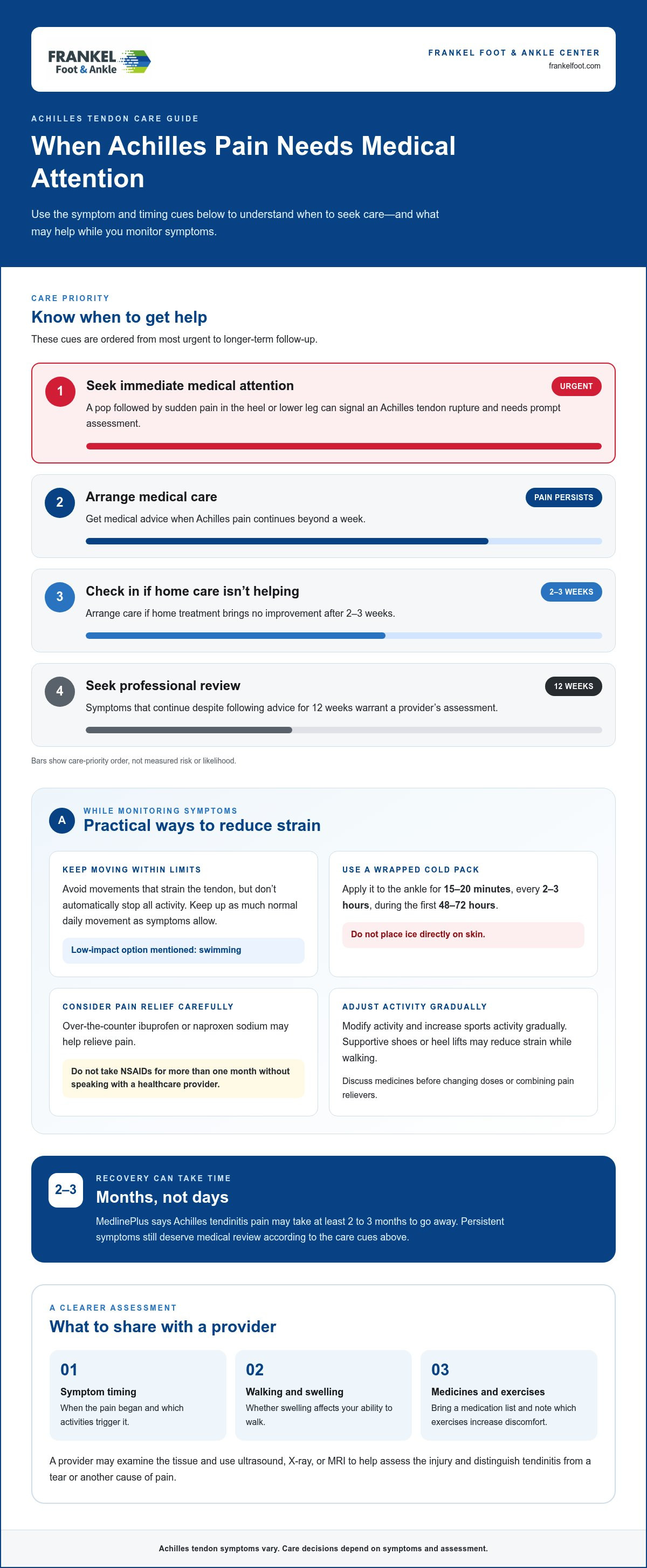
Seek immediate medical attention after a pop followed by sudden heel or lower-leg pain. This can signal an Achilles tendon rupture, which needs prompt assessment. Arrange medical care when pain persists beyond a week, or when home care brings no improvement after 2-3 weeks. Symptoms continuing despite following advice for 12 weeks also warrant professional review.
For day-to-day activity, avoid movements that strain the tendon, but don’t stop all activity automatically. Keep up as much normal daily movement as symptoms allow, and consider low-impact options such as swimming. Ice can ease pain: place a wrapped cold pack against the ankle for 15-20 minutes every 2-3 hours during the first 48-72 hours. Don’t put ice directly on skin.
Over-the-counter ibuprofen or naproxen sodium may help relieve pain. Don’t take NSAIDs for more than one month without speaking with a healthcare provider. Discuss other medicines, including prescriptions, before changing doses or combining pain relievers. Medication may ease symptoms, but it doesn’t identify the cause or restore tendon function on its own.
At an appointment, describe when symptoms began, which activities trigger pain, and whether swelling affects your walking. Bring a medication list and note which home exercises increase discomfort. A provider may examine the tissue and use ultrasound, X-ray, or MRI to assess the injury. Imaging can help distinguish tendinitis from a tear or another cause of pain. Surgery may be considered if the tendon has torn or several months of conservative therapy haven’t worked.
For help with ongoing ankle symptoms, explore ankle pain relief.
Frankel Foot & Ankle Center: Bunion surgery scarless painless
The Frankel Foot & Ankle Center provides foot and ankle pain relief for people seeking assessment and care for ongoing symptoms. Achilles tendon pain can affect walking and daily activities, so persistent discomfort warrants medical attention rather than self-care alone. Bunion surgery is a separate treatment option for bunions, not Achilles tendon problems.
Consider professional foot and ankle care when pain persists, swelling interferes with walking, or symptoms limit normal function. A timely assessment can help clarify the source of discomfort and identify suitable care. Visit Frankel Foot & Ankle Center online to learn more or get in touch.
Take the Next Step Toward Comfortable Movement
Recovery is about more than easing today’s discomfort; it’s also about returning to the activities that matter to you. When considering Achilles tendonitis treatment, think about what you hope to resume, whether that’s comfortable walking, staying active at work, or returning to a favorite sport. Clear goals can guide conversations about care and make progress easier to recognize, while health and fitness tracking tools like Hero AI can help active individuals monitor nutrition and overall wellness as they rebuild their routines.
Persistent foot or ankle pain deserves thoughtful attention, especially when it affects daily movement. Frankel Foot & Ankle Center offers foot and ankle pain relief, along with bunion surgery described as scarless and painless. For a next step, contact Frankel Foot & Ankle Center to discuss your concerns.
With a clear plan and steady support, you can work toward returning to the activities you value.
Frequently Asked Questions
What is Achilles tendinitis?
Achilles tendinitis is irritation or inflammation of the Achilles tendon, the strong band connecting the calf muscles to the heel. It can make walking, running, or pushing off uncomfortable. Symptoms may occur where the tendon meets the heel or along its middle portion. The location can help distinguish different forms of the condition.
What is the main cause of Achilles tendonitis?
Repeated stress on the tendon is a common cause, often when activity increases faster than the tendon can adapt. For example, adding more running or hill work can increase its workload. Direct damage can also contribute. Fluoroquinolone treatment is another recognized risk factor, so mention current or recent medicines during a medical assessment.
What are the symptoms and causes of Achilles tendonitis?
Typical symptoms include pain or tenderness at the back of the heel or ankle, sometimes with swelling. Overuse and damage can irritate tendon tissue, while repeated jumping or running may add strain. Pain after activity or discomfort when pushing off can suggest tendon irritation, but symptoms alone don’t establish the cause. A sudden pop with sharp pain may indicate a rupture.
How is Achilles tendonitis diagnosed, and when should you see a doctor?
A healthcare provider evaluates symptoms and may use imaging to assess the tendon or rule out another problem. Ultrasound shows the tendon in motion, MRI provides detailed tendon images, and X-rays may reveal signs of tendinitis or help exclude other conditions. Seek immediate care after a pop and sudden heel or lower-leg pain. Persistent symptoms also warrant assessment.
What is the best home treatment for Achilles tendonitis?
Home care usually combines adjusting painful activity with protected icing and keeping up comfortable daily movement. During the first 48-72 hours, ice the back of the ankle for 15-20 minutes every 2-3 hours, using a cloth barrier. Stop if skin becomes unusually red, discolored, or blistered. Avoid heat or ice if you have circulation or sensation problems.


