


Planning foot surgery starts with understanding what your insurance may cover and what you may need to pay yourself. Financing options for foot surgery in Middletown, NY, depend on your benefits, the procedure, and the payment arrangements available to you.
It’s understandable to want a clearer financial picture before making a treatment decision. Reviewing your insurance benefits alongside a procedure-specific estimate can help you identify questions, plan for your share, and consider payment approaches without relying on guesswork.
This article explains how to review insurance benefits, what can affect an estimate, and how payment plans may fit into your planning. You’ll also learn what information to gather to make a more informed decision about your care.
Key Takeaways
- Map out your expected out-of-pocket responsibility by reviewing your insurance benefits and the details of the proposed procedure.
- Compare payment-plan terms, including the payment schedule and any fees, so you can judge whether the arrangement fits your budget.
- Use a procedure-specific cost estimate to organize your questions and plan for expenses that insurance may not cover.
- For bunion concerns, Frankel Foot & Ankle Center offers scarless, painless bunion surgery as a treatment option to discuss in the context of your care.
Financing options are not discussed
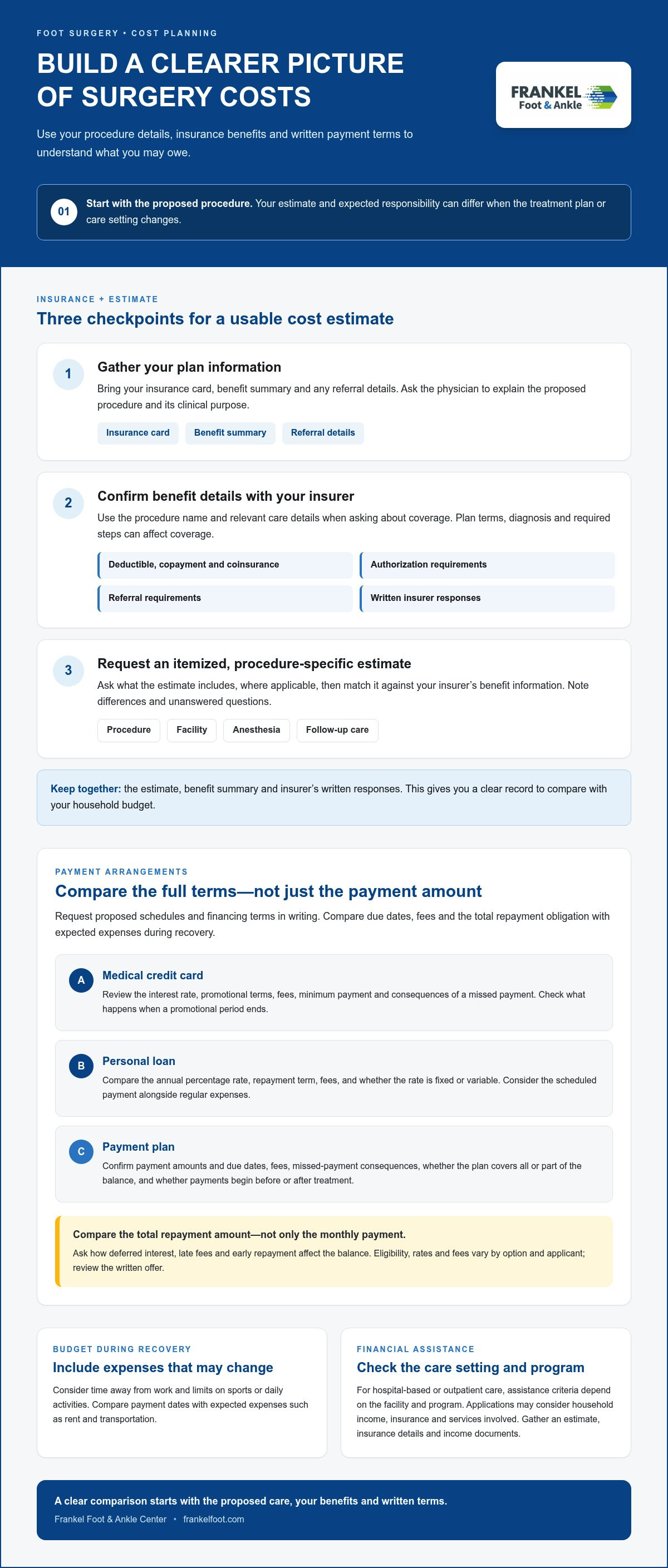
For foot surgery, separate the treatment decision from the borrowing decision. A medical credit card or personal loan can involve interest, fees, missed-payment consequences, and debt that continues during recovery. Key risks include accepting terms you can’t meet, misunderstanding promotional interest, or borrowing more than your final responsibility. Review the full repayment terms before choosing either option.
Start with a written estimate for the proposed procedure and clarify what it includes. Then compare the amount with your insurance benefits and available funds. For example, an estimate for bunion treatment may differ from one for an ankle injury because the procedure and care plan differ. The recommended approach and any care needed to support foot and ankle function also shape your planning.
- Medical credit card: Read the interest rate, promotional terms, fees, minimum payment, and consequences of missing a payment. Check what happens when a promotional period ends.
- Personal loan: Compare the annual percentage rate, repayment term, fees, and whether the rate is fixed or variable. Calculate the scheduled payment alongside regular expenses.
- Either choice: Consider how time away from work or limits on sports and daily activities could affect your budget during recovery.
Keep the estimate, insurance information, and financing terms together. This makes it easier to compare the amount due, payment dates, and total repayment obligations. If the estimate changes because the treatment plan changes, revisit the comparison before borrowing.
When exploring financing options for foot surgery in Middletown, NY, start by understanding the procedure and your expected responsibility. A clear comparison helps you weigh payment terms against your budget without letting financing alone determine which treatment may support your function.
Flexible payment plans
A payment plan can divide a large medical bill into scheduled installments. Before deciding whether it fits your budget, compare the due dates, payment amounts, fees, and consequences of missed payments.
Flexible Payment Plan Details
Request the proposed schedule in writing and compare it with expected expenses during recovery. For example, someone planning ankle surgery can map payment dates against rent, transportation, and time away from work. Confirm whether the plan covers the full balance or only part of it, and whether payments begin before or after treatment. A thorough comparison can support financial planning while keeping your care needs in view.
Financing Eligibility and Costs
Eligibility requirements, interest rates, and fees vary by financing option and applicant. Lenders commonly assess credit history, income, existing debt, and repayment ability; the written offer shows the applicable rate and charges. Compare the total repayment amount, not just the monthly payment. Ask how deferred interest, late fees, and early repayment affect the balance, then consider whether the terms remain manageable alongside other expenses, such as arthritis care.
Financial Assistance and Charity Care
For foot surgery in Orange County, NY, start by identifying whether planned care is hospital-based or outpatient. Financial assistance and charity care criteria depend on the facility and program; applications may consider household income, insurance, and the services involved. Gather an estimate, insurance details, and income documents before applying. To understand the treatment being planned, review foot and ankle treatment information as you compare care and payment considerations.
Insurance benefit research and cost estimates
Before scheduling a procedure, gather your insurance card, benefit summary, and any referral details. These documents can help you identify plan terms that may affect coverage and your expected out-of-pocket responsibility.
At your appointment, ask the physician to explain the proposed procedure and its clinical purpose. Then use the procedure name and relevant care details when discussing benefits with your insurer. Coverage can depend on plan terms, the diagnosis, and whether required steps are completed.
- Confirm benefit details: Ask about applicable deductibles, copayments, coinsurance, authorization, and referral requirements for the planned procedure.
- Request an itemized estimate: Ask which services the estimate includes, such as the procedure, facility, anesthesia, and follow-up care, where applicable.
- Compare documents: Match the estimate to your insurer’s benefit information and note any differences or unanswered items.
For example, an estimate for a procedure intended to improve mobility may change if the treatment plan or care setting changes. Keep the estimate, benefit summary, and insurer’s written responses together. This creates a clear record for comparing your expected responsibility with your household budget.
Bring your benefit questions and procedure details to a foot-care appointment, so the proposed treatment can be explained in context. Explore foot and ankle care as you prepare to discuss your needs and mobility goals.
Frankel Foot & Ankle Center: Bunion surgery scarless painless
The Frankel Foot & Ankle Center offers minimally invasive bunion surgery, also described as no-pain bunion correction. If a bunion affects your comfort or daily activities, learning about the treatment can help you discuss whether it suits your needs. The center also provides care for foot and ankle pain, with treatment focused on the area causing concern.
Before deciding on surgery, consider the treatment plan alongside your insurance benefits and estimate. Understanding the proposed procedure can help you organize questions about coverage and your expected responsibility. For concerns beyond bunions, the practice also offers fungal nail laser treatment.
To learn more about bunion surgery and foot care, visit Frankel Foot & Ankle Center online or contact the practice.
Take Your Next Step With Clarity
As you compare financing options for foot surgery in Middletown, NY, connect the financial decision with the care you need. A focused conversation about your foot or ankle concern can help you identify which treatment questions to prioritize. Bring your estimate and insurance notes so your care discussion reflects both your health needs and planning considerations.
The Frankel Foot & Ankle Center offers minimally invasive bunion surgery, also described as no-pain bunion correction, as well as care for foot and ankle pain. If one of these concerns affects your comfort or mobility, learn more and discuss your needs directly with the practice.
Contact Frankel Foot & Ankle Center to take the next step toward understanding your foot care options. A clear plan can help you move forward with greater confidence.
Frequently Asked Questions
Which foot surgeons in Middletown, NY offer financing or payment plans?
The Frankel Foot & Ankle Center provides bunion surgery and foot and ankle care in Middletown, Katonah, and Milford. Treatment services do not, by themselves, establish which payment arrangements are available. Before choosing surgery, distinguish the medical care from payment terms. Review any written plan for payment timing, interest, fees, and what happens if a payment is missed.
Do Middletown, NY foot surgeons accept health insurance, Medicare, or Medicaid?
Insurance acceptance depends on the clinician, facility, and specific plan, so don’t assume every policy or program is accepted. Review your insurer’s directory for the physician and location, then confirm network status and any referral or authorization requirements. For Medicare or Medicaid, verify that the clinician and planned service meet your coverage terms.
Do local podiatry practices offer CareCredit, medical credit cards, or in-house financing?
CareCredit, other medical credit cards, and in-house payment arrangements are separate options, and availability varies among practices in Middletown. Surgical services alone do not indicate that a practice accepts a particular card. Compare written interest terms, fees, the payment schedule, and the total repayment amount before choosing a financing method for foot care.
How can I get a foot surgery cost estimate and verify insurance coverage in Middletown, NY?
Request an itemized estimate based on the planned procedure and care setting, then compare it with your insurance benefit details. Ask which professional, facility, anesthesia, and follow-up services are included. Give your insurer the procedure description and clinician or facility information, and keep its response with the estimate. This can help identify mismatches before you make a financial commitment.
What payment options are available for urgent or emergency foot surgery in Middletown, NY?
For urgent care, payment arrangements depend on the facility, treatment plan, and insurance benefits involved. An emergency department or hospital may use billing processes different from those of an outpatient podiatry office. Ask the facility’s billing team about accepted payment methods, financial assistance applications, and when an estimate can be provided after immediate treatment needs are assessed.


