


Up to 1 in 10 Americans have plantar fasciitis, a condition that can make the first steps of the day especially painful. The plantar fascia is a thick band of tissue beneath the foot that runs from the heel to the toes and helps form the arch. When repeated strain irritates this tissue, heel pain can follow, and finding the right plantar fasciitis treatment in Middletown, NY, starts with understanding that connection.
If heel pain worsens after rest or returns when you stand or move, it can disrupt your daily routine. This guide covers common causes and symptoms, how clinicians assess heel pain, and how custom orthotics may cushion and support the foot. You’ll also learn about care options and when persistent pain calls for professional attention.
Key Takeaways
- Learn how repeated strain can irritate the plantar fascia and contribute to heel pain, and which symptoms may point to plantar fasciitis.
- Understand how corticosteroid injections may help reduce inflammation and pain as part of a treatment plan.
- See how custom orthotics can cushion and support the foot while addressing mechanical imbalances.
- Recognize why heel pain that persists or limits everyday activities deserves professional attention.
What is Plantar Fasciitis?
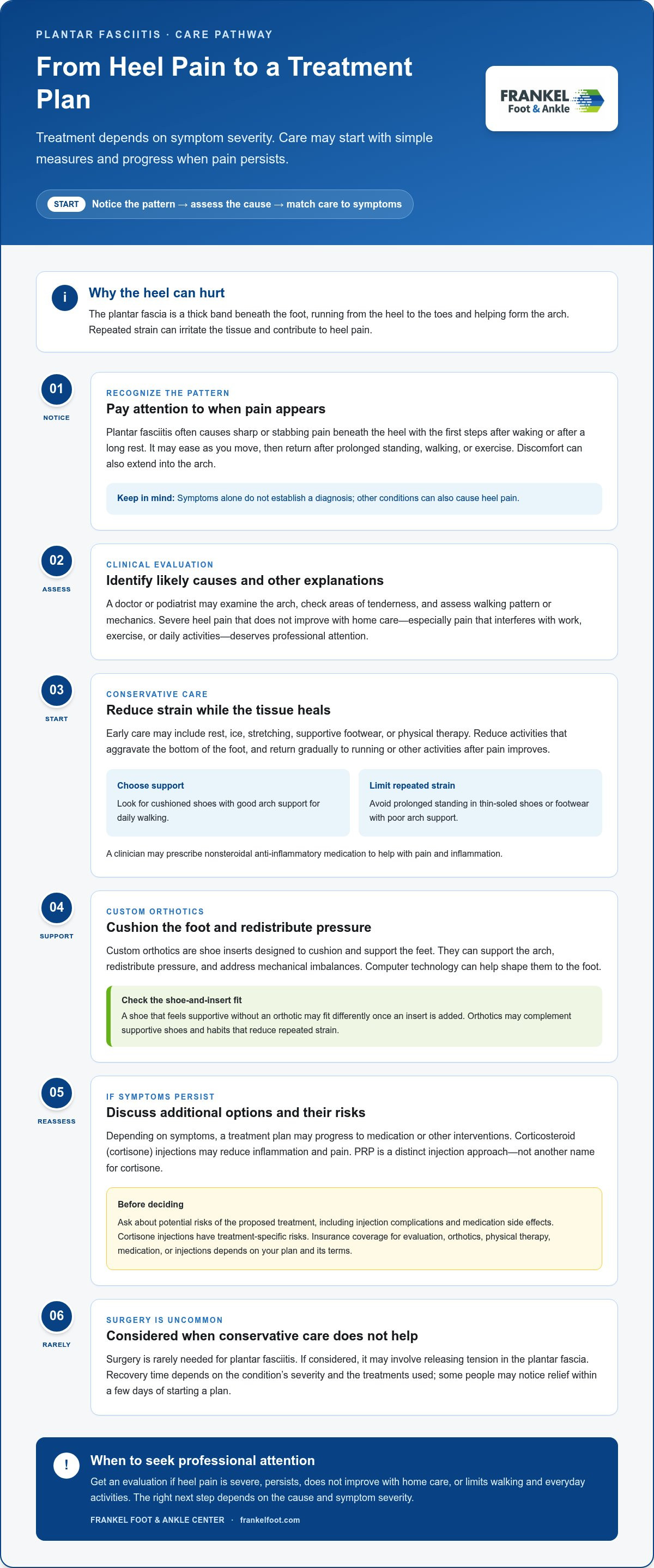
Plantar fasciitis affects up to 1 in 10 Americans. The plantar fascia is a thick band beneath the foot, running from the heel to the toes and forming the arch. Repeated strain can create small tears, irritation, inflammation, and pain. Symptoms often include sharp heel pain with the first steps after waking or after rest, sometimes easing before returning with prolonged standing or walking.
Treatment depends on symptom severity. It may begin with rest, ice, stretching, supportive footwear, or physical therapy, and progress to orthotics, medication, or other interventions. A clinician may prescribe nonsteroidal anti-inflammatory drugs for pain and inflammation. Corticosteroid, or cortisone, injections may reduce both; PRP is a distinct injection approach, not another name for cortisone. Discuss injections and other advanced treatments if symptoms persist. Surgery is rarely needed.
Insurance coverage for evaluation, orthotics, physical therapy, medication, or injections depends on your plan and its terms. Review your benefits for each treatment before proceeding. Have a doctor or podiatrist evaluate severe heel pain that doesn’t improve with home care, especially if it interferes with work, exercise, or daily activities. In Middletown, NY, an evaluation of foot and ankle conditions may include examining your arch, areas of tenderness, and walking pattern.
Recovery time depends on the condition’s severity and the treatments used. Some people may notice relief within a few days of starting a plan. Cortisone injections and surgery have treatment-specific risks, and medications may cause side effects. Before deciding, ask about the potential risks of the proposed treatment, including injection or surgical complications. If conservative care doesn’t help, surgery may be considered to release tension in the plantar fascia.
Custom orthotics
Custom orthotics can support the arch and redistribute pressure under the foot. For plantar fasciitis treatment in Middletown, NY, they may complement supportive shoes and habits that reduce repeated strain.
Custom Orthotics and Foot Support
Custom orthotics are shoe inserts designed to cushion and support the feet. Computer technology can help shape them to support the foot, reduce pain, and promote healing. Look for cushioned shoes with good arch support, and consider how an insert fits inside them. A shoe that feels supportive without an orthotic may fit differently once you add one.
Preventing Symptoms from Returning
To help prevent recurring symptoms, reduce activities that aggravate the bottom of your foot and choose supportive footwear for daily walking. Running and other activities can cause repeated stress through overuse, so return gradually after pain improves. Avoid prolonged standing in shoes with thin soles or poor arch support, which can increase strain and contribute to ongoing irritation.
Anti-inflammatory medication may ease pain and inflammation, while an orthotic supports the foot. These approaches serve different purposes and may be used together; neither replaces well-fitting, cushioned footwear. Surgery is rarely needed for plantar fasciitis. If foot pain continues to affect walking or activity, seek professional guidance about plantar fasciitis treatment in Middletown, NY.
Supportive footwear and shoe inserts that provide proper arch support are recommended to help prevent plantar fasciitis. This guidance highlights arch support as a consideration when selecting both shoes and inserts. For prevention-focused choices, look for supportive footwear and inserts that provide proper arch support, keeping the recommendation centered on consistent support for the foot.
Plantar fascia function and heel pain
The plantar fascia is a thick band of connective tissue that runs from the heel bone to the toes. It forms the foot’s arch, bears body weight, and helps absorb shock with each step. When you walk, run, or climb stairs, this tissue supports the foot as pressure shifts from heel to forefoot. Repeated stretching or overuse can irritate it, making everyday activities painful.
Plantar fasciitis often causes stabbing pain beneath the heel, especially during the first steps after sleep or a long rest. Discomfort may ease as you move, then return after prolonged standing or exercise. Pain can also extend into the arch. Because each step loads the plantar fascia, irritation may become noticeable as it stretches and bears weight. Other conditions can also cause heel pain, so symptoms alone don’t establish a diagnosis.
A podiatrist can assess tenderness, arch shape, and walking mechanics to identify likely causes and consider other explanations. Treatment may combine activity changes, stretching, physical therapy, supportive shoes, or orthotics to reduce stress on the fascia while it heals. For example, reducing an activity that triggers pain and choosing cushioned footwear can help limit repeated strain. If heel pain is severe, persists, or limits daily activities, schedule an appointment for a focused evaluation. Get help for foot pain and discuss options to relieve symptoms.
Plantar fasciitis is a common cause of heel pain. It often affects middle-aged men and women, but can also develop in people who spend a lot of time on their feet.
Frankel Foot & Ankle Center: Bunion surgery scarless painless
Frankel Foot & Ankle Center provides foot pain relief for people whose heel discomfort affects walking or daily activities. Because persistent heel pain can have different causes, identifying what is contributing to it helps guide the next step. The information above explains how plantar fascia strain and foot support relate to symptoms. Ongoing or activity-limiting pain may warrant professional attention.
The practice also offers ankle pain relief, scarless painless bunion surgery, and laser for fungal toenails. These services address different concerns, so the relevant option depends on the foot or ankle problem you’re experiencing. If heel pain is the concern, explore the practice’s foot pain relief offering as a next step. For information, visit Frankel Foot & Ankle Center.
Take the Next Step Toward More Comfortable Movement
Heel pain can make everyday plans uncertain, especially when walking, work, or exercise becomes uncomfortable. Before seeking care, note when the pain appears, which activities aggravate it, and what changes have helped. Sharing these details can keep the discussion focused on your symptoms and daily needs.
For plantar fasciitis treatment in Middletown, NY, seek guidance when heel discomfort persists or limits the activities that matter to you. Frankel Foot & Ankle Center offers foot pain relief, ankle pain relief, and scarless painless bunion surgery. Contact Frankel Foot & Ankle Center to discuss your foot or ankle concerns. With a clearer understanding of the problem, you can take a considered step toward moving with greater comfort.
Frequently Asked Questions
What causes heel pain?
Plantar fascia irritation can cause heel pain, but other problems may lead to similar discomfort. A stone bruise, for example, occurs when a hard object injures the fat pad beneath the foot. A heel spur or stress fracture may also contribute. Pain location, recent activity, and tenderness can help distinguish possible causes, so persistent or severe pain merits an examination.
What are the most effective treatments for plantar fasciitis?
Effective care often combines approaches rather than relying on a single treatment. A clinician may recommend reducing aggravating activity, stretching, supportive footwear, taping, or a night splint. If symptoms continue, physical therapy, custom orthotics, medication, injections, or shockwave therapy may be considered. The choice depends on symptom severity, foot mechanics, health history, and response to earlier care.
What home remedies and exercises help plantar fasciitis?
For early discomfort, apply an ice pack to the painful area for 10 to 15 minutes, at least twice a day during the first few days. Gentle plantar fascia and Achilles tendon stretches can help maintain flexibility; lower-leg strengthening may also support recovery. Reduce activities that worsen pain, and consider low-impact exercise such as cycling or swimming.
Do Middletown, NY clinics offer physical therapy, custom orthotics, or shockwave therapy for plantar fasciitis?
Yes. Physical therapy, custom orthotics, and shockwave therapy are options used to treat plantar fasciitis in Middletown. Physical therapy may combine stretching with lower-leg strengthening, while shockwave therapy applies sound waves to the painful area. A care plan may use one approach or combine options based on symptoms, foot mechanics, and response to treatment.


