


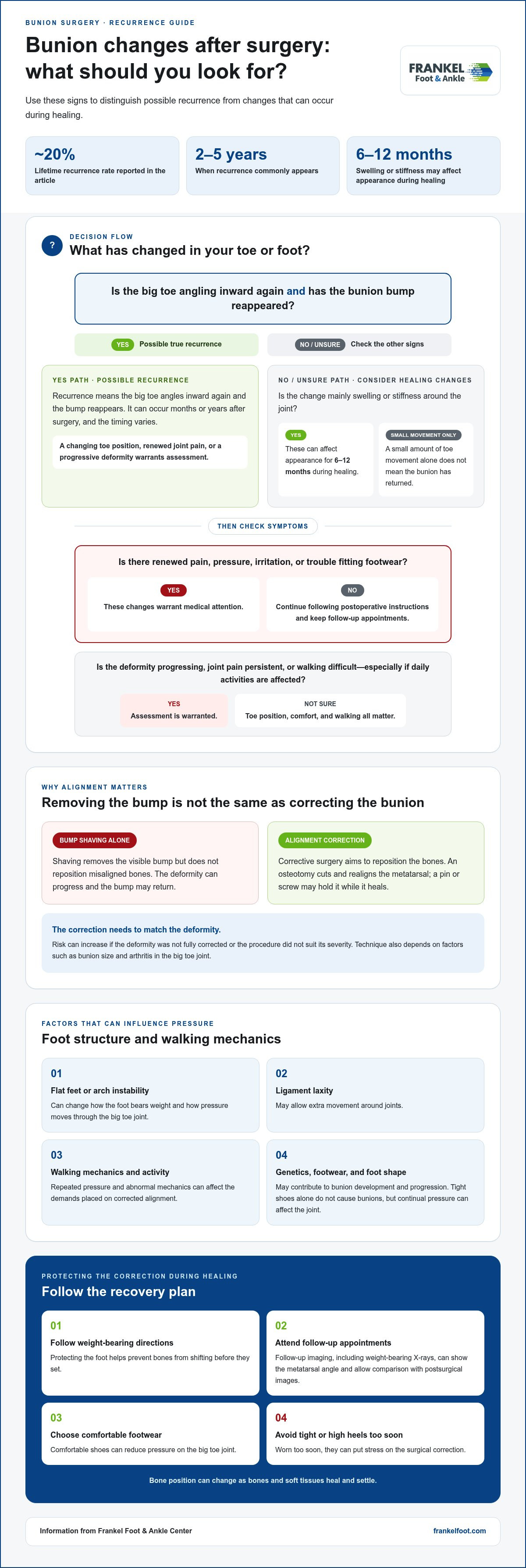
Bunion surgery can provide lasting correction, but recurrence is possible. For anyone asking “will my bunion come back,” the answer is that a bunion can return months or years after surgery, with a lifetime recurrence rate of about 20%. A returning bump doesn’t always mean the same thing as normal healing, so changes in toe position, comfort, and walking matter.
It’s understandable to want reassurance that surgery will address the problem for good. Recurrence depends on more than removing the bump: bone alignment, foot structure, and the way you walk can all influence the result.
This article explains how these factors may affect recurrence and what signs can help distinguish a returning bunion from swelling or stiffness during recovery. You’ll also learn why correcting the underlying alignment matters and how following postoperative instructions can support healing.
Key Takeaways
- A changing toe position, renewed joint irritation, or a returning bump may warrant assessment, while swelling and stiffness can also be part of healing.
- Removing the visible bump alone may leave the underlying bone misalignment unchanged; correction focuses on restoring alignment.
- Foot structure and walking mechanics, including arch instability and ligament laxity, can influence how pressure moves through the big toe joint.
- Follow recovery instructions and notice whether pain or walking difficulty persists; these details help guide the next steps for your foot.
Can a Bunion Grow Back after Bunion Surgery?
If you’re asking, “Will my bunion come back?” yes, recurrence is possible months or years after surgery. The lifetime recurrence rate is about 20%, and it can follow any surgical technique. Risk can increase if the deformity wasn’t fully corrected or the procedure didn’t suit its severity.
Recognizing True Recurrence During Healing
True recurrence means the big toe angles inward again and the bunion bump reappears. Swelling and stiffness around the joint can also affect its appearance during healing, sometimes for 6 to 12 months after surgery. A small amount of toe movement alone doesn’t mean the bunion has returned. Renewed pain, pressure, irritation, or trouble fitting footwear warrant medical attention.
Recurrence Timing and Severity
Recurrence commonly appears within two to five years, but can occur sooner or later. “Will my bunion come back?” has no single timeline, because severity and the adequacy of correction matter. A progressive deformity, persistent joint pain, or difficulty walking deserves assessment, especially when it interferes with daily activities.
Recurrence After Bone Shaving
Shaving removes the visible bump but doesn’t reposition misaligned bones, so the deformity can progress and the bump may return. Mild recurrence may respond to supportive footwear, padding, orthotics, or activity adjustments. Persistent pain, worsening deformity, or walking difficulty may lead to revision surgery if conservative care no longer helps. Treatment options and costs depend on the case; costs are given after a quote request.
Postoperative Instructions and Prevention
Following postoperative instructions helps protect the correction while bones and soft tissues heal. Stick to weight-bearing directions and attend follow-up appointments. Tight or high-heeled shoes worn too soon can put stress on the surgical correction, while comfortable shoes can reduce pressure on the big toe joint. Inadequate protection during healing may allow the bones to shift before they set.
Underlying bone alignment and bump removal
A bunion is a change in bone position, not simply a bump on the skin. The big toe joint shifts as the metatarsal moves out of alignment and pushes toward the skin. As the deformity progresses, the toe may angle toward the second toe and the bump may become more prominent. Removing the bump alone may ease discomfort temporarily without correcting the underlying misalignment.
Corrective surgery aims to reposition the bones. An osteotomy involves cutting and realigning the metatarsal; a pin or screw may hold the bone in place as it heals. The goal is to restore alignment, not just reduce the bump. With a more severe deformity, the correction needs to address the extent of the misalignment. The appropriate technique also depends on factors such as bunion size and arthritis in the big toe joint.
Bone position can change during recovery as bones and soft tissues heal and settle. Following weight-bearing instructions and protecting the foot during this period helps prevent bones from shifting before they set. Follow-up imaging, including weight-bearing X-rays, can show the metatarsal angle and help compare alignment with postsurgical images.
Genetics, foot structure, footwear, and activity can all contribute to bunion development and progression. Conservative care, such as shoe modification or padding, may ease symptoms but doesn’t realign displaced bones. If discomfort persists or walking becomes difficult, an assessment of foot and ankle alignment can help clarify whether the underlying position needs attention.
Underlying foot structure and walking mechanics
Foot structure and walking mechanics can affect pressure on the big toe joint after correction. Flat feet, arch instability, ligament laxity, and abnormal walking mechanics may contribute to recurrence if they are not addressed.
Foot Shape and Activity Risks
Foot shape and repeated pressure can affect how forces travel through the big toe joint when you walk. Flat feet or an unstable arch, for example, can change how the foot bears weight, while ligament laxity can allow extra movement around joints. These factors matter because corrected alignment still needs to function during everyday activities. Footwear and activity can also contribute to bunion development and progression. Tight shoes alone don’t cause bunions, but continual pressure can affect the joint.
Genetics and Foot Structure
Genetics can influence inherited foot structure, which may shape how pressure is distributed across the forefoot. Bunions can be inherited or relate to footwear and activity, so family history is one factor, not the whole picture. Foot shape helps explain why the same correction may face different mechanical demands from one person to another. Custom insoles are not usually helpful for bunions unless another foot-shape issue is present, such as arch instability.
After surgery, comfortable footwear and attention to walking mechanics can help limit unnecessary pressure on the joint. If foot shape or walking discomfort is affecting your alignment, discuss bunion alignment and foot mechanics.
Frankel Foot & Ankle Center: Bunion surgery scarless painless
Frankel Foot & Ankle Center offers scarless, painless bunion surgery for people seeking treatment for a bunion deformity. If your big toe is shifting inward again, the bump is returning, or discomfort is affecting walking, an evaluation can help clarify whether the change reflects healing, recurrence, or another source of foot pain. The factors discussed above, including bone alignment and foot mechanics, help explain why symptoms and treatment needs vary. Bunion surgery is one option for addressing a bunion; persistent foot or ankle discomfort may also call for care focused on the pain itself. To learn more or discuss your concerns, visit Frankel Foot & Ankle Center.
Choose a Next Step That Fits Your Foot
“Will my bunion come back?” is a personal concern, and persistent discomfort or changes in walking can make it hard to know what to do next. Describe your symptoms, recovery experience, and priorities clearly. This can help focus a conversation on what matters to you, whether you want to understand a returning deformity or address ongoing pain.
Frankel Foot & Ankle Center offers bunion surgery described as scarless and painless, as well as foot pain relief and ankle pain relief. If you’re ready to discuss your concerns and possible care, contact Frankel Foot & Ankle Center. Taking a thoughtful next step can help you move toward greater comfort and confidence.
Frequently Asked Questions
How Common Is Bunion Recurrence?
About 20% of patients experience bunion recurrence over their lifetime. Recurrence can follow any type of surgical correction, so the technique alone doesn’t determine the outcome. A useful way to interpret the risk is to watch for changes in toe position and daily function over time, rather than judging the result by the bump’s appearance alone.
How can you prevent a bunion from growing back?
No measure can ensure a bunion won’t recur, but protecting the correction during healing matters. Follow your surgeon’s weight-bearing directions, attend follow-up visits, and avoid returning to tight or high-heeled shoes too soon. Supportive shoes with a wide toe box reduce pressure on the big toe joint. Annual follow-up check-ins can also help track alignment in the years after surgery.
How successful are bunion operations and what are the risks?
Bunion surgery aims to correct the deformity and improve symptoms, but recurrence or overcorrection can occur. Consider pain, walking ability, and shoe comfort when assessing the result, not appearance alone. Persistent symptoms may require further treatment. A second operation, called revision surgery, may be considered when pain or progressive deformity affects function.
What Does It Mean for a Bunion to “Come Back”?
A bunion may have returned when the big toe joint shifts toward its previous misaligned position, often making the bump noticeable again. A little toe movement or a change in appearance during recovery does not by itself establish recurrence. The practical distinction is whether toe alignment, joint symptoms, or everyday function continue to worsen after healing.
What If I already Had A Bunionectomy And My Bunion Returned?
Start by focusing on symptoms and function: note whether pain persists, walking is harder, or the deformity is progressing. Weight-bearing X-rays can measure the metatarsal angle and compare alignment with postsurgical images. Mild symptoms can be managed with supportive shoes, padding, orthotics, or activity changes; persistent problems can lead to consideration of revision. Frankel Foot & Ankle Center serves patients in Middletown and Katonah, New York, and Milford, Pennsylvania.


