


An ankle that repeatedly gives way is more than a lingering sprain. Chronic ankle instability generally means instability that has persisted for more than 6 months, and chronic ankle instability treatment is guided by examination findings, test results, and your activity level. The problem may involve a feeling of instability, measurable looseness in the ankle, or both.
A previous sprain that still affects walking, exercise, or confidence on uneven ground can be frustrating. Chronic ankle instability may develop after repeated sprains or other injuries. This article explains the symptoms to watch for and how a clinician assesses ankle movement and stability. In some cases, stress X-rays can help identify ligament laxity when symptoms are not clearly visible during an examination. Understanding the assessment can make the diagnosis and next steps in care easier to follow.
Key Takeaways
- Ongoing ankle instability is generally considered chronic when it persists for more than 6 months, often after repeated sprains.
- A brace can support the ankle and help protect healing ligaments, especially during sports or other higher-risk activities.
- Diagnosis combines your injury history and physical assessment; stress X-rays can help reveal mechanical looseness in the joint.
- Recognizing recurring ankle “giving way,” discomfort, or swelling can help you understand when an ankle evaluation and pain relief may be useful.
What is ankle instability?
Ankle instability means the joint feels unreliable or repeatedly gives way, often after sprains. It is generally considered chronic when instability has persisted for more than 6 months. The ankle may feel unstable during walking, exercise, or changes in direction. Repeated sprains can stretch or damage ligaments, making it harder to maintain stability. The condition can involve symptoms, measurable looseness, or both.
Non-surgical care may combine bracing, physical therapy, orthotics, neuromuscular training, and proprioceptive exercises. Focused therapy strengthens surrounding muscles, improves balance and range of motion, and retrains movement. Most patients need 6-12 weeks of focused therapy. A proper plan reflects examination findings, test results, and activity level.
An ankle brace supports an unstable joint and may help prevent it from turning into another sprain. It can protect healing ligaments and reduce repeat-sprain risk, particularly during sports or other high-risk activities. Bracing can reduce ankle pain and provide support without interfering with daily activities, exercise, or sports.
Ankle taping also provides external support and may be used for a particular activity; a brace offers a removable support option. Neither replaces rehabilitation or repairs damaged ligaments like a surgical procedure. Proper support should allow comfortable walking and movement. Swelling and inflammation may accompany sprains, while repeated giving-way episodes can signal that support alone isn't retraining balance. These measures can be part of chronic ankle instability treatment alongside rehabilitation, matched to the ankle’s stability and activity demands.
Diagnosis through physical assessment and stress X-rays
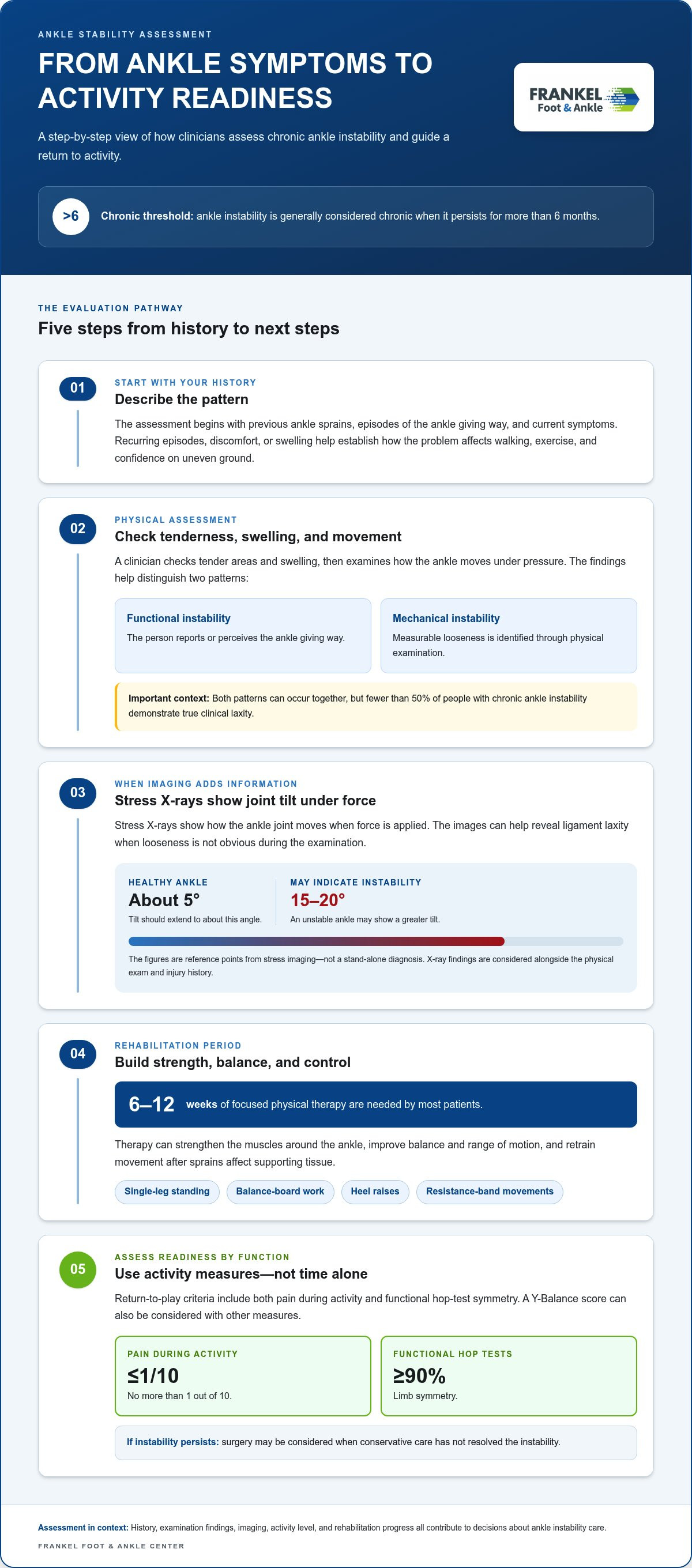
Assessment starts with your history of ankle sprains, episodes of giving way, and current symptoms. A clinician checks for tender areas, swelling, and instability, then examines how the ankle moves under pressure. Functional instability describes reported or perceived giving way; mechanical instability is identified through physical examination. Both patterns can occur together, but fewer than 50% of people with chronic ankle instability demonstrate true clinical laxity.
Stress X-rays show how the ankle joint moves when force is applied. A healthy ankle’s tilt should extend to about 5 degrees, while an unstable ankle may show a tilt of 15 to 20 degrees. These images add information about ligament laxity, but they’re considered alongside the physical findings and injury history. Imaging helps distinguish measurable looseness from symptoms that don’t correspond to obvious clinical laxity.
Physical therapy helps strengthen the muscles around the ankle and retrain balance after sprains have affected supporting tissue. Exercises may include single-leg standing, balance-board work, heel raises, and resistance-band movements. Most patients need 6-12 weeks of focused therapy. This answers a common concern: improvement usually develops through a structured rehabilitation period, rather than one exercise or a brace alone.
Progression toward activity is assessed through function, not simply elapsed time. Return-to-play criteria include pain of no more than 1/10 during activity and at least 90% limb symmetry on functional hop tests. A Y-Balance score can be considered alongside other measures when assessing readiness for increased activity. These measures help assess whether balance, strength, and control are ready for increased activity; surgery may be considered if instability persists despite conservative care.
Causes and symptoms of chronic ankle instability
Ligament injuries and repeated ankle sprains can make the foot and ankle feel unreliable during sports or everyday movement. In the United States, treatment costs vary depending on the care involved, such as assessment, imaging, bracing, physical therapy, or surgery. Insurance coverage also varies by plan and service.
Defining Ankle Instability
Ankle instability is recurring giving way of the outer ankle, often after a sprain. It’s generally considered chronic when it persists for more than 6 months. The distinction matters because ongoing instability can interfere with walking, sports, and everyday motion. Recognizing the pattern helps separate a single injury from a condition involving repeated episodes and persistent difficulty trusting the joint.
Causes and Repeated Ankle Sprains
Repeated sprains can stretch or weaken ankle ligaments, making further turning injuries more likely. The anterior talofibular ligament is the lateral ankle ligament most commonly injured in a sprain; up to 40% of acute ankle sprains develop into chronic instability. Indoor and court sports are modifiable risk factors, as is high-intensity training more than 3 days per week. Rehabilitation and bracing can support recovery, while persistent instability may lead clinicians to consider ligament repair or reconstruction.
Symptoms of Chronic Ankle Instability
Common signs include recurring ankle “giving way,” persistent discomfort or swelling, and pain or tenderness. Some people describe the ankle as wobbly, especially during sports, on uneven ground, or when changing direction. Repeated episodes matter because each new sprain can further stretch ligaments and increase the chance of additional ankle problems. For foot and ankle pain affecting your activities, explore ankle pain relief as a possible next step.
Frankel Foot & Ankle Center: Bunion surgery scarless painless
Frankel Foot & Ankle Center provides foot and ankle pain relief, including care for ankle pain that affects walking, exercise, or daily activities. Repeated giving-way episodes, pain, or swelling are reasons to seek an assessment, especially if symptoms persist after a sprain. A clear diagnosis helps distinguish instability from other causes of ankle pain and guides appropriate care at the Center’s Milford, Pennsylvania; Middletown, New York; and Katonah, New York offices.
Bracing and rehabilitation are common nonsurgical approaches to instability, while surgery may be considered when substantial instability persists despite conservative treatment. The appropriate next step depends on symptoms and clinical findings. If ankle pain is limiting your movement, Frankel Foot & Ankle Center can be a resource for relief. Visit Frankel Foot & Ankle Center online to learn more.
Take the Next Step Toward Comfortable Movement
Choosing chronic ankle instability treatment starts with understanding how symptoms affect your movement and daily life. Note when your ankle feels unreliable, which activities bring on discomfort, and how the problem has changed over time. Sharing these details can help guide a focused conversation about your foot and ankle concerns.
Frankel Foot & Ankle Center offers ankle pain relief and foot pain relief, as well as scarless, painless bunion surgery. If ankle discomfort is limiting your routine, you can contact Frankel Foot & Ankle Center to discuss a next step. You deserve care that takes your concerns seriously and helps you move forward with greater confidence.
Frequently Asked Questions
When Is Surgery Needed?
Surgery is considered when substantial instability continues despite conservative treatment, including bracing and rehabilitation. Nonsurgical management is recommended for at least the first 2 months before surgery is considered. If persistent instability limits activity, ligament repair or reconstruction may restore ankle stability; a Broström procedure is one surgical option when conservative care has failed.
What is chronic ankle instability and what are its symptoms?
Chronic ankle instability is ongoing ankle instability that has persisted for more than 6 months. Symptoms can include recurring giving way, discomfort, swelling, or tenderness. Some people report instability even without clear looseness on examination, so the experience of the ankle matters alongside physical findings. Notice whether episodes happen during particular movements, such as turning or changing direction.
How is chronic ankle instability diagnosed?
Diagnosis combines your history with an examination and, when useful, imaging. Describe previous sprains and situations that trigger the ankle to give way. The clinician checks for tenderness, swelling, and joint instability. Symptoms do not always correspond to measurable ligament laxity. Subtalar instability can cause similar symptoms, so identifying the source helps guide the next steps in care.
What ankle-strengthening and balance exercises are recommended?
Rehabilitation commonly includes single-leg standing, balance-board exercises, heel raises, and resistance-band work. These activities train ankle muscles and balance control so the joint can respond to changes in support. A therapist can adapt the exercises to your ability and gradually build toward everyday demands, such as walking on uneven ground or changing direction during sports.
Do ankle braces or taping help prevent giving-way episodes?
An ankle brace can support an unstable joint, protect healing ligaments, and help reduce the risk of another sprain, especially during sports or other higher-risk activities. It may also provide support during everyday movement. Bracing does not replace rehabilitation, which addresses strength and balance. Taping can provide external support too; choose the option based on the activity and clinical assessment.


