

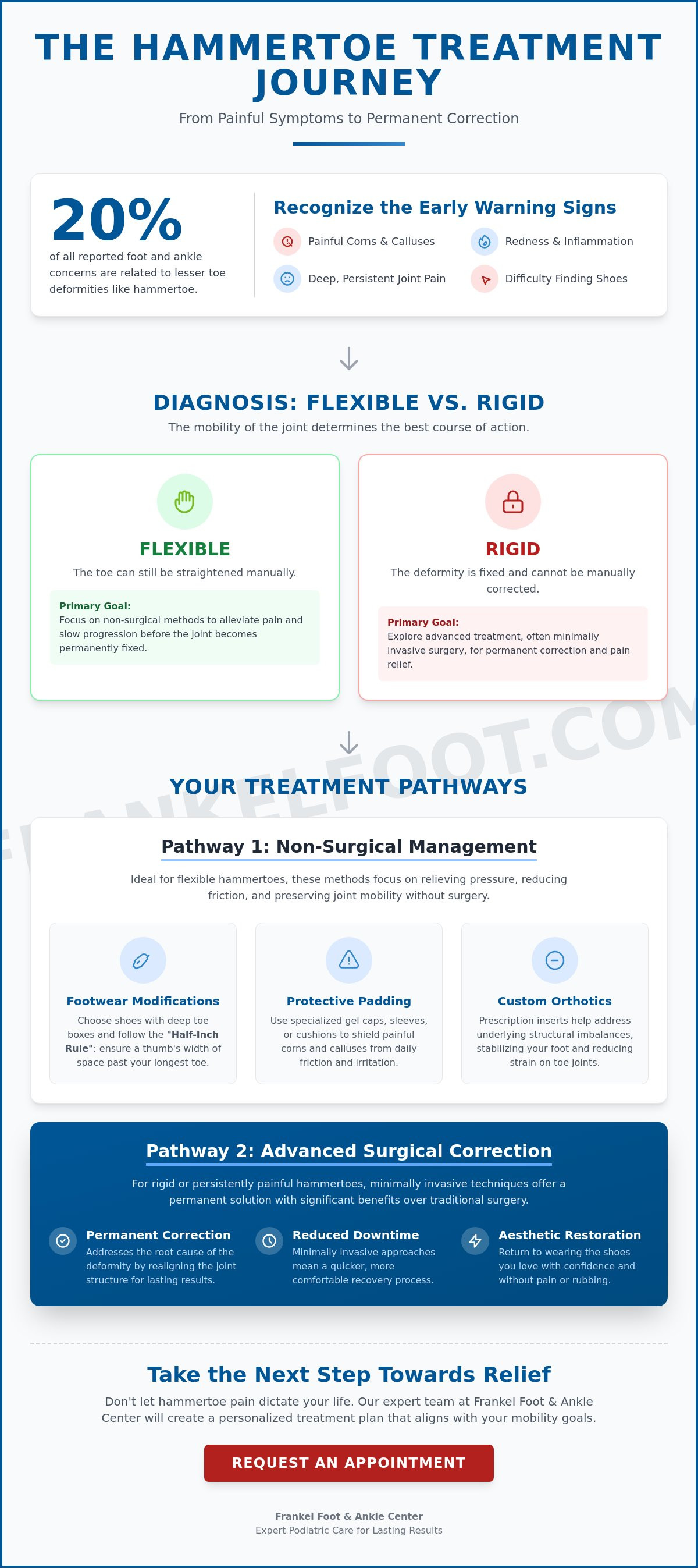
Did you know that lesser toe deformities account for up to 20% of all reported foot and ankle concerns? If you've spent years hiding your feet or dreading the morning routine of finding shoes that don't pinch, you're certainly not alone. Many patients arrive at our clinic feeling frustrated by the constant rubbing and the aesthetic changes that make certain footwear feel impossible to wear. Seeking effective hammertoe treatment shouldn't mean choosing between persistent discomfort and a long, invasive recovery.
We understand that the fear of surgery often keeps people from seeking the care they deserve. At Frankel Foot & Ankle Center, we believe your journey should move from simple symptom management to permanent correction using techniques that prioritize your comfort and aesthetic integrity. In this guide, you'll discover the complete spectrum of care, from conservative non-invasive relief to advanced minimally invasive surgical correction. We'll explore how modern methodology can restore your ability to walk pain-free and return to the stylish shoes you love with minimal downtime.
Key Takeaways
- Identify the clinical progression of toe contractures and how early detection of joint bending can prevent long-term rigidity.
- Master conservative management techniques, including specialized padding and the essential "half-inch rule" for selecting footwear that accommodates your foot's natural shape.
- Understand the criteria for advanced hammertoe treatment and how minimally invasive surgical techniques offer a path to permanent correction with reduced downtime.
- Navigate the recovery process with confidence by learning about essential milestones, from initial surgical support to the successful management of post-operative swelling.
- Discover a compassionate, expert-led approach that exhaustively explores non-surgical options to ensure your treatment plan aligns with your personal mobility goals.
Understanding Hammertoe: Symptoms, Causes, and Progression
A hammertoe is far more than a simple cosmetic issue; it's a progressive contracture deformity that primarily affects the second, third, or fourth toes. When patients seek to understand What is hammertoe?, they're often describing a middle joint that has begun to buckle upward, creating a distinctive "V" shape. This structural shift occurs when the tendons and ligaments surrounding the toe joint become imbalanced, causing the toe to remain in a curled position. Without a timely approach to hammertoe treatment, this misalignment can lead to permanent stiffness and chronic pain.
The symptoms of this condition typically begin with visible redness or inflammation at the top of the affected joint. As the toe continues to rub against the interior of your footwear, the skin often develops painful corns or thick calluses as a protective response to the friction. Your experience may transition from a mild, localized ache during physical activity to a deep, persistent joint pain that makes even standing uncomfortable. Recognizing these early warning signs is the first step toward reclaiming your mobility and comfort.
Flexible vs. Rigid Hammertoes
Clinical progression is categorized by the mobility of the joint. In the "flexible" stage, the toe can still be straightened manually, even if it feels strained. However, if left unaddressed, the surrounding tendons continue to tighten until the joint becomes "rigid." At this point, the deformity is fixed, and the toe cannot be flattened by hand. The effectiveness of conservative hammertoe treatment often depends on this distinction; the earlier you intervene, the more options you have for non-invasive relief before the joint becomes permanently locked in place.
Primary Causes and Risk Factors
Structural imbalances and lifestyle choices often work in tandem to cause this deformity. Footwear is a leading factor, as high heels or shoes with narrow, pointed toe boxes force the toes into a cramped position for extended periods. This external pressure is frequently exacerbated by internal muscle imbalances or previous trauma to the foot. Additionally, there is a significant clinical correlation between the development of bunions and hammertoes. As a bunion shifts the big toe toward the others, it reduces available space, forcing the neighboring toes to buckle and bend to accommodate the change in foot structure.
Non-Surgical Hammertoe Treatments: Managing Pain and Flexibility
Many patients initially seek non-invasive ways to manage their symptoms before considering more permanent solutions. Exploring conservative hammertoe treatment options is an excellent starting point for those with flexible deformities. These strategies focus on two primary goals: alleviating the immediate pain caused by friction and slowing the progression of the joint contracture. While non-surgical methods won't straighten a bone that has already shifted, they can provide the comfort needed to remain active and avoid more intensive interventions.
Effective management begins with a clear understanding of the difference between temporary comfort and long-term stabilization. While a simple adhesive pad might stop a shoe from rubbing today, it does nothing to address the tendon imbalance pulling the toe out of alignment. A comprehensive non-surgical hammertoe treatment plan combines mechanical changes with daily physical maintenance to preserve as much joint mobility as possible.
Footwear Modifications and Padding
The most immediate relief often comes from changing the environment around your toes. We recommend the "half-inch rule," which dictates that there should be at least a half-inch of space between your longest toe and the shoe's tip. This prevents the constant pressure that encourages the middle joint to buckle. Consider these adjustments for daily comfort:
- Deep Toe Boxes: Seek footwear with a high vertical clearance to prevent the top of the bent joint from rubbing against the shoe's upper material.
- Protective Padding: Specialized gel caps and regulators can be worn daily to shield corns and calluses from irritation.
- Avoid the "Break-In" Myth: Shoes should feel comfortable the moment you put them on. Expecting a shoe to stretch over time often leads to unnecessary joint strain and accelerated deformity.
Custom Orthotics and Therapeutic Exercises
Beyond simple comfort, effective care requires addressing the biomechanical imbalances that cause the toe to curl. Custom-molded orthotic devices are far superior to generic store-bought inserts because they're tailored to your specific foot structure. By stabilizing the arch and redistributing pressure away from the forefoot, these devices reduce the workload on the tendons that pull the toes into a bent position. This stabilization is vital for preventing a flexible toe from becoming a rigid, fixed deformity.
This mechanical support is most effective when paired with daily stretches and strengthening exercises. Stretching the extensor tendons on the top of the foot and the flexor tendons on the bottom helps maintain the joint's remaining flexibility. If these conservative measures are no longer providing sufficient foot pain relief, it may be an indication that the joint is transitioning from flexible to rigid, requiring a more advanced clinical evaluation.
Advanced Surgical Correction: Minimally Invasive Options in Middletown
When conservative measures like custom orthotics and footwear modifications no longer provide sufficient relief, surgical intervention becomes the definitive path toward permanent correction. We reserve surgery for cases where pain interferes with daily activities or when the deformity has transitioned into a rigid state that cannot be managed non-invasively. Modern hammertoe treatment has evolved significantly; we no longer rely solely on traditional open procedures that require long incisions and extended recovery periods. Instead, our focus has shifted toward techniques that preserve the structural integrity of the foot while prioritizing your comfort and aesthetic results.
The standard of care at our center involves minimally invasive hammertoe surgery, a progressive methodology that utilizes tiny incisions often no larger than a few millimeters. By using specialized instruments, we can realign the bone and balance the tendons without the extensive tissue disruption associated with older methods. This approach results in significantly less post-operative swelling and minimal scarring. For many patients, the ability to achieve a straight, functional toe without the burden of a conspicuous surgical mark is a vital component of their recovery journey.
Modern Surgical Techniques
Every foot is unique, which is why we tailor the surgical approach to your specific deformity. For flexible hammertoes, a simple tendon transfer or release may be sufficient to restore balance. If the joint is rigid, a joint arthroplasty or fusion may be necessary to ensure long-term alignment. We often utilize internal fixation, such as small implants or pins, to maintain the new position of the toe as it heals. Additionally, many patients choose to address multiple concerns at once by combining their correction with scarless bunion surgery, allowing for a comprehensive forefoot restoration in a single, streamlined session.
What to Expect During and After Surgery
Your procedure is performed on an outpatient basis, meaning you will return home the same day. We prioritize a safe and comfortable experience, typically utilizing local anesthesia combined with light sedation to ensure you remain pain-free throughout the process. Recovery milestones are designed to get you back to your routine as quickly as possible. Most patients are able to begin protected walking in a specialized surgical boot immediately after the procedure. This early mobility is essential for maintaining circulation and encouraging a faster return to your favorite footwear. Our clinical team provides detailed guidance at every step, ensuring you feel supported from the initial consultation through the final stages of healing.
Recovery and Preventing Hammertoe Recurrence
Achieving a successful outcome from your hammertoe treatment requires a dedicated commitment to the post-operative phase. While the surgical correction addresses the bone and tendon misalignment, the recovery period ensures that these changes remain permanent. Our clinical team prioritizes your comfort during this transition, moving from the precision of the operating room to a patient-centered rehabilitation plan. Managing post-operative edema, or swelling, is a critical component of the initial weeks following your procedure in 2026. By following a structured protocol of elevation and icing, you protect the structural integrity of the correction and encourage faster tissue healing.
Long-term success also depends on addressing the underlying biomechanical factors that caused the deformity initially. National data suggests that recurrence and revision rates for these procedures can reach up to 10%, often due to a return to improper footwear or unaddressed muscle imbalances. We focus on a comprehensive strategy that combines surgical excellence with lifestyle modifications to ensure you remain active and pain-free for years to come. Routine podiatric check-ups allow us to monitor your gait and ensure your foot mechanics are properly stabilized.
The Recovery Timeline
Your journey toward full mobility follows a methodical schedule designed to balance rest with gradual activity. During the first two weeks, the focus remains on wound care and maintaining the alignment of the toe within a protective surgical boot. Between weeks three and six, most patients begin a gradual transition into supportive athletic shoes as swelling subsides. We typically clear patients for high-impact activities and vigorous exercise after the eight to twelve-week mark, depending on the specific nature of the correction and the individual's healing rate.
Lifestyle Adjustments for Lasting Results
The choices you make after healing are just as important as the surgery itself. Continuing the use of custom orthotics is often recommended to maintain the stabilization of the arch and prevent the tendons from pulling the toes back into a contracted position. It's also an ideal time to evaluate your shoe closet; discarding narrow, pointed footwear in favor of shoes with a spacious toe box is essential. For patients with underlying conditions like diabetes, daily foot inspections remain a vital habit to identify any new areas of pressure or irritation before they escalate. If you're ready to move beyond temporary fixes and achieve lasting foot pain relief, our team is here to guide your recovery.
Expert Podiatric Care at Frankel Foot & Ankle Center
Choosing the right provider for your hammertoe treatment is a decision that directly impacts your long-term mobility and quality of life. At Frankel Foot & Ankle Center, Dr. Marc Frankel combines a high level of clinical specialization with a deeply compassionate, patient-centered approach. We believe that every individual's journey toward recovery is unique; therefore, we move from a thorough diagnostic evaluation to a customized plan that prioritizes your specific health goals. Our Middletown office serves as a dedicated resource for patients throughout Orange County who are seeking sophisticated medical solutions delivered with genuine care.
Precision is the cornerstone of our practice. We utilize state-of-the-art diagnostic imaging on-site to evaluate the exact degree of your joint contracture and identify any underlying biomechanical imbalances. This immediate access to advanced diagnostics ensures that your hammertoe treatment plan is based on accurate, real-time data. By addressing the root cause of the deformity rather than just the visible symptoms, we can offer more predictable and lasting results. Our team coordinates every aspect of your care, ensuring a seamless transition from your initial consultation through your final recovery milestone.
Why Choose Dr. Frankel in Middletown?
Dr. Frankel brings decades of experience in both surgical and non-surgical foot care to the Middletown community. His philosophy is rooted in the belief that the most effective care is often the least invasive one that achieves the desired result. We exhaustively explore conservative options, such as custom orthotics and therapeutic stretching, before considering surgical intervention. When surgery is necessary, Dr. Frankel focuses on modern techniques designed to provide "scarless and painless" outcomes. This dedication to aesthetic integrity and physical comfort has made our center a trusted destination for those seeking comprehensive foot pain relief without the burden of a long, difficult recovery.
Schedule Your Consultation Today
Preparing for your first visit is the first step toward reclaiming your active lifestyle. We recommend bringing the footwear you wear most frequently, as your shoe wear patterns provide valuable insights into your foot mechanics. During your comprehensive evaluation, we'll discuss your symptoms, review your imaging, and explain every available treatment path in a clear, step-by-step manner. Our goal is to ensure you feel fully informed and confident in your care plan. You can find our Middletown office conveniently located to serve the surrounding Orange County area. Contact us today to begin your journey toward permanent correction and a future free from foot discomfort.
Reclaiming Your Active Lifestyle in Middletown
Restoring the natural alignment of your feet is a journey that moves from daily discomfort toward permanent correction. Identifying the early signs of joint contracture and utilizing professional orthotics provides significant relief in the initial stages. When flexibility is lost, modern hammertoe treatment at our facility leverages advanced, minimally invasive technology to achieve straight, functional results with minimal scarring. We prioritize a patient-centered recovery that ensures your transition back to stylish footwear is as swift and comfortable as possible.
Frankel Foot & Ankle Center remains dedicated to serving the Middletown community with clinical excellence and compassionate guidance. Led by Dr. Marc Frankel, a specialist in minimally invasive surgical techniques, our practice focuses on delivering sophisticated outcomes that prioritize your long-term well-being. You don't have to settle for persistent pain or the embarrassment of toe deformities. Take the first step toward a future of pain-free walking by choosing a team that values your comfort as much as your clinical results. Schedule your hammertoe consultation at Frankel Foot & Ankle Center today and rediscover the joy of movement.
Frequently Asked Questions
Can hammertoes be reversed without surgery?
No, a hammertoe deformity cannot be reversed non-surgically once the bone structure has shifted and the joint has buckled. While conservative measures like padding and orthotics are excellent for managing pain and slowing the progression, they do not straighten the toe. These non-invasive options are most effective during the flexible stage to prevent the joint from becoming permanently rigid.
How long is the recovery time for hammertoe surgery in 2026?
Most patients can expect a total recovery period of six to twelve weeks depending on the complexity of the procedure. In 2026, advanced techniques allow for a transition from a surgical boot to supportive athletic shoes by the six-week mark. While initial healing of the skin occurs within the first fourteen days, internal bone and tissue stabilization continues for several months before high-impact exercise is permitted.
Is hammertoe surgery covered by most insurance plans?
Yes, hammertoe surgery is typically covered by major insurance providers when it is performed to relieve pain or restore function. Because this condition often causes significant discomfort and limits mobility, it is viewed as a medical necessity rather than a cosmetic enhancement. We recommend that patients contact their specific insurance carrier to verify their coverage details and any associated out-of-pocket requirements.
What happens if I leave my hammertoe untreated?
An untreated hammertoe will likely progress from a flexible state to a rigid deformity that is much harder to manage. Over time, the constant friction against footwear leads to the development of painful corns and calluses that can eventually break down into open sores or ulcerations. Delaying hammertoe treatment often results in increased joint stiffness and may require more complex surgical intervention in the future.
Are there specific shoes that help with hammertoe pain?
The best shoes for managing discomfort feature a deep, wide toe box that provides ample vertical and horizontal space for the toes. Footwear made from soft, flexible materials like leather or mesh reduces the pressure on the top of the bent joint. You should avoid high heels over two inches and any styles with a narrow, pointed front, as these force the toes into a cramped and painful position.
Is the surgery for hammertoe painful?
The procedure itself is painless because it is performed under local anesthesia, often combined with light sedation for your comfort. After the numbing wears off, most patients experience a manageable level of soreness that is successfully controlled with prescribed medication and elevation. Our minimally invasive approach specifically aims to reduce tissue trauma, which helps minimize post-operative discomfort compared to traditional open surgeries.
Can I walk immediately after hammertoe correction surgery?
Yes, most patients are able to begin protected walking in a specialized surgical boot immediately after their hammertoe treatment. This early weight-bearing is encouraged to maintain healthy circulation and prevent stiffness in the surrounding joints. However, you will need to limit your time on your feet during the first few days to manage swelling and ensure the surgical site remains undisturbed during the initial healing phase.
Will my hammertoe come back after I have surgery?
While surgical correction provides a permanent structural change, there is a recurrence rate of approximately 10% if the underlying causes are not addressed. Factors such as continued use of narrow footwear or uncorrected muscle imbalances can put pressure on the new alignment. To protect your results, it is vital to follow post-operative instructions, utilize custom orthotics if recommended, and choose shoes that support your foot's natural mechanics.


