


Imagine stepping out for a morning walk only to feel a sharp, burning sensation that makes every stride feel like you're treading on a jagged pebble. You've likely tried switching shoes or resting, yet that persistent ache continues to dictate your daily activities and limit your footwear choices. Finding an effective Metatarsalgia treatment is about more than just managing symptoms; it's about reclaiming your ability to move without hesitation or pain.
This 2026 guide provides a comprehensive roadmap for recovery, offering the clinical insights and at-home strategies needed to extinguish the fire in your feet and restore your active lifestyle. We'll explore the mechanical root causes of this pressure, ranging from footwear imbalances to structural alignment. You'll discover a clear, methodical path toward relief that prioritizes sophisticated conservative care and avoids the need for invasive surgery.
Key Takeaways
- Identify the specific mechanical triggers behind that persistent "pebble in the shoe" sensation to address the root cause of your discomfort.
- Learn how to implement a structured Metatarsalgia treatment plan at home using the RICE method and strategic footwear adjustments for immediate relief.
- Understand when professional intervention is necessary and how custom-molded orthotics provide long-term stability by correcting improper pressure distribution.
- Discover advanced clinical solutions that restore full mobility and ensure a return to your active lifestyle without the need for invasive surgery.
Understanding the Burning Sensation: What Causes Metatarsalgia?
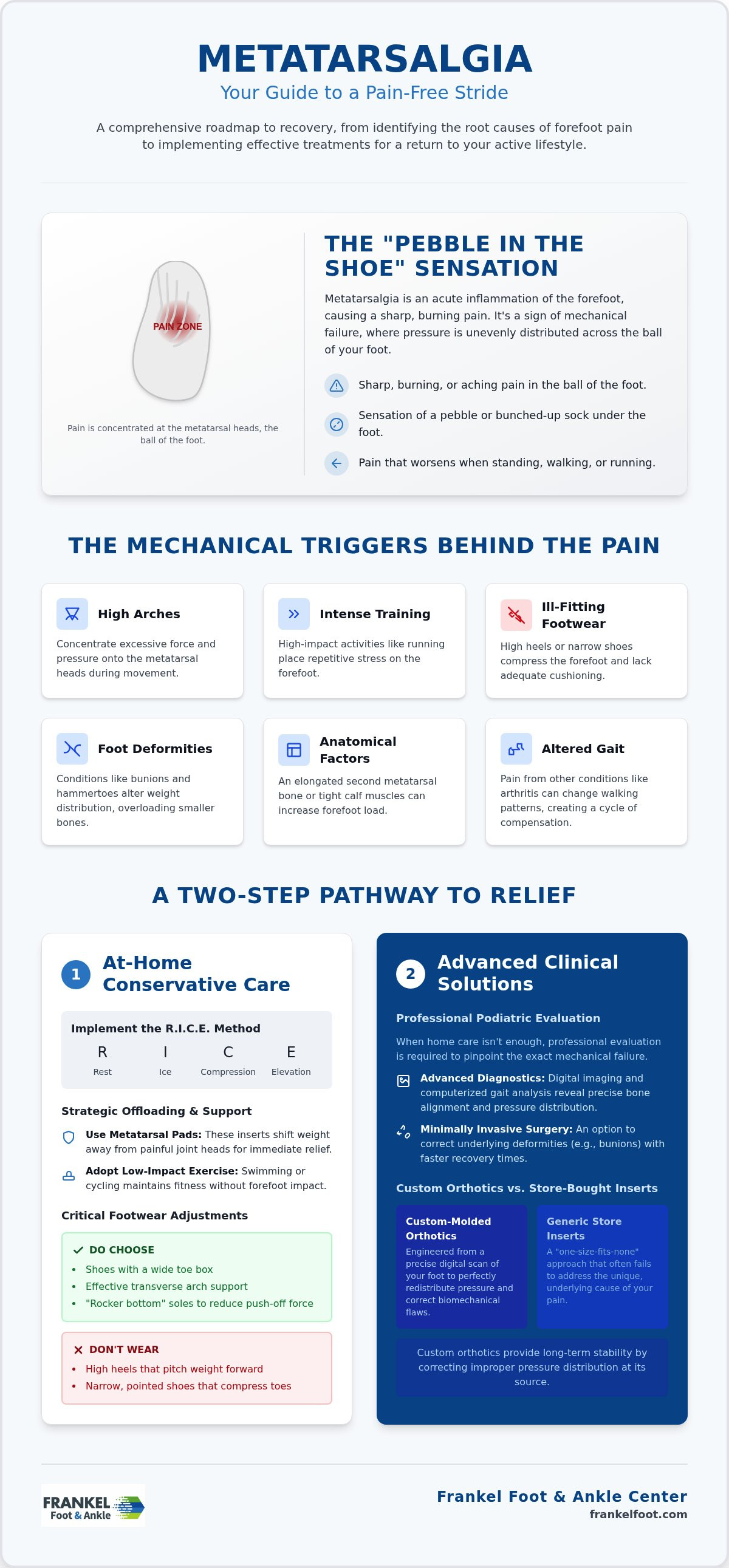
Metatarsalgia is characterized by acute inflammation and pain localized within the forefoot, specifically affecting the metatarsal heads. Patients often describe the experience as a sharp, burning sensation or the uncomfortable feeling of having a pebble in their shoe. This condition isn't merely a temporary irritation; it's a mechanical failure of pressure distribution across the ball of the foot. Common triggers include high arches that concentrate force, intense athletic training, and the use of ill-fitting footwear that lacks adequate cushioning.
Secondary deformities often exacerbate this pressure. When a patient suffers from bunions or hammertoes, the normal weight-bearing function of the big toe is compromised. This shift forces the smaller metatarsal bones to absorb excessive impact, leading to chronic inflammation. Effective Metatarsalgia treatment begins with identifying these underlying structural imbalances rather than just masking the pain. At Frankel Foot & Ankle Center, we specialize in diagnosing these complex interactions to ensure a comprehensive recovery plan that targets the root of your discomfort.
Structural Triggers and Foot Mechanics
Anatomical variations play a significant role in how your feet handle stress. For instance, an elongated second metatarsal bone can lead to disproportionate weight bearing on a single point during the gait cycle. Additionally, tight calf muscles restrict ankle flexibility, which increases the load on the forefoot when you walk or run. Existing foot pain from arthritis can also alter your walking patterns, creating a cycle of compensation that eventually results in metatarsalgia. Our approach moves from identifying these mechanical flaws to implementing precise corrections that restore natural movement and provide lasting foot pain relief.
Effective Metatarsalgia Treatment: From Home Care to Clinical Relief
Managing the inflammation associated with Metatarsalgia symptoms and causes requires a disciplined, stepwise approach. While rest is vital, long-term Metatarsalgia treatment focuses on offloading pressure from the forefoot through these specific actions:
- Implement the RICE method: Rest, ice, compression, and elevation are essential for reducing acute inflammation in the forefoot tissues.
- Utilize metatarsal pads: These small inserts shift weight away from the painful joint heads to provide immediate relief during movement.
- Adopt low-impact exercise: Activities like swimming or cycling allow you to maintain cardiovascular fitness without the strain of forefoot impact.
The Role of Specialized Footwear and Offloading
Selecting the right footwear is a cornerstone of mechanical correction. You should prioritize shoes with a wide toe box that allows the toes to splay naturally and a transverse arch support to stabilize the forefoot. Professional metatarsal bars are a sophisticated Metatarsalgia treatment option that offers a higher level of precision than over-the-counter arch supports, as they're specifically positioned behind the metatarsal heads to offload the shafts. A "rocker bottom" shoe design is also highly effective; it utilizes a curved sole to assist in the push-off phase of walking, significantly reducing the force required from the ball of the foot. It's essential to avoid high heels and narrow-toed shoes that compress the forefoot. If you've struggled with persistent pain despite these changes, a consultation at Frankel Foot & Ankle Center can provide the specialized foot pain relief needed to refine your recovery strategy.
Advanced Clinical Solutions and Long-Term Prevention
Persistent pain that doesn't respond to standard Metatarsalgia home care requires a professional podiatric evaluation at our Middletown or Milford offices. When conservative measures aren't enough, we utilize advanced diagnostic tools like digital imaging and computerized gait analysis to assess bone alignment. These technologies allow us to see exactly how your weight is distributed during movement. In some cases, structural issues like bunions or hammertoes are the primary drivers of forefoot pressure. For these patients, we offer minimally invasive surgical options designed to correct the underlying deformity without the long recovery times associated with traditional procedures. This focused Metatarsalgia treatment ensures you aren't just masking symptoms but resolving the mechanical failure at its source.
Why Custom Orthotics Outperform Store-Bought Inserts
Generic inserts often provide a "one size fits none" approach that fails to address individual biomechanical flaws. Custom-molded orthotics are engineered from a precise digital scan of your foot to redistribute pressure and realign the metatarsal heads. This level of precision is vital for effective Metatarsalgia treatment, as it provides a permanent mechanical correction rather than a temporary cushion. Our clinic's expertise in delivering professional foot pain relief ensures that every orthotic is tailored to your specific lifestyle. From providing comprehensive ankle pain relief to resolving complex forefoot inflammation, Dr. Marc Frankel and our team focus on long-term stability. This personalized path helps you return to high-impact activities without the fear of recurring injury or discomfort.
Reclaiming Your Mobility and Comfort
Living with ball-of-foot pain doesn't have to be your permanent reality. By understanding that this condition is a mechanical issue of pressure distribution, you can move from temporary fixes to a definitive Metatarsalgia treatment plan. Whether you're implementing the RICE method at home or transitioning to custom-molded orthotics, every step brings you closer to a life without the "pebble in the shoe" sensation. Dr. Marc Frankel and our dedicated team offer specialized care across Middletown, Katonah, and Milford, utilizing advanced diagnostics and pioneering scarless, painless surgical techniques when necessary. We're committed to your recovery journey, ensuring that your physical concerns are met with both high-level expertise and genuine warmth. Don't let forefoot inflammation sideline your active lifestyle any longer. Schedule a consultation at Frankel Foot & Ankle Center to find lasting relief today. You deserve to walk with confidence and ease once again.
Frequently Asked Questions
Is metatarsalgia a permanent condition?
Metatarsalgia is not usually a permanent condition; it's a symptom of underlying mechanical stress that responds well to intervention. Most patients experience significant relief within four to eight weeks by following a structured Metatarsalgia treatment plan. This often involves correcting pressure distribution through footwear changes or custom orthotics. If structural issues like bunions are present, specialized surgical correction can provide a permanent, long-term solution.
Can I continue running while treating metatarsalgia?
It's best to pause high-impact activities like running during the acute phase of recovery. Continuous pounding on the pavement exacerbates inflammation in the metatarsal heads and delays healing. We recommend transitioning to low-impact alternatives such as swimming or cycling. Once your foot pain relief is stabilized and your mechanics are corrected, you can gradually reintroduce running while using professional-grade supportive gear.
What are the best shoes for ball-of-foot pain relief?
The ideal footwear for managing this condition features a wide toe box and a "rocker bottom" sole design. A wide toe box prevents forefoot compression, while a rocker sole assists the push-off phase to reduce joint strain. You should also prioritize shoes with firm transverse arch support. Avoiding high heels and narrow, flat shoes is a critical component of successful Metatarsalgia treatment.
When should I see a podiatrist for my forefoot pain?
You should schedule an appointment at our Middletown, Katonah, or Milford offices if your pain persists for more than two weeks despite home care. Professional intervention is necessary if you experience a "pebble in the shoe" sensation or sharp burning that limits your mobility. Early diagnosis by Dr. Marc Frankel ensures you receive a clear treatment plan that prioritizes your long-term recovery.


