


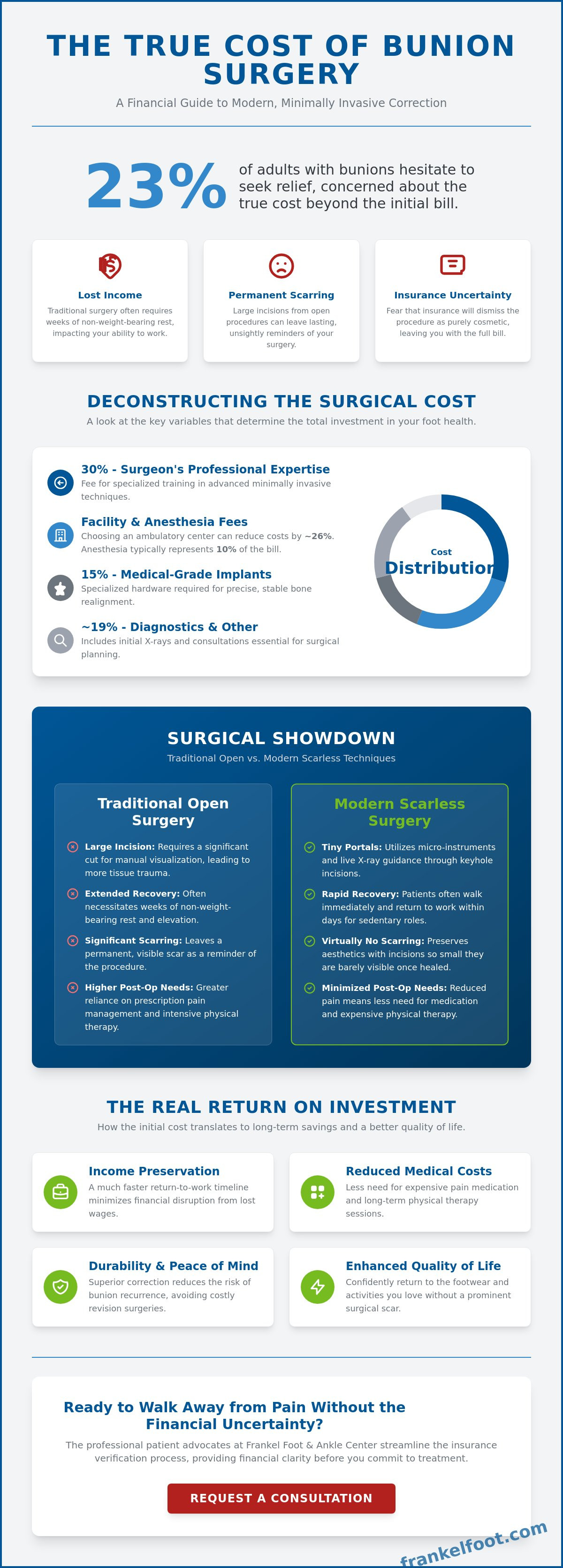
What if the most significant expense of correcting your foot pain isn't the surgical bill, but the weeks of lost income and the permanent scarring left behind by traditional methods? It's a common concern for the 23 percent of adults living with these deformities who hesitate to seek relief. You likely worry that the cost of scarless bunion surgery might be an unattainable luxury or that insurance providers will dismiss the procedure as a cosmetic choice. These anxieties are valid, especially when you're trying to balance your physical health with your financial stability.
I promise that this guide will provide a clear understanding of the financial variables, insurance nuances, and the genuine medical investment required for modern bunion correction. We'll examine the specific factors that drive surgical fees in 2026, including facility choices and specialized instrumentation. You'll also learn how to determine if your procedure qualifies as a medical necessity. This methodical breakdown ensures you can return to a life of pain-free walking without the burden of hidden costs or unsightly reminders of your surgery.
Key Takeaways
- Distinguish between various fee structures, from facility charges to anesthesia, to build a comprehensive budget for your foot health.
- Analyze how the initial cost of scarless bunion surgery translates into long-term value through faster return-to-work timelines and reduced reliance on pain management.
- Understand the critical distinction between cosmetic intent and medical necessity to maximize your potential insurance or Medicare reimbursement.
- Explore how advanced minimally invasive techniques minimize the need for expensive physical therapy and specialized post-operative equipment.
- Learn how professional patient advocates at Frankel Foot & Ankle Center can streamline the insurance verification process to provide clarity before you commit to treatment.
Understanding the Financial Landscape of Bunion Correction in 2026
Establishing a transparent financial plan for corrective procedures requires a look beyond the final invoice. To truly understand the investment, patients must first grasp what a bunion is from a clinical perspective; it's a complex structural deformity that requires precise realignment rather than a simple cosmetic shave. This complexity means the total cost of scarless bunion surgery is influenced by several distinct variables that work together to ensure a successful outcome:
- Professional Expertise: The surgeon’s specialized training in minimally invasive techniques usually accounts for about 30 percent of the total fee.
- Facility Fees: Choosing an ambulatory surgery center over a hospital outpatient department can reduce these costs by approximately 26 percent.
- Anesthesia and Implants: Sedation services typically represent 10 percent of the bill, while specialized medical-grade hardware accounts for another 15 percent.
- Diagnostic Imaging: Initial digital X-rays and consultations are essential for mapping out the precise bone realignment needed before the first incision is made.
Standard vs. Scarless: What Are You Paying For?
The primary distinction between traditional open procedures and modern scarless techniques lies in the technology required for the operation. While open surgery involves larger incisions and manual visualization, scarless surgery utilizes specialized micro-instruments and real-time fluoroscopy. This high-definition, live X-ray guidance allows the surgeon to make corrections through tiny portals. You aren't just paying for a cosmetic result. You're investing in a sophisticated medical methodology designed to minimize tissue trauma and preserve the structural integrity of the foot, which leads to a more predictable recovery.
Geographic Cost Factors in the Tri-State Area
Regional location significantly impacts your final estimate. Patients often find that the cost of scarless bunion surgery varies between high-overhead metropolitan centers and specialized local practices. For instance, receiving care in Middletown, NY, or Milford, PA, often offers a different financial profile than facilities in the heart of Manhattan. These regional offices frequently provide a more personalized experience while maintaining access to the same advanced technology found in major cities. By choosing a provider like Frankel Foot & Ankle Center, patients can access elite surgical care and progressive methodology without the logistical and financial strain of traveling into the city.
The Value Proposition: Why Scarless Surgery is a Long-Term Investment
Evaluating the cost of scarless bunion surgery requires looking past the initial surgical fee and considering the long-term savings in recovery time and physical health. While a traditional "open" procedure might appear comparable on paper, the true financial impact includes the opportunity cost of an extended absence from your professional life. Advanced minimally invasive techniques utilize smaller incisions that preserve more of the surrounding soft tissue. This precision results in a "painless" or significantly reduced pain experience, which lowers the need for expensive prescription pain management and intensive, long-term physical therapy sessions.
Insights from Harvard Medical School on bunion surgery emphasize that surgical correction is the only definitive way to realign the joint, making it a critical investment for those experiencing progressive deformity. Beyond the physical alignment, the aesthetic value of a scarless result provides a psychological boost that shouldn't be undervalued. A foot that looks and feels naturally corrected allows for a confident return to social activities and the footwear you love without the permanent reminder of a large surgical scar. When performed by an expert like Dr. Frankel, the structural integrity of the correction also reduces the risk of recurrence, potentially saving you from the high costs of revision surgeries in the future.
Reduced Downtime and Income Preservation
Traditional bunion surgery often necessitates weeks of elevation and non-weight-bearing rest, which can significantly impact your earning potential. In contrast, the cost of scarless bunion surgery is offset by a much faster return to work, often within days for those in sedentary roles. Walking recovery protocols allow patients to bear weight almost immediately, which effectively eliminates the need for expensive home-care assistance or temporary mobility modifications in your living space.
Long-Term Foot Health and Mobility
Proactive correction prevents a cascade of secondary musculoskeletal issues that often arise from an altered gait. Ignoring a bunion often forces the body to compensate, which frequently leads to a need for ankle pain relief as the joint takes on extra stress. By restoring proper mechanics now, you protect your knees and lower back from the wear and tear associated with chronic foot misalignment. If you're ready to explore how this investment fits your lifestyle, the professionals at Frankel Foot & Ankle Center can help you map out your recovery journey.
Navigating Insurance, Medicare, and Financing for Your Procedure
A frequent concern regarding the cost of scarless bunion surgery is whether insurance providers view the procedure as a cosmetic enhancement rather than a medical requirement. Most major carriers, including Medicare Part B, provide coverage when the surgery is deemed medically necessary. This status generally requires documentation of chronic pain, difficulty with daily mobility, or the failure of conservative treatments like orthotics. For those using Medicare, the program typically covers 80 percent of the approved amount for outpatient procedures, leaving patients responsible for the remaining 20 percent plus any applicable deductibles. Research indicates that the typical out-of-pocket cost for a Medicare outpatient procedure is approximately $596.
Our dedicated team at Frankel Foot & Ankle works closely with patients in Middletown and Katonah to navigate these complexities. We provide thorough insurance verification to help you understand your specific out-of-pocket responsibilities before the day of your procedure. Depending on your plan, typical out-of-pocket costs for those with PPO coverage average around $2,809, while those on high-deductible health plans (HDHP) may see averages closer to $3,540. To manage these portions, many patients successfully utilize:
- HSA and FSA Accounts: These tax-advantaged funds are ideal for covering deductibles, co-payments, or specialized post-operative supplies.
- Specialized Financing: Options like CareCredit allow you to distribute the cost of scarless bunion surgery into manageable monthly payments.
- Facility Choice: Selecting an ambulatory surgery center often results in facility fees that are significantly lower than hospital outpatient departments.
The Consultation: Your Roadmap to Clarity
Your journey begins with a structured consultation designed to eliminate financial ambiguity. We encourage you to ask about the specific breakdown of surgeon fees versus facility charges during this initial visit. Dr. Frankel's methodical approach prioritizes transparency, ensuring you receive a comprehensive plan that links advanced surgical techniques to your specific health goals. This clarity prevents surprise medical bills and allows you to focus entirely on your recovery and long-term mobility.
Next Steps for Patients in NY and PA
Determining the severity of your Hallux Valgus is the first step toward a pain-free lifestyle. A professional diagnostic evaluation will clarify the structural needs of your foot and provide the data required for insurance authorization. We invite you to schedule your consultation at Frankel Foot & Ankle to receive a personalized treatment and cost plan tailored to your unique needs.
Investing in Your Future Mobility
Choosing to address a bunion is a decision that impacts your daily comfort and your long-term physical health. We have analyzed how the total financial picture is shaped by facility choices, insurance nuances, and the significant reduction in recovery downtime. When you evaluate the cost of scarless bunion surgery, it's essential to consider the value of a procedure that prioritizes both structural correction and aesthetic preservation. You aren't just paying for a surgery; you're investing in a methodology that protects your earning potential and prevents secondary joint issues.
Expert care by Dr. Marc Frankel ensures that every aspect of your journey is handled with precision and compassion. From our specialized scarless and painless techniques to our dedicated support in Middletown, Katonah, and Milford, our goal is to provide a seamless path to recovery. You don't have to live with persistent foot pain or the fear of traditional surgical outcomes. Take the first step toward walking with confidence and freedom from discomfort today. We invite you to Book Your Scarless Bunion Consultation with Dr. Frankel and receive the personalized care you deserve.
Frequently Asked Questions
Is scarless bunion surgery more expensive than traditional surgery?
While the specialized instrumentation and real-time imaging used in minimally invasive techniques represent advanced technology, the total cost of scarless bunion surgery is often comparable to traditional methods when performed in an ambulatory surgery center. These centers typically offer rates 26 percent lower than hospital outpatient departments. The primary financial advantage lies in the significantly reduced recovery time, which preserves your income and minimizes the need for long-term postoperative assistance.
Does insurance cover the cost of minimally invasive bunion removal?
Most insurance providers, including Medicare, cover minimally invasive procedures if they are deemed medically necessary rather than purely cosmetic. Coverage typically requires documentation of persistent pain or difficulty walking that hasn't improved with conservative care. Medicare Part B generally covers 80 percent of the approved cost, while out-of-pocket totals for private insurance vary based on your specific deductible and plan structure.
What is the average recovery time for scarless bunion surgery in 2026?
Patients today benefit from walking recovery protocols that often allow for immediate weight-bearing in a specialized protective boot. Many individuals return to sedentary professional roles within a few days. Full bone healing still requires several weeks of monitoring, but this rapid progression is a direct result of the smaller incisions. These tiny portals cause less disruption to the surrounding soft tissues and blood supply compared to traditional open surgery.
Are there hidden costs like physical therapy after a scarless procedure?
Minimally invasive techniques often reduce the requirement for intensive physical therapy because they cause less trauma to the foot's structural integrity. You should still account for essential ancillary expenses such as digital follow-up X-rays, protective walking boots, and any custom orthotics required to maintain your results. Transparency is a priority in our practice, so we provide a thorough breakdown of these potential needs during your initial surgical consultation.
Can I have both feet done at the same time to save on costs?
Performing bilateral surgery can be more cost-effective because it consolidates facility and anesthesia fees into a single surgical session. While this approach streamlines the cost of scarless bunion surgery, it also requires a more coordinated recovery plan since both feet will be in protective footwear simultaneously. We evaluate each patient's lifestyle and physical health to determine if a bilateral procedure is the safest and most efficient path for their specific needs.
What happens if I delay bunion surgery due to cost concerns?
Postponing necessary correction often leads to the progression of the deformity, which can eventually cause secondary complications like ankle or knee pain. As the joint continues to shift, the surgery required may become more complex and potentially more expensive to perform. Addressing the issue early preserves your mobility and prevents the cascade of musculoskeletal problems that frequently arise from chronic gait compensation.


