


Swelling alone doesn’t tell you how serious an ankle injury is. More useful clues include whether you can bear weight, whether the ankle looks misshapen, and whether your foot feels numb or tingly. If you’re asking when to worry about a sprained ankle, remember that pain and swelling can make it difficult to judge, and a fracture can feel similar to a severe sprain.
You don’t have to diagnose the injury yourself. This guide explains which warning signs call for prompt medical assessment, what changes to monitor as symptoms settle, and when ongoing pain or limited function deserves attention. It also explains why the ankle’s function, shape, and sensation matter more than swelling alone, and how an evaluation can help clarify your symptoms and next steps.
Key Takeaways
- A sprain involves injured ligaments, but pain, bruising, and swelling alone can’t confirm a sprain or rule out a fracture.
- Knowing when to worry about a sprained ankle starts with recognizing signs that call for prompt assessment, including changes in ankle shape, sensation, or ability to bear weight.
- Track how symptoms change over time, and seek clinical attention if pain worsens or improvement doesn’t come.
- Protect the ankle and choose a next step based on your symptoms. A clinician can assess its function and determine whether imaging may be appropriate.
When to worry about a sprained ankle: what symptoms can, and cannot, tell you
A sprain is an injury to one or more ligaments, the strong bands of tissue that connect bones and help stabilize a joint. The damage can range from stretching to tearing, so ankle injuries vary in severity. Pain, bruising, and swelling don’t prove that a sprain is the cause or rule out a fracture. If you’re wondering when to worry about a sprained ankle, remember that symptoms are clues, not a diagnosis.
A sprain describes an injury to ankle ligaments. It isn’t a confirmed diagnosis until an appropriate assessment identifies what’s injured. This distinction matters because acting on a label you’ve guessed yourself can delay needed care. A general overview of a sprained ankle explains common injury patterns, but only an individual assessment can help clarify a specific injury.
Why a sprain and a fracture can feel similar
Both injuries may cause sudden pain, swelling, bruising, and difficulty bearing weight. These symptoms indicate an injury, but they don’t reliably show whether a ligament or bone is affected. Soon after an injury, pain may also make it difficult to pinpoint where it’s coming from.
Swelling size and bruise color aren’t dependable ways to grade a sprain or exclude a fracture. A popping sound at the moment of injury also can’t establish how badly a ligament is damaged or identify the injury on its own. A clinician can assess your symptoms and ankle function, then decide whether further evaluation, including imaging, may be appropriate. Seeking assessment when symptoms are concerning is a sensible way to get clarity, not a reason to assume the worst.
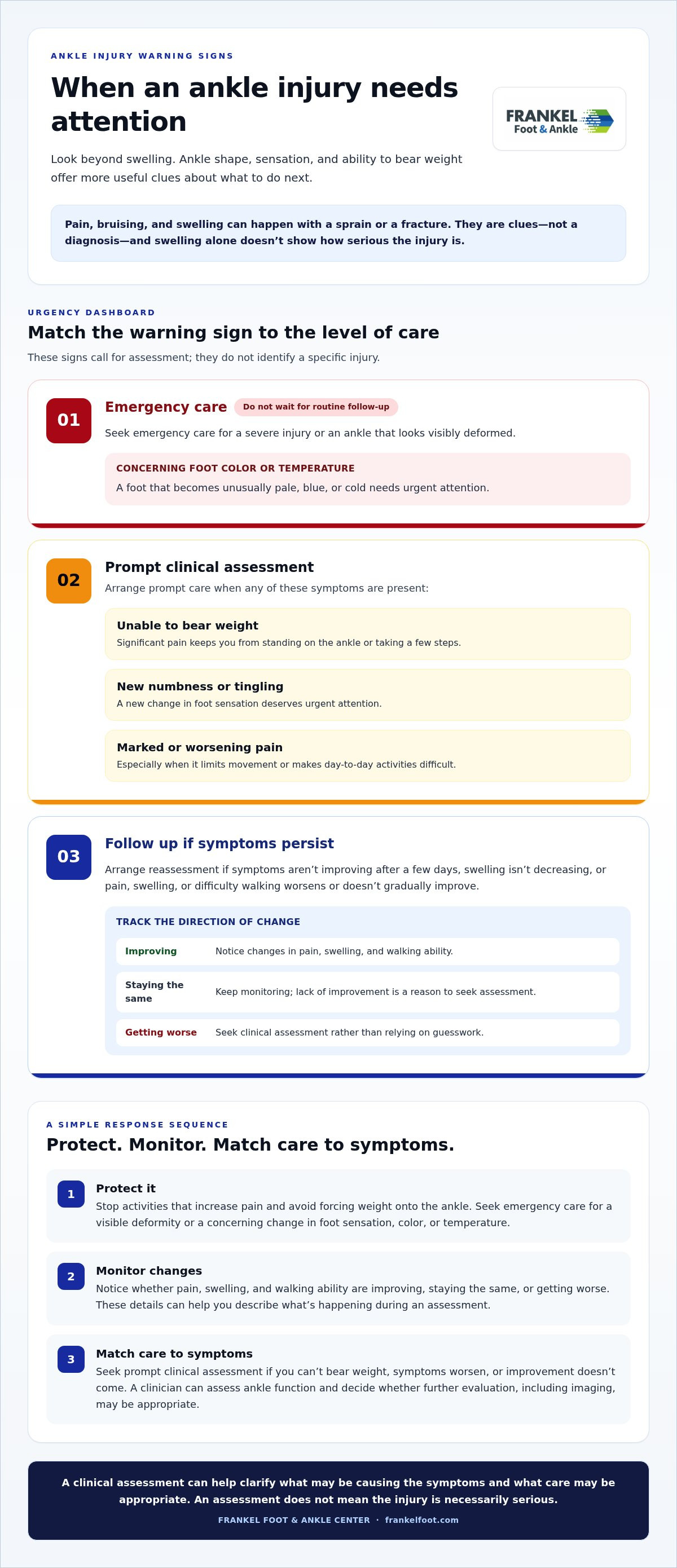
When ankle sprain warning signs call for urgent medical attention
Some signs call for immediate attention. Others warrant prompt assessment rather than continued home monitoring. If you’re deciding when to worry about a sprained ankle, focus on how the foot looks and feels, whether you can bear weight, and whether symptoms are worsening. Warning signs indicate a need for assessment, not a specific diagnosis.
Which symptoms should not wait for routine follow-up?
Seek emergency care for a severe injury or an ankle that looks visibly deformed. New numbness or tingling, or a foot that becomes unusually pale, blue, or cold, can signal a concerning change in sensation or circulation and needs urgent attention. Don’t wait for a routine appointment if these symptoms occur.
Arrange prompt clinical assessment if significant pain keeps you from bearing weight or taking a few steps. Marked or worsening pain also deserves attention, especially if it limits movement or makes day-to-day activities difficult. The Mayo Clinic’s guidance on ankle symptoms and when to seek care offers additional context.
- Emergency care: visible deformity, a severe injury, or a foot that becomes unusually pale, blue, or cold.
- Prompt assessment: inability to bear weight, new numbness or tingling, or marked or worsening pain.
- Follow-up: symptoms that aren’t improving after a few days, or swelling that isn’t decreasing.
Swelling or a popping sound alone doesn’t prove a fracture or a severe ligament injury. The symptom pattern and an examination help determine what evaluation is appropriate. If ankle pain or concerning symptoms persist, a foot and ankle evaluation can help clarify a sensible next step.
What to do next when a sprained ankle worries you
Your next step depends on how the ankle looks, feels, and functions. If you’re unsure when to worry about a sprained ankle, use this sequence to respond without trying to identify the injury yourself:
- Protect it. Stop activities that increase pain, and avoid forcing weight onto the ankle. If there’s a visible deformity, new numbness or tingling, or a concerning change in foot color or temperature, seek emergency care.
- Monitor changes. Notice whether pain, swelling, and walking ability are improving, staying the same, or getting worse. These details can help you describe what’s happening during an assessment.
- Match care to symptoms. Seek prompt clinical assessment if you can’t bear weight, symptoms worsen, or improvement doesn’t come. If you’re concerned, don’t wait for symptoms to become severe before seeking help.
A clinician can assess ankle function and the location of tenderness, then decide whether further evaluation or imaging is appropriate. Starting with an initial GP consultation at a primary care clinic like hatmed.co.za can help clarify what may be causing your symptoms and inform a suitable care plan. An assessment doesn’t mean the injury is necessarily serious. It’s a way to make the next decision with better information.
When symptoms persist or worsen after the initial injury
Arrange reassessment if pain, swelling, or difficulty walking worsens or doesn’t gradually improve. Ongoing symptoms can have different causes. An examination may help identify the injury and guide appropriate care, rather than leaving you to rely on guesswork.
Frankel Foot & Ankle Center provides ankle pain consultations and treatment for patients in Middletown and Katonah, New York, and Milford, Pennsylvania. Learn more about ankle pain relief and the care available.
Take a confident next step toward ankle recovery
Deciding when to worry about a sprained ankle doesn’t require knowing exactly which structure is injured. Pay attention to how the ankle affects your daily activities, and seek professional guidance when you’re uncertain. An evaluation can replace guesswork with a clearer understanding of your ankle and what care may be appropriate.
If you’re ready to discuss ankle pain with a specialist, schedule an ankle evaluation with Frankel Foot & Ankle Center. The center provides ankle pain care in Middletown and Katonah, New York, and Milford, Pennsylvania. Take the next step by scheduling an evaluation to discuss your symptoms and care options.
Frequently Asked Questions
Can you walk on a sprained ankle and still need medical care?
Yes. Being able to walk doesn’t rule out a significant ankle injury or mean it’s safe to ignore symptoms. You may manage a few steps but develop a pronounced limp or increasing pain. If you’re deciding when to worry about a sprained ankle, consider whether walking is getting easier and whether pain is limiting normal activities, not just whether you can stand.
How can you tell whether an ankle is sprained or fractured?
You can’t reliably distinguish a sprain from a fracture by appearance or symptoms alone. A clinician may ask how the injury happened, examine tender areas, and assess movement and weight-bearing ability. Depending on those findings, they may decide imaging is appropriate. Avoid testing the ankle by repeatedly pressing painful spots or forcing movement. That won’t confirm the cause and may aggravate discomfort.
How long should swelling from a sprained ankle last?
There isn’t one exact timeline that applies to every ankle injury. Consider swelling alongside changes in pain and function: is it gradually settling, or staying the same or worsening? Some swelling may remain as the ankle recovers, but swelling that isn’t decreasing after a few days, or that increases alongside worsening pain, is a reason to seek clinical advice.
Should I go to the emergency room or see a foot and ankle specialist?
Choose emergency care for a visibly deformed ankle, a severe injury, or a foot that becomes unusually pale, blue, or cold. For persistent pain or difficulty returning to usual activities without those emergency signs, a foot and ankle specialist can assess your symptoms. Frankel Foot & Ankle Center provides ankle pain care in Middletown and Katonah, New York, and Milford, Pennsylvania.


