


More movement isn’t always better after foot surgery. If you’re searching for foot surgery recovery Milford PA guidance, it can be hard to know when rehabilitation may help and when protecting the surgical area should come first. Follow your surgeon’s instructions, since recovery depends on the procedure and your individual healing.
Questions about pain, getting around safely, and returning to everyday activities are common. Physical therapy may support mobility, strength, and function when your surgeon says it’s appropriate. The timing and pace vary from person to person.
This guide explains how rehabilitation may fit into recovery, what to discuss as activity progresses, and when to seek clinical guidance about new or ongoing foot and ankle concerns. Frankel Foot & Ankle Center provides foot and ankle consultations and pain treatment for patients in Milford, Pennsylvania, as well as Middletown and Katonah, New York. A local consultation can help you discuss concerns while keeping your surgeon’s instructions central.
Key Takeaways
- Physical therapy may address mobility, strength, balance, and walking. Your procedure and recovery plan determine what is appropriate.
- Follow a clear sequence: use your discharge instructions, attend follow-up appointments, clarify restrictions, and progress only when cleared.
- Discuss pain, swelling, incision care, and permitted activity with your treating clinician, especially if something changes or concerns you.
- For foot surgery recovery Milford PA guidance, a local foot and ankle consultation can help you discuss concerns without replacing your surgeon’s instructions.
Physical Therapy After Foot Surgery in Milford, PA
Surgery can bring practical questions: How much pain is expected? When might walking feel easier? How can you make progress without disrupting healing? Physical therapy is clinician-guided rehabilitation that may address mobility, strength, balance, and walking. Activities should match your needs and the limits set by your surgical team.
Rehabilitation doesn’t follow the same plan after every operation. A procedure involving bone healing may require protection from certain loads, while another operation may have different priorities for restoring motion or comfortable walking. Your healing progress, overall health, and surgeon’s instructions help determine what is appropriate. A general overview of foot and ankle surgery can provide background, but clinicians familiar with your procedure should guide your care plan.
Why does rehabilitation differ after each foot operation?
Recovery goals may range from managing daily movement safely to gradually rebuilding strength, balance, and walking tolerance. Weight-bearing restrictions matter because putting pressure on the foot too soon may conflict with healing needs. Follow-up assessments can clarify how recovery is progressing and whether the plan should change. Don’t assume another person’s schedule or exercises apply to you.
Rehabilitation timing depends on procedure-specific healing and clinical clearance. Before beginning or changing therapy, clarify which movements are permitted, whether you need to protect the foot from weight, and which symptoms warrant a call to your treating clinician. If foot surgery recovery Milford PA concerns leave you unsure about pain or activity, individualized foot and ankle guidance can help you discuss your concerns while keeping your surgeon’s instructions in view.
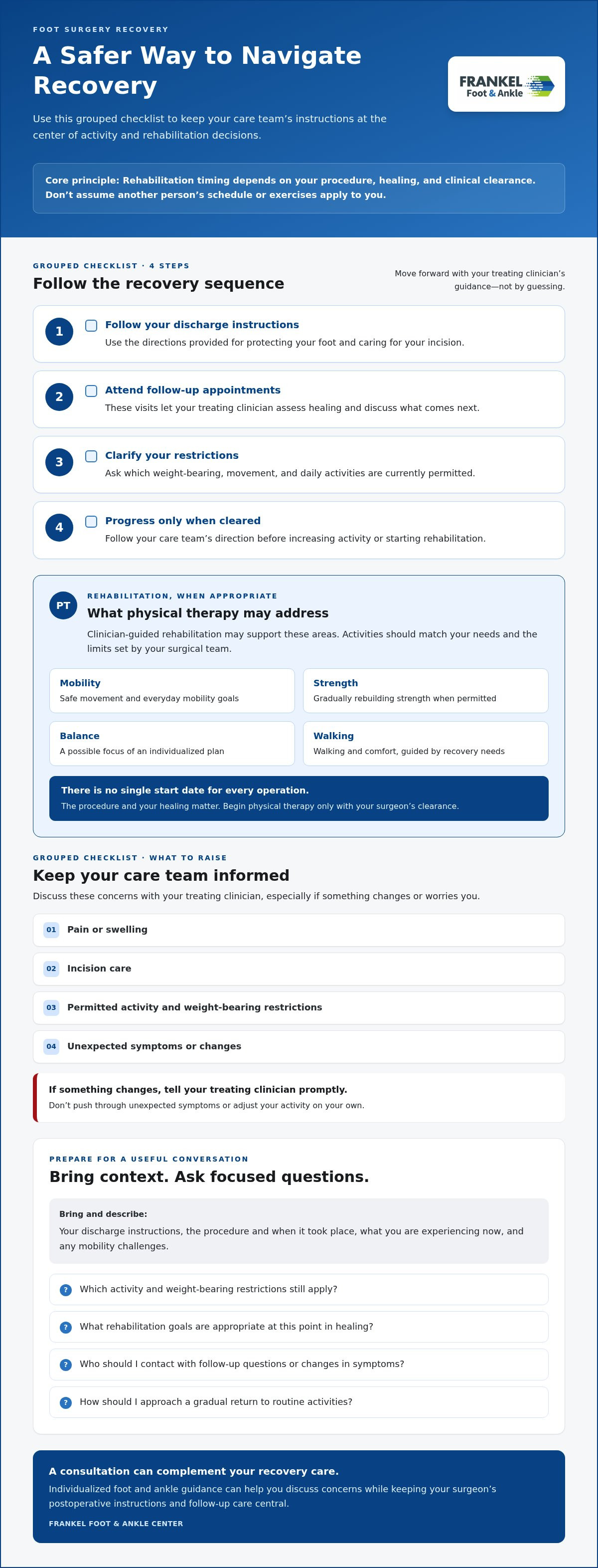
How to Navigate Foot Surgery Recovery and Physical Therapy Safely
A clear sequence can make recovery decisions easier to manage. Keep your surgical team’s directions at the center of each step, and raise questions rather than guessing about activity or symptoms.
- Follow your discharge instructions. Use the directions provided for protecting your foot and caring for your incision.
- Attend follow-up appointments. These visits give your treating clinician an opportunity to assess healing and discuss what comes next.
- Clarify restrictions. Ask which weight-bearing, movement, and daily activities are currently permitted.
- Progress only when cleared. Follow your care team’s direction before increasing activity or starting rehabilitation.
Pain, swelling, incision care, and permitted activity are all appropriate topics to raise with your treating clinician, especially if something changes or concerns you. General recovery goals can help you prepare questions, but your care team must set instructions for your surgery and healing.
When can physical therapy begin after foot surgery?
There isn’t one start date for every operation. Timing depends on the procedure and your healing, and physical therapy should begin only with your surgeon’s clearance. Early rehabilitation goals may include maintaining safe movement or working toward daily mobility, but these are examples, not exercises to try without approval. The American Academy of Orthopaedic Surgeons’ Foot and Ankle Conditioning Program offers general information, not a substitute for postoperative instructions.
Tell your treating clinician promptly about unexpected symptoms or changes. Don’t push through them or adjust your activity on your own. If you’re uncertain about pain or foot and ankle concerns during foot surgery recovery Milford PA, a foot and ankle consultation can provide individualized clinical guidance while keeping your surgeon’s instructions in view.
Choosing a Local Next Step for Foot Surgery Recovery in Milford, PA
Recovery can raise questions that are hard to resolve on your own, particularly if discomfort continues or everyday movement feels difficult. A foot and ankle consultation can provide individualized clinical guidance about concerns during healing. It complements, but doesn’t replace, your surgeon’s postoperative instructions or follow-up care.
To make the conversation more useful, bring your discharge instructions and be ready to describe the operation, your symptoms, and any mobility challenges. You might ask:
- Which activity and weight-bearing restrictions still apply?
- What rehabilitation goals are appropriate at this point in healing?
- Who should I contact with questions about follow-up or changes in symptoms?
- How should I approach a gradual return to routine activities?
What should you discuss with a foot and ankle clinician?
Share what procedure you had, when it took place, and what you’re experiencing now. Describe pain or swelling, movements that are difficult, and how symptoms affect everyday tasks such as getting around at home. Bring your current postoperative directions so the discussion can take those instructions into account. Clear details help focus the conversation on your concern without assuming one recovery plan suits everyone.
If ongoing discomfort is part of your foot surgery recovery Milford PA experience, explore the practice’s information about foot pain relief to learn about its foot and ankle care. Frankel Foot & Ankle Center is a private practice owned and operated by Dr. Marc Frankel, serving Milford, Pennsylvania, Middletown, New York, and Katonah, New York. You can discuss your foot and ankle concerns while continuing to follow your surgeon’s guidance on restrictions and recovery.
Take Your Next Step With Confidence
Recovery can feel less uncertain when you know what to ask next. Before a conversation with your care team, note what has changed, what still feels difficult, and which activities you hope to return to. Include the situations that raise questions. These details can help you explain your concerns and understand which guidance applies to your situation.
For foot surgery recovery Milford PA support, Frankel Foot & Ankle Center provides foot and ankle care in Milford, Pennsylvania, and serves patients in Middletown and Katonah, New York. The private practice is owned and operated by Dr. Marc Frankel. Your surgeon’s directions remain central, and a foot and ankle consultation can help address pain or uncertainty during recovery.
Discuss your foot and ankle recovery concerns. Take recovery one informed step at a time, and give yourself room to progress with care.
Frequently Asked Questions
When should physical therapy start after foot surgery?
Physical therapy should begin only when your surgeon clears it, because timing depends on the operation and how healing is progressing. Don’t use a general week-by-week schedule to decide when to start exercises. At your next visit, ask which movements are allowed, whether you may put weight through the foot, and what will indicate that activity can advance.
Is physical therapy necessary after every foot surgery?
No, formal physical therapy isn’t automatically needed after every foot operation. The decision may depend on what was repaired, your health and mobility before surgery, and how your function returns during follow-up. Some patients may receive targeted guidance for movement or strength, while others follow a different plan. Ask your treating clinician what support is appropriate for your procedure and recovery goals.
What exercises can I do after foot surgery?
Only do exercises that your surgical team has approved for your specific operation and stage of healing. A movement that seems gentle may still conflict with a restriction, so don’t borrow a routine from a general article or video. Ask which motions are safe, how to know when to advance them, and which symptoms mean you should stop and call your clinician.
How do I know if my foot surgery recovery is progressing normally?
Your treating clinician is best placed to assess progress based on your procedure, examination, and follow-up plan, rather than a generic recovery chart. Keep a brief note of changes in pain, swelling, incision appearance, and daily tasks you can manage, then share it at review. For foot surgery recovery Milford PA concerns, report worsening or unexpected changes to your treating team instead of waiting for a milestone.


