


What if pain relief after foot surgery doesn’t have to rely on narcotics alone? Concerns about side effects or dependence are understandable, but managing pain after foot surgery without narcotics isn’t a one-size-fits-all plan. Avoiding opioids may not be appropriate for every patient. Your procedure, health history, and surgeon’s instructions all matter.
This guide covers how a surgeon-directed combination of nonopioid medication, options used during surgery, and recovery habits such as icing and elevation may help keep pain manageable. You’ll learn what to clarify with your surgeon, how to prepare for rest and recovery, and when pain or other symptoms warrant a call to your surgical team. If pain is difficult to control or recovery concerns arise, an individualized foot and ankle evaluation can help clarify next steps.
Key Takeaways
- Managing pain after foot surgery without narcotics calls for an individualized plan shaped by your procedure, health, and surgeon’s instructions.
- Clarify medication directions with your surgeon, including whether acetaminophen or anti-inflammatory medicines are appropriate for you.
- Prepare your recovery space and follow your care instructions to support rest while protecting your healing foot.
- Know when to raise routine pain-control questions and when worsening, uncontrolled, or unexpected symptoms need prompt attention from your surgical team.
What to expect when managing pain after foot surgery without narcotics
Narcotic-free care uses clinician-approved, nonopioid measures to manage pain after surgery. Depending on the procedure and your health, a plan may include medication, local anesthetic techniques, and recovery measures such as rest or elevation. These approaches can work together rather than relying on a single method. A broad overview of pain management strategies includes both medication-based and non-medication approaches.
Your experience may differ from someone else’s. The type and extent of surgery, your medical history, other medicines, and your surgeon’s recovery plan all influence which pain-relief options are suitable. Discomfort can also change as you heal. The goal is generally to keep pain manageable enough to rest and follow your recovery instructions, not to promise that you’ll feel no pain.
Can foot surgery pain be managed without opioids?
Some patients may manage postoperative pain with a nonopioid plan, but suitability and effectiveness vary. Your surgeon can consider your procedure, health conditions, medication interactions, and expected recovery when recommending options. Before surgery, tell the surgical team if avoiding narcotics is your preference or if you’re concerned about side effects or dependence. That information can guide an individualized discussion while keeping clinical judgment central.
A preference for narcotic-free care is not a guarantee of a pain-free recovery. The plan should balance your pain-relief goals with safety. If the agreed approach isn’t controlling your pain, tell your treating team instead of changing doses or adding medication on your own.
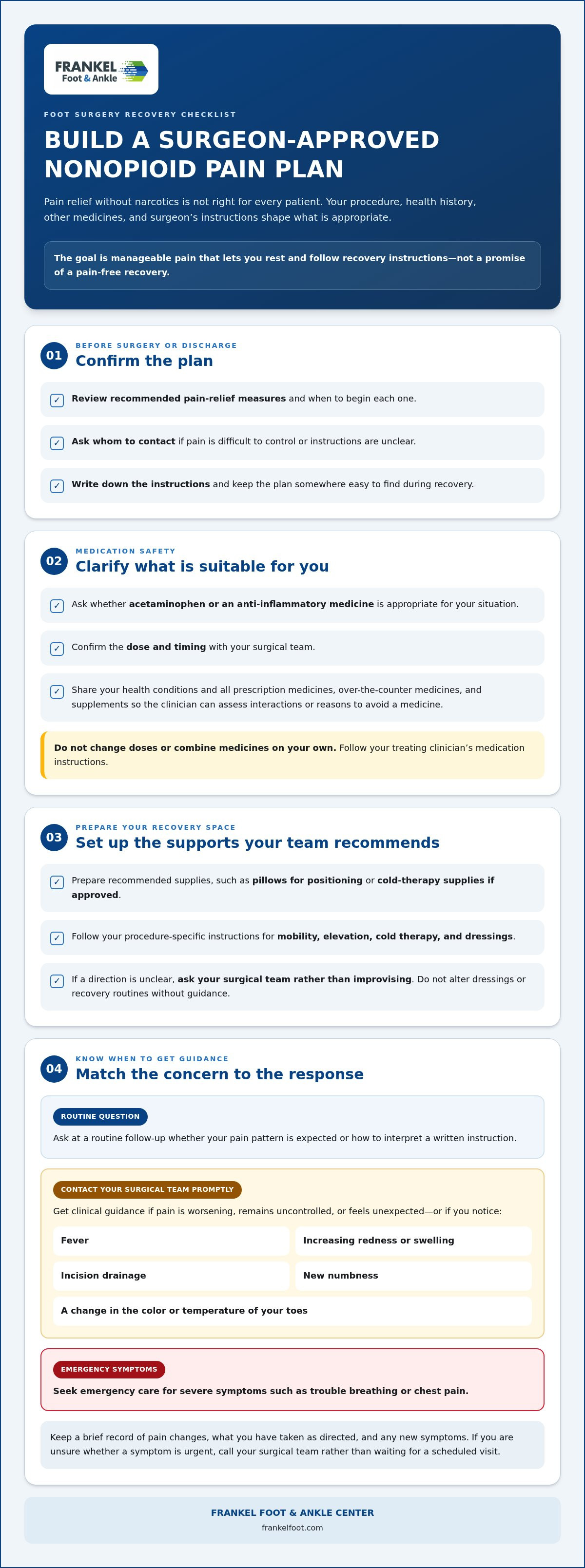
How to build a surgeon-approved, nonopioid pain-management plan
A clear plan helps you know what to take, which recovery measures are appropriate, and what to do if pain isn’t controlled. Before surgery or discharge, ask your surgical team to explain the instructions and write down anything you’ll need to remember. Confirm whom to contact with questions, and keep the written plan where you can find it during recovery. These steps make managing pain after foot surgery without narcotics more organized while keeping decisions specific to your procedure and health.
- Confirm the plan. Review which pain-relief measures are recommended, when to begin them, and whom to contact if you have questions or concerns.
- Clarify medication directions. Ask whether acetaminophen or an anti-inflammatory medicine is suitable, and confirm the dose and timing. Share your health conditions and all prescription, over-the-counter, and supplement use so the clinician can assess possible interactions or reasons to avoid a medicine.
- Prepare recovery supplies. Set up the items your team recommends, such as pillows for positioning or cold-therapy supplies if approved. Keep your written instructions easy to find.
- Follow your restrictions. Use the mobility, elevation, cold-therapy, and dressing instructions provided for your procedure. Don’t improvise if a direction is unclear.
Which nonopioid options may support recovery?
Your clinician may recommend prescribed nonopioid medication or approve supportive measures such as elevation or cold therapy. What’s appropriate depends on your surgery and individual health, so don’t assume a familiar medicine or home remedy is safe after your procedure. Don’t change doses, combine medicines, or alter dressings without guidance from your surgical team.
Medication choice and timing after surgery must follow your treating clinician’s instructions. If you have persistent foot pain or questions about recovery, an individualized evaluation can help guide care. Frankel Foot & Ankle Center provides foot and ankle care for patients in Middletown and Katonah, New York, and Milford, Pennsylvania.
When to contact your foot surgeon about pain or recovery
Some questions can wait for a routine follow-up, such as whether your pain pattern is expected or how to interpret a written instruction. Worsening, uncontrolled, or unexpected pain, however, deserves prompt discussion with your surgical team. Your pain plan may need review, or your foot may need to be assessed. Don’t increase medication or change your recovery routine while waiting for advice.
What symptoms after foot surgery need prompt attention?
Follow the discharge instructions for your procedure to guide whom to call and when. Contact your surgical team promptly if pain is getting worse or remains uncontrolled, or if you notice fever, increasing redness or swelling, drainage from the incision, new numbness, or a change in the color or temperature of your toes. These symptoms need clinical guidance, and your care team can determine the right response for your situation.
Seek emergency care for severe symptoms such as trouble breathing or chest pain. If you’re unsure whether a symptom is urgent, call your surgical team rather than waiting for a scheduled visit. Clear, timely communication matters, especially if your plan for managing pain after foot surgery without narcotics isn’t providing adequate relief.
Keep a brief record of when pain changes, what you’ve taken as directed, and any new symptoms. This can help your clinician understand what’s happening and advise you on next steps. For ongoing foot discomfort beyond surgical recovery, explore comprehensive foot pain relief and individualized foot and ankle care.
Take the next step toward a supported recovery
Recovery can bring questions that are difficult to resolve alone, especially if your pain changes or your progress doesn’t feel as expected. Your concerns deserve attention, along with care that considers your individual foot and ankle needs. A clinical consultation can help you discuss what’s happening and identify appropriate next steps without assuming one pain-management approach suits everyone.
If you’re weighing options for managing pain after foot surgery without narcotics, keep your recovery team involved as your needs evolve. Frankel Foot & Ankle Center provides specialized foot and ankle care and clinical consultations for foot and ankle conditions in Middletown and Katonah, New York, and Milford, Pennsylvania. Discuss your foot and ankle concerns with Frankel Foot & Ankle Center to explore appropriate next steps.
Frequently Asked Questions
Can I manage pain after foot surgery without narcotics?
Yes, some patients can use a clinician-directed nonopioid approach, though the right plan depends on the operation and personal health factors. Before surgery, tell your surgeon about medication reactions, substance-use concerns, and your pain-relief preferences. This can help shape a realistic plan for managing pain after foot surgery without narcotics. Patients in Middletown and Katonah, New York, and Milford, Pennsylvania, can seek an individualized foot and ankle evaluation.
What nonopioid medicines can help after foot surgery?
Depending on your health and procedure, a clinician may recommend acetaminophen, an anti-inflammatory medicine, or a prescribed nonopioid option. These medicines aren’t suitable for everyone, and some over-the-counter combination products contain acetaminophen too. Check active ingredients and review your medication list with your care team before use. This can help you avoid overlapping medicines or taking an option that isn’t appropriate for you.
When should I call my surgeon about pain after foot surgery?
Call if pain suddenly changes, becomes harder to manage, or keeps you from following your recovery instructions. Don’t wait for a routine appointment if you’re concerned. When you call, explain when the change began, where the pain is, what medicines you’ve taken as directed, and whether you’ve noticed other changes. This information can help the surgical team advise you on next steps.
Does avoiding narcotics mean I will have no pain after surgery?
No. “Narcotic-free” describes the medicines used, not a promise about how recovery will feel. Some discomfort may remain, and your clinician may need to reassess the plan if relief isn’t adequate. Share your preferences and concerns, while allowing your treating team to recommend an approach based on your procedure, health, and safety needs.


