


Could putting more weight on your ankle too soon slow the recovery you’re working toward? After surgery, it’s understandable to feel unsure about when to walk, how snug the boot should feel, or whether swelling means something is wrong. The most important walking boot tips after ankle surgery start with one rule: follow your surgeon’s instructions. Weight-bearing and boot use depend on your procedure and healing.
This guide explains how to follow weight-bearing directions, move and care for your boot, manage fit and everyday discomfort, and understand when to remove it or progress. You’ll also learn which changes warrant a call to your surgical care team. If symptoms or progress leave you uncertain, professional evaluation can help clarify a safe path forward.
Key Takeaways
- A walking boot provides support, but your surgeon’s recovery plan determines when and how to use it.
- Use your prescribed walking aid and follow your weight-bearing status every time you move. Don’t advance activity based on comfort alone.
- These walking boot tips after ankle surgery can help you check fit and visible skin safely without adjusting the boot or disturbing dressings.
- Know which concerns can wait for routine guidance and which changes, such as severe pain, numbness, cold or discolored toes, or rapidly increasing swelling, need prompt attention.
Walking Boot Tips After Ankle Surgery: Follow Your Surgical Plan First
A walking boot provides external support to help protect and stabilize your ankle. It doesn’t determine when the ankle is ready to bear weight or replace your surgeon’s recovery plan. Instructions can differ based on the procedure, the structures repaired, and how healing is progressing. General information about ankle fracture treatment may provide context, but it can’t tell you which restrictions apply to your surgery.
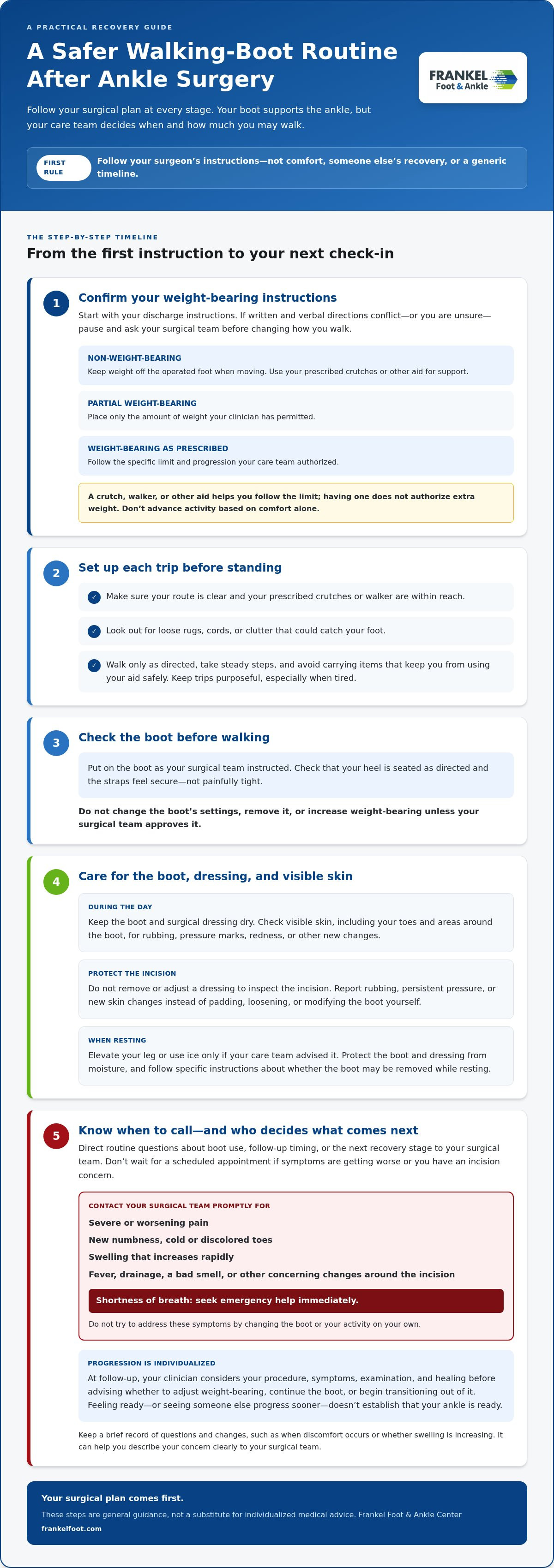
Start with your discharge instructions. Follow the weight-bearing status and boot directions provided by your surgical team, even if they differ from advice for another person or a general recovery timeline. If the instructions are unclear or seem to conflict, contact the team before changing how you walk.
What do weight-bearing instructions mean after ankle surgery?
These terms describe how much pressure you may place through the operated foot:
- Non-weight-bearing: Keep weight off the operated foot when moving, using your prescribed crutches or other aid for support.
- Partial weight-bearing: Place only the permitted amount of weight through the foot, as directed by your clinician.
- Weight-bearing as prescribed: Put weight through the foot only to the level and in the manner your care team has authorized.
Non-weight-bearing means no weight through the foot; partial weight-bearing allows only a clinician-directed amount; weight-bearing as prescribed means following the specific limit and progression in your plan.
Crutches, a walker, or another prescribed aid helps you follow those limits. Having an aid doesn’t authorize extra weight. Don’t change boot settings, remove the boot, or increase weight-bearing unless your surgical team approves it. If your paperwork and verbal instructions seem to conflict, pause and seek clarification rather than guessing.
How to Walk and Care for a Boot After Ankle Surgery
Plan each trip around your prescribed weight-bearing status and mobility aid. Before standing, make sure your route is clear, your crutches or walker are within reach, and loose rugs, cords, or clutter won’t catch your foot. Walk only as directed, take steady steps, and avoid carrying items that prevent you from using your aid safely. Keep trips purposeful, especially when you’re tired.
How should you manage boot fit, skin checks, and daily movement?
Use this routine to follow your care team’s directions:
- Before walking: Put on the boot as your surgical team instructed. Check that your heel is seated as directed and the straps feel secure, not painfully tight. Don’t change the boot’s settings.
- During the day: Keep the boot and surgical dressing dry. Don’t remove or adjust a dressing to inspect the incision. Check visible skin, including your toes and the areas around the boot, for rubbing, pressure marks, redness, or other new changes.
- When resting: Elevate your leg or use ice only if your care team has advised it. Protect the boot and dressing from moisture, and follow specific instructions about whether the boot may be removed while resting.
Report rubbing, persistent pressure, or new skin changes to your surgical team instead of padding, loosening, or modifying the boot yourself. If discomfort continues, the center’s guide to ankle pain relief explains broader approaches, but discuss postsurgical symptoms with your care team. For ongoing ankle concerns that need professional assessment, foot and ankle care can be a supportive next step.
When to Call Your Surgeon and How Boot Progression Is Decided
Direct routine questions about boot use, follow-up timing, or the next recovery stage to your surgical team. Don’t wait for a scheduled appointment if symptoms are getting worse or you have a concern about your incision. Your care team can advise whether you need prompt assessment.
Which symptoms need prompt or urgent medical attention?
Contact your surgical team promptly for severe or worsening pain, new numbness, cold or discolored toes, or swelling that increases rapidly. Also report fever, drainage, a bad smell, or other concerning changes around the incision. If you have shortness of breath, seek emergency help immediately. Don’t try to address these symptoms by changing the boot or your activity on your own.
Boot progression isn’t set by a generic calendar. At follow-up, your clinician considers your procedure, symptoms, examination, and healing before advising whether to adjust weight-bearing, continue using the boot, or begin transitioning out of it. The plan may also include guidance on returning to everyday activities. Feeling ready or seeing someone else progress sooner doesn’t establish that your ankle is ready.
Keep a brief record of questions and changes you notice, such as when discomfort occurs or whether swelling is increasing. This can help you describe the concern clearly when you contact your surgical team. These walking boot tips after ankle surgery are a guide, not a substitute for individualized medical advice.
If you’re concerned about ankle symptoms or need professional evaluation, Frankel Foot & Ankle Center provides foot and ankle care in Middletown and Katonah, New York, and Milford, Pennsylvania.
Take Your Next Step Toward Confident Recovery
Recovery can feel less uncertain when you treat each stage as a conversation with your care team, not a deadline to meet. Keep track of questions as they arise, especially if your symptoms or daily needs change. That information can help guide a useful discussion about what comes next. The best walking boot tips after ankle surgery are the ones that fit your individual healing and clinical guidance.
If you have foot or ankle concerns that need professional evaluation, Frankel Foot & Ankle Center offers care for foot and ankle pain in Middletown and Katonah, New York, and Milford, Pennsylvania. Contact Frankel Foot & Ankle Center for foot and ankle care.
Frequently Asked Questions
How long should I wear a walking boot after ankle surgery?
Many patients wear a boot for about 6 to 8 weeks, but that range isn’t a personal schedule. The procedure, healing, and your surgeon’s assessment determine when you can stop using it. Keep wearing it as instructed between appointments, and don’t transition to a regular shoe just because the ankle feels better. Ask your surgical team what milestones they’ll use to guide the change.
Can I put weight on my foot while wearing a boot after surgery?
Only if your surgical team has allowed weight-bearing, and only to the degree they specified. A boot protects the ankle, but it doesn’t mean the repaired area is ready for pressure. Check your discharge instructions before standing, including whether you need a mobility aid. If the instructions don’t clearly describe what to do during a short trip, get clarification rather than testing your tolerance.
Should I take my walking boot off to sleep after ankle surgery?
Follow your discharge instructions, because sleep directions can depend on your procedure and the support your ankle needs. Don’t assume the boot can come off overnight, even if it feels uncomfortable. If no sleep instructions were provided, call your surgical team for guidance before removing it. Ask specifically whether the boot should stay on while sleeping and what to do if it shifts or causes pressure.
What should I do if my toes become numb or change color in a walking boot?
Contact your surgical team promptly if your toes become newly numb, cold, pale, or discolored, or if the change doesn’t quickly resolve. Don’t ignore it or try to fix the problem by altering the boot’s settings. If symptoms feel severe or worsen, seek urgent medical attention. For foot and ankle evaluation in Middletown or Katonah, New York, or Milford, Pennsylvania, Frankel Foot & Ankle Center can be a local care resource.


