


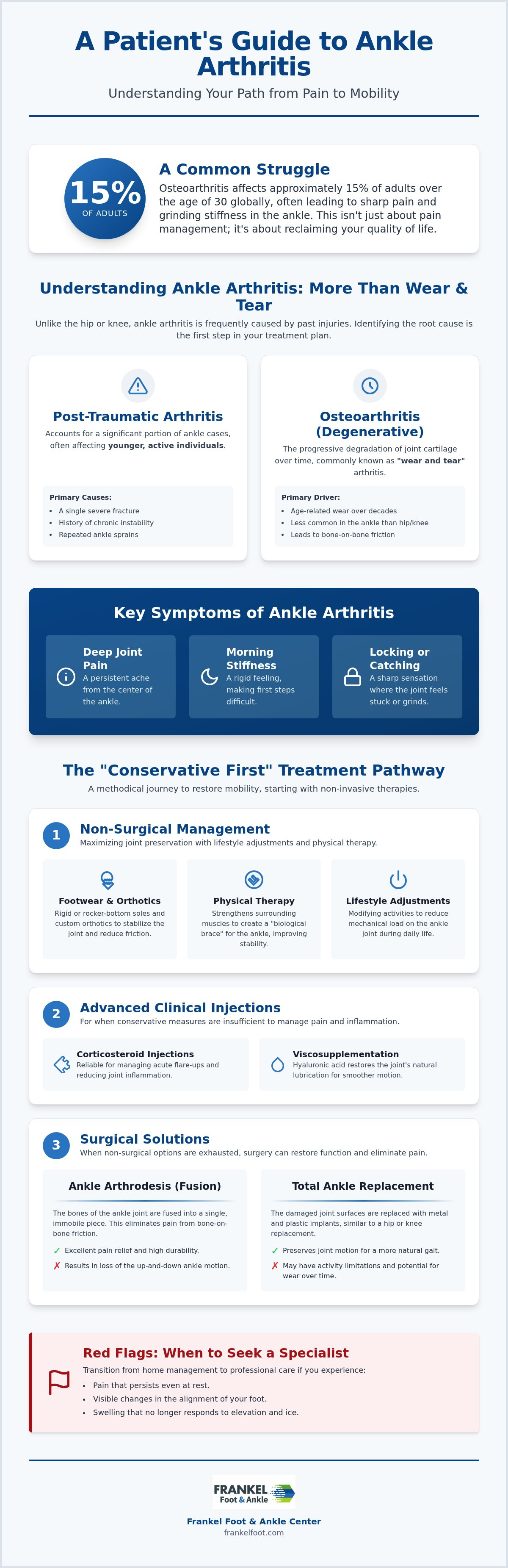
Imagine waking up and dreading the moment your feet hit the floor because you know those first steps will be defined by a sharp, grinding stiffness. You might feel as though your active years are slipping away, especially if you've had to abandon hiking or long walks due to a joint that feels increasingly unstable. It's a common struggle, as osteoarthritis now affects approximately 15% of adults over the age of 30 globally. Seeking an effective ankle arthritis treatment is no longer just about managing daily pain; it's about reclaiming the quality of life you deserve through precise, evidence based care.
We understand that the fear of a long, painful surgical recovery often prevents patients from seeking the help they need. This guide provides a comprehensive look at the modern landscape of joint preservation, from conservative therapies that reduce inflammation to the most advanced clinical interventions available in 2026. You'll discover the difference between post-traumatic and degenerative conditions, learn about the latest AAOS clinical guidelines, and explore how minimally invasive techniques are redefining the recovery process. Our goal is to guide you through a methodical journey toward restored mobility, ensuring you have the expertise and support required for long term health improvement.
Key Takeaways
- Distinguish between age-related osteoarthritis and post-traumatic arthritis to better understand the specific biological cause of your joint degradation.
- Learn how a "conservative first" philosophy utilizes custom orthotics and lifestyle modifications to stabilize the joint and reduce inflammatory load without immediate surgery.
- Evaluate the comprehensive range of ankle arthritis treatment options, moving methodically from non-invasive therapies to advanced clinical interventions.
- Compare the functional outcomes of ankle arthrodesis versus total ankle replacement to determine which surgical solution best supports your long-term mobility goals.
- Discover how modern, minimally invasive techniques are designed to restore your ability to enjoy active hobbies while prioritizing a compassionate and efficient recovery process.
Understanding Ankle Arthritis: More Than Just Wear and Tear
Ankle arthritis is a clinical condition characterized by the progressive degradation of cartilage within the talocrural joint. This joint is where the tibia and fibula meet the talus bone of the foot. When this protective cartilage thins, the smooth gliding motion of the joint is replaced by bone-on-bone friction. Many patients assume this discomfort is an inevitable consequence of aging that they must endure in silence; however, modern medicine views it as a manageable mechanical issue. Effective ankle arthritis treatment starts with understanding that your pain is a signal of joint distress, not a life sentence of immobility.
While this condition is often grouped under a general Osteoarthritis overview, ankle issues are unique. Unlike the hip or knee, where age-related wear is the primary driver, the ankle is frequently affected by post-traumatic arthritis. This distinction is vital for determining your care path. Whether your symptoms stem from decades of use or a specific past event, the primary indicators remain consistent:
- Deep joint pain: A persistent ache that feels as though it's coming from the center of the ankle.
- Morning stiffness: A rigid sensation that makes those first steps out of bed particularly difficult.
- Locking or catching: A sharp sensation where the joint feels stuck or "grinds" during movement.
The Role of Previous Injuries in Ankle Health
Post-traumatic arthritis accounts for a significant portion of ankle cases, often affecting younger, active individuals. A single severe fracture or a history of chronic instability from repeated sprains can disrupt the joint's natural alignment. This misalignment causes uneven weight distribution, which accelerates cartilage wear in specific areas. If you've spent years managing an "unstable" ankle, you're likely seeing the long-term effects of that mechanical imbalance today.
When to Seek a Specialist in Middletown
Recognizing when to transition from home management to professional ankle arthritis treatment is essential for preserving joint function. You should consult a specialist if you experience "red flag" symptoms such as pain that persists even at rest, visible changes in the alignment of your foot, or swelling that no longer responds to elevation and ice. Our diagnostic process utilizes advanced imaging, such as weight-bearing X-rays or MRIs, to precisely map the extent of cartilage loss and identify the most effective path toward relief.
In addition to local options, patients seeking a second opinion on sports-related joint issues can check out The Orthopaedic & Sports Medicine Institute for their specialized approach to orthopedic care.
Non-Surgical Ankle Arthritis Treatment and Management
Our approach to ankle arthritis treatment prioritizes a "Conservative First" philosophy, aiming to maximize joint preservation before considering invasive measures. This methodical journey begins with lifestyle adjustments and footwear modifications designed to redistribute weight and reduce the mechanical load on the talocrural joint. By selecting shoes with rigid soles or rocker-bottom designs, patients can often achieve significant relief during daily ambulation. Custom orthotics and bracing further this effort by stabilizing the hindfoot and midfoot, preventing the microscopic shifts that lead to bone-on-bone friction.
Physical therapy serves as a cornerstone of this phase, focusing heavily on proprioception, which is the body's ability to sense joint position. Strengthening the surrounding tendons and musculature provides a biological "brace" for the ankle, improving overall stability and confidence during movement. If you're struggling with persistent discomfort, seeking a professional evaluation for ankle pain relief can help determine the specific combination of therapies required for your unique anatomy.
Advanced Clinical Injections and Therapies
When lifestyle changes are insufficient, we move toward targeted clinical interventions. Corticosteroid injections remain a reliable tool for managing acute flare-ups and reducing intra-articular inflammation. We also utilize hyaluronic acid viscosupplementation to restore the joint's natural lubrication, often providing a smoother range of motion. While the 2026 AAOS guidelines suggest these are most effective when used as part of a multimodal plan, they offer a vital bridge for patients exploring surgical options for ankle arthritis later in their journey. Emerging regenerative medicine techniques also show promise in supporting the health of remaining cartilage.
For patients considering these new biological paths, you can explore Terapia komórkami macierzystymi (Lipogems) as a specialized regenerative option for joint preservation and recovery.
Home Care Strategies for Daily Relief
Consistent home management helps maintain the gains made in the clinic. The RICE method (Rest, Ice, Compression, Elevation) should be tailored for chronic care, using ice specifically after activity to quiet inflammatory responses. We recommend transitioning to low-impact exercises, such as swimming or cycling. These activities are considered the "gold standard" for arthritic ankles because they maintain cardiovascular health and joint range of motion without the repetitive impact of running or jumping.
Advanced Surgical Excellence: Restoring Mobility and Function
When conservative measures like custom orthotics and clinical injections no longer provide sufficient relief, surgical intervention becomes the logical next step in your recovery. This transition occurs when the physical limitations of joint degradation begin to dictate your daily choices, preventing you from enjoying the active lifestyle that defines our local communities. At Frankel Foot & Ankle Center, we view surgery not as a last resort, but as a sophisticated tool for biological restoration. Our surgical methodology emphasizes the least invasive techniques available, which are designed to minimize tissue disruption and facilitate a more efficient healing process.
Modern surgical ankle arthritis treatment focuses on precision and long-term stability. We provide a complete spectrum of care, from arthroscopic debridement for early-stage issues to complex reconstructive procedures for end-stage arthritis. By utilizing advanced diagnostics, we can accurately determine which surgical path will best support your specific mobility goals and physical demands.
Ankle Fusion vs. Replacement: Which is Right for You?
The choice between Ankle Arthrodesis (fusion) and Total Ankle Replacement (arthroplasty) depends largely on your age, activity level, and the condition of the surrounding joints. Fusion remains a highly reliable option for younger, high-impact patients, as it joins the bones to create a permanent, pain-free foundation. Conversely, ankle replacement is ideal for those seeking to maintain a natural, fluid gait. In 2026, the success of these replacements has been revolutionized by 3D-printed implants. These custom-fit components are designed from patient-specific anatomical data, ensuring a level of precision that significantly improves joint longevity.
Recovery and Long-Term Outlook in the Tri-State Area
Post-operative care has evolved to be far more patient-centered and streamlined than in previous decades. While individual timelines vary, many patients can expect to return to protected walking within a few weeks, with a gradual progression toward full activity over several months. We prioritize localized support, ensuring that residents in Middletown, Katonah, and Milford have access to expert follow-up care close to home. This regional presence allows for a steady, supervised recovery where every concern is addressed with the same level of expertise and warmth that defined your initial consultation.
Reclaiming Your Mobility with Precision Ankle Care
Managing joint pain is a journey that moves from understanding the mechanical causes of your discomfort to implementing a structured plan for restoration. We've explored how a "conservative first" approach can stabilize the ankle, while advanced 3D-printed surgical solutions offer hope when lifestyle changes are no longer enough. Modern ankle arthritis treatment is designed to be as unique as your own anatomy, focusing on preserving function and minimizing recovery time. You don't have to accept chronic stiffness as an inevitable part of your day.
Dr. Frankel has dedicated over a decade to providing compassionate, patient-centered care for those seeking both non-surgical preservation and advanced surgical correction. Our team is committed to meeting your needs with high-level expertise at our convenient locations in Middletown NY, Katonah NY, and Milford PA. It's time to stop letting joint instability hold you back from hiking, walking, or simply starting your morning with ease. Schedule a consultation with Dr. Frankel to discuss your ankle relief options and begin your path toward lasting health improvement today. Your journey to better mobility starts with a single, supported step.
Frequently Asked Questions
Can ankle arthritis be cured without surgery?
While cartilage degradation cannot be biologically reversed, the symptoms of the condition can be successfully managed through a comprehensive ankle arthritis treatment plan. This methodical approach focuses on joint preservation by utilizing custom orthotics, targeted clinical injections, and physical therapy to strengthen supporting structures. Many individuals find that these non-invasive interventions allow them to maintain an active lifestyle and delay the need for surgical correction for many years.
What is the best type of footwear for someone with ankle arthritis?
The most effective footwear for arthritic ankles features a rigid sole and a rocker-bottom design. These specific structural elements reduce the degree of motion required from the talocrural joint during each step, effectively offloading the painful area and reducing bone-on-bone friction. High-top shoes or supportive boots can also provide essential stability for the hindfoot, preventing the microscopic shifts that often trigger sharp pain or locking sensations during daily movement.
How long is the recovery period after an ankle replacement?
Recovery timelines vary based on individual health factors, but most patients transition to protected weight-bearing in a boot within three to six weeks of the procedure. Achieving a full return to more demanding activities typically takes several months of dedicated rehabilitation and post-operative care. Our clinics in Middletown, Katonah, and Milford provide structured follow-up schedules to ensure your recovery progresses safely and efficiently toward your goal of restored mobility.
Is it okay to keep exercising if my ankle has arthritis?
Exercise is highly recommended, provided you shift toward low-impact activities that don't subject the joint to repetitive trauma. Swimming, cycling, and rowing are excellent choices because they maintain cardiovascular health and muscle strength without the grinding impact associated with running or jumping. Consistent, controlled movement helps keep the joint lubricated and the surrounding tendons strong, which is a vital component of any long-term ankle arthritis treatment strategy.


