


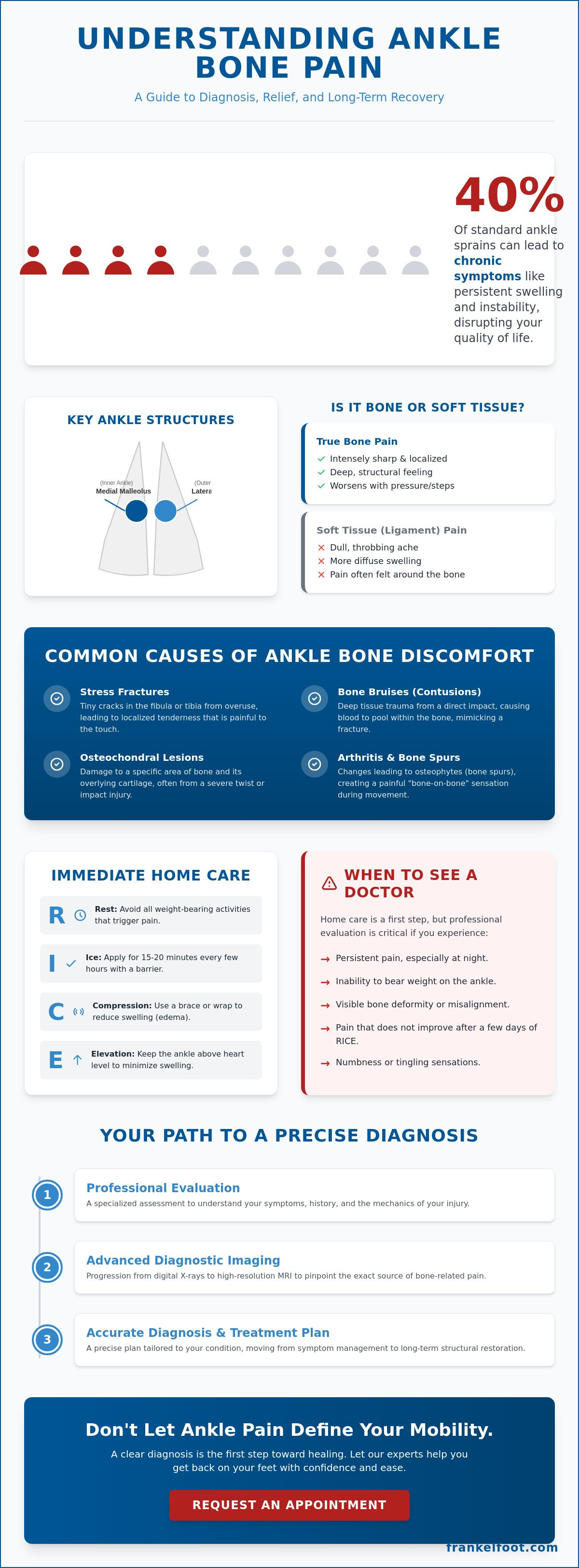
Did you know that up to 40% of individuals who experience a standard ankle sprain may develop chronic symptoms such as persistent swelling and instability? If you're currently struggling with a sharp pain when walking or noticeable swelling around the malleolus, you understand how quickly these issues can disrupt your quality of life. Seeking effective ankle bone pain relief isn't just about comfort; it's about restoring your ability to move through the world with confidence and ease. We recognize that the inability to wear certain shoes or the constant fear of a misstep can feel overwhelming, but obtaining a clear diagnosis is the first step toward healing.
We'll help you distinguish between temporary surface-level inflammation and more serious structural bone stress to ensure you receive the precise care you need. You'll discover the primary causes of your discomfort and learn actionable strategies for both immediate relief and sustainable, long-term recovery. This overview examines the progression from initial home-based care to sophisticated clinical solutions, including modern regenerative techniques and minimally invasive procedures designed to resolve foot and ankle pain. Let's begin the journey toward a future where your mobility is no longer defined by discomfort.
Key Takeaways
- Learn to identify the specific anatomical structures of the medial and lateral malleolus to distinguish between surface-level strain and deep bone-related discomfort.
- Master a methodical approach to home care, including the RICE protocol and targeted immobilization, to achieve effective ankle bone pain relief during the early stages of recovery.
- Recognize critical clinical warning signs, such as persistent night pain or visible bone deformity, that indicate the need for a specialized professional evaluation.
- Understand the diagnostic progression from digital X-rays to high-resolution MRI imaging to ensure a precise and accurate treatment plan for complex conditions.
- Gain the clinical insights necessary to transition from managing immediate symptoms to achieving long-term structural restoration and improved mobility.
Identifying the Root Causes of Ankle Bone Pain
The ankle is a complex structural masterpiece, centered around two prominent bony landmarks: the medial malleolus on the inner side and the lateral malleolus on the outer side. While soft tissue injuries like sprains often involve diffuse swelling, true bone-specific pain is typically localized and intensely sharp when pressure is applied. Distinguishing between these sensations is the first step toward achieving lasting ankle bone pain relief. Unlike the dull, throbbing ache of a ligamentous strain, bone pain feels deep and structural, often worsening with every step as the skeleton absorbs the impact of your weight.
Repetitive stress plays a significant role in compromising joint integrity. When the body is subjected to constant impact without adequate recovery, bone density can fluctuate, leading to microscopic vulnerabilities. Footwear choice also influences this dynamic. Shoes that are too narrow or lack proper cushioning can create excessive friction against the malleolus, exacerbating existing inflammation. Understanding the common causes of ankle pain helps patients identify whether their discomfort stems from a simple bruise or a more complex underlying pathology.
Common Conditions Affecting the Ankle Bone
- Stress Fractures: These are tiny cracks in the fibula or tibia that result from overuse. They cause localized tenderness that is painful to the touch and requires immediate rest.
- Bone Bruises (Contusions): Deep tissue trauma from a direct impact can cause blood to pool within the bone. This leads to significant, long-lasting discomfort that often mimics a fracture.
- Osteochondral Lesions: These occur when a specific area of the bone and its overlying cartilage are damaged. It's often the result of a severe twist or impact injury.
Non-Injury Related Bone Discomfort
Not all bone pain is the result of a sudden accident. Arthritic changes can lead to the development of osteophytes, or bone spurs, which create a painful "bone-on-bone" sensation during movement. Additionally, some individuals possess an accessory navicular, which is an extra piece of bone or cartilage located on the inner side of the foot. This structural variation can cause chronic irritation, requiring specialized strategies for ankle bone pain relief to manage the persistent pressure on the joint.
Evidence-Based Strategies for Ankle Bone Pain Relief
Effective recovery requires more than just waiting for the pain to subside. We recommend a methodical application of the RICE protocol to manage acute symptoms immediately after they arise. Rest means complete avoidance of weight-bearing activities that trigger sharp sensations. Ice should be applied for 15 to 20 minutes every few hours, using a barrier to protect the skin from direct contact. Compression and elevation work in tandem to reduce the edema that often pools around the malleolus. While these are standard evidence-based strategies for ankle sprains, bone-related issues require a much stricter focus on immobilization to be effective.
One of the most dangerous misconceptions in sports medicine is the idea that you should "walk it off." When a bone is in a stress-reaction state, it's structurally vulnerable. Continuing to apply pressure doesn't build resilience. Instead, it can rapidly turn a manageable micro-crack into a complete fracture. Achieving lasting ankle bone pain relief often starts with acknowledging that your body needs a temporary period of total stillness to facilitate deep cellular repair. Under medical supervision, anti-inflammatory management can further assist in calming the periosteal irritation that causes that deep, localized ache.
At-Home Care and Immediate Intervention
Proper icing is vital for success. You aren't just cooling the skin; you're attempting to reach deep-seated bone inflammation. Use a thin towel between the ice pack and your ankle to prevent frostbite while allowing the cold to penetrate the joint. Over-the-counter bracing or a pneumatic walking boot can provide the necessary stabilization to offload the bone effectively. "Prompt immobilization is the cornerstone of preventing an ankle bone stress reaction from evolving into a debilitating fracture."
Long-Term Management and Prevention
Once the acute phase passes, the focus shifts toward preventing recurrence through structural support. Custom orthotics are an excellent tool for this, as they redistribute pressure away from sensitive bony prominences. Strengthening the peroneal tendons is also crucial, as these muscles help maintain proper bone alignment during movement. For those seeking a deeper dive into recovery pathways, our guide on Comprehensive Ankle Pain Relief offers a step-by-step look at transitioning from home care to clinical solutions. If your symptoms persist despite these efforts, seeking professional ankle pain relief is the most reliable way to ensure a full return to activity.
When to Seek Professional Ankle Care in Middletown
While the home-based strategies discussed previously provide a vital foundation for recovery, certain symptoms demand an immediate transition to expert clinical intervention. Identifying red flags early can be the difference between a swift return to activity and long-term joint instability. If you experience persistent night pain that disrupts sleep, a total inability to bear weight, or a visible bone deformity, these are critical indicators of structural damage. Our diagnostic journey is methodical and thorough, moving from high-definition digital X-rays to assess bone alignment toward high-resolution MRI when we need to evaluate marrow health or cartilage integrity. Seeking professional ankle care for sprains and bone stress ensures that micro-trauma doesn't lead to permanent joint degradation.
Specialized care is the most reliable pathway to returning to the active lifestyle you enjoy. If your discomfort is concentrated specifically behind the joint, you should explore the unique causes of Back of Ankle Pain to determine if the Achilles tendon or posterior bone spurs are the primary culprits. Regardless of the location, our focus remains on providing precise and compassionate solutions tailored to your unique anatomy.
Advanced Clinical Treatments at Frankel Foot & Ankle
We utilize progressive technologies to provide comprehensive ankle bone pain relief that addresses the root cause of your discomfort. This includes laser therapy to non-invasively reduce deep-seated bone and joint inflammation without the need for downtime. For patients with structural impediments, we offer minimally invasive surgical options for bone spur removal or fracture repair. These advanced techniques prioritize precision and faster recovery, reflecting our commitment to serving patients across Middletown, Katonah, and Milford with the highest level of surgical skill.
Scheduling Your Consultation
Preparing for your first visit is essential for an accurate diagnosis. We recommend documenting when your pain occurs and bringing any previous imaging results to your appointment. Our team provides specialized ankle bone pain relief across multiple New York and Pennsylvania locations, ensuring that high-level expertise is accessible to your community. You can take the final step toward lasting recovery by visiting the Frankel Foot & Ankle Center homepage to request your appointment today.
Restoring Your Mobility and Joint Health
Navigating the path to recovery requires a precise understanding of your unique anatomy and the specific stressors affecting your joints. By distinguishing between ligamentous strain and deep-seated bone stress, you've taken the first step toward effective ankle bone pain relief. Implementing methodical home care and respecting the need for immobilization are critical for preventing minor stress reactions from evolving into complex fractures. When these initial efforts aren't enough, modern clinical solutions provide a sophisticated bridge from persistent discomfort to restored function.
Dr. Marc Frankel and our dedicated team combine high-level surgical skill with a patient-centered philosophy to ensure your journey is supported at every stage. We specialize in progressive, minimally invasive, and scarless techniques designed to achieve lasting results with minimal disruption to your life. Whether you visit us in Middletown, Katonah, or Milford, you'll find a welcoming environment focused entirely on your well-being. Don't let chronic discomfort dictate your activity levels any longer. We invite you to schedule a consultation with Dr. Marc Frankel for expert ankle bone pain relief and begin your transition toward a pain-free future. Your mobility is our priority, and we're here to guide you back to the lifestyle you love.
Frequently Asked Questions
How can I tell if my ankle pain is in the bone or the ligament?
Bone pain is typically distinguished by its sharp, localized nature when you apply direct pressure to the bony landmarks. If touching the malleolus causes an immediate, piercing sensation, the issue likely resides within the bone itself. Ligamentous injuries often feel like a broader, dull ache that worsens with certain ranges of motion rather than direct touch. Identifying this difference is essential for determining the most effective course for ankle bone pain relief.
Is it safe to walk on an ankle that has sharp bone pain?
It's generally unsafe to continue walking on an ankle that exhibits sharp, localized bone pain. This type of discomfort often signals a stress reaction or a micro-crack that hasn't yet become a full fracture. Don't take the risk. By continuing to bear weight, you risk escalating a minor injury into a significant structural break that requires much more invasive intervention. We suggest immobilizing the joint immediately until you can receive a professional diagnostic evaluation.
What is the fastest way to relieve swelling around the ankle bone?
The most efficient method for reducing acute swelling is consistent elevation of the ankle above the level of your heart. This technique uses gravity to facilitate the drainage of inflammatory fluids away from the joint. When you combine elevation with medical-grade compression and precise icing intervals, you can see a noticeable reduction in edema within 24 to 48 hours. These steps are vital for managing discomfort before pursuing professional ankle bone pain relief.
Can ill-fitting shoes cause permanent damage to the ankle bone?
Chronic use of ill-fitting footwear can lead to permanent structural changes such as bone spurs or osteophytes. When a shoe constantly rubs against the malleolus, the bone may respond by growing extra layers of tissue as a protective measure. These growths can eventually interfere with joint mechanics and cause persistent pain. Your footwear matters. Selecting shoes with a wide toe box and adequate cushioning is a simple way to protect your skeletal health.


