


An ankle that hurts isn’t always simply sprained. If you’re wondering what to do if your ankle hurts, rest it, apply ice, and limit weight on it. Seek emergency care if you suspect a fracture or can’t move your ankle or leg.
It’s understandable to hope the discomfort will settle on its own, especially after a busy day or a twist during exercise. But swelling, bruising, severe pain, or difficulty walking can signal an injury that needs medical attention.
This article covers common causes of ankle pain, signs that may point to a fracture, and when to seek care. Treatment depends on the cause and your recovery needs, and may include supportive footwear, orthotics, or physical therapy.
Key Takeaways
- Ankle pain can stem from injury, overuse, or an underlying condition, so the pattern of symptoms can help guide the next step.
- Rest, ice, elevation, supportive footwear, orthotics, and physical therapy may each play a role in managing pain and restoring function.
- Severe pain, an ankle that looks misshapen, or difficulty moving it may signal a fracture that needs urgent medical assessment.
- Persistent or worsening discomfort deserves professional attention to identify its cause and determine appropriate care.
What is ankle pain?
Ankle pain describes discomfort around the joint, tendons, or nearby tissues. A sprain damages a ligament connecting bones; a strain affects a muscle or tendon. Both can follow a misstep, pivot, jump, or landing, and may cause swelling, bruising, and pain with movement. Increased exercise, long periods standing, or tight shoes can also overload the ankle without one clear injury.
Some causes develop gradually. Repeated running or jumping can irritate ankle tendons, while arthritis may cause stiffness, pain, and swelling after inactivity. Bursitis can cause redness and a dull ache. Gout may trigger intense joint pain and swelling when uric acid crystals form. Tingling or numbness in the ankle or foot can occur with tarsal tunnel syndrome, which involves pressure on the tibial nerve.
Ongoing foot and ankle pain may also be related to plantar fasciitis, bunions, or repeated strain from unsupportive shoes. Symptoms can offer clues, but they don’t confirm the cause. For example, ankle and heel pain with calf pain when standing on tiptoe may point to Achilles tendonitis. Sudden sharp pain, marked swelling, or trouble walking after a twist needs particular attention.
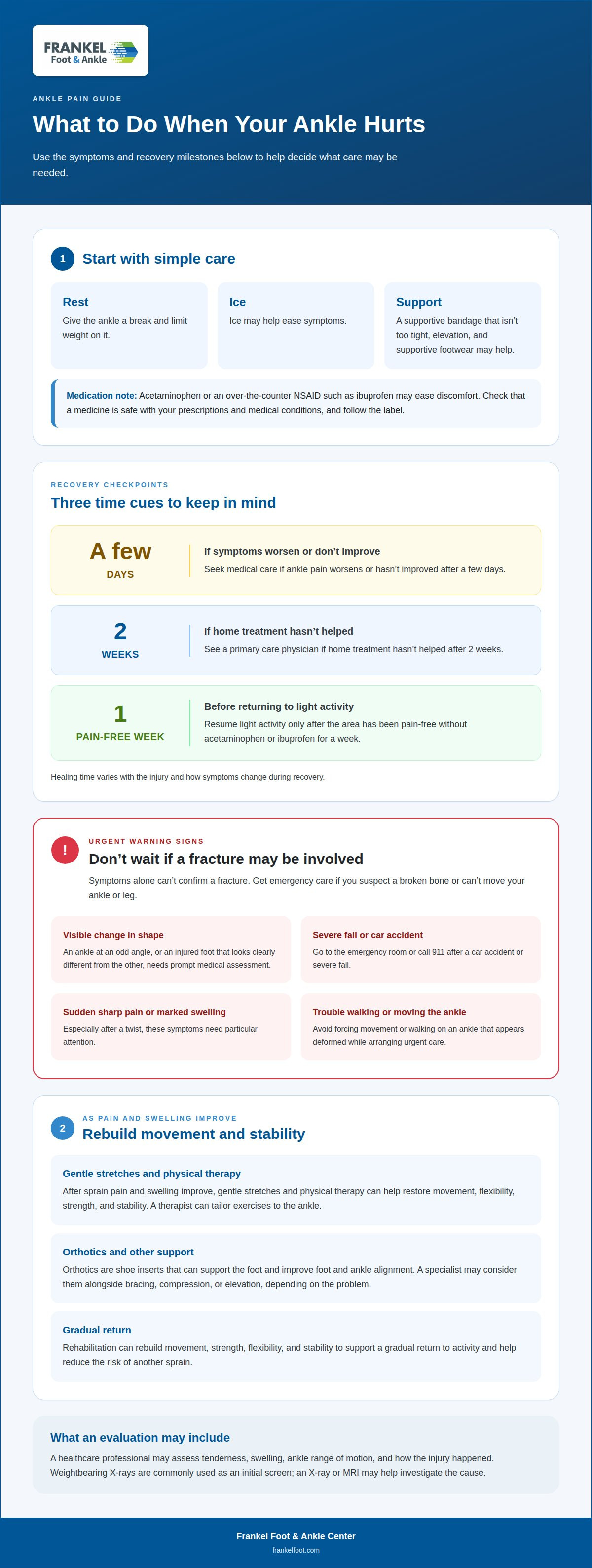
For temporary relief, acetaminophen or an over-the-counter NSAID such as ibuprofen may ease discomfort; ibuprofen and naproxen can also reduce inflammation. Check that a medicine is safe with your prescriptions and medical conditions, and follow the label. Rest, ice, and a supportive bandage that isn’t too tight may also ease symptoms. If you’re deciding what to do if your ankle hurts, seek medical advice if pain worsens or swelling persists, whether from your primary doctor or healthcare practices such as Kingsford Medical Services.
Treatments including orthotics and physical therapy
Treatment depends on the cause and severity of ankle pain and how it affects movement. An examination and imaging can help guide appropriate care, which often begins with an assessment at a walk-in or primary care clinic such as sagecreekmedical.ca.
A healthcare professional can assess tenderness, swelling, and ankle range of motion during a physical examination. For a sprain, these findings help evaluate the injury and whether further assessment is needed. Weightbearing X-rays are commonly used as an initial screen during a foot and ankle consultation; an X-ray or MRI may help investigate the cause. Seek emergency care after a severe fall or car accident, or if you suspect a broken bone or cannot move your ankle or leg. Call 911 after a car accident or severe fall.
Treatments and Physical Therapy
Orthotics are shoe inserts that can support the foot and improve foot and ankle alignment. A specialist may consider them alongside bracing, compression, or elevation, depending on the problem. Once sprain pain and swelling improve, gentle stretches and physical therapy can help restore movement, flexibility, strength, and stability. A therapist can tailor exercises to the ankle, including strengthening muscles that support tendons and help prevent further strain.
Healing and Preventing Repeat Injuries
Healing time for a sprained ankle depends on the injury and how symptoms change during recovery. Resume light activity only after the area has been pain-free without acetaminophen or ibuprofen for a week. Once pain and swelling ease, rehabilitation exercises can rebuild movement, strength, flexibility, and stability. These improvements support a gradual return to activity and help reduce the risk of another sprain.
Seek medical care if ankle pain worsens or doesn’t improve after a few days; see a primary care physician if home treatment hasn’t helped after 2 weeks. Sudden pain and swelling also need medical attention. For persistent symptoms, ankle pain relief can begin with an evaluation to identify the cause.
Ankle fractures
An ankle fracture is a break in one or more bones around the ankle. It can result from a twist or direct trauma, with symptoms such as sudden sharp pain, swelling, or difficulty walking. A popping or snapping sound at the moment of injury can also occur. These signs need attention, but symptoms alone can’t confirm whether the injury is a fracture or a sprain involving ligaments.
Look for a visible change in the ankle’s shape. An ankle at an odd angle, or an injured foot that looks clearly different from the other, calls for prompt medical assessment. If you think a bone is broken, don’t try to treat the injury yourself. Go to an emergency room, especially if you can’t move your ankle or leg. After a car accident or severe fall, go to the emergency room or call 911.
A medical evaluation helps identify the injury and guide care. The clinician considers how it happened, the ankle’s appearance, pain, and movement; imaging may also help assess the damage. Treatment depends on the fracture and whether the ankle is stable. Avoid forcing movement or walking on an ankle that appears deformed while arranging urgent care.
Recovery may involve rehabilitation exercises and physical therapy, depending on the injury. Surgery may be considered if an injury doesn’t heal or the ankle remains unstable after a long period of physical therapy and rehabilitation exercises. Persistent pain, limited walking, or ongoing instability should be assessed rather than managed by pushing through activity. For continuing ankle symptoms, get support for ankle pain.
Frankel Foot & Ankle Center
The Frankel Foot & Ankle Center provides foot and ankle pain relief when discomfort persists, returns, or interferes with daily activities. If ankle pain isn’t improving with home care, identifying the cause can help guide treatment. The right approach depends on your symptoms and the problem affecting the joint or surrounding tissues. For a suspected fracture, a visibly deformed ankle, or inability to move your ankle or leg, seek emergency care rather than waiting for routine pain relief.
Care is centered on addressing ankle and foot pain, with treatment suited to the concern. If you’re unsure what next step makes sense for ongoing ankle discomfort, contact Frankel Foot & Ankle Center to discuss your concerns.
Take the Next Step Toward Comfortable Movement
Knowing what to do if your ankle hurts can help you make a clearer decision about your next step. Pay attention to how discomfort affects your usual routines, which movements aggravate it, and whether it keeps returning. Those details can help shape a conversation about care and make it easier to explain what you’re experiencing. You don’t need to wait until ankle pain disrupts every part of your day to seek support. Frankel Foot & Ankle Center offers foot and ankle pain relief tailored to these concerns. When you’re ready to discuss persistent discomfort, contact Frankel Foot & Ankle Center. Taking a thoughtful next step can help you move toward care that fits your needs.
Frequently Asked Questions
Can I expect to make a full recovery?
Recovery depends on the injury’s severity, ankle stability, and how movement returns during rehabilitation. Sprains and fractures follow different recovery paths, and persistent instability can affect progress. Follow your care plan and avoid strenuous activity while symptoms remain. If you’re in Middletown, Katonah, or Milford and pain or mobility problems continue, the Frankel Foot & Ankle Center offers local foot and ankle care.
What should I do after a foot or ankle injury?
Stop the activity that caused the pain and reduce time on your feet over the next few days as work and daily life allow. Avoid sports or intense exercise until a healthcare provider says it’s safe. Redness, warmth, or fever needs medical attention because these symptoms can indicate infection. After a severe fall or car accident, go to an emergency room or call 911.
What causes ankle pain, and how can you tell if it is a sprain or fracture?
Ankle pain can follow a twist, direct impact, or overuse. A sprain affects a ligament, while a fracture is a break in bone, but symptoms can overlap. A visibly changed ankle shape, sudden sharp pain, or difficulty walking after an injury calls for prompt assessment. A physical examination and imaging can help identify the condition; appearance alone can’t confirm it.
What first aid should you use for a painful ankle at home?
For a mild injury without signs of fracture, rest the ankle, apply ice, and raise it when possible. An elastic bandage can support the area, but keep it loose enough not to restrict circulation. Acetaminophen or ibuprofen may relieve discomfort; check that medication is safe with your prescriptions and health conditions. Don’t rely on home care instead of urgent evaluation if you suspect a broken bone.
Should you rest, ice, compress, and elevate an injured ankle, and for how long?
Yes. Rest, ice, compression, and elevation are common self-care measures for a sprain. Mayo Clinic recommends this approach for the first two or three days. Apply an ice pack or use an ice slush bath for 15 to 20 minutes, repeating every two to three hours while awake. Keep a bandage comfortable, and raise the ankle above heart level when resting.


