


Up to 90% of people with gout experience at least one attack in the big toe during their lifetime. Gout in the foot occurs when uric acid crystals trigger inflammation in a joint, causing sudden pain, swelling, warmth, and tenderness. It can also affect the ankle and other joints.
A painful, swollen toe or ankle can make walking difficult, and gout in the foot can resemble other joint problems. A careful diagnosis matters because treatment depends on what is causing the symptoms.
This article explains what gout is, how it affects the foot and ankle, and how clinicians assess it, including joint-fluid analysis and imaging. It also covers treatment options during a flare and ways to manage gout over time.
Key Takeaways
- Joint-fluid analysis can identify urate crystals, while examination, blood tests, and imaging can contribute to diagnosis when crystals aren’t identified.
- Sudden, severe joint pain deserves medical attention; a hot, inflamed joint with fever requires immediate care.
- Flare treatments may include anti-inflammatory medicines, colchicine, or corticosteroids, with the choice shaped by a person’s health and medication risks.
- Foot or ankle pain that needs assessment may be addressed through the pain-relief services offered at Frankel Foot & Ankle Center.
Diagnosing gout without crystal identification
Gout develops when uric acid builds up in the blood and forms sharp crystals inside a joint. The body produces uric acid while breaking down purines, which are found in some foods. Levels can rise when the body makes too much or the kidneys remove too little. The crystals trigger inflammation, causing sudden pain, swelling, warmth, and tenderness. Repeated inflammation can eventually contribute to joint damage.
Testing fluid from an affected joint for urate crystals is the gold standard for diagnosing gout. If crystal identification isn’t available, a healthcare provider can combine a physical examination with the person’s symptoms, blood tests, and imaging. X-rays, ultrasound, or CT, including dual-energy CT, may help identify signs associated with gout.
Blood uric acid levels provide useful context, but a high result alone doesn’t confirm gout. Some people have elevated levels without symptoms, so results must be considered alongside the affected joints and overall clinical picture. A suddenly painful, highly tender joint may raise suspicion, particularly if similar attacks have happened before.
When crystals aren’t identified, the diagnostic criteria recommend that ideally 6 of 10 features be present. A clinician weighs the overall pattern rather than relying on one result. If pain behaves unusually or doesn’t respond to typical treatment, gout may still warrant consideration. Advanced gout can resemble rheumatoid arthritis, so distinguishing the conditions matters because their treatments differ.
What if a patient can't take the usual gout medications?
A gout flare in the foot can be intensely painful, and some people cannot safely take common anti-inflammatory medicines. Treatment options and the pattern of symptoms help guide next steps.
A gout attack often starts suddenly, sometimes at night, with severe pain, warmth, swelling, redness, and tenderness. The big toe is a common site, though other foot joints can also be affected. Pain may peak within 6 to 12 hours, and movement or light pressure can become difficult. A hot, inflamed joint with fever needs immediate medical care because infection can cause similar symptoms.
Home Treatment for a Foot Flare
Home care means resting the affected foot and using a wrapped cold pack to ease pain and swelling. The National Institute of Arthritis and Musculoskeletal and Skin Diseases says applying ice to a gout-affected area can help reduce swelling and pain during a flare. A flare usually lasts a week or two, according to the National Institute of Arthritis and Musculoskeletal and Skin Diseases. If NSAIDs aren’t suitable, such as with kidney disease or stomach ulcers, a clinician may consider colchicine or corticosteroids.
Food, Drink, and Lifestyle Changes
Prevention may involve dietary choices and a plan to manage uric acid between attacks. Reducing red meat, shellfish, alcohol, especially beer, and sugary drinks may help reduce flare frequency. Drinking plenty of water can help flush uric acid from the system. A low-purine diet can also limit foods such as organ meats and some seafood. Ongoing urate-lowering treatment may help prevent recurring attacks; a clinician can consider the person’s health and gout history when discussing care.
Gout in the big toe, foot, and ankle
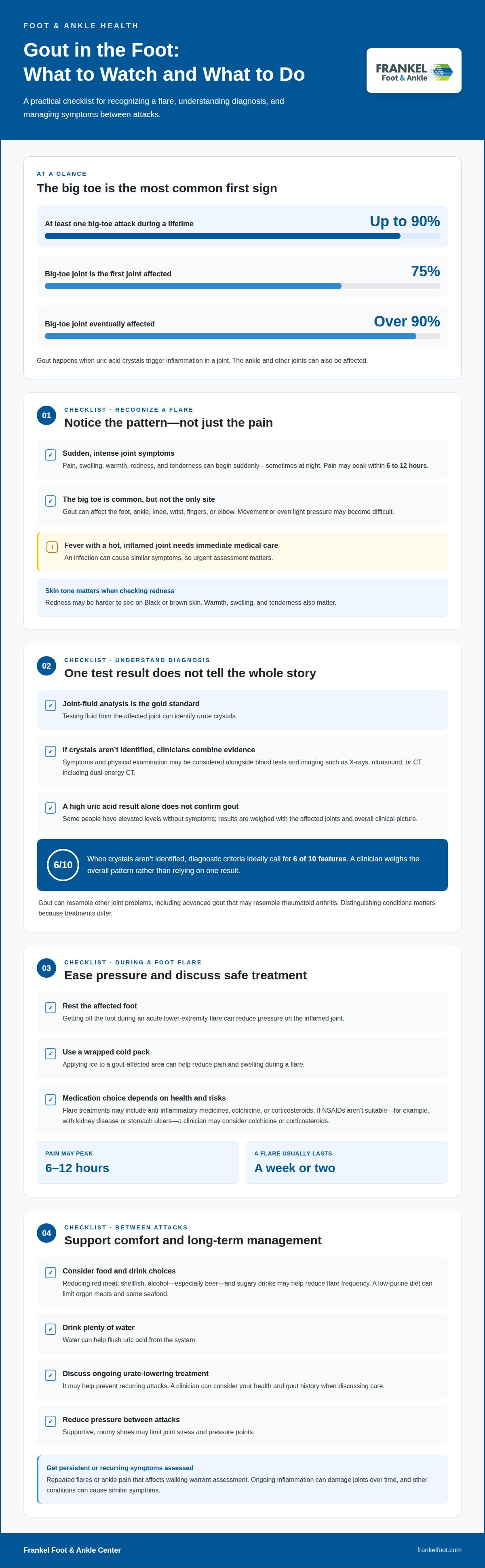
Gout is an inflammatory arthritis that most often affects the joint at the base of the big toe. Up to 90% of people with gout experience at least one big-toe attack during their lifetime. In gout in the foot, this joint may become swollen, warm, intensely painful, and difficult to move, making ordinary steps uncomfortable.
The big-toe joint is sometimes called the bunion joint. It’s the first joint affected in 75% of patients with gout and eventually becomes affected in over 90%. Gout can also involve the ankle, knee, wrist, fingers, or elbow. Redness may be harder to see on Black or brown skin, so warmth, swelling, and tenderness also matter.
Uric acid levels rise when the body produces too much or the kidneys remove too little. Purines in some foods contribute to uric acid production, but a high level alone doesn’t mean someone has gout. Crystals can collect in a joint and trigger inflammation. Persistent deposits, called tophi, may restrict movement, deform joints, and cause ongoing discomfort. Gout in the foot can affect more than the big toe.
During an acute lower-extremity flare, getting off the foot can reduce pressure on the inflamed joint. Supportive, roomy shoes may also limit joint stress and pressure points between attacks. Repeated flares or ankle pain that affects walking warrant assessment, since untreated inflammation can damage joints over time. For ankle symptoms that need attention, explore ankle pain relief.
Frankel Foot & Ankle Center
Frankel Foot & Ankle Center provides foot and ankle pain relief for people whose discomfort affects walking, standing, or daily activities. Gout can affect either area, but other conditions can cause similar symptoms. A medical clinician should guide gout diagnosis and medication decisions.
If foot or ankle pain persists between flares, returns, or makes movement difficult, care focused on relieving the pain may be a helpful next step. The source of discomfort and the joint involved matter when deciding how to address symptoms. Frankel Foot & Ankle Center also provides minimally invasive bunion surgery, described as no-pain bunion correction, for patients with bunion concerns.
Contact Frankel Foot & Ankle Center to discuss your foot or ankle pain.
Choose a Care Path That Supports Your Daily Movement
Living with gout in the foot can affect more than a joint. It may change how confidently you walk, work, and plan everyday activities. Consider which movements you most want to make easier, such as walking comfortably or returning to a routine disrupted by pain. Naming these priorities can help keep conversations about care focused on your needs.
If foot or ankle discomfort continues to affect your mobility, Frankel Foot & Ankle Center can discuss support for those concerns. Gout diagnosis and medication decisions are part of medical care with a clinician, while ongoing foot and ankle pain may also deserve attention. You can contact Frankel Foot & Ankle Center to discuss how discomfort affects your daily life and explore a suitable next step. Taking action at your own pace can help you move toward care that supports your goals.
Frequently Asked Questions
What Is Gout?
Gout is an inflammatory disease caused by urate crystals collecting in joints. Symptoms may disappear during quiet intervals between painful attacks, even while uric acid remains a concern. Over time, unmanaged gout can lead to tophi, firm deposits under the skin, and may contribute to kidney stones or lasting joint problems.
How can a podiatrist help manage gout-related pain?
A podiatrist can assess the affected foot or ankle, examine the joint, and consider whether imaging or other diagnostic tests may clarify the cause. This is important when pain continues between flares or makes walking difficult, since gout can resemble other conditions. For ongoing gout, pain management also needs to fit with the patient’s broader medical treatment plan.
What are future possible treatments of gout?
Potential treatment advances would need to address uric acid or the inflammation it triggers. Current medicines used to lower uric acid include allopurinol, febuxostat, pegloticase, and probenecid; these are available treatment options, not predictions about future approvals. A useful discussion with a clinician is whether long-term uric-acid management is appropriate, especially when attacks recur or tophi develop.
When should I see my healthcare provider?
Contact a healthcare provider for sudden, intense joint pain, especially if gout hasn’t been diagnosed before. A hot, inflamed joint accompanied by fever needs immediate medical care because infection can look similar. If foot pain has not improved within 48 hours, contact a podiatrist for assessment. Don’t assume a new or worsening attack is gout without considering other causes.
Which joints are involved in gouty arthritis, and why is it most common in the foot?
Gouty arthritis most often affects the joint at the base of the big toe, but it can also involve the ankle, knee, elbow, wrist, and fingers. Urate crystals trigger inflammation inside affected joints. The big-toe joint is the characteristic site, although the reason it is affected more often than other joints is not established.


