


Big toe joint pain relief often starts with reducing pressure on a stiff, painful joint. Hallux rigidus is arthritis in the big toe joint. As cartilage wears down, the toe may become stiff and painful, especially when you push off to walk.
If walking or choosing shoes has become uncomfortable, it can be hard to know what may help and when to seek care. This article explains hallux rigidus, how roomy footwear and supportive soles may ease pressure, and how a foot and ankle specialist can assess your symptoms and discuss treatment options. It also explains why identifying the cause of pain matters before deciding what to do next.
Key Takeaways
- Hallux rigidus is arthritis in the big toe joint; stiffness and pain can make push-off while walking uncomfortable.
- Early care may include anti-inflammatory medication, orthotics, physical therapy, and footwear changes.
- Roomy toe boxes and wide, rigid soles can reduce pressure and limit painful bending at the joint.
- A foot and ankle surgeon can assess what’s causing persistent pain and help guide treatment choices, including when bunion correction may be relevant.
What is hallux rigidus?
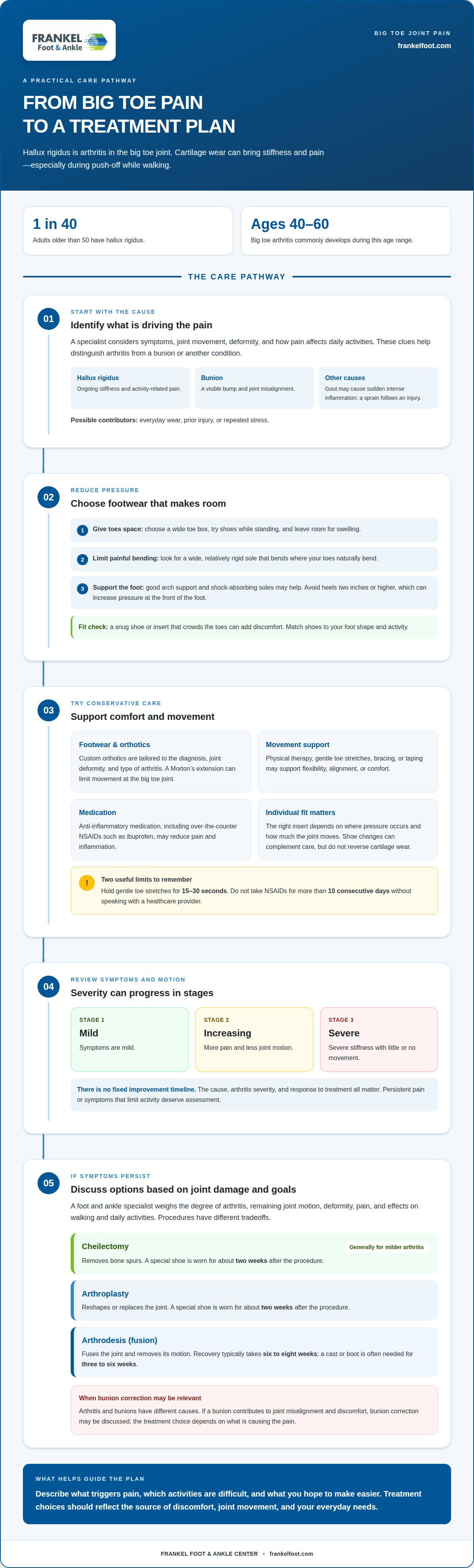
Hallux rigidus is arthritis of the big toe joint. As cartilage wears down, the bones can rub together, causing pain, stiffness, swelling, and reduced motion. Symptoms may worsen during push-off while walking. Around 1 in 40 adults older than 50 have hallux rigidus, and big toe arthritis commonly develops between ages 40 and 60.
Causes include everyday wear, prior injury, or repeated stress. Gout often causes sudden, intense pain and inflammation; a bunion involves a visible bump and joint misalignment, while a sprain follows an injury and may restrict movement. Arthritis more often brings ongoing stiffness and pain with activity. Early-stage conservative care can include anti-inflammatory medication, custom orthotics, suitable footwear, and physical therapy. Gentle toe stretches, held for 15-30 seconds, may help flexibility and motion. Over-the-counter NSAIDs, such as ibuprofen, can reduce pain and inflammation, but don’t take them for more than 10 consecutive days without speaking with a healthcare provider.
Progression varies: stage 1 symptoms are mild, stage 2 brings increased pain and less motion, and stage 3 can cause severe stiffness with little or no movement. There’s no fixed time for symptoms to improve; the cause, arthritis severity, and response to treatment all matter. Persistent pain deserves assessment to guide care.
If conservative treatment isn’t enough, procedures depend on the extent of joint damage and your symptoms. Cheilectomy removes bone spurs and is generally used for milder arthritis. Arthroplasty reshapes or replaces the joint, while arthrodesis fuses it and removes joint motion. After cheilectomy or arthroplasty, a special shoe is worn for about two weeks. Fusion recovery typically takes six to eight weeks, with a cast or boot often needed for three to six weeks.
Choosing properly fitting footwear
A practical starting point for big toe joint pain relief is reducing pressure from your shoes. A wide toe box gives the big toe room and can limit rubbing against neighboring toes or a bunion. Try shoes while standing, when your foot bears weight, and make sure your toes aren’t crowded. Leave room for swelling, since a snug fit may become uncomfortable during the day.
Look for a wide, relatively rigid sole that bends where your toes naturally bend. This may limit painful movement in a stiff big toe joint and make pushing off more comfortable. Good arch support and shock-absorbing soles may also help. Avoid heels two inches or higher, which can increase pressure at the front of the foot.
Insoles can change how pressure is distributed inside a shoe. Custom orthotics are made to address a person’s diagnosis, joint deformity, and type of arthritis. A Morton’s extension is another option that limits movement at the big toe joint. The right choice depends on where pressure occurs and how much the joint moves. An insert that crowds your toes may undermine its purpose.
Footwear-based big toe joint pain relief also means matching your shoes to your activity and foot shape. For example, a wide shoe with a rigid sole may feel more comfortable than a narrow, flexible style on a longer walk. Shoe changes can complement other conservative care, but they don’t reverse cartilage wear. Notice whether a shoe increases pressure or discomfort, and choose a better-fitting option for daily activities.
Choosing treatment with a foot and ankle surgeon
Persistent big toe pain deserves an accurate diagnosis and a treatment plan suited to its cause. A foot and ankle specialist considers your symptoms, joint movement, any deformity, and the effect on daily activities. These details can help distinguish hallux rigidus from pain associated with a bunion or another condition. The goal is to address the source of discomfort, not just temporarily mask an inflammatory flare.
Treatment decisions also depend on how much joint motion remains and how symptoms affect walking, work, and other activities. For early or manageable arthritis, conservative care may remain appropriate. A specialist can discuss footwear changes, orthotic support, medication, physical therapy, or bracing and taping. Bracing or taping can support the joint, encourage alignment, and reduce pain. If symptoms persist despite these approaches, surgery may be discussed.
For a bunion-related problem, correction surgery may realign the joint and reduce discomfort. Hallux rigidus procedures involve different tradeoffs: some preserve or reshape the joint, while fusion removes its movement. The degree of arthritis, existing deformity, pain, and desired function all shape the choice. Before choosing a procedure, understand how each option may affect toe movement, weight-bearing, and recovery. These tradeoffs matter especially when stiffness and pain limit ordinary walking.
Bring a clear account of what triggers pain and which daily activities have become difficult. This helps connect treatment choices to practical goals, such as walking with less discomfort or managing joint stiffness. If persistent foot pain is disrupting daily activities, seek treatment guidance to discuss an assessment and suitable next steps.
Frankel Foot & Ankle Center: Bunion surgery scarless painless
Frankel Foot & Ankle Center provides foot pain relief and minimally invasive bunion surgery, also described as no-pain bunion correction, for patients whose big toe discomfort is linked to a bunion. Arthritis and bunions have different causes, so identifying what is behind the pain helps guide the next step. If a bunion is contributing to joint misalignment and discomfort, bunion surgery may be relevant. Persistent foot pain can also be discussed as part of the center’s foot pain relief care.
For ongoing or activity-limiting symptoms, contact Frankel Foot & Ankle Center to discuss your foot pain and possible treatment options.
Take the next step toward comfortable movement
Before choosing a treatment, consider what you most want to make easier: walking through a workday, staying active, or wearing everyday shoes comfortably. These priorities can help shape a conversation about big toe joint pain relief around the activities that matter to you, rather than focusing only on the joint. Note what you hope to return to and what currently feels difficult. This gives your care discussion a clear, personal direction.
If symptoms continue to affect your routine, you can discuss your concerns and possible next steps with Frankel Foot & Ankle Center. Contact Frankel Foot & Ankle Center to begin that conversation. Taking a thoughtful next step can help you move forward with greater clarity and confidence.
Frequently Asked Questions
What questions should I ask my provider?
Ask what may be causing your pain and what findings support that diagnosis. You can also ask how the condition affects joint movement, which treatment options fit your symptoms, and what changes might mean the plan needs revisiting. If you’re discussing care in Middletown, New York, Katonah, New York, or Milford, Pennsylvania, share the daily activities you want to manage more comfortably.
When should I visit a healthcare provider if I have big toe joint pain?
Seek care for persistent pain, or sooner if you can’t bear weight, notice numbness or tingling, or see a toe deformity. Persistent redness or warmth, fever, and toe pain when you have diabetes also warrant specialist attention. These signs can point to a problem that needs more than home measures, so don’t delay assessment when they appear.
How can you relieve big toe joint pain at home?
Reduce demand on the joint by resting and elevating your foot, and apply ice to help ease inflammation. Pause activities that repeatedly aggravate the toe, such as running or jumping, while symptoms are active. Note which movements trigger discomfort; this can help a healthcare professional understand how your pain affects walking and other daily tasks.
When should you ice or heat a painful big toe joint?
Ice is suggested for inflammation and pain, so use it when the joint feels irritated or swollen. A contrast soak alternates hot and cold water: place the foot in hot water for 30 seconds, then immediately in cold water for 30 seconds. Stop if either temperature increases discomfort, and avoid using heat as a substitute for assessment of persistent symptoms.
What shoes, insoles, or toe spacers can help big toe joint pain?
A toe spacer may help temporarily if a bunion or overlapping toes cause friction, but it won’t address every source of joint pain. An insert should fit comfortably inside your shoe without crowding your toes. Check how the shoe feels with the insole in place. If an insert takes up too much room, it may add pressure rather than ease it.


