


Imagine starting your morning only to find that the simple act of putting on a shoe sends a sharp, radiating sting through your foot. For many residents in Middletown and Milford, an ingrown toenail isn't just a minor annoyance; it's a persistent source of distress that makes every step feel like a gamble. You might find yourself constantly checking for redness or worrying if that lingering soreness has finally turned into a stubborn infection that won't go away.
We understand that the thought of clinical intervention often brings a sense of hesitation, especially if you harbor a fear of needles or the removal process itself. It's natural to seek a solution that is as gentle as it is effective. This article will help you identify the specific symptoms of a progressing nail condition and explain how modern, expert-led treatments provide permanent relief. You'll gain a clear understanding of the professional removal process and learn the exact steps needed to prevent future recurrence, allowing you to walk with confidence and comfort once again.
Key Takeaways
- Identify the clinical stages of an ingrown toenail, from initial pressure to the development of acute paronychia.
- Distinguish between safe conservative home care, such as therapeutic soaks, and hazardous "bathroom surgery" myths that increase infection risks.
- Understand the Partial Nail Avulsion (PNA) procedure, a targeted clinical method designed to provide immediate relief with minimal downtime.
- Explore how chemical matrixectomy using phenol offers a sophisticated, permanent solution to prevent painful nail regrowth and chronic recurrence.
Understanding Ingrown Toenails (Onychocryptosis): Symptoms and Causes
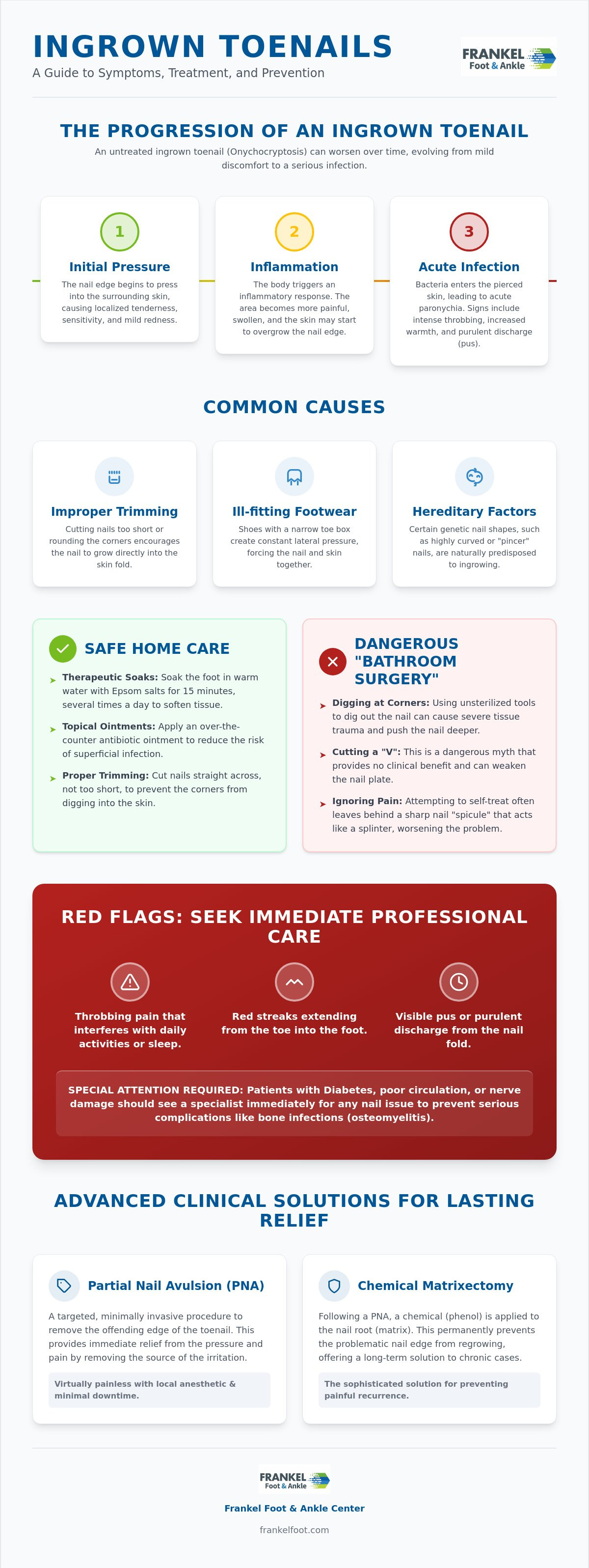
Clinical professionals refer to the painful condition of an ingrown toenail as Onychocryptosis. This occurs when the lateral edge or corner of the nail plate physically pierces the periungual skin, which is the soft tissue surrounding the nail. While often viewed as a minor nuisance, an untreated ingrown toenail can serve as a portal for secondary bacterial infections. The progression of this condition typically moves from initial mild pressure and localized tenderness to acute paronychia, a state characterized by intense throbbing and significant swelling.
Several factors contribute to this painful development, often working in combination to compromise foot health. These include:
- Improper Trimming: Cutting the nails too short or rounding the corners can encourage the nail to grow directly into the skin fold.
- Ill-fitting Footwear: Shoes with a narrow toe box create constant lateral pressure, forcing the nail and skin together.
- Hereditary Factors: Certain genetic nail shapes, such as "pincer" or highly curved nails, are naturally predisposed to ingrowing.
The Anatomy of a Growing Problem
When the nail edge breaches the skin barrier, the body identifies the nail as a foreign body. This triggers an inflammatory response where the nail fold becomes hypertrophied, or overgrown, as it attempts to protect the area. The hallux, or big toe, is the most frequent site of occurrence because it bears the brunt of the pressure from walking and often has the largest nail plate, making it more susceptible to environmental stressors.
Identifying the Signs of Infection
Distinguishing between simple irritation and a clinical infection is vital for timely intervention. While simple inflammation presents as redness and sensitivity, a true infection often manifests through increased warmth, spreading redness, and the presence of purulent discharge or pus. For patients managing diabetes or peripheral vascular disease, these signs require immediate professional attention. In these individuals, reduced circulation can mask pain while allowing a minor infection to escalate into a serious health complication.
Home Care vs. Professional Intervention: When to See a Specialist
Managing a mild ingrown toenail at home often begins with conservative measures. Soaking the affected foot in warm water with Epsom salts for 15 minutes several times a day can soften the tissue and reduce pressure. Following the soak, applying a topical antibiotic ointment can help mitigate the risk of superficial infection. These steps are appropriate for the earliest stages of irritation; however, home care has significant limitations when the nail plate has already breached the skin barrier.
Many patients attempt "bathroom surgery" by cutting a "V" into the center of the nail or digging at the corners with unsterilized tools. These techniques are dangerous myths that provide no clinical benefit and often lead to severe tissue trauma. Professional treatment at Frankel Foot & Ankle is designed to be virtually painless, utilizing advanced local anesthetics to ensure patient comfort throughout the process. Understanding When to See a Specialist is the first step toward achieving a long-term recovery without the stress of recurring pain.
The Risks of "Bathroom Surgery"
Attempting to self-treat often results in leaving behind a sharp "spicule" or nail spike deep within the nail fold. This jagged edge acts like a splinter, driving deeper into the flesh with every step and significantly increasing the likelihood of an abscess. For a broader look at managing these issues, read our guide on Comprehensive Foot Pain Relief.
Red Flags for Immediate Clinical Care
Residents in Middletown and Milford should seek professional diagnostics if they notice symptoms such as throbbing pain that prevents sleep, red streaks extending from the toe, or visible pus. Clinical evaluation is essential to rule out osteomyelitis, which is an infection of the underlying bone. This is especially critical for patients with diabetes, as minor nail issues can escalate rapidly without specialized care. If your symptoms persist, scheduling a consultation with an expert podiatrist can prevent permanent tissue damage.
Advanced Clinical Solutions and Permanent Relief Strategies
When conservative measures fail to provide lasting comfort, advanced clinical intervention becomes the most reliable path to resolving a chronic ingrown toenail. Dr. Frankel utilizes the Partial Nail Avulsion (PNA) procedure, which is a targeted, minimally invasive technique designed to alleviate pressure without the need for extensive surgery. Unlike older, more aggressive methods, a PNA focuses exclusively on removing the narrow sliver of nail that's piercing the soft tissue. This precision ensures that the healthy portion of your nail remains intact while the source of your distress is eliminated.
We prioritize your comfort by utilizing sophisticated local anesthetics that numbing the area completely before the procedure begins. This ensures the entire experience is virtually painless, allowing you to remain relaxed while we address the mechanical cause of your pain. Dr. Frankel’s extensive expertise in these techniques allows for a quick clinical encounter with minimal downtime, often letting patients return to their daily routines with significantly less discomfort than they had before entering the office.
The Permanent Solution: Matrixectomy Explained
To achieve a truly lasting result, we often perform a chemical matrixectomy during the PNA procedure. After the offending nail edge is removed, a specialized solution, typically phenol, is carefully applied to the underlying nail matrix or root. This chemical safely disables the specific cells responsible for nail growth in that corner. While simple trimming often results in the nail regrowing into the same painful position, this methodical approach offers a definitive resolution. Utilizing these Permanent Relief Strategies ensures a high success rate and prevents the cycle of recurrence that many patients find so frustrating.
Recovery and Long-Term Prevention
Post-procedure care is straightforward and designed to support rapid tissue healing. We provide every patient with a methodical care plan, which includes:
- Maintaining a clean, dry dressing for the initial recovery period.
- Applying topical medication to facilitate healing and prevent secondary infection.
- Choosing footwear with a wide toe box to eliminate lateral pressure on the healing site.
To maintain your results, always trim your nails straight across and avoid cutting into the corners. If you're currently dealing with a painful nail in Middletown or Milford, we encourage you to visit Frankel Foot & Ankle for a professional consultation and a permanent return to comfort.
Reclaiming Your Comfort and Mobility
Transitioning from chronic irritation to a permanent solution is possible through the specialized clinical care we've outlined. By identifying the specific symptoms of an ingrown toenail early, you can avoid the risks associated with secondary infections and progressive tissue damage. Modern techniques like chemical matrixectomy offer a sophisticated way to ensure the offending nail edge doesn't regrow, allowing you to focus on recovery rather than the frustration of recurring pain.
At Frankel Foot & Ankle Center, Dr. Marc Frankel and his dedicated team provide a patient-centered environment where your comfort is our primary focus. Serving residents in Middletown, NY, Katonah, NY, and Milford, PA, we combine sophisticated medical diagnostics with a deeply compassionate touch. Our goal is to ensure that every individual receives the high-level expertise required to restore their natural gait and daily comfort through advanced, minimally invasive podiatric techniques.
Don't let foot pain dictate your lifestyle any longer. We invite you to Schedule a Consultation at Frankel Foot & Ankle Center and experience the difference that specialized, expert care can make. We're here to help you move forward with confidence and ease.
Frequently Asked Questions
How do I know if my ingrown toenail is infected?
Signs of infection include the presence of purulent discharge or pus, localized warmth, and redness that spreads beyond the immediate nail fold. If you experience throbbing pain that interferes with your sleep, it's likely that a bacterial infection has developed. These symptoms indicate that the nail plate has breached the skin barrier and requires professional intervention to prevent the condition from escalating into a more serious abscess.
Will a podiatrist have to remove my entire toenail?
Removing the entire nail is rarely necessary for a standard ingrown toenail. Most clinical cases are resolved through a Partial Nail Avulsion (PNA), where only the narrow, offending sliver of the nail is removed. This targeted approach preserves the majority of the nail plate and maintains the aesthetic appearance of the toe while providing immediate relief from the physical pressure causing your distress.
Is the procedure to fix an ingrown toenail painful?
The procedure is designed to be virtually painless through the use of advanced local anesthetics. We prioritize patient comfort by thoroughly numbing the digit before any clinical work begins. While you might feel a slight pressure during the process, the sharp, stinging pain associated with the ingrown edge is eliminated instantly. Our goal is to transform a stressful experience into a structured, comfortable path toward recovery.
Can I walk normally after having an ingrown toenail removed?
Most patients can resume light walking immediately following the procedure, though we recommend wearing open-toed shoes or loose-fitting footwear for the first 24 hours. While you should avoid high-impact activities like running or jumping for a few days, the transition from clinical treatment to normal daily movement is typically very rapid. We provide a methodical post-care plan to ensure your recovery remains steady and uncomplicated.
How can I prevent ingrown toenails from coming back?
Preventing recurrence involves a combination of proper grooming habits and appropriate footwear choices. You should always trim your nails straight across rather than rounding the corners, which prevents the nail from growing into the periungual skin. For those with chronic issues, a chemical matrixectomy is the most effective permanent solution. This procedure disables the specific portion of the nail root to ensure the painful edge never returns.
Does insurance typically cover professional ingrown toenail treatment?
Most insurance providers, including Medicare Part B, typically cover treatment for an ingrown toenail when it's deemed medically necessary to treat an injury or infection. Coverage often extends to the initial consultation and the in-office procedure. We recommend contacting your insurance carrier to verify your specific benefits and any potential out-of-pocket costs, such as co-pays or deductibles, before your visit to our clinic.


