
While many believe that thick, yellowed nails are an inevitable part of aging or a permanent social burden, the reality is that laser therapy has evolved into a sophisticated clinical catalyst for restoration. If you've spent years avoiding sandals or feeling apprehensive about the systemic side effects of oral antifungal medications, you aren't alone. Seeking a laser treatment for toenail fungus is no longer just about aesthetics; it's about reclaiming your comfort and confidence through precise, medical intervention.
We understand the frustration of persistent infections that resist over-the-counter creams and the fear of liver complications often linked to traditional pills. This article demonstrates how advanced laser therapy provides a safe, non-invasive path to eliminating stubborn fungus without those systemic risks. You'll discover the latest 2026 dual-wavelength technologies and learn why a patient-centered approach, led by experts like Dr. Marc Frankel, achieves success rates as high as 85% for those seeking lasting relief.
Key Takeaways
- Understand how specialized light energy penetrates the protective nail plate to neutralize pathogens at their source, offering a level of efficacy traditional topicals can't match.
- Explore the clinical process of laser treatment for toenail fungus, which provides a bloodless and painless experience that allows you to return to your daily activities immediately.
- Evaluate the advantages of non-invasive therapy over oral medications, prioritizing your long-term health by avoiding potential systemic side effects.
- Gain insights into professional maintenance and preventative care strategies that ensure your nails remain clear and healthy long after your final session.
The Science of Laser Treatment for Toenail Fungus: Why It Works
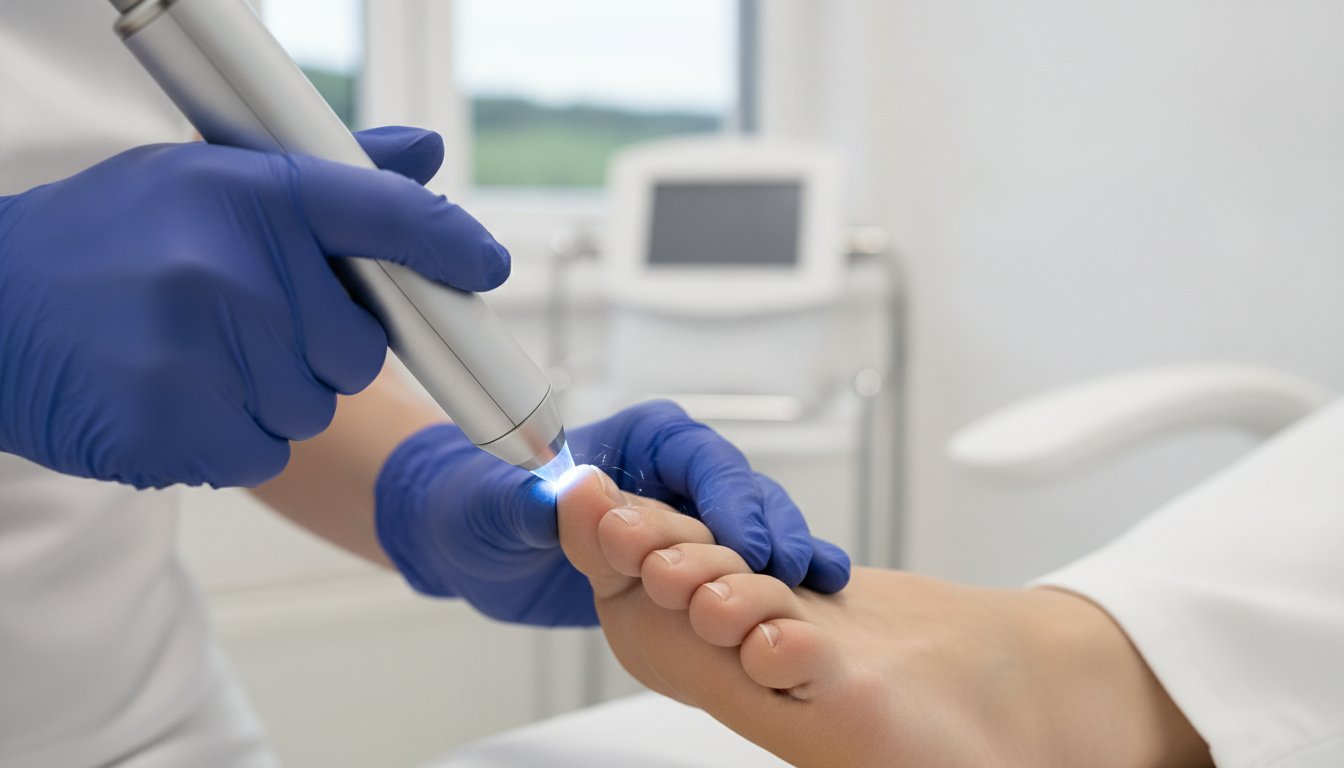
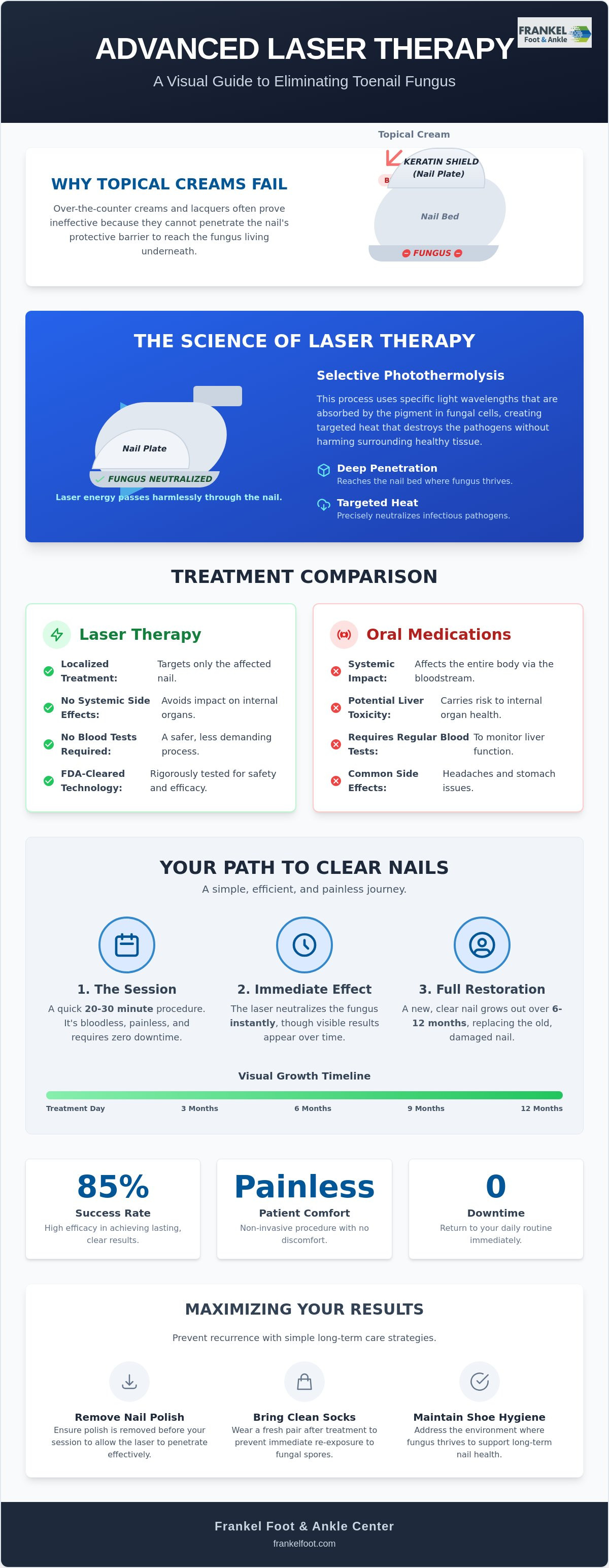
Onychomycosis is a persistent fungal infection that thrives in the dark, moist environment beneath the nail. Most patients find that over-the-counter creams and lacquers simply don't work. This is because the fungal pathogens are shielded by a thick, protective layer of keratin. Traditional topicals lack the molecular power to penetrate this barrier effectively. In contrast, laser treatment for toenail fungus uses specific wavelengths of light to reach the nail bed without damaging the surface of the toe.
The process works through a principle known as selective photothermolysis. The laser energy is attracted to the dark pigments within the fungal cells. When the light hits these pathogens, it generates a controlled heat that neutralizes the infection. Because the laser is so precise, it bypasses healthy skin cells entirely. This targeted approach is exactly why modern podiatry has embraced laser technology as a primary solution for clearing stubborn infections.
Laser vs. Oral Medications: Safety and Efficacy
For many years, oral antifungal pills were the standard of care. However, these medications are systemic, meaning they travel through your bloodstream and impact your entire body. This often necessitates regular blood tests to monitor for liver toxicity. Patients frequently report side effects like persistent headaches or stomach issues. Laser therapy offers a safer alternative by keeping the treatment localized. It eliminates the fungus exactly where it lives, removing the risks associated with internal pharmaceuticals.
The Role of FDA Clearance in Patient Safety
Safety is the cornerstone of any medical procedure. FDA clearance indicates that a device has been rigorously tested for clinical use. At Frankel Foot & Ankle Center, we prioritize technologies that provide controlled-thermal energy. This ensures the procedure remains comfortable and safe for every patient. You don't have to worry about burns or tissue damage; the focus remains entirely on your recovery and the health of your nails.
The Clinical Experience: What to Expect in Middletown and Katonah
Your journey toward healthier feet begins with a thorough clinical evaluation. At our offices in Middletown and Katonah, we don't just treat the symptom; we confirm the presence of pathogens through advanced diagnostics. This ensures that your laser treatment for toenail fungus is the correct course of action for your specific condition. The procedure itself is incredibly efficient. Most sessions last between 20 to 30 minutes. It's a bloodless, painless experience that requires absolutely no downtime. For our busy neighbors in New York and Pennsylvania, this "walk-in, walk-out" convenience means you can return to your daily routine immediately after leaving the clinic.
The Road to Clear Nails: A Realistic Timeline
Patients often ask if they'll see results before they leave the office. It's vital to understand that while the laser neutralizes the fungus instantly, the visible nail takes time to grow out. The human toenail growth cycle typically spans 6 to 12 months. You'll witness a gradual transformation from thick, yellowed keratin to clear, translucent growth as the healthy nail emerges from the base. Depending on the severity, research indicates that multiple sessions spaced 4 to 8 weeks apart may be necessary to achieve optimal clarity. This methodical approach is a hallmark of Laser Treatment of Fungal Nail Disease, ensuring the infection is thoroughly addressed.
Preparing for Your Laser Session
Preparation is straightforward and designed to maximize the efficacy of the light energy. We ask that you remove all nail polish or lacquers before your appointment, as these can block the laser's path. Bringing a pair of clean, fresh socks to wear after the treatment is also recommended to prevent immediate re-exposure to old spores. At Frankel Foot & Ankle Center, we've cultivated a supportive and welcoming atmosphere where your comfort is our priority. If you're ready to start your journey, scheduling a consultation is the first step toward the healthy, clear nails you deserve.
Maximizing Your Results: Preventing Recurrence and Long-Term Care
The most common concern patients voice is the fear of recurrence. Many have tried over-the-counter solutions only to find the infection returning months later. This "revolving door" of infection typically occurs when the environment surrounding the nail isn't addressed alongside the pathogens themselves. Success with laser treatment for toenail fungus requires a comprehensive approach that extends far beyond the initial office visit. It's about changing the ecosystem of your footwear as much as it's about treating the keratin.
Dr. Frankel serves as a compassionate guide throughout this entire recovery process, providing the expert monitoring necessary during the nail’s critical regrowth phase. Data from a Clinical trial on laser therapy for toenail fungus highlights the efficacy of light therapy, yet clinical results are best sustained when paired with a specialist-led prevention framework. We focus on neutralizing the fungus while simultaneously teaching you how to protect your investment in your health. This partnership ensures that as your new, clear nail grows in, it remains protected from reinfection.
A Specialist’s Checklist for Fungus-Free Feet
Why a Podiatrist Beats a MedSpa for Laser Therapy
Choosing a medical environment over a MedSpa ensures you receive an accurate diagnosis before treatment begins. Conditions like subungual hematomas or repetitive trauma often mimic fungal infections; a MedSpa might treat a condition that isn't actually fungus. For a detailed breakdown of the value of professional care, read The Real Cost of Laser Toenail Fungus Treatment. When you're ready to achieve lasting results through expert care, schedule your consultation at Frankel Foot & Ankle today.
Step Toward a Future of Clearer, Healthier Nails
Choosing to address persistent nail concerns is a significant step toward personal comfort and social freedom. We've explored how advanced light energy effectively neutralizes pathogens without the systemic risks of oral pharmaceuticals. This modern approach ensures your path to recovery is both safe and non-invasive. By combining clinical precision with a dedicated prevention strategy, you can break the cycle of infection and enjoy the confidence of clear growth once again.
As you reclaim the confidence to travel and explore with healthier feet, it's also important to consider your broader medical readiness. For those planning international trips from the New York area, John Abroon M.D. provides comprehensive health consultations and essential travel vaccinations.
Led by board-certified specialist Dr. Marc Frankel, our team is committed to guiding you through every stage of this transformation. With convenient locations in Middletown, Katonah, and Milford, accessing specialized laser treatment for toenail fungus has never been more straightforward. You don't have to settle for the discomfort or embarrassment of thickened nails. Take the first step today and Book Your Laser Fungus Consultation at Frankel Foot & Ankle. Your journey to healthier feet is supported by high-level expertise and genuine care; we're ready to help you walk with confidence again.
Frequently Asked Questions
Is laser treatment for toenail fungus painful?
Laser treatment for toenail fungus is a non-invasive procedure that is generally considered painless and requires no anesthesia. Most patients describe a mild, localized warming sensation as the laser energy targets the infection beneath the nail plate. Because the technology is so precise, it doesn't damage the surrounding skin or tissue, allowing you to walk out of the office and resume your daily activities immediately without any discomfort.
How many laser sessions are needed to cure toenail fungus?
The number of sessions typically ranges from one to four treatments depending on the severity of the infection and the thickness of the nail. While some mild cases respond well to a single visit, moderate to severe infections often require multiple sessions spaced four to eight weeks apart to ensure the fungus is fully neutralized. We customize your clinical plan during the initial consultation to align with the specific growth rate and condition of your nails.
Does insurance cover laser fungal nail treatment?
Most insurance providers, including Medicare as of 2026, generally classify laser therapy for onychomycosis as an elective or cosmetic procedure rather than a medical necessity. While the diagnostic evaluation and treatment for complications like secondary infections may be covered, the laser therapy itself is typically an out-of-pocket investment. Many patients choose to utilize their Flexible Spending Accounts (FSA) or Health Savings Accounts (HSA) to manage the costs of this advanced therapy.
What is the success rate of laser therapy compared to topical creams?
Laser therapy has a reported success rate of approximately 85%, which is significantly higher than the results typically achieved with over-the-counter or prescription topical creams. The primary reason for this difference is penetration; while creams often fail to pass through the dense keratin of the nail, the laser delivers energy directly to the pathogens in the nail bed. This targeted approach provides a more reliable path to clear nails compared to the low efficacy of external lacquers.


