


What if the permanent solution to your chronic foot pain didn't require a visible scar or months of recovery? You've likely spent years managing the persistent discomfort of a protruding joint, struggling to find shoes that don't pinch, and feeling self-conscious about your feet. It's natural to feel anxious about traditional surgery when you've heard stories of long, painful healing processes. In 2026, scarless bunion surgery has transformed foot correction, offering a path to pain-free walking without the aesthetic trade-offs of the past.
This article examines how advanced, minimally invasive techniques utilize tiny three to five millimeter incisions to provide a sophisticated, compassionate solution. You'll learn about the rapid recovery timelines that allow many patients to bear weight immediately and return to regular footwear in as little as two to six weeks. We'll explore the methodology that makes this modern approach the preferred choice for lasting relief and restored mobility.
Key Takeaways
- Understand how percutaneous techniques utilize specialized instruments to achieve precise bone realignment without the extensive tissue disruption of traditional open surgery.
- Discover how scarless bunion surgery leverages tiny three to five millimeter incisions to ensure your path to relief leaves virtually no visible trace on your skin.
- Gain insights into the modern recovery timeline, including the "walking recovery" model that encourages early mobility to prevent joint stiffness and accelerate healing.
- Learn about the patient-centered philosophy at Frankel Foot & Ankle, where clinical excellence in structural correction meets a deep commitment to aesthetic results.
What is Scarless Bunion Surgery? Understanding the MIS Approach
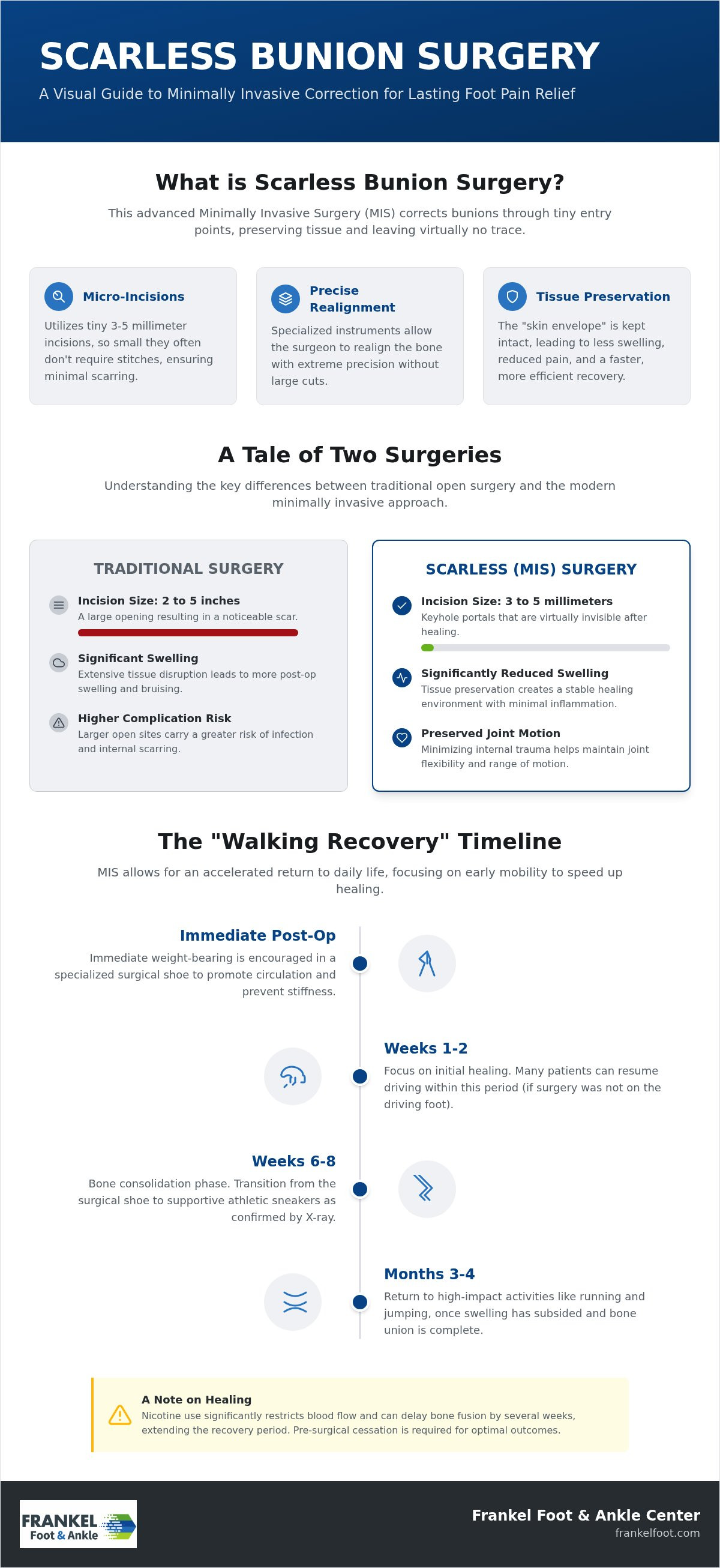
Scarless bunion surgery represents a significant clinical evolution in how we address hallux valgus deformities. This minimally invasive surgery (MIS) utilizes tiny, percutaneous incisions rather than the extensive open cuts required in the past. During the procedure, specialized instruments allow the surgeon to realign the bone with extreme precision. Because we don't have to peel back large sections of skin or disrupt the delicate soft tissue surrounding the joint, your body's natural healing response is much more efficient.
The Difference Between Traditional and Scarless Techniques
Traditional bunion correction typically involves a two to five inch incision along the side or top of the foot. This large exposure often leads to significant swelling and a higher risk of complications. In contrast, the keyhole approach used at Frankel Foot & Ankle Center prioritizes the preservation of the "skin envelope." By keeping the protective layers of skin and fascia intact, we create a stable environment for the bone to heal. This methodology results in several patient benefits:
- Significantly reduced post-operative swelling and bruising.
- A lower risk of infection compared to large, open surgical sites.
- Preservation of joint range of motion by minimizing internal scar tissue.
This sophisticated technique allows us to deliver results that prioritize both your long-term mobility and the natural appearance of your foot. By focusing on tissue preservation, we ensure a smoother transition from the operating room to your daily activities.
Recovery Timeline: What to Expect After Bunion Correction
One of the most significant advantages of scarless bunion surgery is the accelerated return to daily life. While every patient's healing journey is unique, the minimally invasive approach generally allows for immediate weight-bearing in a specialized surgical shoe. This "walking recovery" model is intentional. We encourage early movement because it helps prevent joint stiffness and maintains the flexibility of the surrounding tendons. By engaging the foot early, you promote better circulation and a more natural gait during the healing process.
It's vital to recognize factors that can impede this progress. For instance, nicotine use significantly restricts blood flow and can delay bone fusion by several weeks. Research indicates that smokers often face a longer consolidation period, sometimes extending the initial healing phase to eight weeks or more. We prioritize your long-term success, which is why pre-surgical cessation is required to ensure the bone heals predictably within the standard timeframe.
Milestones from Surgery Day to Full Activity
Your journey toward restoration after scarless bunion surgery is marked by specific clinical milestones designed to protect the correction while restoring function:
- Weeks 1-2: You'll focus on initial healing and managing minimal discomfort. Many patients transition back to driving within this period, provided the procedure was not performed on their driving foot.
- Weeks 6-8: This is the bone consolidation phase. Most individuals move from the surgical shoe back into supportive athletic sneakers as x-rays confirm the bone has stabilized.
- Months 3-4: You can typically return to high-impact activities like running or jumping. We monitor your progress closely to ensure that all swelling has subsided and the bone union is complete.
If you're ready to reclaim your active lifestyle and walk without hesitation, you can consult with our specialists to determine if you're a candidate for this streamlined recovery process.
Why Choose Frankel Foot & Ankle Center for Your Bunion Procedure?
Selecting a surgical provider is a significant decision that requires both clinical trust and emotional comfort. At Frankel Foot & Ankle Center, our philosophy bridges the gap between high-level surgical expertise and a deeply compassionate, patient-centered atmosphere. Dr. Marc Frankel rejects the outdated notion that a patient must sacrifice aesthetic results for structural integrity. Instead, his approach to scarless bunion surgery ensures that the deformity is corrected at its source while preserving the natural beauty of the foot. This focus on aesthetic outcomes is a hallmark of modern care, much like the work performed at Scalp Aesthetic Dearborn to provide natural-looking hair restoration. We take pride in being a regional leader in minimally invasive techniques, providing a sophisticated environment where your recovery is our primary focus.
Convenience plays a vital role in a stress-free recovery. We offer specialized care across several accessible locations, including Middletown and Katonah in New York, as well as Milford in Pennsylvania. This local presence eliminates the need for exhausting long-distance travel, allowing you to attend follow-up appointments and receive personalized attention close to home. Our practice is designed to support you from the initial diagnostic phase through the final stages of your rehabilitation.
The path to restoration begins with a comprehensive diagnostic evaluation. We utilize advanced on-site imaging to assess the severity of your condition and confirm if you're an ideal candidate for scarless bunion surgery. It's critical to address chronic foot pain early, as untreated bunions often lead to compensatory movements that trigger secondary issues in your knees or hips. If you're ready to explore a permanent solution, we invite you to learn more about our comprehensive foot pain relief solutions. Our team is committed to guiding you through every stage of your journey toward a life without foot pain.
Step Into a Pain-Free Future
The decision to address long-standing joint pain is a commitment to your future mobility and long-term well-being. By choosing scarless bunion surgery, you move beyond temporary fixes and embrace a permanent, clinically advanced correction. This modern methodology ensures that your recovery is defined by movement rather than restriction, allowing you to return to the activities you love with renewed confidence in both your foot's function and its appearance. You no longer have to settle for the discomfort of traditional surgical methods or the persistence of a painful deformity.
At Frankel Foot & Ankle Center, we combine technical precision with a supportive environment designed for your comfort. With convenient locations in Middletown, Katonah, and Milford, world-class podiatric care is available right in your community. We invite you to Schedule Your Scarless Bunion Consultation at Frankel Foot & Ankle Center and begin your journey toward a life without limitations. You deserve to walk, run, and live without the burden of foot pain.
Frequently Asked Questions
Is scarless bunion surgery as effective as traditional open surgery?
Yes, clinical data demonstrates that scarless bunion surgery is as effective as traditional open procedures, with patient satisfaction rates reported between 87% and 94%. This approach achieves precise structural realignment through tiny portals rather than large incisions. By preserving the surrounding soft tissue, we provide the same long-term joint stability while significantly reducing the risk of post-operative stiffness or aesthetic concerns.
How long does it take to walk normally after a minimally invasive bunionectomy?
Most patients return to walking in regular, supportive footwear within two to six weeks after the procedure. While you'll be encouraged to bear weight in a specialized surgical shoe immediately, the transition to a normal gait occurs as the bone stabilizes. This early mobility is a key component of our recovery model, which helps prevent joint stiffness and promotes healthy circulation during healing.
Will my bunion come back after having scarless surgery?
Recurrence is highly unlikely when the structural cause of the deformity is corrected through scarless bunion surgery. Our methodology focuses on permanent bone realignment and stabilization to ensure the joint remains in its natural position. While no surgical procedure can guarantee absolute prevention, following post-operative guidance and choosing appropriate footwear significantly minimizes the risk of the bunion returning over time.
What kind of anesthesia is used for minimally invasive foot surgery?
Most minimally invasive foot procedures are performed using local anesthesia combined with intravenous sedation, often referred to as "twilight sleep." This combination ensures you remain entirely comfortable and relaxed throughout the correction without the need for general anesthesia. By utilizing targeted nerve blocks, we provide a painless approach during the surgery and extend your comfort well into the initial stages of your recovery.
Can both feet be operated on at the same time using the scarless method?
Bilateral surgery is possible, but we generally recommend treating one foot at a time to ensure your mobility and safety during the recovery process. Treating both feet simultaneously can make it difficult to navigate your home and perform daily tasks independently. We'll review your specific clinical needs and lifestyle requirements during your consultation to determine if a staged or simultaneous approach is the most appropriate path.


