


If you’re wondering what causes bunions to get worse, start by separating a symptom flare from a change in the joint’s alignment. Narrow shoes, prolonged standing, and repeated rubbing can irritate the big-toe joint. Foot structure, the way weight passes through the foot, and gradual changes over time may also affect alignment.
Pain, redness, or difficulty finding comfortable shoes can be concerning, especially if the bump looks more prominent. This guide explains common sources of irritation, factors that may contribute to progression, practical ways to reduce pressure, and when an assessment may help clarify what is changing. A flare does not automatically mean the bunion has advanced.
Key Takeaways
- A bunion involves a change in big-toe alignment, but pain and visible changes do not always progress together.
- Learn what causes bunions to get worse and which everyday pressures may trigger tenderness, redness, or swelling.
- Changes to footwear and activities may help reduce rubbing and pressure on the joint.
- Persistent pain, trouble walking, or recurring skin irritation are reasons to seek an individualized assessment.
What causes bunions to get worse, and what changes over time?
A bunion is a change in the alignment of the big toe at the first metatarsophalangeal (MTP) joint, where the toe meets the foot. As the toe angles toward the smaller toes, the base of the joint may look more prominent. For a plain-language overview of what a bunion is, see this reference on hallux valgus and foot anatomy.
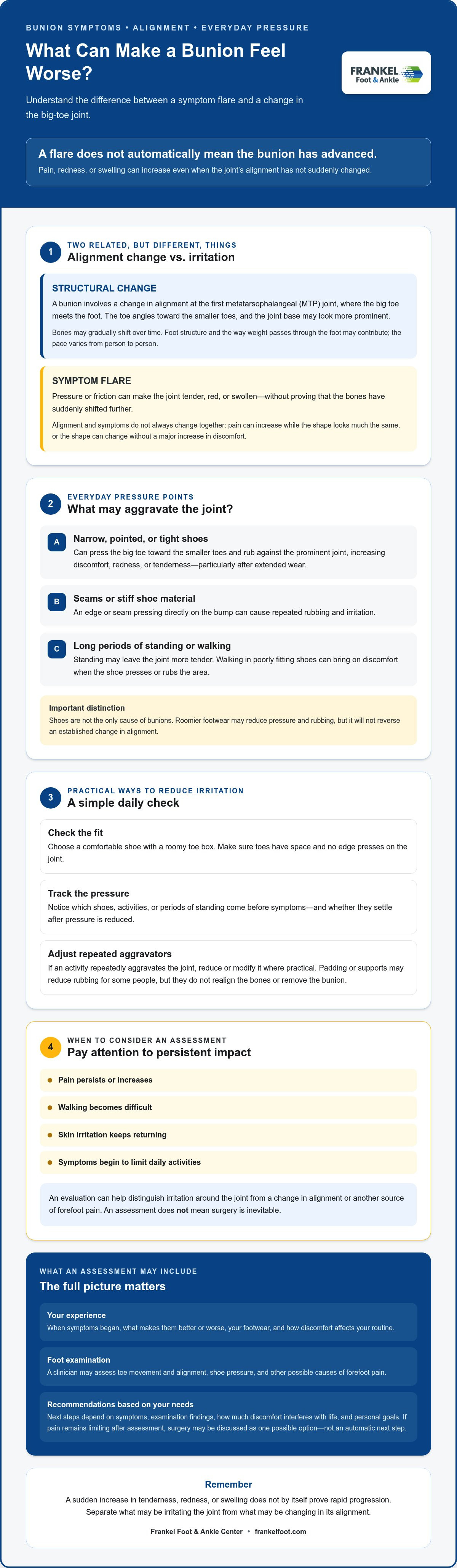
Bunions can progress as the bones gradually shift, but the pace varies from person to person. Inherited foot structure and the way the foot bears weight may contribute. Alignment and symptoms do not necessarily change together: the joint may look much the same while becoming painful or swollen, or its shape may change without a major increase in discomfort. A sudden increase in tenderness, redness, or swelling does not by itself prove that the deformity has rapidly advanced.
To understand what causes bunions to get worse, consider structural changes separately from factors that irritate the joint. This distinction can help you decide whether to reduce pressure in daily activities or seek an assessment if symptoms persist.
Can shoes make a bunion worse?
Narrow, pointed, or tight footwear can press the big toe toward the smaller toes and rub against the prominent joint. This may increase discomfort, redness, or tenderness, particularly after extended wear. Shoes are not the only cause of bunions, and roomier footwear will not reverse an established change in alignment. Look for a toe box with enough space for your toes, and check that the shoe’s edge or seams do not press directly on the joint.
Which everyday factors can aggravate bunion pain or pressure?
Repeated pressure or friction around the prominent joint can make a bunion feel irritated. A tight toe box may squeeze the big toe, while seams or stiff shoe material can rub against the bump. Long periods of standing may leave the joint more tender. Walking in poorly fitting shoes can also bring on discomfort if the shoe presses or rubs the area.
These triggers can lead to tenderness, redness, or swelling without proving that the bones have suddenly shifted further. The NHS offers practical guidance on worsening bunion symptoms and measures that may help ease discomfort. Notice when symptoms start, which shoes or activities precede them, and whether they settle after pressure is reduced.
How can you reduce bunion irritation day to day?
Choose shoes with a roomy toe box and a comfortable fit, with no edge pressing on the joint. Padding or supports may reduce rubbing for some people, but they do not realign the bones or remove the bunion. Use this checklist to identify possible sources of irritation:
- Check the fit: Make sure your toes have space and the shoe does not press on the bump.
- Track pressure: Note which shoes, activities, or periods of standing bring on symptoms.
- Adjust activity: If an activity repeatedly aggravates the joint, reduce or modify it where practical.
- Reassess persistent pain: Discuss ongoing or increasing discomfort with a clinician.
These observations can help you identify what causes bunions to get worse in your case, especially when several daily pressures overlap. If pain persists or limits your routine, a foot and ankle consultation can help assess your symptoms and possible contributing factors. Learn about foot and ankle consultations at Frankel Foot & Ankle Center.
When should worsening bunion symptoms be assessed?
Consider an assessment if pain persists or increases, walking becomes difficult, skin irritation keeps returning, or symptoms begin to limit daily activities. Changes in discomfort can have more than one cause. An evaluation can help distinguish irritation around the joint from a change in alignment or another source of forefoot pain. Des Moines University also discusses factors that may contribute to bunion development and aggravate symptoms.
An assessment does not mean surgery is inevitable. It can help clarify what is affecting your foot and let you consider next steps in light of your symptoms, examination findings, and personal goals.
What happens at a bunion assessment?
A clinician may ask when symptoms began, what makes them better or worse, what footwear you use, and how the discomfort affects your routine. They will examine the foot and may assess toe movement and alignment, while considering shoe pressure and other possible causes of forefoot pain. Specific examples, such as pain during a walk or rubbing from a particular shoe, can help make the discussion more useful.
Recommendations depend on the full picture, including how much symptoms interfere with your life and what matters most to you. If pain remains limiting after assessment, bunion surgery may be discussed as one possible option, not an automatic next step. For a local foot and ankle consultation, you can Contact Frankel Foot & Ankle Center.
Take a Clear Next Step for Your Foot Health
Understanding what causes bunions to get worse starts with recognizing that structural changes and symptom flare-ups are not always the same. Footwear and repeated pressure can irritate the joint, while persistent pain, difficulty walking, or recurring skin irritation warrant professional attention. A clinician can assess your alignment, symptoms, and daily needs to help clarify possible contributing factors.
If bunion discomfort is limiting your routine, an individualized foot and ankle consultation can help you understand your options. Frankel Foot & Ankle Center serves patients in Middletown and Katonah, New York, and Milford, Pennsylvania. The center specializes in scarless and painless bunion surgery when surgery is appropriate to consider. Surgery is not the only possible next step, and an assessment can help guide a decision based on your circumstances and goals.
Explore foot and ankle care at Frankel Foot & Ankle Center to discuss your bunion symptoms and possible next steps.
Frequently Asked Questions
What causes bunions to get worse?
Bunions may progress as the bones of the big-toe joint gradually shift, though the rate varies between individuals. Inherited foot structure and the way your foot bears weight can contribute to alignment changes. Tight footwear, prolonged standing, or repeated rubbing may aggravate pain and swelling, but a symptom flare does not necessarily mean the bunion’s structure has suddenly changed.
Can tight shoes make a bunion worse?
Tight, narrow, or pointed shoes can increase pressure on the bunion and squeeze the big toe, making discomfort, redness, or tenderness worse. Choose footwear with enough room for your toes and no direct pressure against the prominent joint. A better fit may ease irritation, but it will not reverse an existing change in joint alignment.
Can bunions get worse even if you wear comfortable shoes?
Yes. A bunion may gradually progress even if your shoes fit comfortably, because foot structure and mechanics can also influence alignment. Comfortable footwear can reduce pressure and irritation, but it cannot guarantee that the joint will not change. If the toe appears to be shifting or symptoms are increasing, an assessment can help clarify what is happening.
When should I see a doctor or podiatrist about a bunion?
Arrange an assessment if pain persists or increases, walking becomes difficult, skin irritation keeps returning, or symptoms limit daily activities. A clinician can examine alignment and movement, discuss footwear, and consider other causes of forefoot pain. Frankel Foot & Ankle Center offers foot and ankle consultations in its local service area, including Middletown and Katonah, New York, and Milford, Pennsylvania.


