


What if an ankle that keeps giving way needs more than time to heal? If it feels unreliable on a walk, during exercise, or on uneven ground, you may wonder whether to see an ankle instability specialist. A past sprain may seem healed, yet repeated buckling or reduced confidence can be a reason to discuss your symptoms with a foot and ankle clinician.
Occasional soreness is not necessarily the same as recurrent instability. An assessment can help clarify what may be contributing to the symptoms and whether further evaluation is appropriate. This article covers patterns to watch for, what a stability-focused evaluation may involve, and questions to ask about next steps. Keeping track of your injury history and the activities affected can help you have a more useful conversation about care.
Key Takeaways
- Note whether your ankle repeatedly rolls or gives way, and whether this happens on uneven ground, stairs, or during particular activities.
- An ankle instability specialist may consider your symptoms, injury history, movement, and balance before deciding whether imaging could help.
- Bring a symptom timeline, details of previous treatment, and a list of medications to make your visit more informative.
- If recurring episodes or activity limits concern you, ask a foot and ankle clinician serving Middletown, Katonah, or Milford whether an evaluation is appropriate.
What recurrent ankle instability can feel like, and when it matters
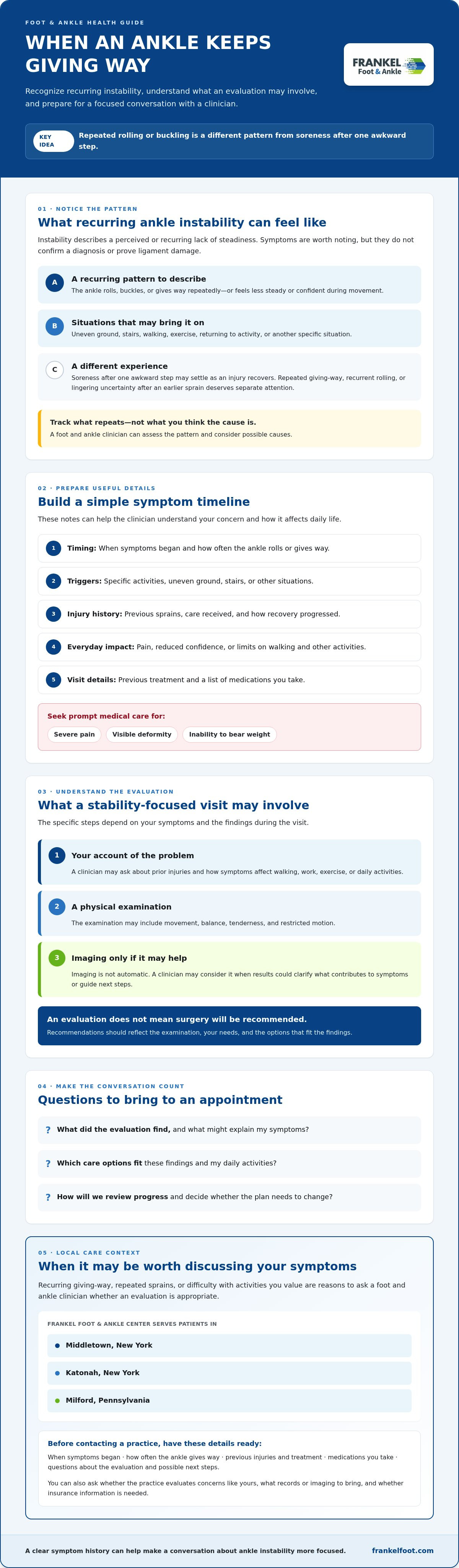
Ankle instability describes a perceived or recurring lack of steadiness. You might feel your ankle roll, buckle, or give way, or feel less confident on uneven ground, stairs, or when returning to exercise. These experiences are worth noting, but symptoms alone cannot confirm a diagnosis or show whether a ligament is damaged. A foot and ankle clinician can assess the pattern and consider possible causes.
Soreness after one awkward step may settle as the injury recovers. Repeated giving-way, recurrent rolling, or ongoing uncertainty after an earlier sprain is a different pattern, particularly if it affects everyday movement. An initial sprain can sometimes be followed by Chronic Ankle Instability; learning about ankle sprains can provide background. For guidance on recovery after a sprain, consult an ankle sprain treatment guide.
How to tell recurring giving-way from a one-time ankle injury
Focus on what repeats instead of trying to diagnose the cause yourself. Before speaking with a clinician, note:
- How often the ankle rolls or gives way, and when the pattern began.
- Whether it happens during a specific activity, on uneven ground, or in other situations.
- Any previous sprains, what care you received, and how recovery progressed.
- Whether pain, reduced confidence, or limits on movement affect daily activities.
This history can help a clinician understand your concern without treating symptoms as proof of ligament damage. Seek prompt medical care for severe pain, visible deformity, or inability to bear weight. For recurring episodes or lingering concerns, ask a foot and ankle clinician whether an evaluation is appropriate.
What an ankle instability specialist may assess before recommending care
An evaluation typically begins with your account of the problem, followed by a physical examination. The clinician may ask about previous injuries and how symptoms affect walking, work, exercise, or other daily activities. The examination may include checking movement, balance, tenderness, and restricted motion. The specific steps depend on your symptoms and the findings during the visit.
Imaging is not automatic. A clinician may consider it if the results could help clarify what is contributing to symptoms or guide next steps. The American Orthopaedic Foot & Ankle Society offers an overview of ankle instability symptoms and causes, but an individual assessment is needed to understand your situation. Seeing an ankle instability specialist does not mean surgery will be recommended. Any recommendations should reflect the examination, your needs, and the options that fit the findings.
Questions to bring to an ankle instability appointment
Before your visit, write down when symptoms began, how often the ankle gives way, and which activities tend to bring it on. Include details of prior injuries and care. These questions can help you understand the assessment and possible plan:
- What did the evaluation find, and what might explain my symptoms?
- Which care options fit these findings and my daily activities?
- How will we review my progress and decide whether the plan needs to change?
A clear conversation can help you weigh next steps without assuming one treatment is right for everyone. If you are experiencing ankle pain, review foot and ankle care information and ask whether discussing your symptoms with a clinician is appropriate.
Finding ankle instability care near Middletown, Katonah, or Milford
Recurring giving-way, repeated sprains, or difficulty with activities you value are good reasons to discuss your symptoms with a foot and ankle clinician. An appointment can help clarify whether further assessment is appropriate and what options may suit your needs. Frankel Foot & Ankle Center serves patients in Middletown, New York; Katonah, New York; and Milford, Pennsylvania. The center offers comprehensive ankle pain relief. Learn more about its ankle pain care.
Before contacting a practice, gather details that explain how the problem affects you: when symptoms began, how often your ankle gives way, previous injuries and treatment, and any medications you take. Write down questions about what an evaluation may involve, whether the practice can address your concern, and what possible next steps could look like. This preparation can make a conversation with an ankle instability specialist more focused.
What to expect when contacting a local foot and ankle practice
Start by describing the recurring instability and asking whether the practice evaluates concerns like yours. Confirm practical details, such as appointment availability, location, what records or imaging to bring, and whether your insurance information is needed. These questions can help you understand the process before arranging a visit, without assuming that a particular evaluation or treatment will be recommended.
For a straightforward next step, contact Frankel Foot & Ankle Center to discuss whether a clinical conversation may be appropriate for your symptoms.
Take the Next Step Toward a More Steady Ankle
Repeated giving-way, rolling, or reduced confidence on uneven ground can be different from soreness after a single injury. Tracking when symptoms occur and how they affect daily activities can help a clinician understand your concerns. An ankle instability specialist may consider your history, movement, balance, and other findings before discussing appropriate options. An assessment does not automatically mean surgery; recommendations should reflect your individual needs.
If your ankle continues to feel unreliable, consider asking whether an evaluation is appropriate. Frankel Foot & Ankle Center provides foot and ankle pain relief for patients in the Middletown, Katonah, and Milford areas. Contact Frankel Foot & Ankle Center to discuss your ankle concerns and ask about a suitable next step.
Frequently Asked Questions
What does an ankle instability specialist do?
An ankle instability specialist evaluates recurring feelings of buckling or reduced steadiness to help identify possible causes and appropriate next steps. The assessment may include questions about previous injuries and daily activities, followed by an examination of movement, balance, and tenderness. Imaging may be considered if it is relevant to the findings. Recommendations are individualized, and symptoms alone do not confirm a diagnosis.
Can ankle instability go away on its own?
It can improve, but recurring giving-way should not be assumed to resolve without attention. Mild symptoms after a single injury may settle as the ankle recovers, while repeated episodes or lingering uncertainty may need assessment to understand what is contributing. Note how often it happens and which activities bring it on. If symptoms persist or interfere with daily life, discuss them with a foot and ankle clinician.
When should I see a specialist for an unstable ankle?
Consider seeing a foot and ankle clinician if your ankle repeatedly gives way, you have had repeated sprains, or instability limits walking, exercise, or other activities. Share your symptom timeline and previous care so the clinician can understand the pattern. Patients in Middletown, Katonah, and Milford can ask a local practice whether it evaluates concerns like theirs. Seek prompt care for severe pain, deformity, or inability to bear weight.
Does ankle instability always require surgery?
No. Ankle instability does not automatically mean surgery is needed. Care depends on the assessment, symptom severity, activity needs, and response to appropriate nonsurgical options. A clinician can explain which approaches fit the findings and how progress will be reviewed. Surgery may be considered in some cases if instability continues despite nonsurgical care, but the decision should be individualized after discussing potential benefits and risks.


