


If you’re asking, “why does my ankle hurt,” the timing and pattern of the pain may offer useful clues. Pain that starts after a twist may call for a different next step than discomfort that develops gradually or keeps returning. It’s understandable to feel unsure whether an injury or another cause is involved.
This guide explains how the pain’s onset, location, and accompanying symptoms can help you decide what to do next, without trying to diagnose yourself. You’ll also learn which warning signs call for prompt medical evaluation and what a foot and ankle clinician may assess if symptoms persist. An evaluation can help clarify what may be contributing to the pain and which options may be appropriate.
Key Takeaways
- Asking “why does my ankle hurt” is a starting point, not a diagnosis. When pain began and how it changes can offer useful clues.
- Severe injury, visible deformity, inability to bear weight, or an open wound calls for prompt medical evaluation.
- Fever alongside a red, hot, swollen ankle joint is a warning sign that needs urgent medical attention.
- If pain persists or keeps returning, a foot and ankle specialist can assess your symptoms and discuss appropriate next steps.
Why does my ankle hurt? Clues from how the pain started
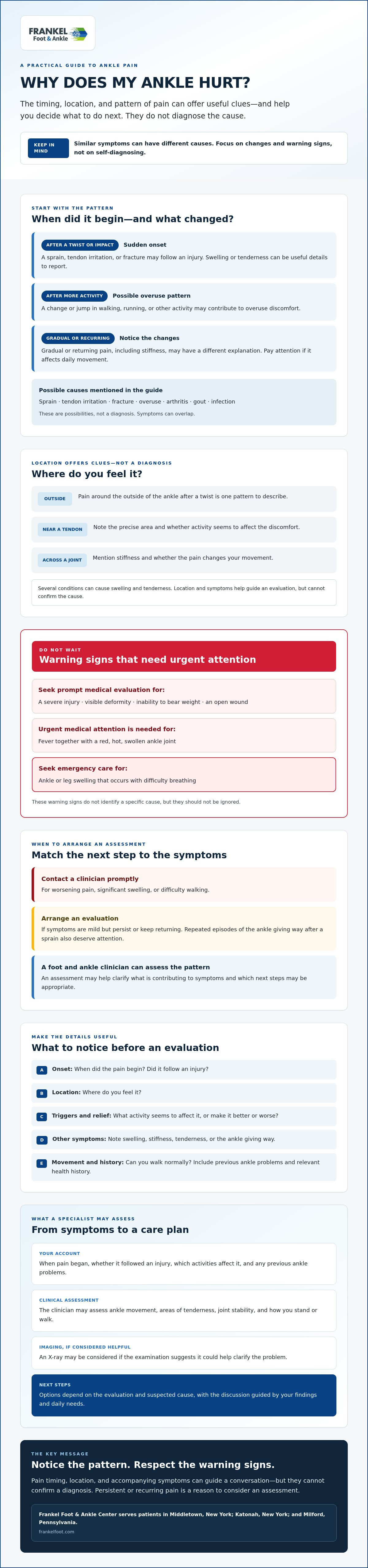
Ankle pain may start suddenly after a twist or impact, or develop gradually without one clear injury. A sprain, tendon irritation, or fracture may follow an injury. A change in activity can contribute to overuse, while arthritis, gout, and infection are other possible causes. Because symptoms can overlap, they can’t confirm what’s responsible.
To describe the pattern clearly, note when the pain began, where you feel it, what activity seems to affect it, and whether you have swelling, stiffness, or tenderness. These details can help guide a clinical evaluation. This overview of common ankle problems describes possible causes, including sprains and tendon conditions, but it can’t determine the cause of an individual’s pain.
What does the timing and location of ankle pain suggest?
Pain that starts after a twist, especially with swelling or tenderness, may be related to an injury. Discomfort that appears after a jump in walking, running, or other activity may be associated with overuse. Gradual or recurring pain, including stiffness, can have a different explanation. Pay attention if it affects daily movement.
Location offers clues, not a diagnosis. Pain around the outside of the ankle after a twist differs from discomfort near a tendon or across a stiff joint, but several conditions can cause swelling and tenderness. Notice whether you can walk normally and what seems to make the pain better or worse. For a broader look at care options, read the ankle pain relief guide. If pain persists or returns, a foot and ankle clinician can assess the pattern and discuss appropriate next steps.
When ankle pain needs urgent attention, and when to schedule an evaluation
Understanding why does my ankle hurt matters, but deciding how quickly to seek care comes first. Get prompt medical evaluation after a severe injury, if the ankle looks deformed, if you can’t bear weight, or if there’s an open wound. Fever with a red, hot, swollen joint also needs urgent medical attention. These signs don’t identify a specific cause, but they shouldn’t be ignored.
Which ankle-pain symptoms should not wait?
Seek emergency care if ankle or leg swelling occurs with difficulty breathing. For worsening pain, significant swelling, or difficulty walking, contact a clinician promptly for guidance. If symptoms are mild but persist or keep returning, arrange an assessment rather than relying on pain intensity alone. MedlinePlus’ guidance on when to see a doctor for ankle pain can help you understand which symptoms warrant medical attention.
Repeated episodes of the ankle giving way after a sprain deserve attention, even if each episode settles. A clinician can assess ongoing symptoms and discuss suitable next steps. For background on recovery after a sprain, see this ankle sprain treatment guide.
Persistent or recurring ankle pain can be assessed by a foot and ankle specialist. If you’re seeking ankle pain evaluation in Middletown or Katonah, New York, or Milford, Pennsylvania, learn about ankle pain care at Frankel Foot & Ankle Center. An assessment can help clarify what may be contributing to your symptoms and which options may be appropriate.
What happens when a foot and ankle specialist evaluates ankle pain?
An evaluation starts with your account of the symptoms. The clinician may ask when the pain began, whether it followed an injury, what activities affect it, and whether you’ve had previous ankle problems. Be ready to describe swelling, stiffness, tenderness, or episodes of the ankle giving way, along with relevant health history. These details put the symptoms in context, but don’t establish a diagnosis on their own.
The clinician may then assess ankle movement, areas of tenderness, joint stability, and how you stand or walk. Imaging, such as an X-ray, may be considered if the examination suggests it could help clarify the problem. Next steps depend on the evaluation and suspected cause. The Mayo Clinic overview of ankle pain causes also explains why similar symptoms can have different causes.
How can an evaluation turn symptoms into a care plan?
Before your appointment, put together a brief timeline: when symptoms began, what seems to trigger or ease them, any previous injuries, and questions you want answered. If pain also affects your foot, this comprehensive foot pain relief information offers related guidance. Sharing clear details can help the clinician discuss options that fit your findings and daily needs.
Frankel Foot & Ankle Center offers ankle pain services for patients in Middletown, New York; Katonah, New York; and Milford, Pennsylvania. You can learn about ankle pain care and consider whether an evaluation may help you understand your next steps.
Take the Next Step Toward Understanding Your Ankle Pain
If you’re wondering “why does my ankle hurt,” remember that when the pain starts, where you feel it, and what symptoms accompany it can help guide what to do next, but they can’t confirm the cause. Severe injury, visible deformity, inability to bear weight, an open wound, or fever with a red, hot, swollen joint calls for urgent medical attention. Persistent or recurring discomfort can be discussed during a foot and ankle evaluation.
Frankel Foot & Ankle Center offers ankle pain relief services for patients in Middletown and Katonah, New York, and Milford, Pennsylvania. An evaluation can help clarify your symptoms and provide an opportunity to discuss suitable options. Request an ankle pain evaluation to discuss your next steps with the center.
Frequently Asked Questions
Why does my ankle hurt without an injury?
Ankle pain can develop without a clear injury because of overuse, tendon irritation, arthritis, gout, or, less commonly, infection. A recent increase in walking or exercise may contribute to discomfort, while stiffness or recurring pain can have other explanations. The location and timing offer clues, but they can’t identify the cause by themselves. A clinician can assess persistent, worsening, or unexplained pain.
Can ankle pain go away on its own?
Mild ankle discomfort may improve with reduced activity and time, particularly if it follows temporary strain. Improvement isn’t guaranteed, and pain that persists, returns, worsens, or interferes with walking deserves medical attention. Seek prompt evaluation for severe injury, visible deformity, inability to bear weight, or an open wound. Fever with a red, hot, swollen ankle joint also needs urgent medical care.
When should I see a doctor for ankle pain?
Seek prompt medical evaluation after a severe injury or if your ankle looks deformed, you can’t bear weight, or there’s an open wound. Fever with a red, hot, swollen joint calls for urgent attention. Get emergency care if leg swelling occurs with difficulty breathing. For pain that worsens, keeps returning, or makes walking difficult, contact a clinician to discuss an assessment.
What will a foot and ankle specialist do for ankle pain?
A foot and ankle specialist will ask when symptoms began, what activities affect them, and whether you’ve had previous injuries or relevant health conditions. They may examine movement, tenderness, stability, and walking. Imaging may be considered depending on the findings. Frankel Foot & Ankle Center offers ankle pain relief services for patients in Middletown and Katonah, New York, and Milford, Pennsylvania.


