


Have you ever spent an evening with your foot propped on a pillow, watching the clock and wondering if that puffiness around your sock line is a simple strain or something more concerning? It's deeply frustrating when persistent ankle swelling limits your mobility and creates anxiety about your health. You've likely tried icing and elevation, yet the discomfort often remains, creating a cycle of confusion between a minor injury and more complex systemic edema. This guide will help you decode the signals your body is sending, offering clarity on when at-home remedies are sufficient and when specialized clinical care is necessary for lasting relief. We'll explore everything from identifying the primary causes of inflammation to the advanced diagnostic pathways available in Middletown New York to restore your comfort and mobility.
Key Takeaways
- Identify the critical differences between unilateral and bilateral inflammation to determine if your symptoms indicate a localized injury or a broader health concern.
- Implement a methodical five step routine that guides you from initial elevation to medical grade compression for effective at-home management of acute ankle swelling.
- Understand how specialized diagnostic tools, including digital imaging and gait analysis, provide a precise roadmap for resolving complex foot and ankle issues.
- Discover the advanced treatment options available in Middletown New York that bridge the gap between temporary relief and permanent recovery.
Understanding Ankle Swelling: Common Causes and Clinical Red Flags
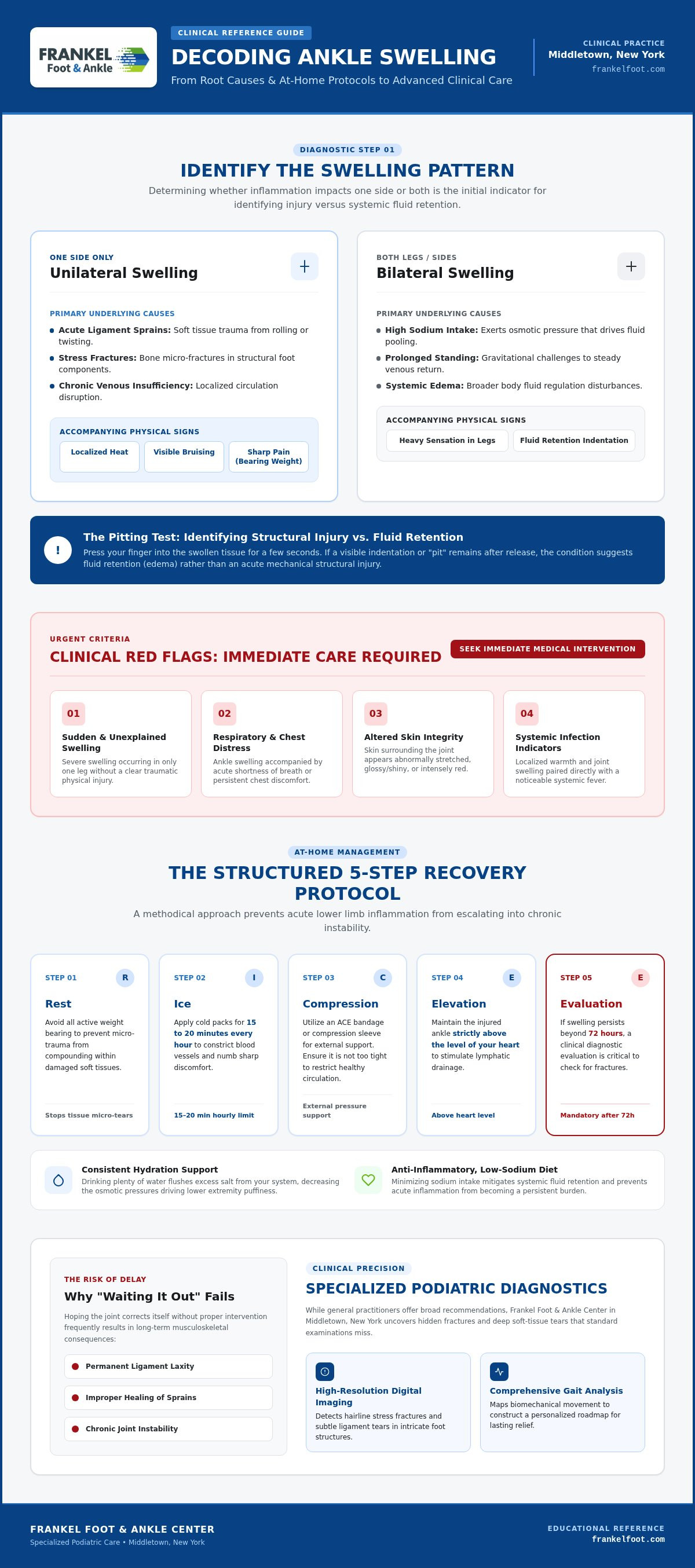
Ankle swelling, clinically recognized as peripheral edema, occurs when excess fluid accumulates within the soft tissues surrounding the joint. This condition often signals an underlying disruption in the body's fluid regulation or a direct response to physical trauma. Identifying whether the puffiness affects one side or both is the first step toward a precise diagnosis. Unilateral swelling typically points to localized issues like acute ligament sprains, chronic venous insufficiency, or stress fractures in foot structures. Conversely, bilateral swelling often stems from lifestyle habits, such as high sodium intake or prolonged periods of standing that challenge healthy circulation.
Identifying the Source: Injury vs. Systemic Edema
Discerning the cause of ankle swelling requires a methodical look at accompanying symptoms. If you've suffered a mechanical injury, you'll likely notice localized heat, visible bruising, and sharp pain during weight-bearing activities. These signs indicate a specific inflammatory response to damaged tissue. In contrast, systemic edema often presents as a heavy sensation in both legs. You can check for pitting by pressing your finger into the swollen area; if an indentation remains after you release, it suggests a fluid retention issue rather than a structural injury. While many cases are manageable, certain red flag symptoms demand immediate clinical intervention:
- Sudden, severe swelling in only one leg without a clear injury.
- Accompanying shortness of breath or chest discomfort.
- Skin that appears stretched, shiny, or unusually red.
- A fever paired with localized warmth and swelling.
Recognizing these distinctions ensures you receive the appropriate level of care, moving from simple home management to professional podiatric evaluation when necessary to protect your long term mobility.
Immediate Relief: Effective Home Remedies and When to Seek Help
Managing initial ankle swelling requires a disciplined approach to prevent acute inflammation from becoming a chronic burden. While many patients begin with basic rest, the journey to recovery often evolves from simple elevation to medical grade compression to stabilize the joint. Following established foot, leg, and ankle swelling guidelines ensures you don't inadvertently exacerbate the condition through neglect. Hydration and a low sodium, anti-inflammatory diet also play supportive roles in managing systemic fluid retention. Consuming plenty of water helps flush excess salt from your system, which reduces the osmotic pressure that often drives puffiness in the lower extremities. Many people mistakenly choose to wait it out, hoping the body will correct itself. However, this delay can lead to permanent ligament laxity or the improper healing of sore ankles, eventually resulting in chronic instability. If home care doesn't yield results, seeking specialized foot care is the most reliable way to ensure long term mobility.
The RICE Method and Beyond: Managing Swelling Safely
A structured recovery plan provides the foundation for healing when you're dealing with persistent ankle swelling. Follow these five steps to manage acute symptoms effectively:
- Step 1: Rest. Avoid weight bearing to prevent further micro trauma to the delicate soft tissues surrounding the joint.
- Step 2: Ice. Apply cold packs for 15 to 20 minutes every hour to constrict blood vessels and numb the area.
- Step 3: Compression. Use an ACE bandage or sleeve to provide external pressure, ensuring it's not so tight that it restricts circulation.
- Step 4: Elevation. Keep your ankle above the level of your heart to facilitate lymphatic drainage and reduce fluid pooling.
- Step 5: Evaluation. If the swelling persists beyond 72 hours despite these efforts, a professional diagnostic exam is essential to rule out structural damage.
Advanced Diagnostic and Clinical Treatments for Persistent Swelling
When at-home management fails to resolve persistent puffiness, a specialized podiatric evaluation at Frankel Foot & Ankle Center is essential. While general practitioners might offer broad advice, our diagnostic process identifies hidden fractures or ligament tears that standard exams often miss. We utilize sophisticated tools ranging from high-resolution digital imaging to comprehensive gait analysis. This precision allows us to create a tailored roadmap for ankle pain relief, ensuring that the root cause is addressed rather than just the symptoms. Understanding the clinical causes and symptoms of edema helps patients recognize when their condition requires this higher level of professional scrutiny. Our clinical interventions include custom orthotics and targeted physical therapy protocols designed to strengthen the joint and prevent future recurrence. We prioritize progressive, minimally invasive methodologies that accelerate your return to mobility.
Specialized Care at Frankel Foot & Ankle Center
Our patient-centered approach defines the care delivered at our Middletown New York, Katonah New York, and Milford Pennsylvania offices. We guide patients through the transition from initial diagnosis to long-term treatment, effectively managing chronic conditions such as osteoarthritis or gout-related inflammation. Dr. Marc Frankel's commitment to excellence ensures that every individual receives a personalized recovery plan. Whether you are dealing with acute trauma or a recurring systemic issue, our team provides the expert-led support you need to regain your quality of life. Don't let persistent ankle swelling dictate your activity levels any longer. Contact us today to schedule your compassionate consultation and take the first step toward lasting comfort.
Reclaiming Your Mobility and Comfort
Persistent ankle swelling shouldn't be a permanent fixture in your daily life. While at-home care provides a vital first response, recognizing when symptoms require professional intervention is key to preventing chronic instability. By understanding the difference between localized trauma and systemic fluid retention, you've already taken the first step toward recovery. Dr. Marc Frankel offers board-certified expertise in foot and ankle surgery, providing a bridge from temporary relief to lasting health. With convenient locations in Middletown New York, Katonah New York, and Milford Pennsylvania, our practice combines advanced diagnostics with deeply compassionate care. Don't let discomfort limit your potential any longer. Schedule a consultation with Dr. Frankel for expert ankle relief and rediscover the joy of pain-free movement. Your journey toward better health starts with a single, expert-led conversation.
Frequently Asked Questions
Is ankle swelling always a sign of a serious problem?
No, ankle swelling isn't always a sign of a serious medical emergency, but it's always a signal from your body that requires attention. Temporary puffiness often results from lifestyle factors like high sodium intake or standing for long periods. However, persistent inflammation might indicate chronic venous insufficiency or localized trauma. It's essential to monitor how long the symptoms last and if they're accompanied by pain.
How can I tell if my swollen ankle is broken or just sprained?
Distinguishing between a break and a sprain without professional imaging is difficult because both share symptoms like bruising and localized heat. Generally, a fracture involves immediate, intense pain and an inability to bear any weight on the foot. Sprains typically allow for some limited movement, though they still cause significant discomfort. A clinical evaluation at our Middletown New York office provides the digital imaging necessary for an accurate diagnosis.
What is the fastest way to get swelling down in the ankle?
The fastest way to reduce acute ankle swelling is through the methodical application of the RICE protocol: rest, ice, compression, and elevation. Keeping the joint above your heart level facilitates lymphatic drainage, while consistent icing for 20 minutes every hour constricts blood vessels to limit fluid buildup. Staying hydrated also helps your body flush excess salt, which prevents the osmotic pressure that leads to persistent lower extremity puffiness.
When should I see a podiatrist for swollen ankles in Middletown?
You should schedule a consultation in Middletown New York if your swelling persists beyond 72 hours despite at-home care. Professional intervention is also necessary if you experience pitting edema, where skin indentations remain after pressure. Dr. Marc Frankel provides specialized diagnostics to rule out hidden injuries, ensuring you receive a precise treatment plan that restores your mobility and prevents long-term joint instability or chronic pain.


