


One moment you're stepping off a curb, and the next, a sharp, localized snap leaves you unable to bear any weight on your foot. It's a frightening experience that sparks immediate anxiety about your future mobility and whether you should rush to the ER or find a specialist. Finding the right broken ankle treatment in Middletown is the first step toward replacing that fear with a clear, professional plan for recovery. We understand that the uncertainty of a long healing timeline can be just as overwhelming as the physical pain itself.
This article will guide you through the essential stages of diagnosing and treating an ankle fracture, ensuring you have the knowledge to make informed decisions. You'll learn what to expect from modern diagnostics, the difference between surgical and non-surgical paths, and how specialized care minimizes your downtime. From initial first aid to advanced rehabilitation, we'll show you how to return to your daily activities with strength and confidence.
Key Takeaways
- Learn how to identify the critical signs of an ankle fracture and implement the R.I.C.E. method to manage initial swelling and discomfort.
- Discover the advanced imaging techniques specialists use to assess bone stability and ensure an accurate diagnosis for long-term health.
- Explore the various options for broken ankle treatment in Middletown, ranging from functional bracing to precise surgical interventions like ORIF.
- Understand the structured path to restoring full mobility and minimizing recovery time through expert-led, compassionate care.
Recognizing the Signs of an Ankle Fracture and Immediate Local Care
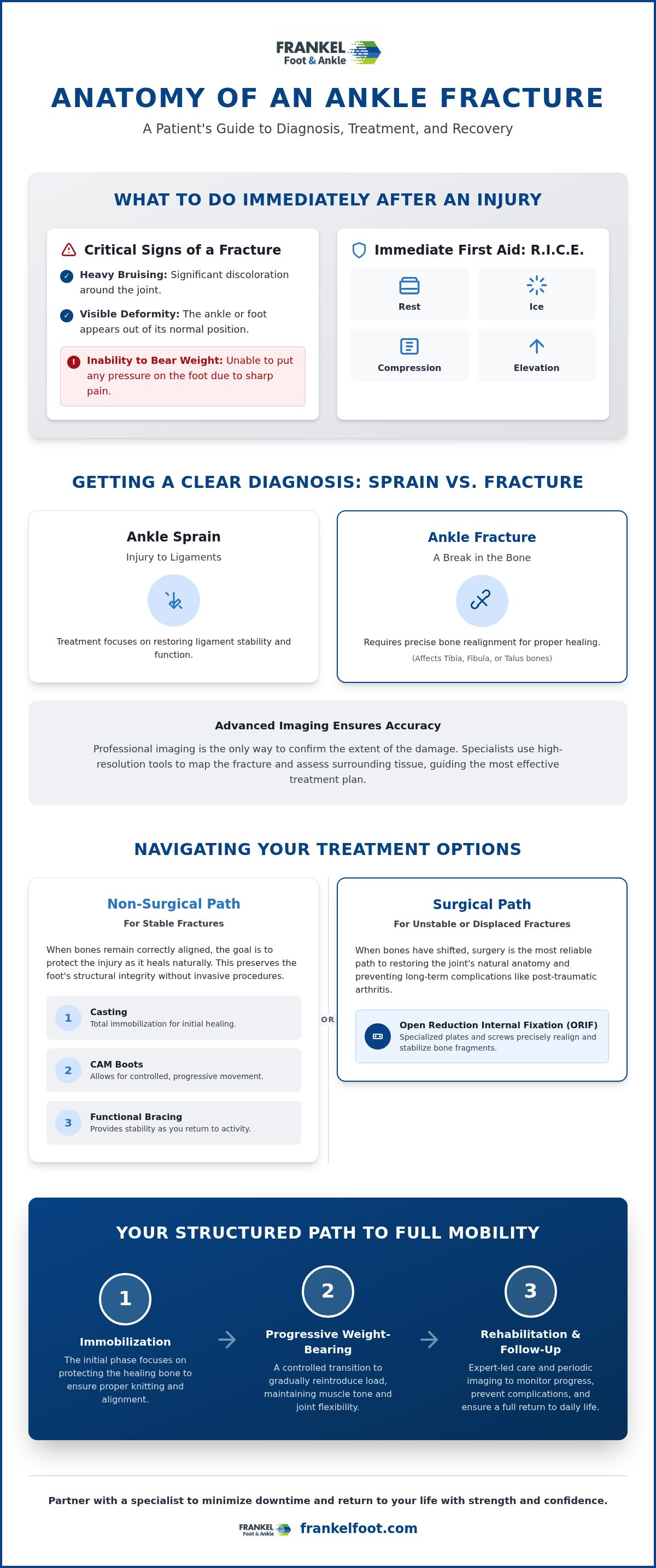
An ankle injury often occurs in a split second, leaving you in significant distress and wondering about the next steps. Recognizing the physical symptoms is vital for seeking the right broken ankle treatment in Middletown. You should look for immediate signs such as heavy bruising, a visible deformity of the joint, or an absolute inability to place any weight on the affected foot. While you're waiting for a professional evaluation, it's critical to implement the R.I.C.E. method: rest the limb entirely, apply ice for 20 minutes at a time, use a compression wrap, and elevate the ankle above your heart to manage swelling and pain.
Deciding between a local Middletown ER and a specialized podiatric consultation depends on the severity of the trauma. While an emergency room is equipped for immediate stabilization and life-threatening issues, a dedicated specialist provides the continuity of care necessary for a full, functional recovery. This Ankle fracture overview explains how these injuries involve the tibia, fibula, or talus bones, requiring expert assessment. From initial stabilization to long-term rehabilitation, a specialized approach ensures every detail of your bone health is addressed with precision.
Is It a Sprain or a Break? Navigating Diagnostic Uncertainty
It's often difficult to distinguish a severe sprain from a fracture because both conditions involve intense swelling and sharp pain. Professional imaging, including digital X-rays or MRI, is the only way to confirm the extent of the damage. An accurate diagnosis is essential because ankle sprain treatment focuses on ligament stability, whereas a break requires precise bone realignment. Securing a diagnosis early prevents chronic pain and ensures you receive the most effective broken ankle treatment in Middletown for your specific injury profile.
Comprehensive Diagnostic and Non-Surgical Recovery Strategies in Middletown
Precision is the cornerstone of effective broken ankle treatment in Middletown. We utilize high-resolution digital X-rays and advanced MRI technology to evaluate the complex architecture of the ankle joint, specifically focusing on the stability of the tibia, fibula, and talus bones. When a fracture is stable and the bones remain correctly aligned, non-surgical strategies provide a robust path toward recovery. These interventions range from traditional casting to modern CAM boots and functional bracing, each selected to protect the injury while the bone naturally knits together. This methodical approach ensures that the structural integrity of your foot is preserved without the need for invasive procedures.
The Role of Advanced Imaging and Custom Stabilization
At Frankel Foot & Ankle, we believe that detailed diagnostics are the foundation for long-term ankle pain relief. By accurately mapping the fracture line and assessing surrounding soft tissue, we can determine if you are a candidate for Surgical treatment for ankle fractures or if a conservative approach is more appropriate. Our team carefully manages your journey from total immobilization to controlled, progressive weight-bearing. This transition is vital for maintaining muscle tone and joint flexibility while the fracture heals, ultimately leading to a more efficient recovery.
Methodical follow-up appointments are a non-negotiable part of our clinical process. We monitor the healing progress through periodic imaging to ensure that bone alignment remains perfect as your activity levels gradually increase. This structured oversight prevents complications like malunion and supports a faster return to your daily routine. If you are concerned about a recent injury, seeking professional ankle pain relief from a specialist ensures every detail of your broken ankle treatment in Middletown is handled with expertise and care.
Advanced Surgical Solutions and the Path to Restoring Mobility
When a fracture is displaced or the joint remains unstable, surgical intervention becomes the most reliable path to a full recovery. Dr. Frankel specializes in Open Reduction Internal Fixation (ORIF), a procedure that precisely realigns bone fragments using specialized hardware. This level of broken ankle treatment in Middletown is designed to restore the joint's natural anatomy, which the Mayo Clinic identifies as a critical factor in preventing post-traumatic arthritis. We combine this technical excellence with a compassionate approach, ensuring you feel supported through every phase of the procedure. Our commitment to minimizing post-operative discomfort means we utilize progressive techniques that prioritize your comfort and promote faster tissue healing. This balanced methodology ensures that your physical recovery is matched by a reassuring patient experience.
Personalized Rehabilitation: Returning to Your Middletown Lifestyle
Successful surgery is only the beginning of your journey back to an active life. We implement a methodical rehabilitation program that transitions you from initial healing to intensive physical therapy. This structured progression is essential for rebuilding muscle strength and restoring a full range of motion. By focusing on long-term foot pain relief, we help you avoid the chronic instability that often follows poorly managed injuries. Our goal is to ensure you return to your favorite Middletown activities, whether it's walking through local parks or returning to work, with a joint that feels stable and strong. This personalized oversight is what defines high-quality broken ankle treatment in Middletown, turning a traumatic injury into a manageable step toward renewed health.
Secure Your Path to a Pain-Free Future
Recovering from a fracture requires a balance of sophisticated medical expertise and a supportive, patient-centered environment. By understanding the critical signs of injury and utilizing advanced on-site diagnostic imaging, you can transition from the initial trauma to a structured recovery plan. Whether your injury requires conservative stabilization or a precise surgical intervention, receiving specialized broken ankle treatment in Middletown ensures that your long-term mobility remains the priority. Dr. Marc Frankel and his dedicated team provide the authoritative guidance and compassionate care necessary to navigate every stage of healing. From the first evaluation to your final physical therapy session, we're committed to helping you regain your strength without unnecessary delay. Schedule your expert ankle evaluation at Frankel Foot & Ankle Center today and take the first step toward a full recovery. You have the resilience to overcome this injury, and we're here to guide you home.
Frequently Asked Questions
How can I tell if my ankle is broken or just badly sprained?
Differentiating between a break and a sprain requires professional imaging because both injuries present with intense pain and swelling. A fracture often involves immediate bruising, a visible deformity, or an absolute inability to bear weight on the foot. Even if you can take a few steps, you might still have a break. We use on-site digital X-rays to provide a definitive diagnosis and start your broken ankle treatment in Middletown immediately.
Do all broken ankles require surgery for a full recovery?
No, many ankle fractures heal successfully without surgery if the bones remain in their proper alignment. Stable fractures are typically managed with casting, CAM boots, or functional bracing to protect the joint while the bone naturally knits back together. However, displaced or unstable fractures often require surgical intervention to ensure long-term health. Dr. Frankel evaluates every case to determine the most conservative yet effective path for your recovery.
How long is the typical recovery timeline for an ankle fracture in 2026?
Most ankle fractures take approximately six to eight weeks for the bone to heal, though achieving full strength often takes several months. By September 2026, advanced rehabilitation protocols allow many patients to begin physical therapy sooner to restore range of motion. Your specific timeline depends on the fracture's severity and how closely you follow the recovery plan. Our primary goal is to minimize downtime while ensuring a safe return to activity.
What should I bring to my first appointment at Frankel Foot & Ankle Center?
Please bring your identification, insurance information, and a list of any current medications. If you've already received imaging at a local ER or urgent care, bringing those digital files or reports helps us streamline your broken ankle treatment in Middletown. We also suggest wearing loose-fitting clothing that allows easy access to your limb for a thorough physical examination and any necessary on-site diagnostic imaging during your consultation.


