


What if the greatest obstacle to your mobility wasn't the surgery itself, but the outdated myths surrounding how we heal? Many patients delay care because they dread a bunion surgery recovery defined by months of immobility, intense pain, and unsightly scarring that lingers long after the bone has been corrected. It's completely natural to feel anxious about losing your independence or being unable to drive while you recover.
This guide provides a comprehensive roadmap for the modern patient, proving that scarless, minimally invasive techniques offer a drastically different experience. You'll discover exactly what to expect as you move through each milestone, from the initial 48 hours to the day you return to your favorite footwear. We'll explore how advanced surgical precision minimizes post-operative discomfort and allows for immediate weight-bearing, ensuring you regain your active lifestyle with confidence and clinical clarity.
Key Takeaways
- Master the "Golden Window" of the first 48 hours by implementing precise elevation protocols to minimize postoperative swelling and accelerate early tissue healing.
- Navigate your bunion surgery recovery with a milestone-based timeline that transitions you from protective wraps to increased mobility within the first six weeks.
- Discover how modern, scarless surgical techniques prioritize immediate structural stability, allowing for a faster return to weight-bearing activities and favorite footwear.
- Ensure long-term success and prevent recurrence through advanced structural correction and the strategic use of custom orthotics to maintain optimal foot alignment.
Navigating the First 72 Hours of Bunion Surgery Recovery
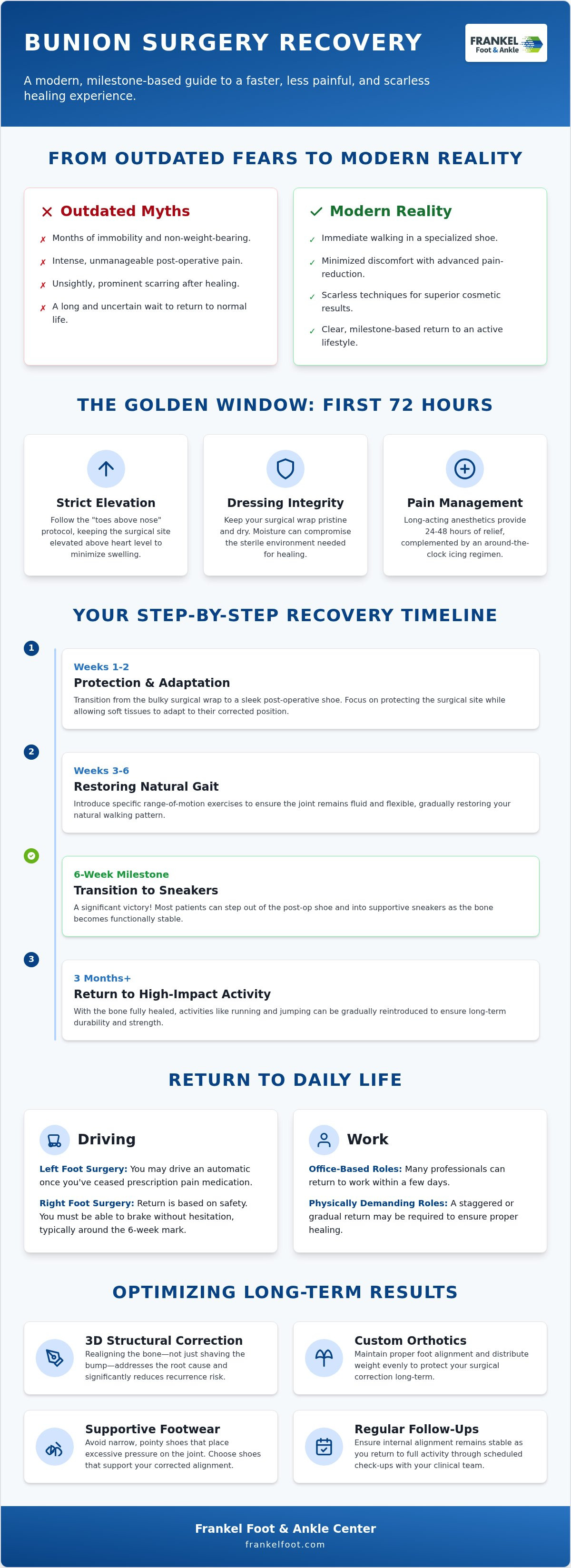
The first 72 hours represent the "Golden Window" for a successful bunion surgery recovery. During this critical phase, managing inflammation is the primary objective to ensure optimal tissue healing. While you may have researched what is a bunion to understand the structural deformity, the recovery phase requires a focused commitment to these stabilization protocols:
- Elevation: We implement a strict "toes above nose" protocol, elevating the surgical site above the level of the heart to facilitate venous return and reduce swelling.
- Dressing Integrity: You must keep your surgical wrap pristine and dry; moisture can compromise the sterile environment required for scarless healing and increase irritation risks.
- Controlled Mobility: Unlike traditional methods that mandate weeks of non-weight-bearing, our techniques frequently allow for immediate walking in a specialized shoe.
Managing Discomfort with Modern Pain-Reduction Techniques
Many patients worry about intense post-operative pain, but modern podiatry has transformed this experience from the initial procedure to the final stages of healing so you don't have to feel anxious. We utilize long-acting local anesthetics during the procedure that provide extended relief for 24 to 48 hours. This proactive approach prevents the "pain peak" often associated with older surgical methods. To complement this, we recommend an "around-the-clock" icing regimen where you apply ice behind the knee to constrict blood vessels and soothe the area. To understand how we prioritize your comfort during bunion surgery recovery, read Is Bunion Surgery Painful? for a deeper dive into our anesthesia protocols.
Your Step-by-Step Bunion Surgery Recovery Timeline
Once you move past the initial 72-hour stabilization phase, your bunion surgery recovery enters a period of gradual reintroduction to activity. Between weeks one and two, we transition you from the bulky surgical wrap to a sleek, post-operative shoe. This stage focuses on protecting the surgical site while allowing you to navigate your home with increasing ease. You aren't just waiting for a bone to heal; you're allowing the soft tissues to adapt to their new, corrected position.
From week three to week six, we focus on restoring your natural gait. We introduce specific range-of-motion exercises to ensure the joint remains fluid and flexible. Reaching the six-week milestone is a significant victory, as most patients can finally step out of the post-op shoe and into supportive sneakers. While the bone is functionally stable, high-impact activities like running or jumping are typically reserved for the three-month mark to ensure long-term durability.
Functional Milestones: When Can You Drive and Work?
Your return to the driver's seat depends largely on which foot underwent the bunion surgery procedure. If we treated your left foot and you drive an automatic, you may return to driving once you've ceased all prescription pain medication. For right-foot procedures, safety is paramount; you must be able to perform an emergency brake maneuver without hesitation, which usually occurs around the six-week mark. Office-based professionals often return to work within days, whereas those in physically demanding roles may require a staggered return. Our scarless techniques prioritize rapid healing, often allowing you to return to your favorite footwear faster than traditional methods during your bunion surgery recovery. To ensure you're meeting these milestones safely, consult with our clinical experts for a tailored evaluation of your progress.
Optimizing Long-Term Results and Preventing Recurrence
The final stage of bunion surgery recovery focuses on protecting your results for a lifetime. While some believe bunions are purely progressive and inevitable, the surgical technique we employ addresses the root structural cause through precise, three-dimensional correction. By realigning the bone rather than just shaving the bump, we significantly reduce the risk of the deformity returning. This structural integrity is further supported by the use of custom orthotics, which maintain proper foot alignment and distribute weight evenly across the forefoot as you walk.
Your choice of footwear plays a vital role in this preservation. Moving away from narrow, pointy shoes prevents excessive pressure on the joint and protects the investment you've made in your health. Regular follow-up appointments at our Middletown, Katonah, or Milford offices allow us to monitor your progress and ensure your foot is healing exactly as planned. These visits are essential for confirming that the internal alignment remains stable as you return to full, high-impact activities.
Professional Support and Physical Therapy in the Hudson Valley
A customized stretching routine is critical to ensure the big toe joint remains flexible and functional. We guide you through specific exercises that prevent stiffness, a common concern in traditional surgeries. During these sessions, we also monitor the scarless surgical site to ensure the aesthetic outcome meets our high standards. If you're ready to secure a future of pain-free movement, we encourage you to schedule a consultation at Frankel Foot & Ankle Center for a personalized recovery assessment. Our team is dedicated to supporting your bunion surgery recovery from the first step to your full return to an active lifestyle.
Step Into Your Future of Pain-Free Mobility
A successful bunion surgery recovery is no longer a months-long ordeal defined by limitations; instead, it's a structured journey toward lasting foot health. By mastering the initial 72-hour swelling management and following a milestone-based timeline, you can return to your active lifestyle with confidence. Modern surgical techniques ensure that your correction is both structurally sound and aesthetically pristine. Dr. Marc Frankel's board-certified expertise focuses on delivering painless and scarless outcomes that prioritize your long-term comfort. Whether you visit us in Middletown, Katonah, or Milford, our team is dedicated to providing the specialized care you deserve. Don't let foot pain dictate your pace any longer. Schedule your consultation at Frankel Foot & Ankle for a pain-free future and reclaim the freedom to move without hesitation. Your journey to better health starts with a single, supported step toward professional care.
Frequently Asked Questions
How soon can I walk after scarless bunion surgery?
Patients can typically take their first steps immediately following the procedure while wearing a specialized protective boot. This early weight-bearing is a hallmark of modern scarless techniques, which prioritize immediate structural stability. While you won't be returning to strenuous exercise right away, you can navigate your home with ease from the very first day.
Will I need crutches or a knee scooter during recovery?
Most patients undergoing our minimally invasive procedures don't require crutches or a knee scooter. Because the structural correction is stable and we encourage immediate walking in a post-operative shoe, these mobility aids are rarely necessary. This approach significantly simplifies your bunion surgery recovery by allowing you to maintain better independence throughout the healing process.
When can I wear high heels or narrow shoes again?
You can generally return to supportive sneakers at the six-week mark, but high heels or narrow shoes should be avoided for at least three to six months. This timeframe allows the internal tissues to mature and prevents the recurrence of the deformity. We recommend a gradual reintroduction of fashion footwear to ensure your long-term comfort and surgical results remain intact.
How do I minimize scarring after my bunion removal?
Minimizing scarring begins with our specialized scarless technique, which utilizes tiny incisions that often require no external stitches. To further optimize the aesthetic outcome, you should keep the surgical site dry and protected as directed. Following our specific post-operative care instructions ensures the skin heals smoothly, leaving virtually no visible trace of the procedure.
Is physical therapy required after bunion surgery?
While formal physical therapy isn't always mandatory for every patient, we frequently prescribe customized stretching routines to maintain joint flexibility. These exercises are essential for preventing stiffness in the big toe joint. For those with more complex corrections, a few targeted sessions can accelerate your bunion surgery recovery and improve your overall walking mechanics.
Can I drive myself home after the procedure?
No, you cannot drive yourself home because of the sedative medications and local anesthetics used during the surgery. You must arrange for a responsible adult to provide transportation. Depending on which foot was treated and your specific healing progress, you may be able to return to the driver's seat in as little as a few days or up to six weeks.


