
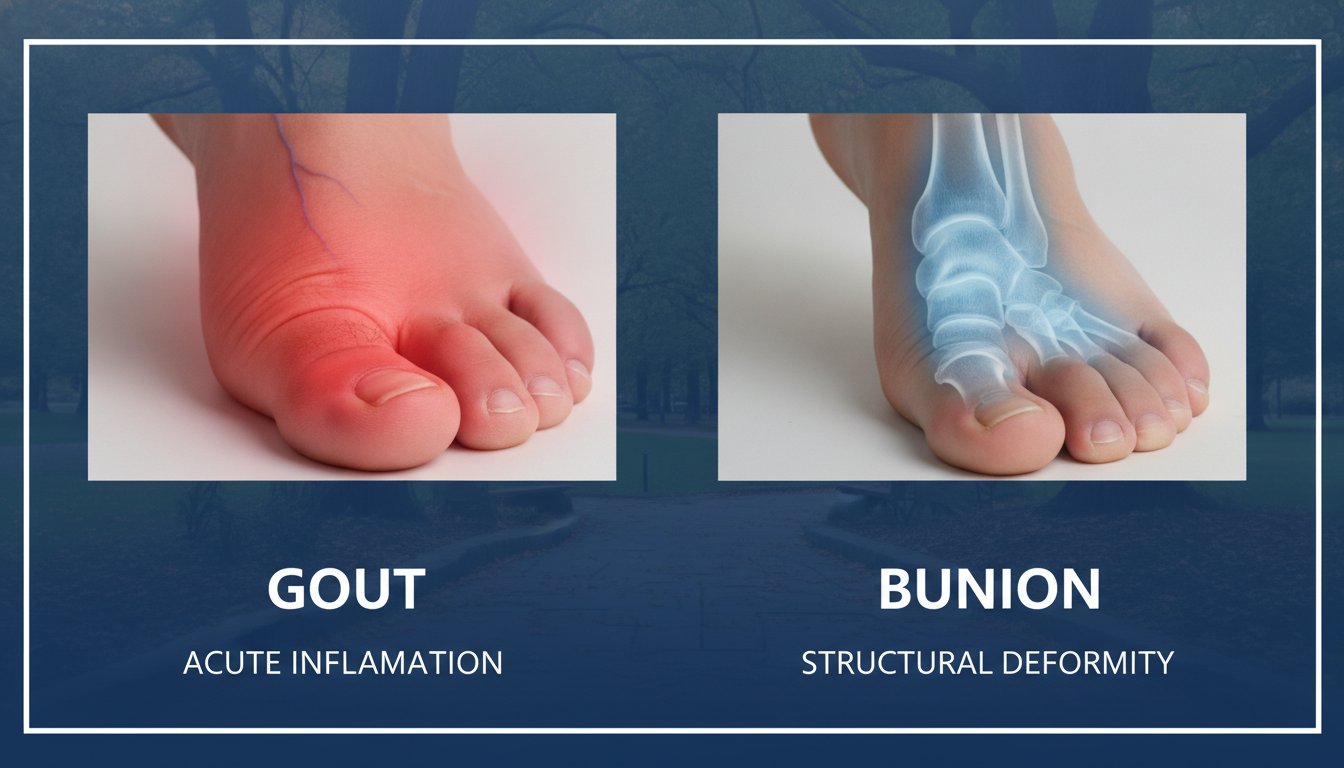

Imagine waking up to a big toe joint that feels as though it's radiating intense heat, making even the weight of a light bedsheet feel unbearable. When you're struggling to take a single step without wincing, the primary question on your mind is whether you're dealing with gout or bunion formation. With approximately 23 percent of adults under 65 experiencing bunions and millions more facing the sudden onset of gout, you're certainly not alone in this confusion. It's incredibly frustrating to feel sidelined by debilitating pain, especially when you're unsure if the solution lies in dietary changes or structural correction.
You deserve a clear path to recovery that restores your mobility without the fear of invasive surgery or extensive downtime. We're committed to helping you understand your symptoms from the initial flare-up to long-term joint health. This article will help you distinguish between the sudden, chemical inflammation of a gout attack and the gradual structural shift of a bunion. We'll explore how modern, minimally invasive techniques can provide relief, ensuring you return to your active lifestyle with the confidence and comfort you deserve.
Key Takeaways
- Understand the fundamental distinction between the inflammatory nature of uric acid crystals and the progressive structural deformity known as Hallux Valgus.
- Recognize the diagnostic differences in pain quality, from the extreme sensitivity of a metabolic flare to the persistent, pressure-induced ache of a misaligned joint.
- Discover how to identify specific visual markers, contrasting the sudden redness and swelling of an inflammatory attack with the hard, bony protrusion of a bunion.
- Determine the most effective clinical path for your specific condition, whether you require systemic management for gout or bunion correction through specialized surgical techniques.
- Gain insight into advanced, patient-centered treatment plans that prioritize long-term recovery, restored function, and minimally invasive methodologies.
Gout vs. Bunion: Understanding the Core Differences
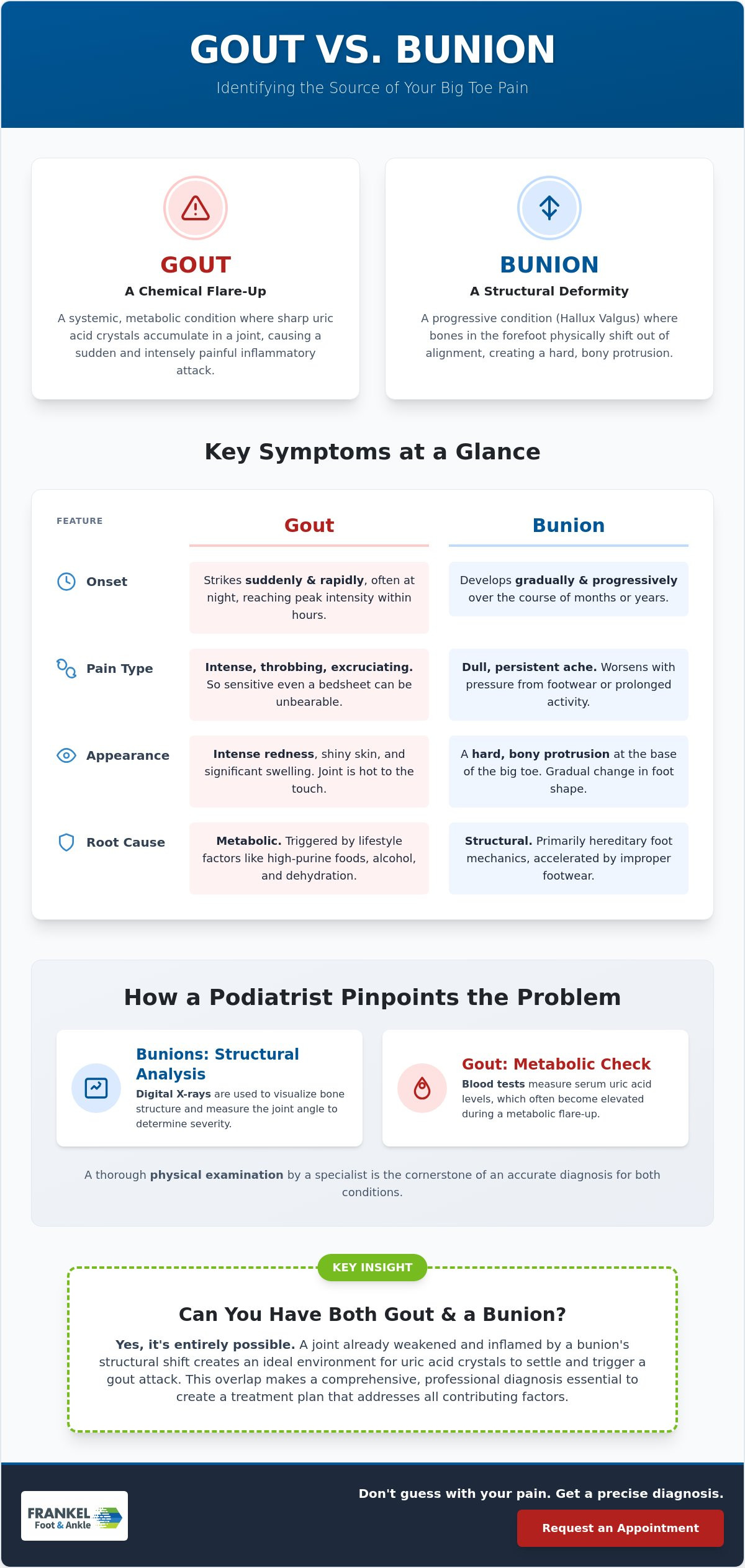
When you experience intense discomfort in your big toe, the first step toward recovery is identifying whether the issue is gout or bunion formation. While they share a common location, their origins couldn't be more different. Gout is a systemic condition characterized by a metabolic "event" where uric acid crystals accumulate within the joint. A bunion, or Hallux Valgus, is a progressive structural deformity where the bones of the forefoot physically shift out of alignment. One is a chemical flare-up; the other is a mechanical failure.
The timeline of your pain often provides the clearest clue. Gout typically strikes with startling speed, often in the middle of the night, reaching peak intensity within hours. Bunions are far more patient. They develop over several years, gradually altering the silhouette of your foot and causing discomfort that worsens with activity or tight footwear. Understanding this distinction ensures that your treatment plan addresses the root cause rather than just the surface-level symptoms.
The Anatomy of the Big Toe Joint
The metatarsophalangeal (MTP) joint serves as the primary hinge for your big toe, bearing significant weight with every step. In gout, the joint capsule suffers from acute chemical irritation, leading to severe swelling and heat. With a bunion, the issue is structural. The first metatarsal bone angles away from the foot while the big toe leans toward the second toe, creating a bony protrusion that disrupts the joint's natural mechanics. This shifting bone structure can eventually lead to secondary issues like arthritis if left uncorrected.
Can You Have a Bunion and Gout Simultaneously?
It's entirely possible to suffer from both conditions at once. In fact, a joint already weakened by a bunion's structural shift can become a primary site for uric acid crystal accumulation. The localized stress and chronic inflammation from a bunion create an environment where crystals can easily settle. If you have both, addressing only the metabolic side won't fix the bone's misalignment, and surgery alone won't prevent future gout flares. A comprehensive diagnostic approach is essential to ensure every factor contributing to your pain is addressed.
Key Symptoms and Diagnostic Indicators
Differentiating between the symptoms of gout or bunion formation requires a keen eye for specific clinical markers. While a bunion manifests as a hard, bony protrusion that gradually alters the foot's contour, gout presents with intense redness and a shiny, swollen appearance. The nature of the pain is equally telling. Gout sufferers often describe a throbbing sensation so acute that even the weight of a bedsheet is intolerable. Conversely, bunion pain is typically a dull, persistent ache triggered by the pressure of footwear or prolonged standing. The Hallux Valgus Angle serves as the primary clinical metric for determining the severity of a bunion's structural progression.
How a Podiatrist Diagnoses Your Pain
Precision in diagnosis is the cornerstone of effective recovery. During a thorough physical examination at our Middletown or Katonah clinics, we utilize advanced digital X-rays to visualize the internal bone structure and evaluate the health of the joint space. If we suspect a metabolic cause, we may order blood tests to measure serum uric acid levels. Understanding Gout symptoms and diagnosis is essential, as elevated levels often confirm an inflammatory flare rather than a structural shift. For those seeking professional foot pain relief, an accurate evaluation ensures the treatment matches the underlying pathology.
Risk Factors: From Diet to Genetics
The underlying causes of these conditions stem from vastly different sources. Gout is frequently triggered by lifestyle factors, including the consumption of high-purine foods, alcohol intake, and chronic dehydration. Bunions, however, are largely the result of hereditary foot mechanics and structural predispositions, though improper footwear can certainly accelerate their development. Identifying these risk factors allows us to tailor a preventative strategy that addresses your unique health profile, ensuring that your path to recovery is both comprehensive and sustainable.
Treatment Pathways: From Management to Permanent Correction
Once we determine if your clinical presentation indicates Bunion symptoms and causes or a metabolic flare, we develop a targeted treatment plan designed for your specific needs. Gout management focuses on systemic stabilization through anti-inflammatory medications like colchicine and long-term dietary adjustments to lower uric acid levels. For bunions, conservative care often begins with custom orthotics, padding, and footwear changes to alleviate pressure on the joint. While these non-invasive measures provide temporary comfort, they don't correct the bone's physical displacement. When conservative measures fail to provide lasting foot pain relief, permanent correction through scarless bunion surgery becomes the gold standard for restoring function.
The Advantage of Scarless and Painless Bunion Surgery
Dr. Marc Frankel utilizes a sophisticated, minimally invasive approach that significantly reduces tissue trauma compared to traditional methods. By performing the correction through tiny portals rather than large incisions, we ensure there are no visible scars and minimal postoperative pain. This modern technique allows for a much faster return to your daily activities and athletic pursuits. Traditional "open" bunionectomies often involve significant swelling and a grueling recovery, but our progressive methodology prioritizes your comfort and long-term aesthetic results.
Comprehensive Relief in Middletown, Katonah, and Milford
At Frankel Foot & Ankle Center, we maintain a patient-centered atmosphere where your recovery journey is our primary focus. Seeking an expert opinion early is vital to prevent secondary complications, such as foot pain from arthritis, which often arises from untreated joint misalignment. Whether you're navigating the complexities of gout or bunion discomfort, our team provides the specialized expertise required for a full recovery. Schedule your consultation at Frankel Foot & Ankle Center today to begin your path toward pain-free living.
Restore Your Mobility and Comfort
Distinguishing between the sudden metabolic flare of gout and the progressive structural shift of a bunion is the first step toward reclaiming your active lifestyle. You've learned that while gout requires systemic management to control uric acid levels, a bunion necessitates mechanical correction to realign the joint and prevent long-term arthritis. Identifying whether your discomfort is a gout or bunion issue ensures that your treatment plan is as precise as it is effective. Our team is dedicated to providing you with a clear diagnosis and a compassionate path to recovery, moving from accurate diagnostics to permanent surgical correction.
Under the leadership of authoritative expert Dr. Marc Frankel, our clinics specialize in advanced, scarless, and painless bunion surgery designed to minimize trauma and eliminate visible scarring. With convenient locations in Middletown, Katonah, and Milford, we're here to provide the specialized care you need to walk without hesitation. Don't let chronic foot pain dictate your daily activities any longer. Schedule Your Expert Foot Consultation Today and take the first step toward lasting health and restored function. We're ready to help you move forward with confidence.
Frequently Asked Questions
Is gout pain different from bunion pain?
Yes, the quality and onset of pain vary significantly between the two conditions. Gout pain is characterized by a sudden, explosive onset, often peaking within hours and feeling like a sharp, throbbing, or burning sensation. In contrast, bunion pain is typically a dull, mechanical ache that fluctuates based on footwear choices and physical activity levels. While gout makes the joint sensitive to even the lightest touch, bunion discomfort is usually localized to the bony protrusion itself.
Can a bunion be mistaken for gout?
It's common for patients to confuse a gout or bunion flare-up because both affect the first metatarsophalangeal joint. A swollen, red bunion can mimic the inflammatory appearance of a gout attack, especially during periods of high activity. However, a professional diagnostic evaluation using digital X-rays and blood tests can clarify the cause. Mistaking one for the other can delay appropriate treatment, as metabolic management won't correct the structural misalignment of a bunion.
What happens if I leave a bunion or gout untreated?
Neglecting either condition can lead to progressive joint deterioration and chronic mobility issues. Untreated gout may result in permanent joint damage, the formation of tophi (visible crystal deposits), and potential kidney complications. Similarly, an unaddressed bunion will continue to shift, eventually causing secondary issues like hammertoes, bursitis, or severe osteoarthritis in the big toe joint. Early intervention is the most effective way to preserve your long-term foot health and avoid complex corrective procedures.
How do I know if I need surgery for my big toe pain?
Determining whether you require surgery for gout or bunion issues depends on the severity of your structural misalignment and your response to non-invasive care. If you experience persistent pain despite trying orthotics or medications, a surgical consultation is the next step. Our specialized, scarless techniques offer a modern alternative to traditional surgery, providing a permanent solution with minimal downtime. We prioritize restoring function while ensuring an excellent aesthetic outcome for your feet.


