


Imagine swinging your feet out of bed, only to have your first step feel as though you've landed on a sharp, jagged stone. For many, this morning ritual is a painful reality that makes finding effective heel pain relief feel like an impossible task. You've likely experimented with various stretches or store-bought cushions, yet the persistent ache remains, leaving you caught between the desire to stay active and the fear of further injury. It's a common struggle to determine whether your condition requires a simple lifestyle adjustment or a more sophisticated medical approach.
We're here to provide you with a comprehensive clinical roadmap for achieving permanent recovery, moving you from a state of morning stiffness to a life of unrestricted mobility. This guide explores the precise diagnostic steps needed to uncover the root cause of your discomfort. We will also preview the latest 2026 treatment protocols, covering everything from progressive loading exercises to advanced regenerative therapies that prioritize your long-term recovery and comfort. By understanding the path from initial diagnosis to advanced intervention, you can regain the confidence to walk, run, and move without hesitation.
Key Takeaways
- Learn why mechanical stress on the foot structure causes intense morning stiffness and how to identify the specific source of your discomfort.
- Discover how custom-molded orthotics provide a foundation for heel pain relief by correcting the underlying structural imbalances that lead to chronic symptoms.
- Explore the benefits of non-invasive laser therapy, a modern clinical intervention designed to stimulate cellular repair and rapidly reduce localized inflammation.
- Understand the comprehensive diagnostic roadmap used by specialists to transition you from temporary home care to permanent medical recovery.
Identifying the Source of Your Heel Pain and Immediate Relief Strategies
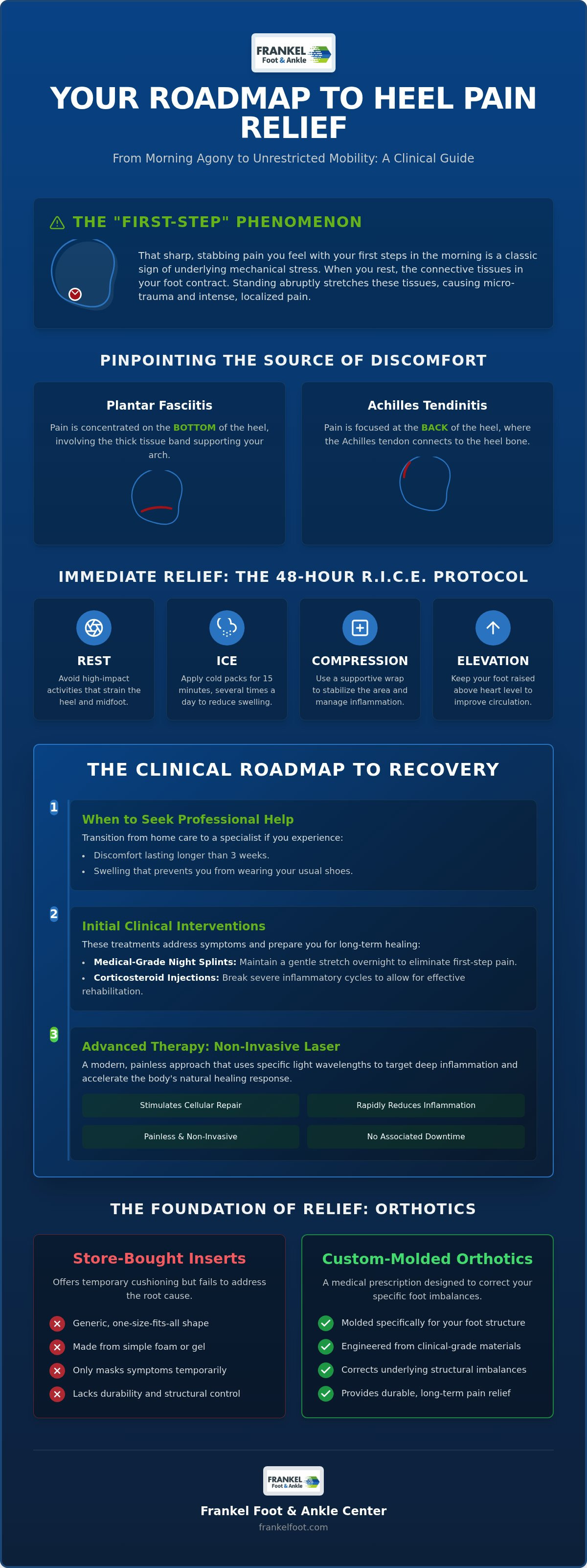
Heel pain is rarely an isolated incident. It's typically a symptom of underlying mechanical stress on the foot’s intricate architecture. When the structural alignment of your foot is compromised, the connective tissues absorb excessive force, leading to localized inflammation. This often manifests as the "first-step" phenomenon, where the most intense discomfort occurs immediately after sleep or prolonged rest. During periods of inactivity, your tissues naturally contract; when you stand, these tissues are abruptly stretched, causing sharp micro-trauma.
Effective heel pain relief begins by distinguishing where the discomfort originates. If the pain is concentrated on the bottom of your heel, you may be asking What is Plantar Fasciitis?, a condition involving the thick band of tissue supporting your arch. Conversely, pain at the back of the heel often points toward Achilles tendinitis. For acute flare-ups, follow a 48-hour RICE protocol to manage symptoms:
- Rest: Avoid high-impact activities that strain the heel and midfoot.
- Ice: Apply cold packs for 15 minutes several times a day to reduce heat and swelling.
- Compression: Use a supportive wrap to stabilize the area and manage minor inflammation.
- Elevation: Keep your foot raised above heart level to improve circulation and drainage.
The Heel Cord Connection: Debunking the Heel Spur Myth
Many patients believe a bony protrusion, or heel spur, is the primary source of their agony. In reality, spurs are often a secondary result of chronic tension, not the cause of the pain itself. The true culprit is frequently found higher up in the leg. Significant calf muscle tightness increases the pull on the heel cord, which directly intensifies the tension on the plantar fascia. Addressing this "heel cord connection" through targeted stretching is essential for a long-term resolution.
When Home Remedies Fall Short
While conservative care is a vital starting point, certain red flags indicate a need for professional intervention. If your discomfort lasts longer than three weeks or if swelling prevents you from wearing your usual shoes, it's time to move beyond self-diagnosis. A clinical assessment at a specialized center ensures that you aren't ignoring structural damage that could lead to permanent mobility issues. Transitioning to professional care allows for a precise diagnosis and a more advanced recovery plan.
Moving Beyond Home Care: Advanced Clinical Treatments for Heel Pain
When conservative measures like stretching and icing fail to provide lasting results, advanced clinical treatments for heel pain become the essential bridge to recovery. These interventions move beyond symptom management to address the underlying physiological causes of your discomfort. Medical-grade night splints, for instance, are designed to maintain a gentle, consistent stretch on the heel cord throughout the night. This prevents the fascia from contracting while you sleep, significantly reducing that sharp, first-step pain in the morning. For patients trapped in severe inflammatory cycles, corticosteroid injections can be utilized to break the cycle of pain, allowing you to participate more effectively in long-term rehabilitative therapies.
Laser Therapy: A Modern Approach to Chronic Inflammation
Modern podiatric care has evolved to include non-invasive laser therapy, a sophisticated methodology that targets deep-seated inflammation. This technology uses specific light wavelengths to penetrate the skin and stimulate cellular repair within damaged tissues and inflammatory microtears. It's an entirely painless and non-invasive option, which is particularly beneficial for active individuals who can't afford the downtime associated with more aggressive procedures. By accelerating the body’s natural healing response, this therapy provides a progressive alternative to traditional surgery.
Custom Orthotics vs. Store-Bought Inserts
Custom orthotics are sophisticated medical prescriptions designed specifically for your unique gait and foot structure. Unlike generic, store-bought foam inserts that offer only temporary cushioning, custom-molded devices are engineered from clinical-grade materials to correct the specific structural imbalances causing your pain. These devices provide the durability and precise alignment necessary for achieving permanent heel pain relief. If your daily activities are limited by persistent aching, you might consult with a specialist to determine if a custom-molded solution is the missing piece in your recovery roadmap. This transition from generic support to clinical precision is often what finally restores a patient's quality of life.
Expert Podiatric Care in Middletown: Restoring Your Quality of Life
At Frankel Foot & Ankle Center, we believe that effective care starts with listening to your unique journey. Our patient-centered philosophy ensures that your physical concerns are met with both high-level clinical expertise and genuine compassion. We don't just treat symptoms; we investigate the specific mechanical stresses impacting your lifestyle. This process begins with a methodical diagnostic evaluation, where we analyze your gait and perform a comprehensive physical examination. When necessary, we utilize advanced imaging to identify the precise causes and treatments of heel pain that will best serve your recovery.
Accessing specialized podiatric care is convenient for residents across the tri-state region. We provide modern medical interventions at our three regional offices in Middletown NY, Katonah NY, and Milford PA. While our primary focus remains on non-invasive recovery, we're dedicated to achieving "scarless and painless" outcomes should surgical intervention become necessary. Our goal is to provide a seamless transition from chronic discomfort to lasting health.
Personalized Treatment Plans for Long-Term Mobility
Dr. Marc Frankel specializes in developing individualized recovery timelines that reflect your personal activity level and long-term health goals. It's vital to pursue heel pain relief as soon as symptoms emerge. Delaying treatment often causes you to unconsciously alter your gait to avoid pain. This compensation can lead to secondary issues, such as strain in your knees, hips, or lower back. Early intervention protects your entire musculoskeletal system from these avoidable complications.
Your Next Steps Toward Pain-Free Living
You don't have to accept daily foot pain as an inevitable part of your life. Professional intervention can stop the cycle of chronic inflammation and restore your ability to exercise and walk without hesitation. We've made scheduling a consultation at any of our three regional offices a straightforward and welcoming experience. Visit Frankel Foot & Ankle Center to take the first step toward a clinical roadmap designed for your permanent recovery.
Reclaiming Your Mobility and a Pain-Free Future
Achieving lasting heel pain relief requires a transition from temporary home management to a structured clinical strategy. We've explored how identifying the mechanical root of your discomfort and utilizing advanced interventions, from custom-molded orthotics to non-invasive laser therapy, can effectively break the cycle of chronic inflammation. This methodical approach allows you to move from the frustration of morning stiffness to the confidence of pain-free movement while protecting your overall musculoskeletal health.
Frankel Foot & Ankle Center stands as your dedicated partner in this journey, offering specialized expertise in scarless and painless podiatric surgery should conservative measures be exhausted. With three convenient locations in Middletown, Katonah, and Milford, high-level podiatric care is always within reach. Our commitment to progressive methodology and patient-centered warmth ensures that your recovery is managed with the precision and care you deserve.
Don't let persistent discomfort dictate your activity levels any longer. Schedule your consultation for heel pain relief at Frankel Foot & Ankle Center today and rediscover the joy of walking without hesitation. We're ready to help you take that first step toward a more active, comfortable life.
Frequently Asked Questions
Is heel pain a sign of something serious?
Heel pain is frequently a result of localized mechanical stress, but it can occasionally signal more complex systemic conditions or significant structural injuries like stress fractures. While most cases respond well to conservative care, persistent discomfort should be evaluated to rule out nerve entrapment or inflammatory arthritis. Seeking a professional diagnosis ensures that underlying issues don't lead to long-term mobility limitations or secondary joint pain in your knees and hips.
How long does it take for plantar fasciitis to heal with clinical treatment?
Recovery timelines for plantar fasciitis typically range from several weeks to a few months depending on the severity of the tissue damage. When you utilize advanced clinical interventions for heel pain relief, such as laser therapy or custom-molded orthotics, the healing process is often accelerated. These professional treatments address the root cause of inflammation more effectively than home remedies alone, providing a more predictable roadmap toward a full return to activity.
Can I continue to exercise while receiving heel pain relief treatments?
You can usually maintain an active lifestyle during treatment, though your exercise routine may require specific modifications to protect the healing tissues. We often recommend transitioning from high-impact activities like running to low-impact alternatives such as swimming or cycling until inflammation subsides. This approach ensures you stay fit without aggravating the microtears in your fascia, allowing for a steady progression back to your preferred sport or fitness regimen.
Will I need surgery for my heel pain?
Surgery is rarely the first course of action and is typically reserved for cases that haven't responded to at least twelve months of comprehensive conservative care. Most patients achieve successful heel pain relief through non-invasive clinical strategies like laser therapy and structural correction. If surgical intervention is eventually required, we prioritize scarless and painless techniques designed to minimize downtime and ensure a sophisticated, patient-centered recovery experience.


