
What if the key to reclaiming your confidence in sandals isn't found in a pharmacy aisle, but through a precision-engineered clinical reset? Many individuals struggle with the persistent embarrassment of onychomycosis, a fungal infection that currently affects up to 20% of the population. If you've spent months applying ineffective topical treatments or worrying about the systemic side effects of oral medications, you're not alone in your frustration. This guide explores the transformative journey of laser toenail fungus treatment before and after, documenting how advanced light therapy targets pathogens at the source to facilitate the growth of clear, healthy nails.
We're dedicated to providing a transparent look at the visual progression of healing and the clinical expertise required to achieve lasting results. You'll learn about the sophisticated technology behind FDA-cleared devices, such as the Lunula cold laser, which has demonstrated clinical improvement rates as high as 95% in recent studies. We'll preview the entire recovery timeline, starting from the initial destruction of fungal spores to the final emergence of translucent nail plates. This methodical overview ensures you have the medical insight necessary to move forward with professional podiatric care and achieve the permanent relief you deserve.
Key Takeaways
- Understand how clinical laser energy penetrates the nail plate to target underlying dermatophytes directly while preserving the surrounding healthy tissue.
- Track the realistic visual progression of laser toenail fungus treatment before and after by identifying the gradual transition from yellowing debris to clear, healthy growth.
- Learn to recognize the emergence of the "clear moon" or lunula at the base of the nail by month three, signaling the successful neutralization of the infection.
- Discover essential post-treatment sanitization protocols for footwear and hosiery to eliminate environmental reservoirs of spores and ensure long-term results.
Visual Milestones: What to Expect During Laser Fungal Nail Therapy
Understanding the path to recovery begins with acknowledging the burden of Onychomycosis. It isn't just a cosmetic annoyance. It's a persistent medical condition that often brings deep frustration and social embarrassment. When you look at your feet, you might see significant thickening, yellowing, or crumbly subungual debris. These "before" characteristics are common signs of a stubborn infection that has taken root deep beneath the nail plate, where standard creams cannot reach.
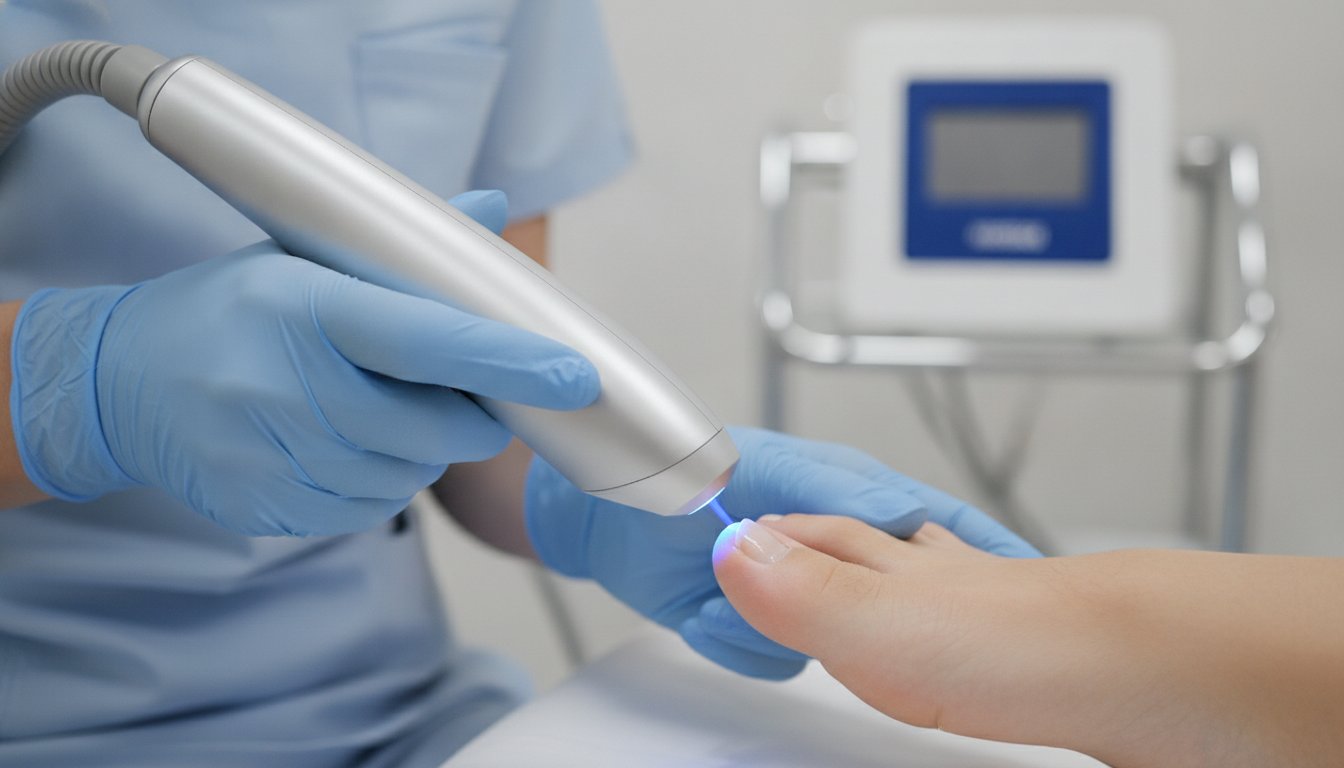
Laser therapy utilizes focused light energy to penetrate the hard keratin of the nail. This energy specifically targets dermatophytes, the fungal pathogens responsible for the infection. By heating these organisms to a precise temperature, the laser neutralizes their ability to survive and reproduce. Unlike many surface-level treatments, this method addresses the core of the issue without damaging the surrounding healthy tissue. It's a sophisticated "biological reset" for your nail bed.
It's vital to understand that laser treatment doesn't provide an instant cosmetic fix. When reviewing a laser toenail fungus treatment before and after journey, you'll notice the original infected nail remains until it naturally grows out. The laser kills the fungus, but it's your body's natural growth cycle that eventually replaces the damaged tissue with a clear, healthy nail. Patience is a critical part of the clinical process.
The Clinical Transformation Process
Modern podiatric care relies on specific wavelengths to ensure safety and efficacy. Not every yellow nail is fungal, which is why professional diagnostics are essential before you begin. Once confirmed, the laser provides a localized treatment that spares your skin while destroying the infection. High-success outcomes are most common when the infection is caught early, though even severe cases can see dramatic improvements with the right clinical approach.
Comparing Laser to Traditional "Before and Afters"
- Topical Creams: These often fail to reach the "after" stage because they can't penetrate the thick nail plate effectively.
- Oral Medications: While effective, these carry risks of systemic side effects, particularly for the liver.
- Laser Therapy: This offers a balanced alternative. It provides localized efficacy with a high safety profile, helping you reach your goals without the risks of internal pharmaceuticals.
The Recovery Roadmap: A Month-by-Month Guide to Clear Nails
Achieving a successful "after" isn't a race; it's a physiological process. While the laser neutralizes pathogens during your sessions, the visual transformation follows the natural growth cycle of your body. Unlike some guides that promise instant clarity, we prioritize an honest look at the biological timeline required to reach a true result. The journey toward clear nails requires a partnership between clinical precision and your body's ability to regenerate.
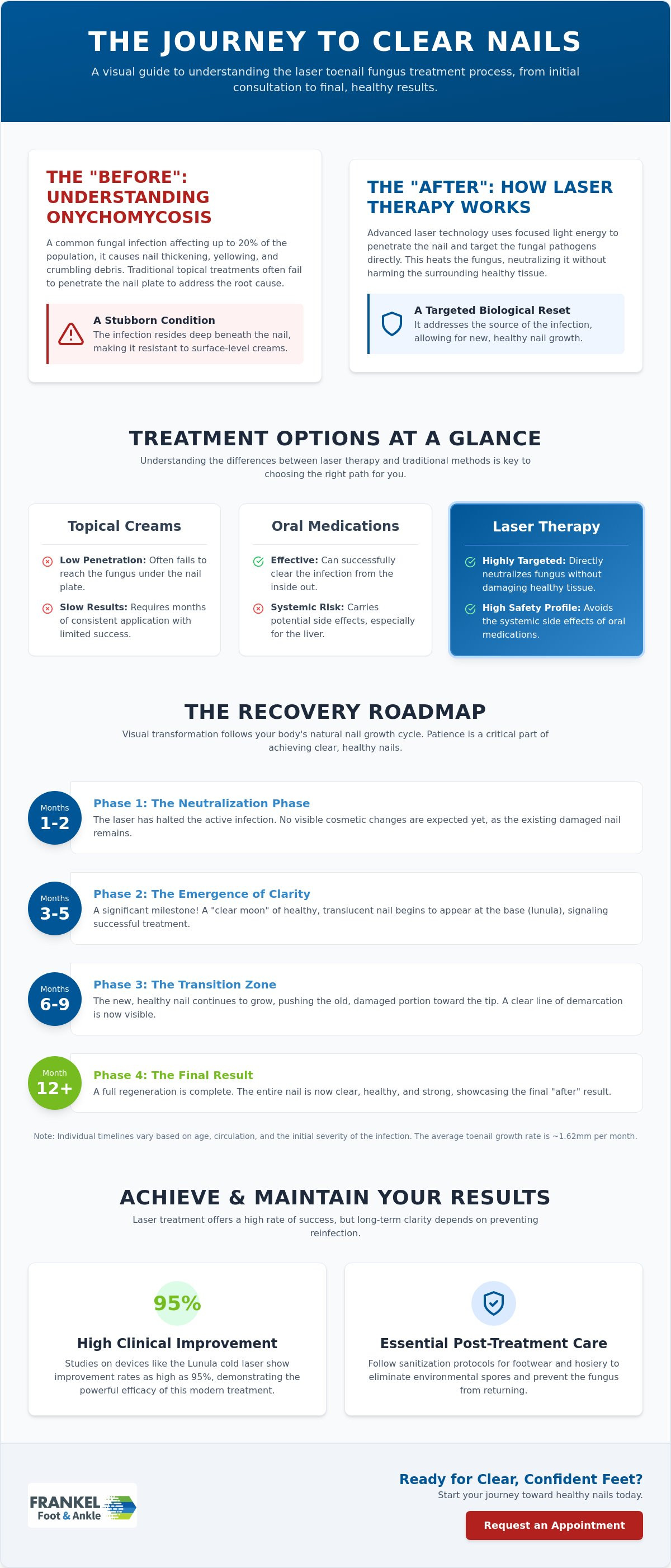
- Month 1-2: The Neutralization Phase. During these initial weeks, the active infection is halted. However, because the existing nail plate is composed of dead keratin, you won't see cosmetic changes yet. It's a period of internal stabilization.
- Month 3-5: The Emergence of Clarity. This is a significant milestone. You'll begin to see a "clear moon" appearing at the base of your nail. This translucent, healthy growth is the first visible indicator that the treatment successfully cleared the path for new keratin.
- Month 6-9: The Transition Zone. The healthy nail continues to push the damaged, yellowed portion toward the tip. You'll notice a distinct "line of demarcation" where the old infection meets the new, clear growth.
- Month 12+: The Final Result. For most patients, a full regeneration takes a year or longer. This is the stage where a laser toenail fungus treatment before and after comparison reveals a completely clear nail.
Clinical reviews in Onychomycosis: Current Trends in Diagnosis and Treatment highlight that success is a gradual process tied directly to these growth milestones. It's essential to remain patient as your body replaces the damaged tissue.
Factors Influencing Your Individual Timeline
The speed of your recovery depends on several biological variables. Circulation and age play significant roles in how fast your body produces new tissue. The average growth rate of a toenail is roughly 1.62mm per month. If you're ready to start your own timeline, consulting with a specialist can provide a personalized roadmap based on your specific health profile.
Because systemic health and circulation are so closely linked to the body's regenerative capacity, individuals focusing on overall wellness may also benefit from professional metabolic support. For those in the New Jersey area, Nusbaum Medical Centers offers specialized medical and surgical weight loss solutions to help patients achieve their broader health goals.
Documenting Your Progress
Consistency is key when tracking your results. Take a "before" photo in clear, natural light and repeat this every thirty days. Look specifically at the nail matrix for signs of healthy, pinkish growth. These small victories keep you motivated through the year-long journey of regeneration.
How to Achieve and Maintain Optimal "After" Results
Reaching the final stage of your laser toenail fungus treatment before and after journey is a significant clinical achievement. However, the "after" result is not a static state. It requires ongoing vigilance to ensure that your new, healthy growth remains protected from environmental reinfection. Fungal spores are remarkably resilient; they can survive for months in the dark, moist environments of footwear, making sanitization just as important as the laser sessions themselves.
At Frankel Foot & Ankle Center, we believe in a comprehensive approach that extends beyond the treatment room. We prioritize patient education to ensure you have the tools necessary to maintain translucent, strong nails for the long term. This involves a partnership where our clinical expertise meets your daily hygiene routine. We don't just clear the infection; we help you build a lifestyle that prevents its return. This focus on systemic health is mirrored by practitioners like Ombright Wellness Fertility Acupuncture, who offer specialized holistic support to optimize reproductive wellness and natural healing.
Step-by-Step Prevention Protocol
- Shoe Sanitization: Utilize antimicrobial sprays daily and consider UV shoe sanitizers to neutralize the environmental reservoir of spores living in your footwear.
- Strategic Trimming: Practice proper nail trimming by cutting straight across. This prevents micro-trauma to the nail bed, which often serves as an entry point for new pathogens.
- Structural Support: If you're also seeking foot pain relief because of structural issues, addressing those concerns is vital. Misaligned mechanics can lead to repetitive nail trauma, making you more susceptible to recurrent infections.
Professional Care in New York and Pennsylvania
Accessing advanced medical technology in Middletown, Katonah, and Milford ensures your care is managed by board-certified specialists. A podiatrist-led treatment plan offers significant advantages over cosmetic-only solutions because it addresses the underlying biological causes of onychomycosis. We provide structured follow-up assessments to monitor your progress and ensure the "after" results remain permanent. While you plan your recovery, you may find it helpful to review our comprehensive guide on the cost of laser toenail fungus treatment to understand the value of this specialized clinical investment.
Reclaiming Your Foot Health with Clinical Precision
The journey toward clear, translucent nails is a marathon rather than a sprint. By understanding the biological milestones of your laser toenail fungus treatment before and after experience, you can navigate the recovery process with confidence and realistic expectations. You've learned that neutralizing the infection is only the first step; the true transformation occurs as your body regenerates healthy keratin over several months. Combining this advanced light therapy with rigorous environmental hygiene ensures that your results are not just temporary improvements, but lasting health outcomes.
At Frankel Foot & Ankle Center, we provide the board-certified podiatric expertise and state-of-the-art laser technology required to address even the most stubborn fungal infections. Our dedicated team is ready to guide you through every phase of this clinical reset, providing a seamless transition from the initial diagnosis to the final emergence of healthy growth. With convenient locations in Middletown, Katonah, and Milford, accessing high-level podiatric care is straightforward and supportive.
If you're tired of ineffective topical treatments and ready for a professional intervention, it's time to take the next step. Schedule Your Laser Consultation at Frankel Foot & Ankle Center today to begin your path toward healthy, clear nails. We look forward to supporting you as you step back into the world with renewed comfort and confidence.
Frequently Asked Questions
How long after laser treatment will I see clear nail growth?
You will typically begin to see a clear, healthy nail emerging from the base around three to four months after your initial session. Because the average toenail grows at a rate of approximately 1.62mm per month, the transition from the "before" state to a fully regenerated "after" state usually requires a full year. Patience is essential as your body naturally replaces the damaged keratin with new, translucent tissue.
Does laser toenail fungus treatment hurt during the procedure?
Most modern laser protocols are designed to be entirely painless and comfortable for the patient. For example, the Lunula cold laser technology uses specific light wavelengths to neutralize fungus without generating heat or causing tissue damage. You won't need anesthesia or numbing agents, as the procedure involves no cutting or invasive techniques, ensuring a stress-free clinical experience.
How many laser sessions are needed to go from "before" to "after"?
A standard treatment course typically involves four weekly sessions, though the exact number depends on the severity of your infection. During your initial consultation, we assess the thickness and extent of the fungal involvement to customize your clinical roadmap. Achieving the best laser toenail fungus treatment before and after results often requires this structured series of treatments to ensure every fungal spore is effectively neutralized.
Can the fungus return after a successful laser treatment?
Yes, reinfection can occur if the nail is exposed to new fungal spores in the environment. While the laser successfully clears the existing infection, it doesn't provide permanent immunity. We provide a comprehensive post-treatment protocol, including the use of antimicrobial shoe sprays and proper foot hygiene, to protect your healthy nail growth and prevent a recurrence of the condition.
Is there any downtime required after a laser nail therapy session?
There is absolutely no downtime required, allowing you to resume your normal daily activities immediately after your appointment. You can wear shoes and socks, exercise, and even walk out of the clinic without any physical restrictions. This convenience makes laser therapy an ideal choice for individuals with active lifestyles who cannot commit to the recovery periods associated with more invasive surgical options.
Will insurance cover the cost of laser fungal nail treatment in 2026?
Most private health insurance plans and Medicare continue to classify laser fungal therapy as a cosmetic procedure, which means it is generally not covered. However, many patients successfully use their Health Savings Account (HSA) or Flexible Spending Account (FSA) funds to manage the investment. We recommend contacting your provider directly to verify your specific benefits and explore available options for your specialized podiatric care.


