

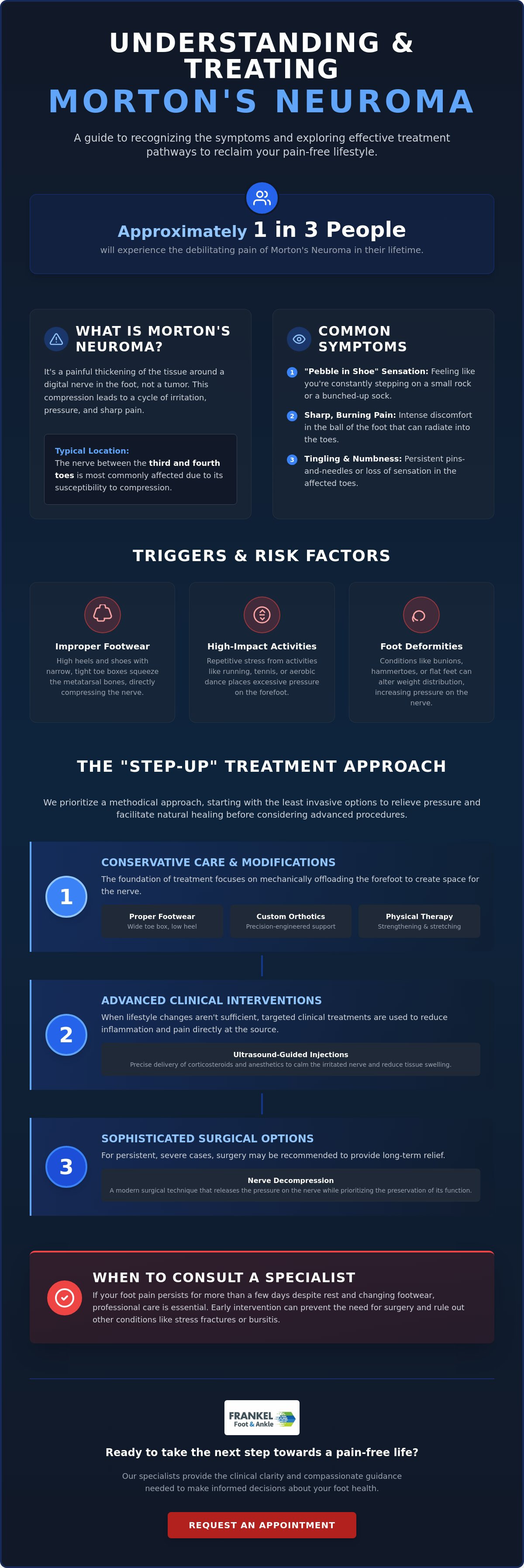
Approximately 1 in 3 people will experience the debilitating sensation of Morton's neuroma at some point in their lives, making the search for effective morton's neuroma treatment a priority for many. If you're struggling with sharp, radiating pain between your third and fourth toes, you understand how quickly this condition can strip away your independence. It's more than just a minor annoyance; it's the persistent numbness and the feeling of a permanent pebble in your shoe that stops you from exercising or wearing the footwear you love.
We believe that no one should have to compromise their quality of life due to chronic nerve compression. By exploring the most advanced clinical and conservative options available today, you can move toward immediate pain relief and restore your ability to walk without hesitation. Our goal is to provide you with the clinical clarity and compassionate guidance needed to make informed decisions about your foot health.
This article provides a methodical overview of the current medical landscape, ranging from custom orthotic adjustments and advanced injection therapies to sophisticated surgical decompression. You'll gain a comprehensive understanding of how to navigate your recovery journey, comparing non-surgical and surgical paths to reclaim your active, pain-free lifestyle.
Key Takeaways
- Recognize the hallmark signs of nerve compression, including persistent tingling and the sensation of a bunched-up sock inside your footwear.
- Explore the methodical "step-up" approach to morton's neuroma treatment, which prioritizes non-invasive modifications to relieve pressure on the digital nerve.
- Discover how specialized tools like custom orthotics and metatarsal pads mechanically offload the forefoot to facilitate natural healing and mobility.
- Understand the importance of advanced diagnostic imaging to ensure your symptoms aren't caused by other conditions like bursitis or stress fractures.
- Learn about sophisticated surgical options, such as nerve decompression, that offer long-term relief while prioritizing the preservation of nerve function.
What is Morton’s Neuroma? Recognizing the Symptoms
Morton’s neuroma isn't actually a tumor, despite what the name might suggest. It's a benign but intensely painful thickening of the tissue that surrounds the digital nerve, typically developing between the third and fourth metatarsal heads. In this specific area of the foot, the nerve is highly susceptible to repetitive compression and irritation. As the protective tissue thickens in response to this stress, it creates a cycle of pressure that results in symptoms ranging from a dull ache to sharp, burning sensations. Understanding this underlying anatomy is the first step toward finding an effective Morton's neuroma treatment.
Patients often describe the hallmark sensation as having a "bunched-up sock" or a small pebble stuck in their shoe, even when their footwear is perfectly clear. You might experience tingling that radiates into your toes or a persistent numbness that lingers long after you've removed your shoes. If left unaddressed, the condition can lead to permanent nerve desensitization. We often see individuals who have subconsciously shifted their weight for months to avoid the pain, which unfortunately creates secondary issues in the ankle, knee, or hip due to an altered gait.
Common Triggers and Risk Factors
Your choice of footwear plays a significant role in nerve irritation. High-heeled shoes and narrow toe boxes squeeze the metatarsal bones together, trapping the nerve in a vice-like grip. High-impact athletic activities like running, tennis, or aerobic dancing also contribute by placing repetitive stress on the forefoot. Additionally, existing foot deformities such as bunions or hammertoes can alter the natural distribution of your weight, shifting excessive pressure onto the vulnerable nerve area. Identifying these triggers early allows for more effective management before the nerve thickening becomes irreversible.
When to Consult a Foot Specialist
It's time to seek professional care if your foot pain persists for more than a few days despite switching to roomier shoes or resting. Early intervention is crucial because it often allows for conservative morton's neuroma treatment that can prevent the need for surgical excision later. If you're seeking comprehensive foot pain relief, a specialist can provide the precise diagnosis needed to rule out similar issues like stress fractures or bursitis. Our diagnostic process ensures that your treatment plan addresses the root cause of your discomfort rather than just the symptoms.
Non-Surgical Morton’s Neuroma Treatment Options
We utilize a methodical "step-up" approach to morton's neuroma treatment, ensuring that we explore every conservative avenue before considering more invasive measures. This strategy begins with mechanical corrections designed to alleviate pressure on the sensitive digital nerve. Custom orthotics and metatarsal pads serve as foundational tools in this process. They mechanically offload the forefoot, spreading the metatarsal heads to create more space for the nerve to heal. Unlike generic over-the-counter inserts, custom solutions, such as those from Footfall Podiatry, are precision-engineered to match your unique foot architecture, providing targeted support where you need it most.
Physical therapy and targeted stretching also play a critical role in long-term recovery. By strengthening the intrinsic muscles of the foot and improving flexibility, you can stabilize the forefoot structure and prevent the condition from recurring. This holistic focus on foot health helps patients transition from acute pain to sustained mobility.
Footwear Modifications That Actually Work
The ideal shoe for managing nerve compression should include several specific features:
- A wide toe box that allows toes to splay naturally without lateral compression.
- A low heel to minimize the weight-bearing pressure placed on the forefoot.
- Robust arch support to stabilize the foot's structural integrity.
Many people believe in "breaking in" tight or narrow shoes, but for those with a neuroma, this is a dangerous myth that only deepens the nerve injury. Metatarsal bars are specialized shoe modifications that shift your weight-bearing load away from the nerve and onto the shafts of the metatarsal bones.
Advanced Non-Invasive Clinical Interventions
When lifestyle changes aren't enough, we transition to clinical interventions. We often utilize ultrasound-guided injections to deliver corticosteroids and local anesthetics with high precision. This accuracy is vital for a successful Morton's neuroma diagnosis and treatment plan. While steroids effectively reduce acute inflammation, we are mindful of the risks associated with over-reliance, such as the thinning of the protective fat pad on the ball of the foot. It's also helpful to distinguish these therapies from laser toenail fungus treatment, which targets localized infection in the nail bed rather than deeper nerve tissue. If conservative steps haven't provided the relief you need, you can explore specialized foot pain relief options with our clinical team.
Specialized Clinical Solutions at Frankel Foot & Ankle
Diagnostic excellence is the cornerstone of our approach. Before initiating morton's neuroma treatment, we conduct a meticulous physical examination combined with high-resolution imaging to rule out competing diagnoses such as stress fractures or bursitis. This precision ensures that we're addressing the actual source of your nerve pain rather than applying a generalized solution. Our commitment to accuracy allows us to tailor a recovery plan that respects your individual needs and lifestyle goals.
When conservative measures have been exhausted, we offer sophisticated surgical interventions that prioritize the preservation of nerve function. Advanced relief for nerve pain is often achieved through nerve decompression, a technique that addresses the underlying pressure without the necessity of removing the nerve itself. We apply the same meticulous precision found in our scarless bunion surgery to every neuroma procedure we perform. This philosophy of care focuses on long-term results and patient well-being above all else.
Minimally Invasive Surgical Approaches
Traditional neurectomy involves the complete removal of the affected nerve, which can lead to permanent numbness or the development of a painful "stump neuroma." In contrast, our minimally invasive decompression involves releasing the tight ligament surrounding the nerve to alleviate pressure. This method utilizes smaller incisions, which typically results in less scarring, reduced post-operative pain, and a significantly faster return to your daily activities. By focusing on ligament release, we maintain the sensory integrity of your foot while eliminating the source of irritation.
Local Access to Expert Podiatric Care
Accessing a high level of specialized care shouldn't require a long journey. We provide advanced diagnostics and morton's neuroma treatment at our locations in Middletown, Katonah, and Milford. During a consultation with Dr. Marc Frankel, you'll experience a methodical and compassionate evaluation where every detail of your foot health is addressed. We invite you to schedule a consultation at Frankel Foot & Ankle Center to discover a personalized path toward a pain-free life.
Restore Your Mobility and Step Forward Without Pain
Living with the persistent discomfort of nerve compression shouldn't be your permanent reality. By recognizing early symptoms and engaging in a methodical morton's neuroma treatment plan, you can regain the independence you thought was lost. From the initial diagnostic imaging to the implementation of custom mechanical supports, every step we take is designed to alleviate pressure and facilitate natural healing. You've learned that early intervention is the most effective way to avoid permanent nerve damage and secondary gait issues.
Our team provides a balance of clinical professionalism and genuine warmth to ensure you feel supported throughout your recovery. Dr. Marc Frankel specializes in progressive, minimally invasive, and scarless surgical techniques that prioritize your long-term comfort and functional results. With convenient Tri-State locations across New York and Pennsylvania, specialized care is accessible and close to home. We encourage you to Schedule Your Appointment at Frankel Foot & Ankle Center to find the advanced relief you deserve. It's time to leave the "pebble in your shoe" behind and walk with confidence again.
Frequently Asked Questions
How can I tell if I have Morton’s neuroma or just a sore foot?
You can distinguish Morton's neuroma from general soreness by the specific location and nature of the discomfort. While general foot fatigue often feels like a dull ache across the entire sole, a neuroma typically produces sharp, burning, or radiating sensations specifically between the third and fourth toes. Many patients also report the distinct feeling of a "pebble in the shoe" or a bunched-up sock that doesn't resolve with rest or simple massage.
Is surgery the only way to permanently cure a Morton’s neuroma?
Surgery isn't the only solution, as many patients find lasting relief through a methodical "step-up" approach to morton's neuroma treatment. Conservative therapies, such as custom-molded orthotics and ultrasound-guided injections, effectively reduce inflammation and mechanically offload the nerve. While surgical decompression is a sophisticated option for refractory cases, we always prioritize non-invasive modifications to alleviate pressure and restore your mobility without the need for an operating room.
How long does it take to recover from Morton's neuroma treatment?
Recovery timelines vary significantly based on whether you're pursuing conservative management or a minimally invasive surgical procedure. For non-surgical interventions like orthotic adjustments, you might feel an improvement in your comfort levels within days. If you undergo a nerve decompression, most patients return to light activity and supportive footwear within two to three weeks, though complete healing of the deep tissue typically requires a few months of dedicated care.
Can I still exercise if I have a neuroma in my foot?
You can continue to stay active, but it's essential to modify your routine to avoid exacerbating the nerve compression. High-impact activities that place repetitive stress on the forefoot, such as running or court sports, should be replaced with low-impact alternatives like swimming or stationary cycling. Wearing shoes with a wide toe box and excellent arch support during your workouts will help protect the nerve and prevent the condition from worsening during your recovery.


