

Imagine stepping out of bed only to feel a sharp, electric shock radiating through your toes, or the persistent sensation that a small pebble is permanently lodged in your sock. For many, this isn't just a temporary discomfort. It's the daily reality of nerve compression that requires a specialized morton's neuroma treatment approach. You've likely tried switching shoes or resting your feet, yet the numbness and burning between your third and fourth toes continue to restrict your lifestyle. It's deeply frustrating when even your favorite footwear feels like a source of agony. We understand that this pain affects your ability to exercise, work, and enjoy life.
Finding relief doesn't always mean heading straight to the operating room. You can reclaim your mobility and live without that constant, radiating pain through a structured, clinical methodology. We're committed to guiding you from initial diagnosis to long-term recovery with precision and care. This guide explores the full spectrum of modern relief, from specialized orthotics and ultrasound-guided corticosteroid injections to advanced surgical decompression. You'll gain a clear understanding of both conservative and clinical options, providing a definitive roadmap to walking pain-free once again.
Key Takeaways
- Learn how to identify the hallmark signs of nerve thickening, such as the persistent "bunched-up sock" sensation and radiating digital pain.
- Discover a methodical "step-up" approach to morton's neuroma treatment, starting with non-invasive modifications like custom orthotics to alleviate pressure.
- Understand the importance of diagnostic precision in ruling out similar conditions like stress fractures to ensure your recovery plan is accurate.
- Explore sophisticated clinical solutions, including nerve decompression surgery, which offers a modern alternative to traditional nerve removal.
- Gain the knowledge necessary to transition from chronic discomfort to restored mobility through a combination of expert guidance and advanced medical techniques.
What is Morton’s Neuroma? Recognizing the Symptoms
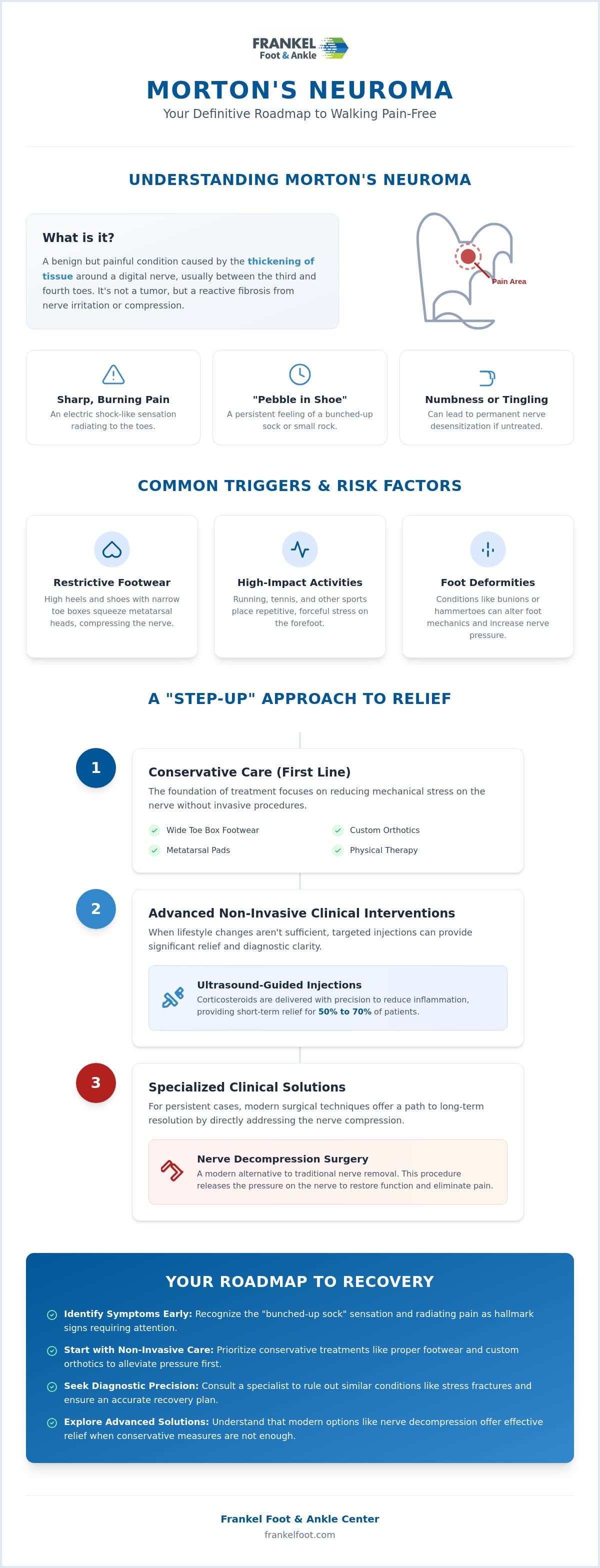
Morton’s neuroma is a benign yet debilitating condition characterized by the thickening of the tissue surrounding the digital nerve leading to your toes. To understand What is Morton's Neuroma?, one must look at how the foot responds to repetitive irritation or compression. It isn't a tumor in the traditional sense, but rather a reactive fibrosis of the nerve sheath. Patients often describe a sharp, burning sensation or the feeling that they're stepping on a marble. This "bunched-up sock" sensation typically occurs between the third and fourth metatarsal heads, where the nerve is most vulnerable to being pinched by the surrounding bone and ligament structures.
If left unaddressed, persistent pressure can lead to permanent nerve desensitization or chronic neuropathy. Seeking early morton's neuroma treatment is essential to prevent these long-term complications. When the nerve remains under constant stress, the body continues to build protective tissue; this ironically increases the pressure and worsens the symptoms over time. What starts as a minor annoyance can quickly transition into a significant barrier to your daily mobility.
Common Triggers and Risk Factors
Several factors contribute to the development of this nerve compression. High-heeled shoes or footwear with a narrow, restrictive toe box are frequent culprits, as they force the metatarsal heads together and squeeze the nerve. High-impact athletic activities, such as running or tennis, also play a role by placing repetitive, forceful stress on the forefoot. Additionally, existing foot deformities like bunions or hammertoes can shift your gait and redistribute pressure, making the digital nerve far more susceptible to injury.
When to Consult a Foot Specialist
You should consult a specialist if your foot pain persists for more than a few days despite switching to roomier shoes or reducing your activity levels. Early intervention is the key to avoiding invasive surgical excision later on. A dedicated professional can provide Comprehensive Foot Pain Relief: From Home Care to Advanced Specialist Solutions to ensure you return to your active lifestyle. Prompt morton's neuroma treatment allows for conservative measures to be much more effective, preserving the natural function of your foot and preventing the need for more complex interventions.
Non-Surgical Morton’s Neuroma Treatment Options
For most patients, the journey toward recovery begins with a conservative, methodical "step-up" approach designed to reduce mechanical stress on the nerve. This strategy prioritizes the least invasive modifications first, allowing the body to heal without the immediate need for surgical intervention. Effective morton's neuroma treatment often starts with mechanical changes that immediately reduce the burden on the digital nerve. Many clinical guidelines, including those for Non-Surgical Morton’s Neuroma Treatment Options, suggest that conservative measures provide significant relief for up to 50% of patients.
Custom orthotics and metatarsal pads serve as foundational tools in this process. They are meticulously engineered to mechanically offload the affected nerve by spreading the metatarsal heads and restoring proper foot alignment. This structural correction is vital because it addresses the root cause of the irritation rather than just masking the symptoms. Complementing these tools, physical therapy and targeted stretching help strengthen the foot’s intrinsic architecture, creating a more resilient environment that prevents the recurrence of symptoms.
Footwear Modifications That Actually Work
Selecting the right footwear is often the most impactful change a patient can make. The ideal shoe features a wide toe box that allows the toes to splay naturally, a low heel to prevent forward pressure, and excellent arch support. It's a dangerous myth that tight shoes can be "broken in" over time; in reality, forcing your foot into restrictive footwear only compounds the nerve damage. Metatarsal bars are also highly effective, as they are specifically designed to shift the weight of your stride away from the sensitive nerve area.
Advanced Non-Invasive Clinical Interventions
When lifestyle changes aren't enough, clinical injection therapies provide a more direct method of morton's neuroma treatment. Utilizing ultrasound guidance ensures that corticosteroids and local anesthetics are delivered with extreme diagnostic and therapeutic precision. These injections provide short-term relief for approximately 50% to 70% of patients, offering a vital window to implement long-term structural changes. While effective, we carefully monitor the frequency of these injections to avoid risks like fat pad thinning, which can leave the ball of the foot less protected. These interventions focus on nerve inflammation, which is a distinct therapeutic target compared to laser toenail fungus treatment that addresses dermal pathogens. If you're struggling to find the right balance of relief, our team provides personalized foot pain relief strategies tailored to your specific anatomy.
Specialized Clinical Solutions at Frankel Foot & Ankle
Achieving a successful outcome begins with diagnostic precision. At our practice, we utilize a combination of detailed physical examinations and advanced imaging to ensure an accurate diagnosis. It's vital to rule out mimicking conditions such as stress fractures or bursitis before finalizing a plan for morton's neuroma treatment. This rigorous assessment ensures that every patient receives a strategy tailored to their specific pathophysiology. We apply the same level of technical skill and dedication to nerve care as we do to our scarless bunion surgery, prioritizing both functional recovery and aesthetic integrity.
Our philosophy centers on Advanced Relief for Nerve Pain through a patient-centered recovery model. For patients requiring specialized neurological intervention, Mustafa Hammad MD offers over 21 years of expertise in managing complex nerve conditions and chronic pain. We focus on clear communication and meticulous surgical technique to instill confidence throughout your journey, ensuring that no detail is overlooked in your transition back to a pain-free life.
Minimally Invasive Surgical Approaches
When conservative measures prove insufficient, we often recommend nerve decompression surgery as a sophisticated alternative to traditional methods. Unlike a neurectomy, which involves removing the nerve entirely, decompression focuses on releasing the tight ligament that is pinching the nerve tissue. This approach offers several distinct advantages:
- Smaller incisions that result in less visible scarring and tissue disruption.
- Reduced post-operative pain and a significantly faster return to your favorite activities.
- Prevention of "stump neuromas," a painful complication often associated with total nerve removal.
Local Access to Expert Podiatric Care
Patients in Middletown, Katonah, and Milford have direct access to these advanced methodologies. Dr. Marc Frankel leads a methodical consultation process that places your individual needs and long-term health at the forefront of every interaction. We don't just treat the immediate symptoms; we work to restore your total mobility and quality of life. If you're ready to move past the "pebble in your shoe" sensation, we invite you to Schedule a consultation at Frankel Foot & Ankle Center to discover your personalized path to morton's neuroma treatment and lasting relief.
Reclaiming Your Active Lifestyle
You don't have to endure the persistent burning and numbness of nerve compression indefinitely. By understanding the progression from conservative footwear modifications to advanced clinical interventions, you can take a decisive step toward lasting recovery. Effective morton's neuroma treatment is a methodical process that prioritizes both diagnostic excellence and progressive medical methodology. Whether your specific path involves custom orthotics to mechanically offload pressure or sophisticated nerve decompression to restore function, our focus remains entirely on your long-term comfort and mobility.
Dr. Marc Frankel and our dedicated team specialize in these minimally invasive and scarless surgical techniques, ensuring you receive high-level expertise with a compassionate, patient-centered approach. With convenient Tri-State locations across New York and Pennsylvania, expert care is always accessible when you're ready to address your physical concerns. We invite you to Schedule Your Appointment at Frankel Foot & Ankle Center to begin your personalized consultation. We're here to guide you through every stage of your recovery, helping you return to the activities you love without the burden of foot pain.
Frequently Asked Questions
How can I tell if I have Morton’s neuroma or just a sore foot?
You can distinguish Morton’s neuroma from general soreness by the specific nature and location of the discomfort. General foot fatigue usually dissipates with rest, whereas a neuroma causes a persistent, sharp sensation localized between the third and fourth toes. Look for the hallmark "pebble in the shoe" feeling or electric-like tingling that radiates into your toes. If the numbness persists even after you've removed your shoes, it's likely a nerve issue rather than simple muscle strain.
Is surgery the only way to permanently cure a Morton’s neuroma?
Surgery isn't the only solution, as many patients find long-term relief through a methodical, conservative approach. A successful morton's neuroma treatment plan often includes custom orthotics to offload pressure and ultrasound-guided injections to manage acute inflammation. These non-surgical interventions provide relief for approximately 50% of patients without the need for an operation. We only consider surgical decompression after these initial measures fail to restore your mobility or comfort.
How long does it take to recover from Morton's neuroma treatment?
Recovery timelines vary depending on whether you're utilizing conservative or surgical interventions. Non-invasive measures like footwear changes provide immediate comfort, though full resolution of inflammation may take several weeks of consistent care. If you undergo minimally invasive decompression surgery, most patients return to light activity and comfortable walking within a few weeks. Our goal is always to facilitate a rapid, safe recovery that allows you to resume your daily routine with confidence.
Can I still exercise if I have a neuroma in my foot?
You can still exercise, but you must modify your activities to avoid exacerbating the nerve compression. High-impact sports like running or tennis often increase pressure on the forefoot, so transitioning to low-impact options like swimming or cycling is often beneficial. Incorporating professional morton's neuroma treatment into your routine, such as using metatarsal pads during your workouts, helps protect the digital nerve. This allows you to maintain your fitness levels while your foot heals.


