
Imagine reaching for closed-toe shoes on a beautiful summer day because you feel embarrassed by thick, yellowed nails. You've likely spent months applying messy lacquers that never seem to penetrate the nail bed, only to find the infection remains. This cycle of frustration is why more patients are turning to nail fungus and laser treatment as a sophisticated alternative to traditional methods. Onychomycosis accounts for up to 50% of all nail diseases, yet many people struggle in silence with physical discomfort while walking or the social stigma of discoloration.
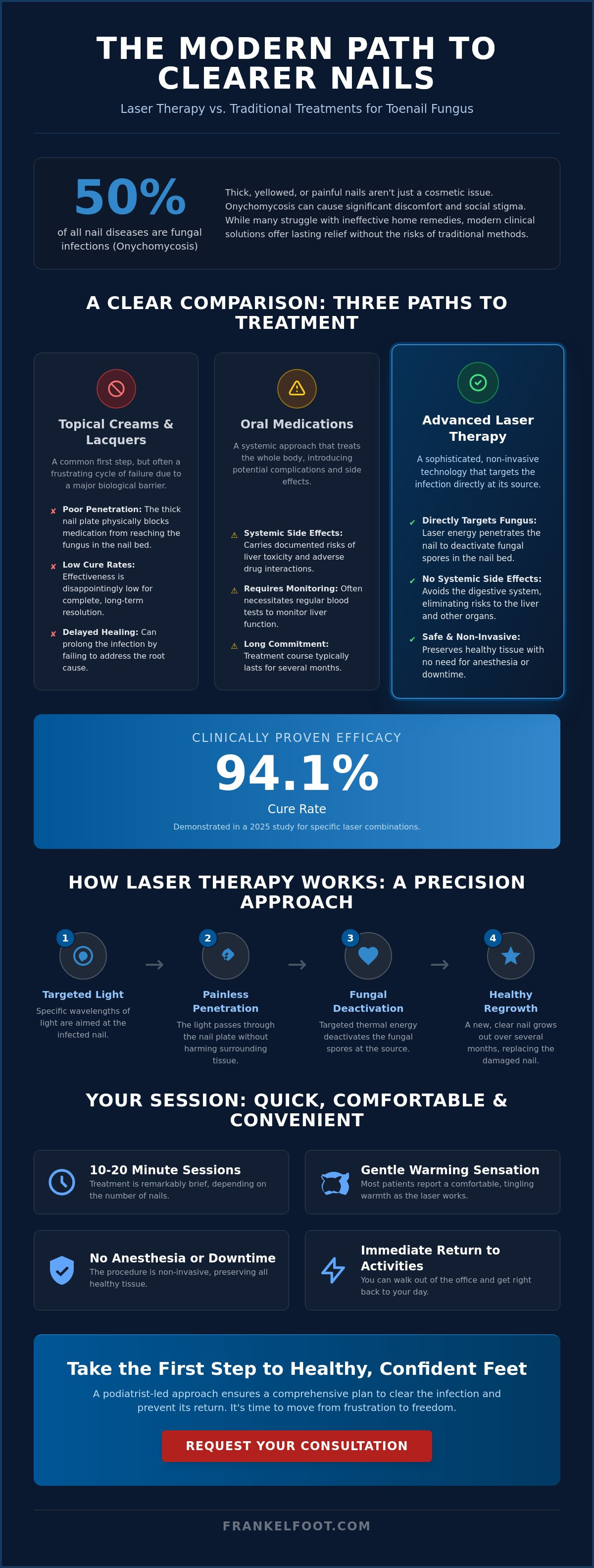
We understand that you want a solution that actually works without the systemic risks of oral medications, such as potential liver damage. This article will help you discover how advanced laser therapy compares to traditional antifungal treatments to help you achieve healthy, fungus-free toenails. We'll examine recent clinical data, including a 2025 study showing a 94.1% cure rate for certain laser combinations, and explain why this precise, non-invasive technology is the progressive choice for lasting relief. By understanding the science behind these modern advancements, you can make an informed decision for your long-term health and confidence.
Key Takeaways
- You'll learn why traditional topical lacquers often fail to penetrate the nail plate and how laser technology offers a more effective pathway to recovery.
- Understand the clinical advantages of nail fungus and laser treatment, which utilizes targeted thermal energy to deactivate fungal spores while preserving healthy tissue.
- Discover a safer, non-invasive alternative to oral medications that eliminates the risk of systemic side effects like liver toxicity.
- Explore how a podiatrist-led approach in Middletown and Milford ensures a comprehensive plan for both clearing the infection and preventing its return.
Nail Fungus and Laser Treatment vs. Traditional Methods
Onychomycosis is a persistent fungal infection that affects 50% of adults by age 70. While many people initially view thickened or yellowed nails as a minor cosmetic issue, the condition often progresses into a painful ailment that makes wearing shoes or walking difficult. When seeking a path to recovery, comparing traditional protocols to modern nail fungus and laser treatment reveals why standard approaches frequently fail to deliver lasting results. We help patients transition from the frustration of failed home remedies to the confidence of clinical precision.
The Limitations of Antifungal Creams and Lacquers
Topical solutions and over-the-counter lacquers are common starting points for patients, yet they face a significant biological obstacle. The thick nail plate acts as a dense physical barrier, preventing liquid medications from reaching the active fungal colonies residing deep within the nail bed. Because these treatments cannot effectively penetrate the keratinized structure, complete cure rates remain disappointingly low. Rather than continuing with self-treatment that often delays genuine healing, securing a professional diagnosis at our home page is the most effective way to address the underlying infection.
Laser Therapy: A Non-Invasive Clinical Alternative
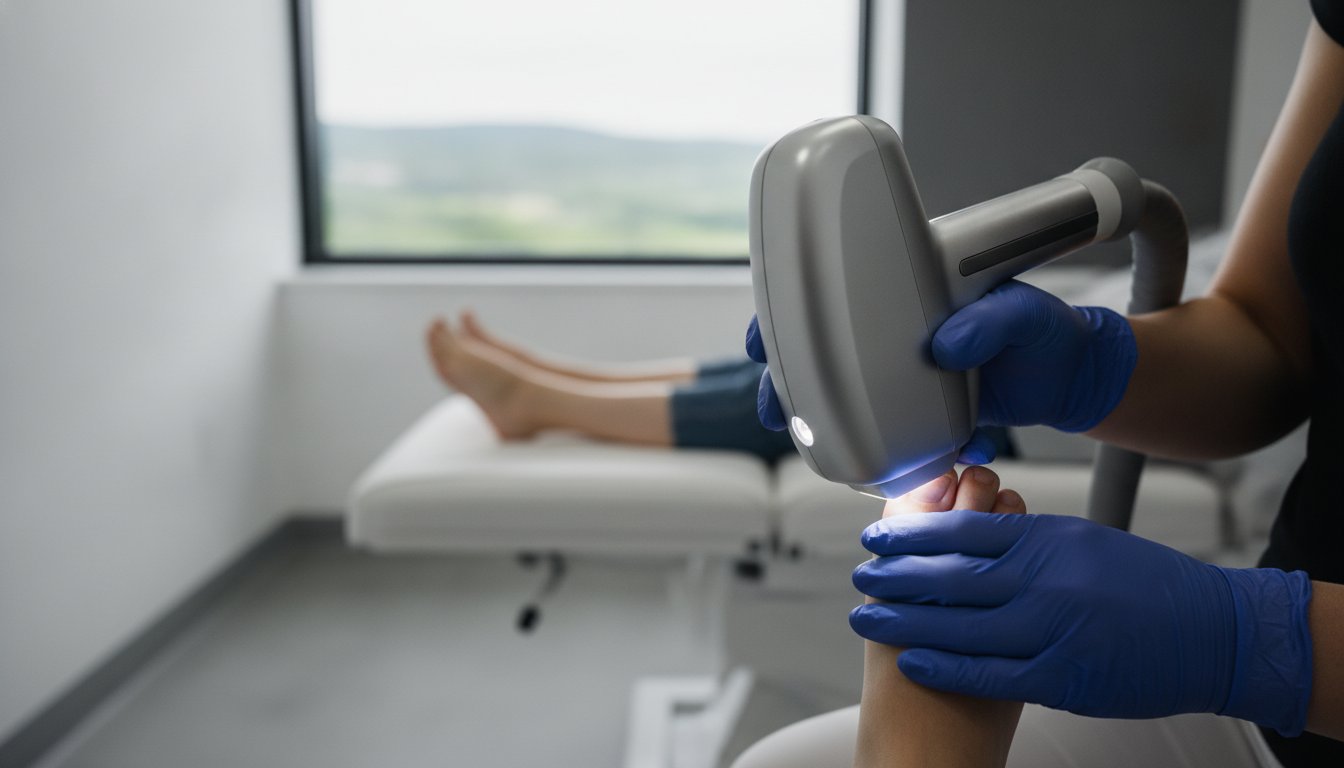
Oral medications represent another traditional route, but they require a commitment of several months and carry documented risks of liver toxicity and complex drug interactions. These systemic concerns often necessitate regular blood monitoring, which can be burdensome for many individuals. In contrast, nail fungus and laser treatment provides a sophisticated, non-invasive alternative that bypasses the digestive system entirely. By utilizing specific wavelengths of light, the laser reaches fungal pathogens directly through the nail plate without damaging the surrounding healthy tissue. It's an ideal choice for patients with pre-existing health conditions who cannot safely tolerate oral pills. This methodology allows us to move from merely managing symptoms to actively deactivating the infection at its source, ensuring a more thorough and comfortable recovery process.
How Laser Removal of Toenail Fungus Actually Works
Understanding the biological mechanism is essential for patients seeking nail fungus and laser treatment. Unlike topical creams that stay on the surface, advanced medical lasers utilize specific wavelengths of light to penetrate the nail plate and generate targeted thermal energy. This heat effectively deactivates fungal spores while ensuring the surrounding skin and healthy nail tissue remain completely unharmed. It's a sophisticated process that treats the infection at its source without the need for systemic drugs.
The Science of Thermal Deactivation
The efficacy of this technology is supported by a systematic review and meta-analysis, which highlights how laser therapy bypasses the nail barrier to address pathogens directly at the nail bed. This clinical approach is detailed further in our guide regarding How Laser Removal of Toenail Fungus Actually Works. Because the procedure is localized and non-invasive, it doesn't require anesthesia or any post-treatment downtime; you can return to your daily activities immediately after leaving the office.
What to Expect During Your Clinical Session
We prioritize your comfort throughout the entire process. Patients often describe the sensation as a gentle warming or a light tingling as the laser passes over the affected area. Most clinical sessions are remarkably brief, typically lasting between 10 to 20 minutes depending on the number of nails requiring attention. To ensure the laser can penetrate the keratin effectively, we advise patients to remove all nail polish prior to their appointment. The laser promotes the growth of a new, clear nail plate over several months as the healthy nail gradually replaces the damaged tissue. If you're ready to see visible improvement, you can explore our specialized laser for fungal toenails to begin your journey toward healthier feet.
Choosing Advanced Laser Therapy in Middletown and Milford
Selecting the right path for recovery requires more than just access to technology. It demands a podiatrist-led approach where the underlying cause of the infection is accurately identified and addressed. Dr. Frankel stands as an authoritative leader in progressive podiatric medicine, ensuring that each patient receives a tailored plan for recovery. This clinical expertise is reinforced by a systematic review on laser treatment efficacy, which confirms that laser interventions provide a viable, high-success alternative to traditional regimens. With local access in Middletown, NY, Katonah, NY, and Milford, PA, maintaining a consistent treatment schedule is manageable and stress-free.
Long-Term Outcomes and Preventing Recurrence
While nail fungus and laser treatment effectively deactivates pathogens, the visual transformation is a gradual process. The laser deactivates the existing spores, but the old, damaged nail must grow out completely to be replaced by a clear, healthy plate. This transition requires patience and a commitment to rigorous post-treatment hygiene to prevent the recurrence of fungal spores. For detailed answers to common patient concerns regarding the healing timeline, you can explore our Toenail Fungus Cure Laser FAQ.
We recommend following this essential post-care checklist to protect your results:
- Apply antifungal sprays to all footwear daily to eliminate dormant spores.
- Wear moisture-wicking socks to keep the nail environment dry and inhospitable to fungus.
- Sanitize all nail grooming tools thoroughly after every use.
- Rotate your shoes to allow them to air out for at least 24 hours between wearings.
Schedule Your Consultation at Frankel Foot & Ankle Center
Achieving clearer nails begins with an accurate clinical diagnosis. Many conditions can mimic the appearance of onychomycosis, so a professional evaluation is the first step toward effective nail fungus and laser treatment. At Frankel Foot & Ankle Center, we provide a full spectrum of specialized care, ranging from foot pain relief to advanced surgical corrections. Our team is dedicated to providing compassionate, high-level expertise that prioritizes your long-term health and mobility. We invite you to reach out and take the first step toward the healthy, fungus-free nails you deserve.
Restore Your Confidence with Progressive Foot Care
Transitioning from the limitations of traditional topicals to the precision of modern technology represents a significant advancement in podiatric medicine. You've seen how laser therapy effectively deactivates fungal pathogens at the nail bed while preserving the integrity of surrounding healthy tissue. This clinical approach eliminates the systemic risks often associated with oral medications, offering a safer path to recovery for patients with complex health needs. By choosing nail fungus and laser treatment, you're opting for a methodology that addresses the root cause of the infection without the burden of long-term side effects.
Achieving lasting results requires a partnership with an expert who understands the nuances of onychomycosis. Dr. Marc Frankel provides board-certified expertise combined with advanced non-invasive laser technology to help you reclaim the health of your feet. With convenient locations in Middletown, Katonah, and Milford, professional help at Frankel Foot & Ankle Center is always within reach. Don't let the embarrassment of discoloration or the discomfort of thickened nails hold you back any longer. Schedule your laser fungal toenail consultation at Frankel Foot & Ankle Center today and begin your journey toward clear, healthy growth. We're here to support you with both high-level skill and genuine care.
Frequently Asked Questions
Is laser treatment for toenail fungus painful?
Laser treatment is typically painless and doesn't require any local anesthesia. Most patients report a gentle warming sensation or a light tingling as the device moves across the nail plate. This non-invasive approach ensures you can walk out of the office and resume your daily activities immediately without any recovery time. Our clinical focus is on providing a comfortable experience while effectively deactivating the fungal pathogens responsible for the infection.
How many laser sessions will I need to see results?
The number of sessions required for effective nail fungus and laser treatment depends on the severity of your onychomycosis and the rate of your nail growth. While some patients see significant improvement after a single session, a series of one to five treatments is often recommended to ensure the infection is thoroughly addressed. Because the healthy nail must grow out to replace the damaged tissue, you'll observe the clearest results over several months.
Does insurance cover laser treatment for nail fungus?
Most private insurance plans and Medicare classify nail fungus and laser treatment as a cosmetic procedure, which means they don't typically cover the cost. However, Medicare may provide coverage for fungal nail care if you have underlying conditions like diabetes-related peripheral neuropathy or poor circulation that increase the risk of complications. It's always best to check with your specific provider to understand your benefits before beginning any new clinical regimen.
Can I wear nail polish after a laser treatment session?
You must remove all nail polish before your appointment so the laser can penetrate the nail plate effectively. Once the session is complete, you can technically reapply polish, but we often recommend waiting or using specialized antifungal lacquers. Traditional polishes can trap moisture against the nail bed, potentially creating an environment where fungal spores might thrive. Maintaining a clear nail allows you to monitor the healthy growth as it emerges from the base.


