


Imagine waking up at 3:00 AM because the inside of your ankle feels like it's on fire. It's not just a temporary cramp. It's a persistent, searing sensation that makes you wonder if you'll ever walk comfortably again. You're likely exhausted by the cycle of burning and tingling that turns every step into a challenge. It's deeply frustrating when simple activities feel impossible and you start searching for an effective tarsal tunnel syndrome treatment before the damage becomes permanent.
You deserve a medical solution that goes beyond temporary relief. We'll help you address the precise source of your nerve compression to stop further damage and restore your quality of life. This guide explores our comprehensive approach in Middletown, ranging from advanced non-surgical therapies to specialized surgical release techniques designed for lasting mobility and a clear roadmap for recovery.
Key Takeaways
- Identify the signs of posterior tibial nerve compression and understand why timely diagnosis is the first step toward stopping progressive nerve damage.
- Explore non-surgical tarsal tunnel syndrome treatment plans that utilize custom orthotics and targeted physical therapy to alleviate pressure on the ankle's nerves.
- Learn how specialized surgical release techniques provide a permanent solution for chronic cases by decompressing the nerve and restoring functional mobility.
- Establish a structured recovery roadmap that focuses on long-term relief, allowing you to return to daily activities without the interruption of burning sensations.
Understanding Tarsal Tunnel Syndrome and the Risks of Delayed Treatment
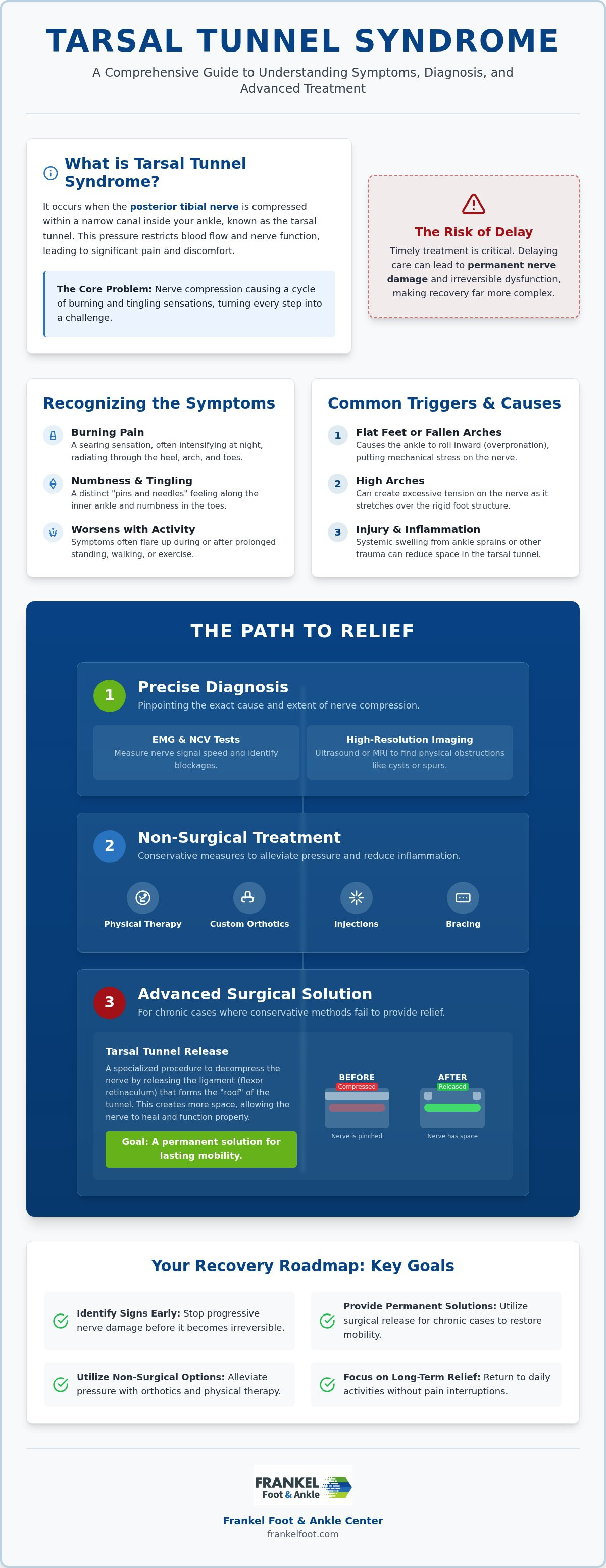
Tarsal Tunnel Syndrome occurs when the posterior tibial nerve becomes compressed as it passes through the narrow canal on the inside of the ankle. This structure, known as the tarsal tunnel, acts as a gateway for nerves, arteries, and tendons. When space within this tunnel is restricted, the nerve suffers from mechanical pressure and reduced blood flow.
Patients experience a vast spectrum of discomfort. This range often progresses from mild, intermittent tingling in the heel to debilitating burning sensations that radiate through the arch and into the toes. There's a vital window of opportunity where early tarsal tunnel syndrome treatment prevents permanent nerve scarring. Delaying care can lead to irreversible nerve dysfunction, making recovery much more complex.
Several biomechanical factors and injuries typically trigger this compression. We frequently see patients where the condition is exacerbated by:
- Flat feet or fallen arches that cause the ankle to roll inward.
- High arches that create excessive tension on the nerve.
- Systemic swelling or inflammation from previous ankle sprains.
Identifying the Symptoms of Tibial Nerve Compression
Recognizing the early red flags is essential for protecting your long-term mobility. Many patients report burning pain that intensifies at night, numbness in the toes, and a distinct "pins and needles" sensation along the inner ankle. These symptoms often worsen during prolonged standing, which is especially difficult for those in active work environments.
Chronic nerve pain carries a heavy emotional toll. It creates a constant state of anxiety regarding your next step. For those interested in learning more about managing nerve discomfort and conditions like sciatica, SciaticaZone.com offers helpful insights. Seeking a professional evaluation in Middletown provides the clarity you need to move forward with confidence and clinical precision.
Comprehensive Non-Surgical Tarsal Tunnel Syndrome Treatment Options
Most patients begin their recovery journey with conservative measures. Effective tarsal tunnel syndrome treatment starts with activity modification to reduce mechanical stress on the posterior tibial nerve. Targeted physical therapy programs focus on nerve gliding exercises and strengthening the supporting structures of the foot. Custom orthotics are essential for those with overpronation; these devices realign the foot to eliminate the biomechanical pressure that causes nerve entrapment.
When inflammation is severe, medical interventions provide a necessary bridge to recovery. Corticosteroid injections can reduce swelling within the tunnel, offering significant ankle pain relief and immediate comfort. We also utilize specialized bracing to stabilize the joint. This prevents excessive motion that might further irritate the nerve during daily movement. This clinical overview of Tarsal Tunnel Syndrome highlights how these conservative steps often resolve symptoms before surgical consideration is necessary.
Diagnostic Excellence: Pinpointing the Cause of Your Foot Pain
Accurate tarsal tunnel syndrome treatment relies on precise diagnostics. We use Electromyography (EMG) and Nerve Conduction Velocity (NCV) tests to confirm the extent of nerve damage. These neurodiagnostic tools allow us to measure how well signals travel through the tibial nerve, identifying the exact location of the blockage.
High-resolution imaging, such as ultrasound or MRI, helps us identify physical obstructions like bone spurs or ganglion cysts. At Frankel Foot & Ankle, our diagnostic process is methodical and patient-centered, ensuring we address the root cause of your discomfort. If you're ready to find answers, our team is here to provide a structured consultation tailored to your specific needs.
Advanced Interventions and Surgical Solutions at Frankel Foot & Ankle
When conservative foot pain relief methods don't provide the necessary results, surgical intervention offers a definitive path toward recovery. Dr. Frankel specializes in Tarsal Tunnel Release, a procedure focused on decompressing the posterior tibial nerve. The surgical objective involves releasing the flexor retinaculum ligament, which creates the "roof" of the tunnel. By carefully opening this structure, we provide the nerve with the space it needs to heal properly. Before recommending this step, we often review the outcomes of injection treatments for tarsal tunnel to ensure all non-invasive options have been thoroughly exhausted.
Our practice utilizes advanced techniques that prioritize minimal discomfort and optimal healing. For patients in Katonah and Milford, we provide specialized surgical expertise that addresses chronic nerve issues with clinical precision. This level of tarsal tunnel syndrome treatment ensures that every patient receives a plan as progressive as it is compassionate. From the initial consultation to the final follow-up, our team remains dedicated to your long-term success and functional independence.
Tarsal Tunnel Release: What to Expect During and After Surgery
Recovery is a methodical process designed to protect the integrity of the nerve as it regenerates. Patients typically begin with a period of non-weight bearing to ensure the surgical site stabilizes correctly. You'll then transition to a protective boot and eventually back to standard footwear. Post-operative physical therapy plays a vital role in this journey. These sessions restore strength and ensure the nerve heals without tension or restrictive adhesions. Our ultimate goal is a return to a life free from burning pain and the restoration of full, pain-free mobility through comprehensive tarsal tunnel syndrome treatment.
Restoring Your Mobility and Comfort
Living with the persistent burning and numbness of nerve compression can feel isolating, but effective relief is within reach. We've explored how early intervention and precise diagnostics form the foundation of successful tarsal tunnel syndrome treatment. Whether your path to recovery involves custom biomechanical support or a specialized surgical release, our team is dedicated to protecting your nerve health. Dr. Marc Frankel and our staff provide expert care for complex ankle sprain treatment and nerve conditions across our Middletown, Katonah, and Milford locations.
We prioritize long-term outcomes through a patient-centered approach that addresses both the physical and emotional aspects of chronic pain. Don't let nerve damage dictate your future or limit your daily activities. You can Schedule a Consultation for Tarsal Tunnel Relief today to begin your structured journey back to a pain-free life. We look forward to supporting your full recovery.
Frequently Asked Questions
How do I know if my foot pain is Tarsal Tunnel Syndrome or Plantar Fasciitis?
Plantar fasciitis usually causes sharp heel pain during the first steps of the morning. Tarsal tunnel syndrome presents with neurological symptoms like burning, tingling, or numbness that often worsens with activity or at night. While plantar fasciitis involves ligament inflammation, tarsal tunnel is a nerve compression issue. A clinical evaluation is necessary to distinguish between these two common causes of foot pain.
Can Tarsal Tunnel Syndrome go away on its own without medical treatment?
Tarsal tunnel syndrome rarely resolves without intervention because the underlying cause is typically mechanical compression. While resting might temporarily reduce symptoms, the pressure on the posterior tibial nerve often persists. Delaying professional tarsal tunnel syndrome treatment can allow the condition to become chronic. It's essential to address the root cause, such as biomechanical issues or inflammation, to achieve lasting relief and prevent recurrence.
What happens if Tarsal Tunnel Syndrome is left untreated for too long?
Leaving this condition untreated can lead to permanent nerve damage and muscle atrophy in the foot. Over time, chronic compression causes scarring within the nerve itself, resulting in constant numbness or a loss of motor function. This progression makes daily activities difficult and often requires more invasive surgical solutions. Seeking early care ensures you maintain functional mobility and avoid irreversible neurological dysfunction.
Is surgery for Tarsal Tunnel Syndrome considered a major procedure?
Tarsal tunnel release is a specialized surgical procedure but is typically performed on an outpatient basis. While it requires precision to decompress the nerve, it's less invasive than major joint reconstructions. The recovery involves a structured timeline from non-weight bearing to physical therapy. It's an effective tarsal tunnel syndrome treatment for chronic cases where conservative methods haven't provided the relief necessary for a high quality of life.


