


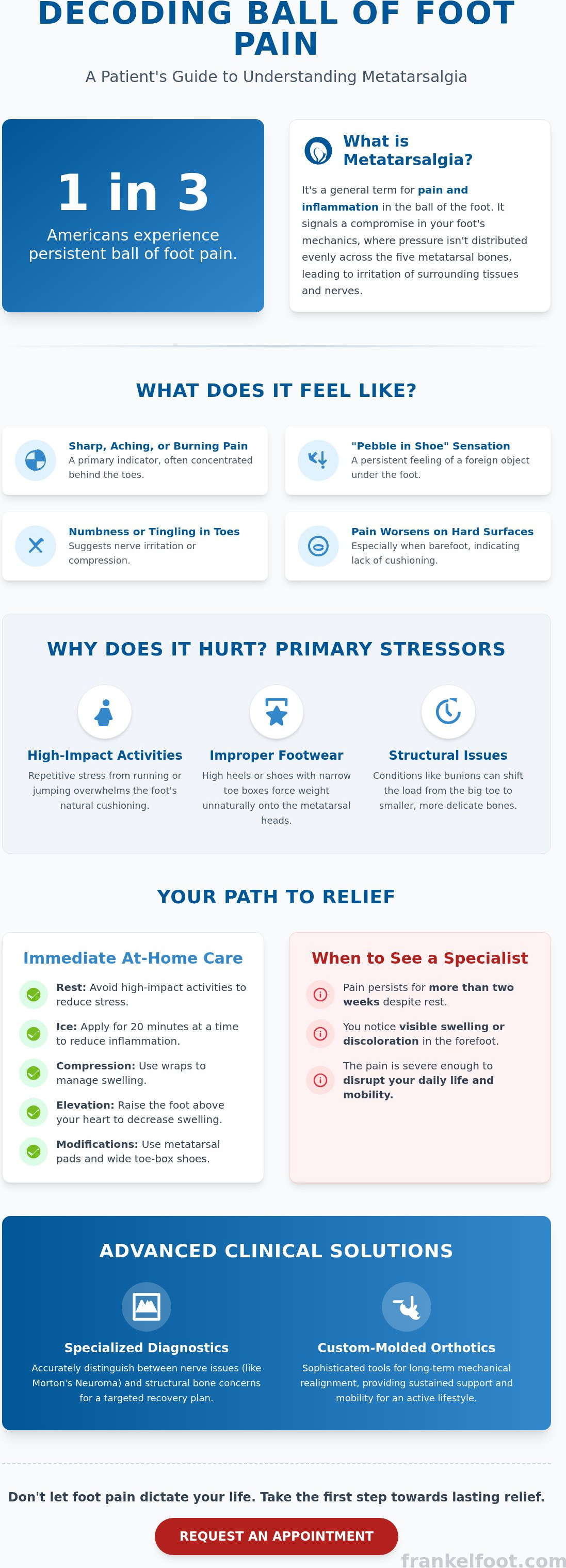
Did you know that approximately 33% of Americans currently struggle with persistent ball of foot pain? For many, this discomfort manifests as a sharp, burning sensation or the nagging feeling that a small pebble is permanently lodged in their shoe. We understand how these symptoms can disrupt your daily life, from hindering your exercise routines to making simple walks across a hardwood floor feel unbearable. You deserve a clear path back to a life where movement is not defined by physical distress.
This article provides a comprehensive look at the mechanical and biological factors contributing to your forefoot discomfort. We'll guide you through the process of identifying the source of your pain, whether it stems from simple mechanical overload or more complex conditions like metatarsalgia. You'll discover a range of solutions, from immediate at-home remedies to advanced clinical diagnostics and specialist care. By the end of this guide, you'll understand how to reduce inflammation and implement the necessary steps to return to walking and running without pain. Our goal is to move beyond temporary fixes and focus on achieving the lasting health improvements you need to stay active and confident.
Key Takeaways
- Define the clinical symptoms of metatarsalgia and recognize the distinct sensations of inflammation in the forefoot.
- Pinpoint the primary mechanical stressors, from high-impact exercise to restrictive footwear, that trigger persistent ball of foot pain.
- Implement conservative, at-home strategies designed to mitigate acute discomfort and reduce localized inflammation.
- Learn how specialized clinical diagnostics accurately distinguish between nerve-related issues and structural bone concerns for a targeted recovery.
- Discover the benefits of custom-molded orthotics as a sophisticated tool for long-term mechanical realignment and sustained mobility.
What is Metatarsalgia? Understanding Ball of Foot Pain
Metatarsalgia isn't a single disease but rather a clinical symptom used to describe pain and inflammation in the forefoot. It functions as an umbrella term for various localized foot stresses that occur in the region just before your toes. While some might dismiss this as simple tiredness, persistent ball of foot pain often signals that the delicate balance of your foot's mechanics is compromised. This discomfort can range from a dull, localized throb to a sharp, radiating heat that makes every step a challenge.
Your foot relies on five metatarsal bones to manage weight distribution during movement. These long bones connect your midfoot to your toes, acting as the primary lever for propulsion. When pressure isn't distributed evenly across these structures, the soft tissues and nerves surrounding them become irritated. This imbalance leads to a sensation often described as walking on a marble or a sharp, burning ache concentrated behind the second, third, or fourth toes.
It's vital to distinguish between transient soreness from a long day on your feet and chronic conditions that require specialist intervention. Temporary discomfort usually resolves with rest and ice. However, if the pain persists or intensifies, it may indicate a deeper mechanical misalignment or tissue damage. Seeking professional guidance helps ensure that a minor irritation doesn't progress into long-term mobility issues.
Common Symptoms of Forefoot Irritation
Recognizing the early signs of metatarsal stress is the first step toward effective recovery. Patients often report specific indicators that point toward clinical metatarsalgia:
- Sharp, aching, or shooting ball of foot pain.
- A persistent feeling like there's a pebble or fold in your sock.
- Numbness or tingling sensations in the toes.
- Increased sensitivity when walking barefoot on hard surfaces.
These symptoms typically peak during the 'push-off' phase of your stride. This is the moment when your forefoot bears the maximum load of your body weight. Identifying these patterns allows for a more precise approach to relief and long-term foot health.
Why Your Foot Hurts: Common Causes and At-Home Relief
Understanding the root of your discomfort requires looking at how you move and what you wear. High-impact activities like running or jumping place repetitive mechanical stress on the forefoot, leading to localized inflammation. This constant pounding can overwhelm the body's natural cushioning. Footwear also plays a critical role; high heels and shoes with narrow toe boxes force the foot into an unnatural position. This posture concentrates weight on the metatarsal heads rather than distributing it across the entire foot. When this pressure becomes excessive, you might also notice pain on top of foot near ankle as your body attempts to stabilize the joint under duress.
Structural issues like bunions exacerbate this problem significantly. A bunion often weakens the big toe's ability to bear weight during the push-off phase of walking. This shift forces the smaller, more delicate metatarsal bones to take on an increased load they aren't designed to handle, resulting in chronic ball of foot pain. Addressing these mechanical imbalances is essential for achieving lasting recovery.
Identifying the Source of Discomfort
It's important to distinguish between nerve and tendon issues to apply the correct treatment. Morton's Neuroma involves a thickening of the tissue around the nerves leading to the toes, creating a burning sensation. In contrast, Sesamoiditis is an inflammation of the tendons surrounding the small sesamoid bones under the big toe joint. Many patients find their ankles hurt because they subconsciously alter their gait to avoid putting weight on the painful area. This compensatory movement creates a secondary cycle of strain that impacts the entire lower limb.
Immediate Steps for Pain Management
For acute flare-ups, the R.I.C.E. method remains an effective starting point. Rest the foot, apply ice for 20 minutes several times a day, use compression wraps, and elevate the limb to reduce swelling. Temporary footwear modifications, such as switching to shoes with a wide toe box or using metatarsal pads, can provide immediate ball of foot pain relief by offloading the affected area. However, home remedies have limits. You should seek a professional consultation if you experience:
- Pain that persists for more than two weeks despite consistent rest.
- Visible discoloration or significant swelling in the forefoot.
- Difficulty performing basic daily activities or exercise routines.
- Numbness or tingling that spreads into the toes.
If conservative measures don't resolve the issue, seeking specialized foot pain relief ensures your recovery is guided by clinical expertise rather than guesswork.
Advanced Clinical Treatments for Persistent Foot Pain
When conservative measures fall short, sophisticated diagnostics become necessary to restore your quality of life. At Frankel Foot & Ankle, we utilize advanced imaging and clinical assessments to distinguish between nerve-related pathologies and structural bone issues. This precision ensures that your ball of foot pain is addressed with a strategy tailored to your specific anatomy. By identifying the exact source of mechanical overload, we can move beyond symptom management toward a definitive solution.
Custom-molded orthotics represent a primary long-term solution for mechanical realignment. Unlike generic inserts, these specialized devices are engineered from detailed impressions of your feet to redistribute weight away from the sensitive metatarsal heads. We also incorporate progressive options like laser fungal toenail treatment and dedicated pain therapy. These non-invasive technologies utilize targeted light energy to accelerate tissue repair and reduce acute inflammation, offering a modern alternative for those seeking rapid recovery without downtime.
For patients whose discomfort stems from structural deformities like bunions, minimally invasive surgery offers a transformative path. By correcting the underlying bone alignment through tiny incisions, we eliminate the primary driver of forefoot pressure. This surgical precision allows for a quicker return to weight-bearing activities while addressing the mechanical root of your distress.
The Frankel Approach to Lasting Relief
Our practice prioritizes scarless and painless interventions designed to optimize your healing journey. We believe that treating the root cause of your discomfort is the only way to achieve permanent foot pain relief. If you're a Middletown resident experiencing persistent ball of foot pain, don't wait for your body to develop compensation injuries in your ankles or knees. A professional evaluation provides the clarity and expertise needed to restore your mobility and get you back to the activities you love with confidence.
Reclaiming Your Mobility and Comfort
Identifying the specific cause of your ball of foot pain is the vital first step toward a life without physical limitations. Whether your discomfort arises from high-impact activities, improper footwear, or structural imbalances like bunions, understanding the mechanical root of the issue allows for a targeted recovery plan. By moving beyond temporary at-home remedies and embracing advanced clinical diagnostics, you can prevent secondary injuries in your ankles and knees. You deserve a treatment strategy that prioritizes long-term health rather than just temporary relief.
At Frankel Foot & Ankle, we specialize in progressive methodologies, from non-invasive laser therapy for pain management to scarless and painless surgical techniques. Our dedicated team serves patients in Middletown, NY; Katonah, NY; and Milford, PA, with a focus on achieving lasting health improvements and restored function. Schedule a consultation at Frankel Foot & Ankle Center for expert relief today. You don't have to navigate this journey alone; we're here to provide the specialized care and support you need to walk, run, and move with ease once again.
Frequently Asked Questions
Is ball of foot pain the same as a stress fracture?
No, while both conditions present in the forefoot, they represent different types of injury. Metatarsalgia is a broad term for inflammation and irritation of the soft tissues and metatarsal heads. A stress fracture is a specific hairline crack in one of the metatarsal bones caused by repetitive mechanical overload. While ball of foot pain is a shared symptom, a fracture typically presents with more localized swelling and intense tenderness directly over the bone structure.
Can wearing high heels cause permanent damage to the ball of my foot?
Prolonged use of high heels can lead to lasting structural changes by shifting nearly 75% of your body weight onto the delicate forefoot. This sustained pressure can cause the natural fat pad to thin over time, leading to chronic ball of foot pain and increasing the risk of developing bunions or hammertoes. Much like how specialized clinics such as Best Filler Clinic address volume restoration for facial contours, opting for footwear with lower heels and a supportive toe box helps mitigate these long-term risks and preserves the integrity of your foot's cushioning.
How do I know if I have Morton’s Neuroma or metatarsalgia?
Distinguishing between these conditions requires an assessment of the specific sensation you're experiencing. Metatarsalgia typically feels like a dull ache or the sensation of walking on a bruise in the forefoot. In contrast, Morton's Neuroma involves a thickening of the nerve tissue, which often produces sharp, electric sensations, burning, or numbness that radiates into the third and fourth toes. A professional diagnostic evaluation is essential to confirm which underlying pathology is present.
What are the best exercises to relieve pain on the top of the foot near the ankle?
Gentle stretching and strengthening can alleviate tension in the tendons connecting the ankle to the forefoot. Effective movements include calf stretches to reduce posterior tension and toe curls with a towel to strengthen the intrinsic muscles of the foot. Ankle circles and alphabet tracing also help maintain joint mobility. These exercises support better weight distribution, which ultimately reduces the strain that contributes to discomfort throughout the entire lower limb.


