


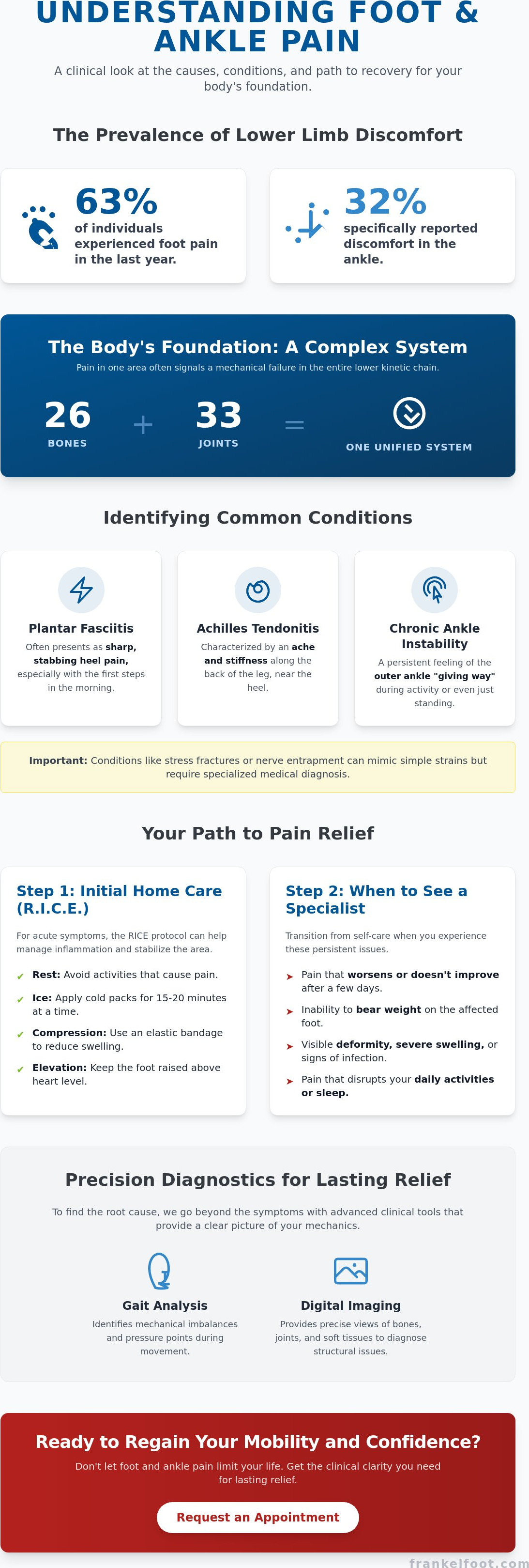
Recent data from 2025 reveals that 63% of individuals experienced foot pain within the last year, with 32% specifically reporting discomfort in the ankle. When you're managing persistent pain in ankles and feet, it's rarely just an isolated issue; rather, it's a mechanical signal that your foundation requires professional attention. This discomfort can turn simple activities like a morning walk or a regular exercise routine into a source of significant stress and physical limitation.
You've likely felt the frustration of waking up to intense morning stiffness or the confusion of trying to determine if your ache is a simple muscle strain or a deeper structural problem. It's common to feel hesitant about whether to keep resting or to book an appointment. We're here to provide the clinical clarity you need to regain your mobility and confidence. You'll learn to identify the underlying causes of your discomfort and discover actionable strategies for long term recovery. This article outlines the clear progression from home care to professional foot pain relief and ankle pain relief, ensuring you know exactly when it's time to consult a specialist.
Key Takeaways
- Understand how the intricate relationship between 26 bones and 33 joints creates a unified system where pain in ankles and feet often signals a failure in the lower kinetic chain.
- Learn to distinguish between common inflammatory issues like plantar fasciitis and more complex structural concerns such as stress fractures or nerve entrapment.
- Master the clinical application of the RICE protocol to effectively manage acute symptoms and stabilize the affected area during the initial phase of recovery.
- Discover how advanced diagnostic tools, including gait analysis and digital imaging, provide the precision required for sustainable foot pain relief.
- Recognize the specific physical milestones that indicate when it's time to transition from self-care to specialized medical intervention for lasting ankle pain relief.
The Interconnected Nature of Pain in Ankles and Feet
The human foot is a sophisticated marvel of biological engineering, consisting of 26 bones and 33 joints that work in a delicate, weight-bearing balance. When this system falters, the resulting pain in ankles and feet is rarely a localized event but rather a combined mechanical failure of the lower kinetic chain. We define the kinetic chain as the specific functional relationship between the foot, ankle, and leg alignment. This interconnectedness explains why an injury in the heel often manifests as ankle soreness; the body instinctively redistributes pressure to compensate for the primary site of inflammation. Understanding these Common Foot Conditions requires looking beyond the immediate ache to find the root cause within this integrated functional unit.
Why Foot and Ankle Pain Often Occur Together
Discomfort frequently bridges these two areas because of the way we move through our daily environments. Whether you're walking on the uneven terrain found in Milford or commuting through the busy streets of Middletown, your gait naturally shifts to avoid aggravating a sore spot. This subconscious compensation leads to secondary ankle strain as the surrounding muscles overwork to maintain stability. The Achilles tendon serves as the primary anatomical bridge between these regions, acting as a high-tension cable that transmits force from the heel to the lower leg. When foot mechanics are compromised, this tendon often bears the brunt of the imbalance, resulting in simultaneous pain in ankles and feet.
Anatomical Triggers: From Ligaments to Tendons
Identifying the source of distress involves differentiating between structural bone-related pain and soft tissue dysfunction. High-impact pressure on the talus and calcaneus bones can lead to stress fractures or joint degradation, while ligaments and tendons are more susceptible to acute sprains and chronic inflammation. From ligamentous tears to degenerative tendonitis, each condition requires a precise diagnostic approach to ensure long-term recovery. Restoring the foundational integrity of your feet is essential to alleviate the cascading effects of mechanical strain across the entire lower extremity.
Identifying Common Conditions: From Acute Injuries to Overuse
Identifying the specific origin of your discomfort is the essential first step toward recovery. While many people assume any sudden ache is a simple sprain, the reality is often more complex. Clinical experience shows that causes of foot pain range from localized inflammation to systemic mechanical shifts that cause pain in ankles and feet. Mapping these sensations to their anatomical source allows for a more targeted and effective treatment plan. Common symptom patterns include:
- Sharp morning heel pain: Often a hallmark sign of Plantar Fasciitis.
- Aching at the back of the leg: Frequently suggests Achilles Tendonitis or calf strain.
- Persistent outer joint instability: Commonly linked to Chronic Lateral Ankle Pain.
It's a mistake to categorize all pain in ankles and feet as minor soft tissue injuries. Conditions like stress fractures or nerve entrapment often masquerade as simple strains, yet they require entirely different clinical protocols for effective healing. Understanding why your ankle hurts when walking often reveals that the issue isn't just a weak joint, but a gait abnormality caused by an underlying foot condition. From diagnostic gait analysis to advanced digital imaging, modern podiatry offers the precision needed to uncover these hidden triggers.
Chronic vs. Acute: Understanding the Timeline of Pain
Acute injuries usually stem from sudden trauma, such as an impact or a fall, whereas chronic overuse develops gradually through repetitive stress. We see patients experiencing everything from sudden ligamentous tears to long-term joint degradation. Ignoring "minor" foot discomfort can lead to permanent ankle instability, as the body’s compensatory movements create new points of friction and strain throughout the lower leg.
When Foot Deformities Impact Ankle Health
Bunions are frequently misunderstood as mere cosmetic toe issues. In reality, they represent a significant structural shift that destabilizes the entire medial column of the foot. This misalignment forces the ankle to tilt into an unnatural position, creating a cycle of wear and tear on the joint cartilage. Modern bunion surgery can restore this mechanical balance, protecting your long-term joint health. If you're struggling with persistent discomfort, seeking specialized foot pain relief is the most reliable way to prevent these secondary complications and regain your mobility.
Comprehensive Strategies for Foot and Ankle Pain Relief
Managing acute pain in ankles and feet requires a structured approach that moves from immediate stabilization to long term mechanical correction. For sudden flare ups, we recommend the RICE protocol: Rest the affected limb, apply Ice for 20 minute intervals, use Compression bandages to manage swelling, and keep the foot Elevated above heart level. While these steps provide temporary comfort, they don't address the complex Foot Pain and Problems that often stem from deeper structural issues. Professional diagnostics, including high resolution digital X-rays and computerized gait analysis, are essential to identify whether your discomfort arises from bone alignment or soft tissue degradation.
At-Home Care and Lifestyle Adjustments
Daily habits significantly influence your recovery timeline. Selecting footwear that matches your specific biomechanics is a critical first step. Use this checklist when evaluating your shoes:
- Arch Support: Ensure the midsole provides firm resistance against collapse.
- Heel Stability: The heel counter should be rigid to prevent excessive rolling.
- Toe Box Width: There should be ample space to prevent nerve compression or bunion irritation.
Regularly performing targeted stretches for the plantar fascia and calf muscles helps maintain flexibility in the kinetic chain. These simple movements reduce the tension that often triggers morning stiffness and persistent pain in ankles and feet.
Advanced Clinical Solutions in Middletown and Beyond
There are times when conservative measures alone aren't sufficient to restore full mobility. When traditional methods fail, specialized ankle pain relief through non-invasive laser therapy can effectively reduce chronic inflammation and accelerate tissue repair. For structural deformities, modern podiatry has shifted toward minimally invasive surgical techniques designed for painless and scarless outcomes. At Frankel Foot & Ankle Center, we provide these advanced methodologies to patients in Middletown, Katonah, and Milford, ensuring that your journey toward recovery is met with the highest level of clinical expertise and compassionate care.
Restoring Your Foundation and Mobility
Your journey toward recovery begins with acknowledging that persistent pain in ankles and feet is a signal your body shouldn't ignore. We've explored how the intricate mechanics of your lower extremities require a holistic diagnostic approach, from identifying early inflammatory signs to understanding how structural shifts like bunions impact your overall alignment. By transitioning from basic at-home care to specialized clinical diagnostics, you can prevent minor discomfort from evolving into long term instability.
Dr. Marc Frankel and our dedicated team are committed to providing high level expertise through progressive, patient centered methodologies. We specialize in advanced treatments, including scarless and painless techniques, to ensure your path to relief is as comfortable as possible. With convenient locations in Middletown, Katonah, and Milford, expert care is always within reach. Don't let physical limitations define your daily life. Schedule your consultation at Frankel Foot & Ankle Center for lasting relief. We look forward to helping you regain the confidence to move without hesitation.
Frequently Asked Questions
Is it normal for my ankles and feet to hurt after a long day of walking?
Mild fatigue after significant exertion is expected, but persistent pain in ankles and feet indicates a mechanical issue that requires attention. Healthy joints and soft tissues should recover quickly from standard weight-bearing activities without lingering inflammation or intense morning stiffness. If you find that your discomfort doesn't resolve with a night of rest, it's likely a sign of underlying structural strain or a gait abnormality.
How do I know if my foot or ankle pain is a medical emergency?
You should seek immediate clinical evaluation if you experience an inability to bear weight, visible bone deformity, or severe swelling following a traumatic event. Signs of infection, such as a fever accompanying localized redness and warmth, also necessitate urgent medical intervention. These symptoms often suggest acute fractures or significant ligamentous ruptures that require stabilization to ensure proper healing and prevent permanent joint damage.
Can ill-fitting shoes cause permanent pain in my ankles and feet?
Improper footwear can lead to permanent structural changes, including the progression of bunions and chronic nerve entrapment. Constant compression or inadequate arch support forces the bones into unnatural alignments, which eventually compromises the integrity of the 33 joints in your feet. Selecting shoes that accommodate your specific foot shape is a fundamental step toward achieving lasting foot pain relief and protecting your long term mobility.
What is the fastest way to relieve swelling in the ankles and feet?
The most efficient method for reducing acute swelling is the immediate application of the RICE protocol: Rest, Ice, Compression, and Elevation. Elevating your feet above the level of your heart encourages fluid drainage, while professional-grade compression help stabilize the area and limit fluid accumulation. If swelling persists for more than 48 hours despite these at-home efforts, a professional diagnostic assessment is necessary to rule out deeper vascular or structural issues.


